Why Food Motivates a Burmese Too Well
If you share your home with a Burmese, you know that mealtime isn't just a daily event; it's a sacred ritual, often punctuated by enthusiastic vocalizations and an unwavering stare. Their relentless pursuit of snacks and devotion to dinner can be both charming and utterly bewildering, often leaving owners wondering if their furry friend has a hollow leg. This guide dives deep into why your beloved Burmese seems to be perpetually hungry, the underlying reasons for their intense food motivation, the potential health implications, and, most importantly, how to channel that powerful drive into positive, healthy habits for a long and joyful life together.
Understanding the Burmese's Insatiable Appetite
It’s not just your imagination; Burmese cats truly do seem to have an extraordinary relationship with food. They’re often described as having an "endless stomach," and while that might be a slight exaggeration, their drive for food is certainly more pronounced than in many other breeds. This isn’t a flaw in their character; it's a complex interplay of genetics, physiology, and their deeply affectionate nature.
A Genetic Predisposition to Pleasure
The intense food motivation in Burmese cats isn't just anecdotal; there's a growing body of understanding about the unique genetic makeup that contributes to this trait. For many Burmese, the pleasure derived from eating seems amplified, almost as if every meal is the most incredible culinary experience of their lives. This strong positive association with food means they learn quickly that vocalizing, rubbing against your legs, or even charmingly following you around the kitchen can lead to a tasty reward.
It's a trait that can be both adorable and a little challenging. You might find yourself laughing at their dedication, only to then realize they've managed to convince you for a second, or even third, treat. This isn't them being naughty; it's their natural instinct and a powerful drive that has likely been inadvertently reinforced over time. Understanding this inherent predisposition helps us approach their "begging" not as a behavioral problem to be scolded, but as a characteristic deeply woven into the fabric of the breed that needs careful management.
The Metabolism of a Muscle-Bound Marvel
One of the reasons your Burmese seems to have a bottomless pit for a stomach might also be tied to their unique physique and metabolism. Burmese cats are often described as "bricks wrapped in silk" – they are surprisingly muscular and dense for their size. This robust build requires a good deal of energy to maintain, even for an indoor cat. Their higher muscle mass means a higher metabolic rate compared to a leaner, more delicate breed, burning more calories even at rest.
However, this doesn't give them a free pass to eat endlessly. The challenge lies in balancing their apparent need for fuel with the actual caloric requirements of an indoor, often pampered, cat. A high metabolism is a double-edged sword: while it might explain their hunger, it also means that overfeeding can quickly lead to excess weight. This breed's powerful musculature can mask weight gain, making it harder to spot until it becomes a significant issue. Why a Muscular Burmese Is Mistaken for a Fat One delves deeper into this common misconception. It's crucial to remember that even with a healthy metabolism, caloric intake must be carefully controlled to prevent obesity, which is a precursor to several serious health problems.
How Their Companionship Translates to Food Demands
Burmese cats are renowned for being incredibly people-oriented and affectionate, often described as "Velcro cats." They thrive on human interaction and want to be involved in every aspect of your life. This intense desire for companionship often extends to the kitchen and meal times. For a Burmese, dinner isn't just about the food; it's another opportunity for interaction with their beloved human.
When you're preparing food, they see an opportunity to be close, to receive attention, and, yes, to potentially get a share of whatever deliciousness you're handling. Their persistent vocalizations – that characteristic rasping rumble – and constant presence are their ways of communicating their desire for connection, which they often conflate with receiving food. Why a Burmese Begs Harder Than Any Other Cat explores this specific behavioral trait in more detail. They learn very quickly that their charm and persistence often pay off, reinforcing the idea that hounding their human leads to rewards. It's a testament to their intelligence and their deeply social nature, but it can make setting boundaries around food a real challenge for owners.
The Health Risks of a Food-Motivated Burmese
While a Burmese's intense love for food can be endearing, it also presents significant health risks if not properly managed. This breed is predisposed to certain conditions where diet and weight play a critical role, making careful feeding not just a preference, but a medical necessity.
The Shadow of Diabetes
This is perhaps the most critical health concern directly linked to a Burmese's powerful food motivation and the potential for overfeeding. The Burmese has a well-documented genetic predisposition to Type 2 diabetes, a condition where the body either doesn't produce enough insulin or can't use the insulin it produces effectively. The Burmese Has the Highest Diabetes Rate of Any Cat Breed and Why a Burmese Is Four Times More Likely to Become Diabetic highlight just how significant this risk is within the breed.
Excess weight and a diet high in carbohydrates are major contributing factors to the development of diabetes in genetically predisposed cats. When a Burmese is constantly overfed, especially with dry kibble which is often high in carbohydrates, their pancreas is constantly working overtime to produce insulin to manage blood sugar levels. Over time, this can lead to insulin resistance and eventually, pancreatic exhaustion, resulting in full-blown diabetes.
Managing your Burmese's weight and diet is literally life-saving. Every extra pound your Burmese carries increases their risk significantly. Why Weight Is the Only Lever a Burmese Owner Has underscores the immense power owners have through dietary control. If your Burmese does become diabetic, it means daily insulin injections, regular vet visits, and a strict, low-carbohydrate diet. The cost, time, and emotional toll can be considerable, making proactive prevention through responsible feeding absolutely paramount.
Beyond Weight Gain: Other Related Issues
While diabetes is the most prominent health concern linked to a food-motivated Burmese, it's not the only one. Overeating and subsequent obesity can contribute to a cascade of other health problems, impacting their quality of life and longevity.
Here are some additional risks:
- Joint Problems and Arthritis: Carrying excess weight puts undue strain on a cat's joints, leading to or exacerbating conditions like arthritis. Even active Burmese cats can develop mobility issues prematurely if they are overweight, reducing their ability to jump, play, and engage in their natural behaviors.
- Hepatic Lipidosis (Fatty Liver Disease): While typically associated with rapid weight loss in an obese cat, chronic overfeeding contributes to obesity, which is the underlying risk factor. If an obese Burmese suddenly stops eating for any reason (stress, illness, etc.), their body can be overwhelmed by fat metabolism, leading to a life-threatening liver condition.
- Urinary Tract Issues: Obesity can make it harder for cats to groom themselves properly, especially in the perineal area, increasing the risk of urinary tract infections. It can also be a contributing factor to the formation of bladder stones.
- Dental Disease: While Burmese are generally prone to gum disease regardless of weight, a diet high in inappropriate treats or sticky foods, coupled with less rigorous dental hygiene in an overweight cat, can worsen dental problems. Why a Burmese Is Prone to Gum Disease explores this breed-specific vulnerability.
- Reduced Quality of Life: Simply put, an overweight Burmese is often a less energetic, less playful, and less comfortable Burmese. Their natural agility is hampered, their tolerance for heat may decrease, and their zest for life can diminish.
It's clear that their strong food drive, if left unchecked, can transform an otherwise delightful characteristic into a serious threat to their well-being. This is why Why Portion Control Is Medical Care in a Burmese is such an important concept to grasp for every Burmese owner.
Managing Your Burmese's Intense Food Drive
Dealing with a cat that seems to live for food can be tough, especially when they're as charming and persistent as a Burmese. However, with consistent strategies and a little creativity, you can manage their intense food drive effectively, ensuring they remain healthy and happy.
The Critical Role of Portion Control and Diet
When it comes to a food-motivated Burmese, diet isn't just about feeding; it's about precision. Free-feeding, where food is left out all day, is a recipe for disaster for this breed. Why a Burmese Should Never Be Free Fed is a truth that cannot be overstated. Your Burmese will likely graze constantly, consuming far more calories than they need, which directly fuels their diabetes risk.
The cornerstone of managing their appetite is strict portion control. Every meal should be carefully weighed, not scooped. Investing in a good digital kitchen scale (available widely on Amazon) is non-negotiable. This allows you to provide the exact amount of food recommended by your vet based on your cat's ideal weight and activity level. How to Weigh a Burmese Accurately at Home provides a step-by-step guide.
When choosing food, focus on a high-quality, low-carbohydrate wet diet. Wet food generally has higher moisture content, which helps with satiety, and is easier to find in formulations that keep carbohydrate levels low, which is crucial for diabetes prevention. Why Low Carbohydrate Food Matters for a Burmese and Which Carbohydrate Percentage a Burmese Should Stay Below are vital reads for understanding the specifics. Dry kibble, even "prescription" or "indoor" formulas, often contains too many carbohydrates for a predisposed Burmese. If your Burmese is already diabetic, a veterinary-prescribed diabetic diet is essential.
Mealtime Routines and Enrichment Strategies
A predictable mealtime routine can help manage a Burmese's hunger signals. Feeding them two or three specific meals a day, rather than small, frequent snacks, helps their bodies regulate insulin better and reduces the constant anticipation of food. Make sure these meals are given at consistent times each day.
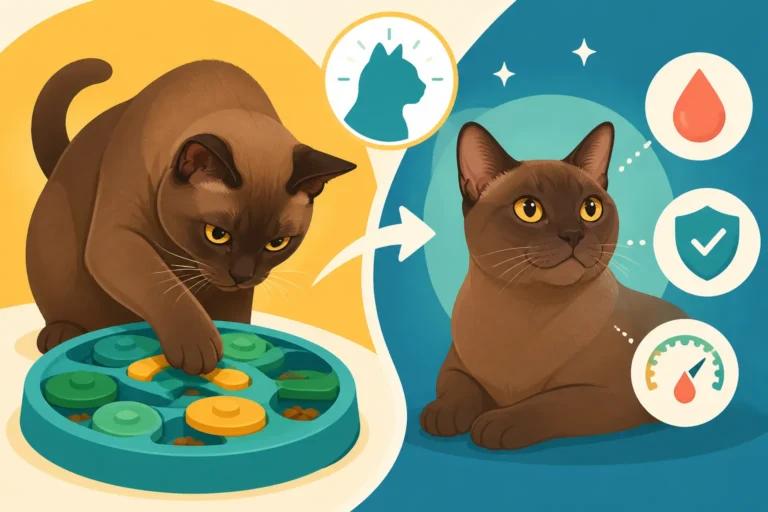
Puzzle feeders are absolute game-changers for food-motivated cats. Instead of simply gulping down their meal from a bowl, they have to work for it, mimicking their natural hunting instincts. This slows down their eating, makes meals more engaging, and mentally stimulates them. There's a wide range of puzzle feeders available on Amazon, from simple treat balls to more complex mazes. Using a puzzle feeder turns mealtime into an activity rather than a race. Why a Puzzle Feeder Helps a Diabetes Prone Burmese emphasizes the health benefits beyond just slowing down eating.
Consider spreading their weighed portion across multiple puzzle feeders or even hiding small amounts around the house for them to "hunt" (if you only have one cat and are certain they will find it). This adds valuable enrichment and makes them feel more satisfied by the effort.
Tackling Begging and Counter-Surfing
Burmese cats are incredibly smart and persistent. They learn quickly that certain behaviors, like loud meows or darting between your legs, result in food. To combat begging, consistency is key, and it can be tough!
- Ignore the Begging: As hard as it is, do not give in to begging. This means no table scraps, no sneaking treats when they demand it, and no feeding from your plate. Any reward, even just once, reinforces the behavior.
- Redirection: When they start begging, redirect their attention to something else. Engage them in a play session, offer a designated cat-safe chew toy, or simply pick them up for a cuddle away from the kitchen.
- Secure Food Sources: Burmese cats are notoriously clever when it comes to finding food. Why a Burmese Steals Food From the Counter isn't a myth; they will absolutely try to "acquire" anything left unattended. Ensure all human food is put away or in secure containers. Don't leave groceries or open bags of treats on counters. Child-proof latches on cabinets can be a wise investment.
- Bin Security: Your waste bin is another potential treasure trove for a determined Burmese. Invest in a bin with a secure, cat-proof lid. How to Stop a Burmese Raiding the Bin explains the importance of this simple step.
It takes patience, but over time, your Burmese will learn that begging is no longer an effective strategy, and their food drive will be channeled into appropriate mealtimes and activities.
| Strategy | Benefit | Implementation Tips |
|---|---|---|
| Portion Control | Prevents overfeeding, crucial for diabetes. | Use a digital kitchen scale for every meal. Vet guidance for caloric needs. |
| Low-Carb Wet Food | Supports healthy blood sugar, increases satiety. | Choose high-protein, low-carb wet food. Avoid dry kibble as a primary food. |
| Fixed Meal Times | Regulates metabolism, reduces constant hunger cues. | Feed 2-3 times daily at consistent hours. |
| Puzzle Feeders | Slows eating, provides mental enrichment, satiety. | Introduce various types. Scatter portions of food to encourage natural hunting behavior. |
| Ignore Begging | Breaks the association between demands and rewards. | No human food, no extra treats. Redirect with play or affection away from the kitchen. |
| Secure Food/Bins | Prevents opportunistic eating and counter-surfing. | Put away all human food immediately. Use cat-proof bins and cabinet latches. |
Beyond the Bowl: Redirecting That Energy
Your Burmese has an abundance of energy and intelligence, and if it's not directed productively, it can often manifest as food-seeking behaviors. By providing ample mental and physical stimulation, you can help satisfy their innate drives in healthier ways, shifting their focus from constant eating to engaging activities.
Playtime as a Powerful Distraction
A well-played Burmese is a happier, less food-obsessed Burmese. These cats are known for their playful nature, remaining kittenish well into old age. Regular, interactive play sessions are incredibly important for burning off energy and providing mental stimulation. Think of it as satisfying their "hunting" drive without involving actual prey (or your dinner).
Wand toys are fantastic for Burmese cats as they encourage jumping, pouncing, and chasing. Laser pointers can be fun but always end the session with a tangible toy they can "catch" and mouth to prevent frustration. Rotate toys frequently to keep things interesting, and consider puzzle toys that don't involve food, like those where they can bat at a ball or figure out a mechanism.
Schedule dedicated playtimes, ideally around when they might typically start pestering for food. A 10-15 minute vigorous play session before a meal can help them feel more satisfied and less frantic when the food bowl finally appears. This also strengthens your bond, reminding them that you're a source of fun and affection, not just a food dispenser. Even an old Burmese still wants to play, so don't let age be an excuse to skip these vital interactions. What an Old Burmese Still Wants to Play emphasizes this continued need for engagement.
Training for a Happier, Healthier Cat
Yes, you can absolutely train a cat, especially a clever and eager-to-please Burmese! Their strong food motivation, which can be a challenge, actually makes them excellent candidates for positive reinforcement training. Instead of giving them treats for begging, use small, measured portions of their regular low-carb wet food as rewards for desired behaviors.
Teaching your Burmese simple commands like "sit," "stay," or "come" can be incredibly rewarding. Not only does it provide mental exercise, but it also gives them a sense of purpose and connection with you. For example, teach them to sit patiently before their meal is placed down. This channels their anticipation into a structured, positive interaction. Teaching a Burmese to Sit Still for a Glucose Check demonstrates how their food drive can be leveraged for practical health management, a skill that can be invaluable.
Consider setting up vertical spaces like cat trees, shelves, or wall-mounted perches. Burmese cats love to climb and observe their world from above. These vantage points satisfy their natural instincts and give them a place to expend energy. Even if they mostly climb people rather than furniture, a dedicated space can be a wonderful outlet. Providing these outlets helps them to feel secure, engaged, and less focused on constantly seeking out food as their primary form of entertainment.
Ultimately, understanding and managing your Burmese's powerful food motivation is about balance. It's about respecting their natural instincts while providing the structure, diet, and enrichment they need to thrive, ensuring that their endearing love for food never becomes a threat to their long-term health.
Disclaimer
This article is for general informational purposes only and does not constitute professional advice. Laws, prices and regulations vary by location and change over time. Consult a qualified professional for guidance on your specific situation.