Why a Burmese’s Eyes Weep in the Corners
It can be truly disheartening when you notice your beloved Burmese cat's beautiful, expressive eyes aren't as sparkling as they usually are, but instead have tear trails or crusty gunk in the corners. This common concern can range from a completely normal, harmless occurrence to a sign of something that needs a little extra attention, leaving many owners wondering what's really going on. This comprehensive guide will delve into the specific reasons why Burmese cats are prone to weeping eyes and provide practical advice on when to intervene and how to keep those gorgeous peepers healthy.
The Unique Facial Structure of Your Burmese Cat
One of the most defining characteristics of the Burmese cat, and often a contributing factor to their eye issues, is their distinctive facial structure. Unlike many other breeds, the Burmese boasts a unique head shape that, while utterly charming, can unfortunately predispose them to certain ocular challenges.
Understanding the Brachycephalic Tendency
The Burmese breed, particularly the American Burmese, has a slightly brachycephalic tendency, meaning they have a somewhat shortened muzzle and a rounder head compared to their long-nosed feline cousins. This isn't as pronounced as in, say, a Persian, but it's enough to alter the delicate anatomy around their eyes. This distinctive 'smushed' or rounded facial profile can impact the alignment of their tear ducts. Imagine a gentle curve where a straight line would normally be – this curvature can make it harder for tears to drain efficiently through the nasolacrimal ducts, which are the tiny tubes that connect the eyes to the nose. When tears can't flow down into the nasal cavity as intended, they have nowhere to go but to spill over onto the face, leading to that tell-tale weeping or staining in the corners.
How Eye Shape and Set Influence Tear Flow
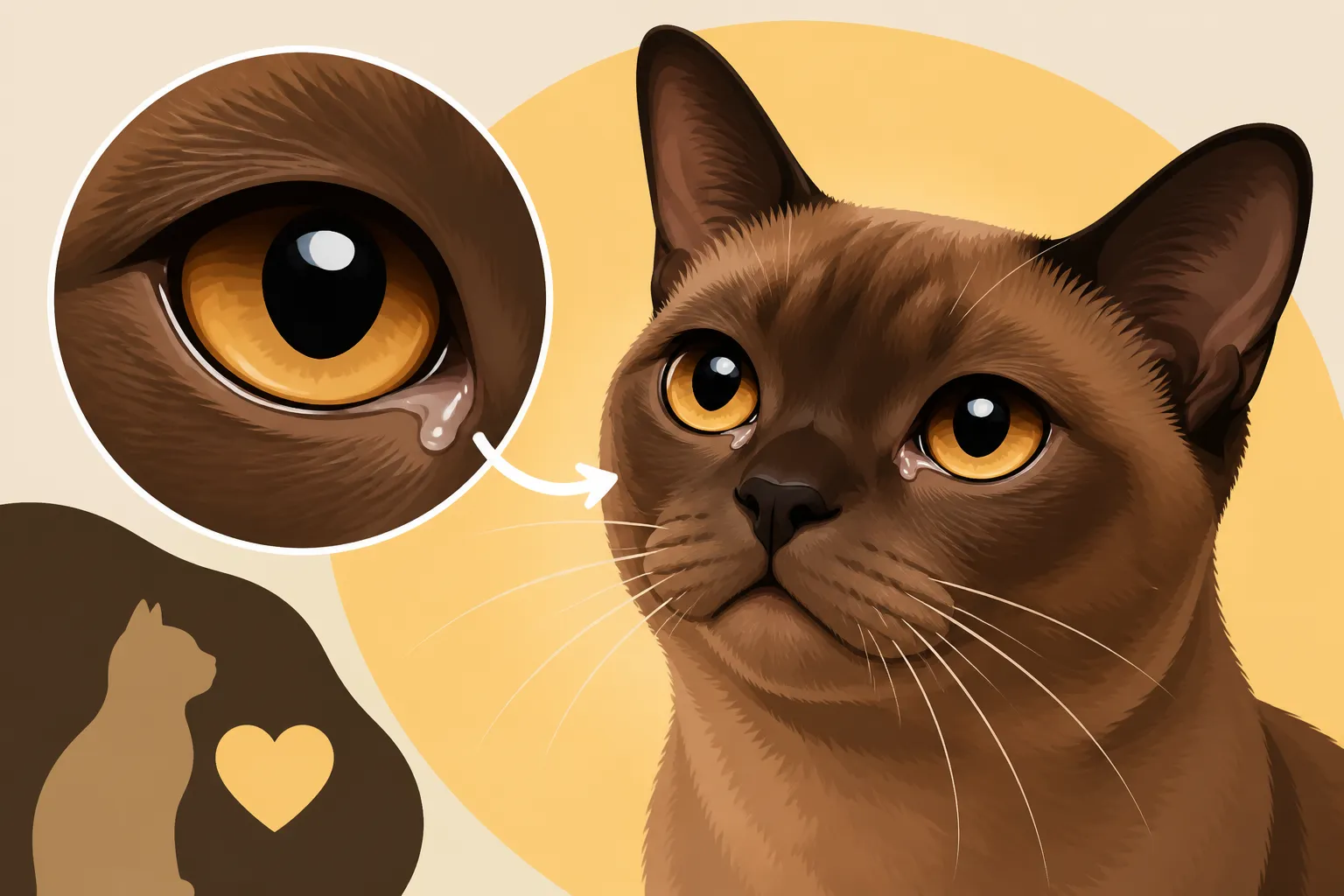
Adding to the brachycephalic influence, Burmese cats are renowned for their large, round, expressive eyes, which are set relatively far apart. While undeniably captivating, this eye shape and placement can also contribute to weeping. Their prominent eyes can be more exposed to environmental irritants like dust, pollen, or even stray hairs from their own short, dense coat, triggering increased tear production. Furthermore, the way their eyelids sit, sometimes not perfectly tight against the eyeball due to the facial structure, can create small pockets where tears collect instead of distributing evenly across the eye surface. This natural pooling means tears are more likely to overflow, rather than evaporating or draining properly. It’s a delicate balance, and the Burmese cat's charming features often mean they're living right on the edge of what's considered normal tear flow.
Common Reasons for Weeping Eyes in Burmese Felines
Once you understand the Burmese's unique anatomy, it becomes clearer why their eyes might weep more often than other breeds. However, not all weeping is cause for alarm, and it's helpful to distinguish between normal occurrences and signs that might point to a problem.
Normal Tear Staining and Discharge
It’s completely normal for a cat, including a Burmese, to have a tiny bit of clear, watery discharge in the corners of their eyes, especially after a long nap. This is just the eye’s natural way of cleaning itself. For Burmese cats, because of their tear duct anatomy, this clear fluid might spill over a bit more frequently. When this happens, it can sometimes lead to reddish-brown staining on the fur around the eye. This isn't blood; it's typically due to porphyrins, pigments that are naturally present in tears and become visible when exposed to air and light. This staining is particularly noticeable on lighter-colored Burmese, like champagnes or platinums, and while not aesthetically pleasing, it’s usually harmless. The key here is that the discharge should be clear and watery, not thick or discolored.
Environmental Irritants and Allergies
Just like us, cats can react to things in their environment. A Burmese's eyes can become watery as a response to common household irritants. Think about dust, pollen (especially during seasonal changes), strong perfumes, air fresheners, or even fumes from cleaning products. If you've recently changed your cat litter, a dustier brand could be the culprit. Smoke, whether from a fireplace or cigarettes, is another major irritant. In these cases, the eyes weep as a protective mechanism to flush out the irritant. Allergies can also manifest as watery eyes, sometimes accompanied by sneezing or a runny nose. Pinpointing the exact allergen can be tricky, but observing when the weeping occurs (e.g., after dusting, or certain times of year) can offer clues. Keeping your home clean and dust-free, and using unscented, dust-free litter, can make a big difference.
Blocked or Malformed Tear Ducts Epiphora
This is a specific condition where tears overflow because the tear drainage system isn't working properly, a condition known as epiphora. As we touched on earlier, the Burmese's shorter muzzle can mean their nasolacrimal ducts are narrower, kinked, or even completely blocked from birth (congenital). Over time, inflammation from chronic irritation or minor infections can also cause scarring that narrows these ducts. When the ducts are blocked, tears simply can't drain away, and they continuously spill over the lower eyelid and onto the face, often leading to persistent wetness and staining. While often not painful on its own, the constant moisture can irritate the skin around the eyes, leading to dermatitis or secondary bacterial infections if not managed. This is where conditions like Why a Burmese's Eyes Water and Crust can become more prevalent.
Minor Injuries and Infections
Cats are curious creatures, and even an indoor Burmese can encounter things that cause eye irritation or injury. A playful swipe from another cat, bumping into furniture, or even a tiny piece of debris or a rogue eyelash can cause a corneal abrasion – a scratch on the surface of the eye. These can lead to excessive watering as the eye tries to heal itself. More concerning are infections. Conjunctivitis, or inflammation of the conjunctiva (the lining of the eyelids and eyeball), is common. It can be bacterial or viral, with feline herpesvirus being a frequent offender. Symptoms often include redness, swelling, and a discharge that can be clear, but often progresses to thick, yellow, or greenish pus. If you notice your Burmese squinting, rubbing their eye, or if the discharge changes color or consistency, it's a definite sign to seek veterinary attention.
Recognizing When Professional Veterinary Care Is Needed
While some weeping is normal for a Burmese, there are clear signs that indicate a problem beyond simple staining or minor irritation. Knowing when to call the vet is crucial for your cat's health and comfort.
Distinguishing Between Minor Irritation and Serious Problems
It's easy to worry every time you see a little wetness, but there's a significant difference between a perfectly healthy Burmese with normal tear overflow and one that's genuinely unwell. A good rule of thumb is to look at the quality of the discharge and your cat's overall demeanor. If the discharge is consistently clear and watery, and your cat is otherwise bright, alert, eating well, and playful, it's likely a benign issue or simple epiphora. You can follow tips like How to Clean a Burmese's Eye Corners Safely for management.
However, if you observe any of the following, it's time to reach out to your veterinarian:
- Changes in Discharge: If the discharge becomes thick, cloudy, yellow, green, bloody, or has a foul odor.
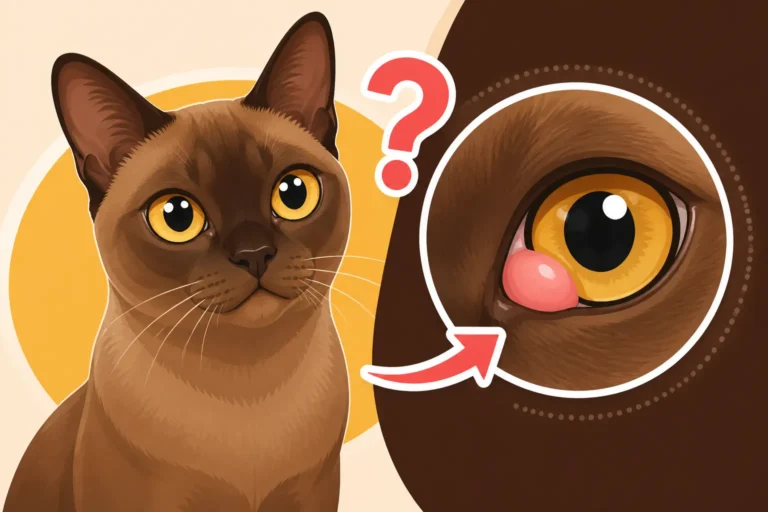
- Redness or Swelling: Any visible redness of the conjunctiva (the pink lining of the eyelids), swelling around the eye, or if the third eyelid (nictitating membrane) is consistently visible.
- Pain or Discomfort: Squinting, holding the eye partially or completely shut, pawing at the face, rubbing against furniture, or increased sensitivity to light.
- Changes in Eye Appearance: A cloudy cornea, visible injury to the eyeball, or uneven pupil sizes.
- Behavioral Changes: Lethargy, loss of appetite, hiding more than usual, or a sudden decrease in playfulness. Remember, a Burmese is incredibly affectionate and often hides illness behind that affection, so any withdrawal is a red flag. As discussed in Why a Burmese Hides Illness Behind Its Affection, subtle changes can be significant.
- Other Symptoms: Sneezing, coughing, nasal discharge, fever, or any other signs of systemic illness accompanying the eye weeping.
The Importance of a Thorough Eye Examination
When you bring your Burmese to the vet for weeping eyes, they won't just glance at them and guess. A thorough eye examination is essential to get to the root of the problem. Your vet will conduct a detailed physical exam, often starting with a visual inspection of the eyes and surrounding structures, checking for foreign bodies, eyelid abnormalities, or signs of injury. They may use an ophthalmoscope to look inside the eye.
Common diagnostic tests include:
- Fluorescein Stain: This non-toxic orange dye is applied to the eye to check for corneal ulcers or abrasions. If there's a scratch, the dye will stick to it and glow bright green under a special blue light.
- Schirmer Tear Test: Measures tear production to determine if the eye is producing too few or too many tears.
- Tonometry: Measures the intraocular pressure (pressure inside the eye) to rule out conditions like glaucoma, which can be quite painful.
- Tear Duct Flush: If a blocked tear duct is suspected, the vet may try to flush it with saline solution to clear any obstruction.
- Swabs or Cultures: If an infection is suspected, samples of the discharge might be taken for bacterial or viral culture to identify the specific pathogen and guide treatment.
These diagnostic steps are crucial, and while the costs can accumulate, having pet insurance like Healthy Paws can be a real lifesaver, covering a significant portion of unexpected vet bills for diagnostics and treatment. It allows you to make decisions based on your cat's health needs, not just your wallet. For unusual conditions like Whether Corneal Dermoid Reaches the Burmese, prompt diagnosis is key.
Addressing Underlying Health Conditions
Sometimes, weeping eyes aren't the primary problem but rather a symptom of a larger, underlying health issue. For example, some dental problems can cause inflammation that spreads to the tear ducts. Feline infectious diseases, such as Feline Herpesvirus (FHV-1) or Feline Calicivirus (FCV), can manifest with conjunctivitis and watery eyes, alongside upper respiratory symptoms like sneezing and nasal discharge. In these cases, treating the eye symptom alone won't solve the problem; the underlying systemic disease needs to be addressed. This highlights the importance of regular comprehensive check-ups, even for adult cats. Your vet may recommend a more extensive evaluation, potentially including a full blood panel as described in Which Blood Panel a Burmese Should Have Yearly, to rule out any systemic illness that could be contributing to the ocular signs. If your Burmese is ever withdrawn or showing other signs of discomfort, don't delay – Why a Withdrawn Burmese Should See a Vet That Day is a critical piece of advice for all cat owners.
| Feature | Normal Tear Staining / Minor Weeping | Concerning Eye Symptoms |
|---|---|---|
| Discharge | Clear, watery, or reddish-brown (porphyrin) staining | Thick, yellow, green, bloody, pus-like, excessive |
| Frequency | Occasional, especially after waking or slight irritation | Constant, persistent, worsening |
| Eye Color | Normal, clear whites, pupils reactive | Redness, visible blood vessels, cloudy cornea, uneven pupils |
| Appearance | No swelling, eye held open normally, no squinting | Swelling of eyelids, squinting, holding eye shut, third eyelid visible |
| Behavior | No discomfort, playful, normal appetite, no rubbing | Pawing at eye, rubbing face excessively, lethargy, loss of appetite, withdrawal |
| Associated Signs | None | Sneezing, coughing, nasal discharge, fever, limping, tenderness to touch |
| Urgency | Monitor, clean gently | Vet visit within 24-48 hours, or immediately if severe pain/trauma |
Practical Steps for At-Home Eye Care and Prevention
Once you’ve ruled out serious medical issues with your vet, managing minor weeping and preventing irritation at home becomes your daily routine. Consistent, gentle care can make a huge difference in your Burmese's comfort and appearance.
Safe and Gentle Cleaning Routines
For regular tear staining or minor clear weeping, a consistent cleaning routine is your best friend. The goal is to keep the area dry and clean to prevent irritation and secondary skin infections. Start by gathering your supplies: sterile saline solution (the kind used for contact lenses, without preservatives) or vet-approved eye wipes, and soft, lint-free cotton pads or gauze. Never use tap water, as it's not sterile and can introduce bacteria.
To clean, gently hold your cat's head steady and apply a small amount of saline to a cotton pad. Carefully wipe away any crusts or wetness from the inner corner of the eye, moving outwards. Use a fresh pad for each eye to prevent cross-contamination. Be extremely gentle – never rub or press directly on the eyeball. If there's stubborn crusting, you can hold a warm, damp (with saline) compress over the area for a few seconds to soften it before wiping. Consistency is key; a quick clean once or twice a day can prevent buildup and staining. For more detailed instructions, you might find How to Clean a Burmese's Eye Corners Safely helpful.
Environmental Management and Allergy Mitigation
Controlling your cat’s environment can significantly reduce eye irritation. Start with air quality: regularly dust and vacuum your home to minimize airborne particles that can irritate eyes. Consider using an air purifier, especially in rooms where your Burmese spends a lot of time. If you use scented candles, air fresheners, or strong chemical cleaners, switch to unscented, pet-safe alternatives. Pay attention to your cat litter – some brands are much dustier than others. Switching to a low-dust or dust-free option can make a big difference.
If you suspect allergies are at play, a process of elimination might be necessary. This could involve removing potential allergens from their environment one by one, or even discussing a hypoallergenic diet with your vet if food allergies are a possibility. Remember that a Burmese kitten needs an early vet check for all manner of reasons, including establishing a baseline for its health, as explored in Why a Burmese Kitten Needs an Early Vet Check.
Proactive Health Monitoring
Being proactive about your Burmese's health means observing them closely every day. Look at their eyes, check their energy levels, and monitor their appetite. Any subtle change can be an early indicator of a problem. Keep a small journal or a note on your phone to track when weeping occurs, what it looks like, and any accompanying symptoms. This information will be invaluable to your vet if you need to seek professional help.
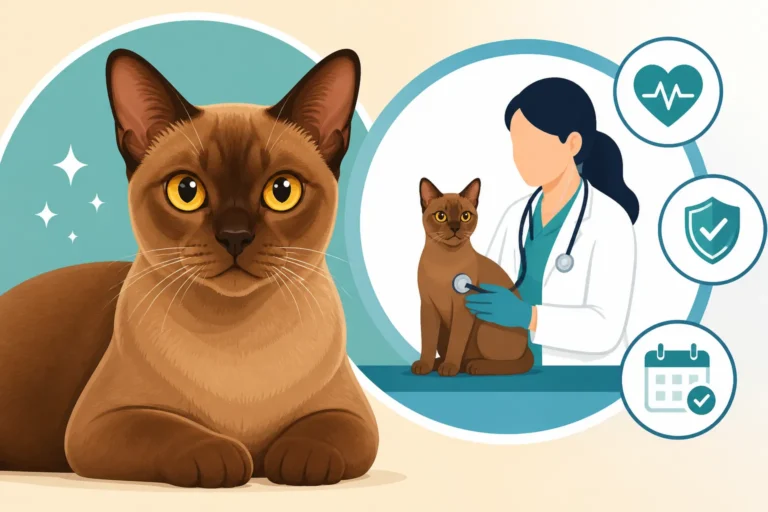
Regular veterinary check-ups are non-negotiable. Even seemingly healthy adult Burmese cats should see their vet at least once a year. This allows your vet to catch potential issues early, perform routine screenings, and ensure your cat is in top condition, which is a key part of How Often a Healthy Adult Burmese Needs Checking. During these visits, your vet can also specifically examine your Burmese's eyes, even if you haven't noticed any major problems. Early detection and intervention are crucial for many health conditions, and having a robust pet insurance plan like Healthy Paws in place ensures that you're always prepared for the unexpected, making proactive care decisions easier without financial stress.
Disclaimer
This article is intended for informational purposes only and does not constitute medical advice. Always consult with a qualified veterinarian for any health concerns or before making any decisions related to your pet's medical care.