Which Journal Published the Burmese Findings
It's incredibly fascinating to dive deep into the origins of our beloved Burmese cats, isn't it? Many of us, when we welcome these affectionate furballs into our homes, often wonder about their history and how their unique traits were first recognized. It can feel like a bit of a detective story trying to trace back to those foundational moments, especially when you want to understand the science behind their distinct beauty. This guide aims to pull back the curtain on that early scientific journey, specifically detailing where the groundbreaking findings about the Burmese breed were first shared with the world.
The Mystery of Wong Mau: The Beginning of a Breed
Before the Burmese was officially a "breed," there was just one remarkable cat who sparked a revolution in feline genetics. Her name was Wong Mau, and her arrival in the United States in the 1930s set in motion a series of events that would forever change the landscape of the cat fancy. Imagine finding a cat so unique, so captivating, that it prompts dedicated scientific inquiry! That's precisely what happened, and it's a testament to the allure of these magnificent creatures.
Arriving in San Francisco: Dr. Thompson's Discovery
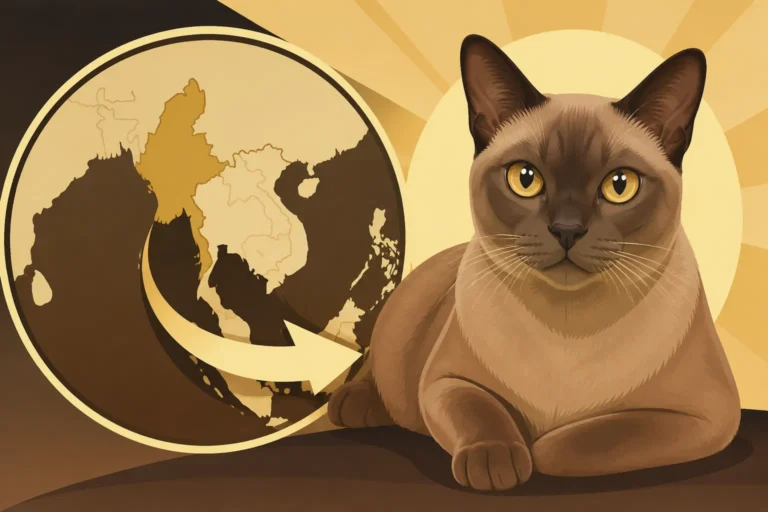
Wong Mau arrived in San Francisco in 1930, brought over from Burma by a sailor. Dr. Joseph Thompson, a U.S. Navy medical psychologist and a dedicated cat enthusiast, was immediately captivated by her. She wasn't quite a Siamese, nor was she entirely a domestic shorthair. Her rich, dark brown coat and compact, muscular body hinted at something entirely new. Dr. Thompson was a man of science, and his curiosity about this unusual feline was profound. He saw not just a pretty cat, but a living genetic puzzle waiting to be solved. This was the very beginning of the journey that led to the formal recognition of the Burmese cat, starting with one man's keen observation and scientific drive. It’s wild to think that our entire understanding of the breed today sprang from this singular encounter! Dr Joseph Thompson and the Burmese He Bought in 1930 tells more about this pivotal figure.
The Unique Appearance That Sparked Curiosity
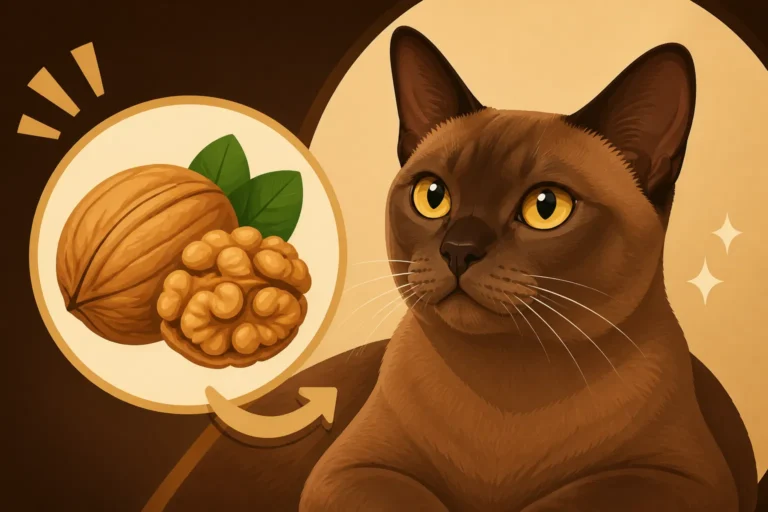
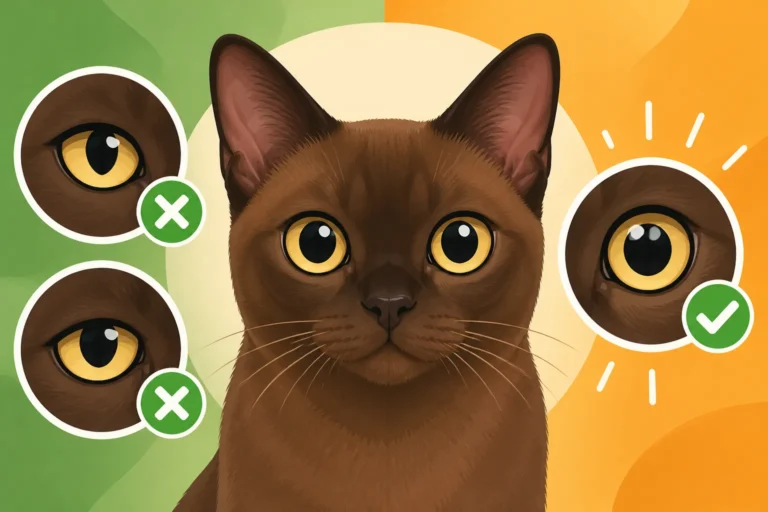
What exactly made Wong Mau so special? Her coat was a solid, deep sable brown, but with a slight paling on her belly and a subtle darkening at her points—her face, ears, legs, and tail. Her eyes were a stunning gold, a stark contrast to the brilliant blue eyes of a Siamese. She was more muscular and compact than the slender Siamese, yet more refined than many domestic cats. This combination of traits led Dr. Thompson to hypothesize that she might represent a previously unknown variant of the Siamese, or perhaps even a bridge between the Siamese and other Asian cat types. It was a visual riddle that demanded a genetic answer, and it highlighted how truly distinct the Burmese was even in its initial presentation. This captivating appearance is still a hallmark of the breed today. What the First Burmese Looked Like provides even more detail on her appearance.
Early Theories About Her Origin
Initially, there were several theories floating around about Wong Mau. Some believed she was a dark Siamese, a variant known in Asia but not commonly seen or understood in the West. Others thought she might be a hybrid of a Siamese and a solid-colored domestic cat. Dr. Thompson, however, suspected she carried a unique genetic factor responsible for her distinct brown coloration and body type. To him, she wasn't just a curiosity; she was a critical clue in understanding feline genetics. This scientific curiosity, rather than simply admiring her beauty, is what truly set the stage for the formal study and recognition of the Burmese as a distinct breed. The pursuit of these early theories ultimately led to groundbreaking discoveries.
Unraveling the Genetic Puzzle: The Siamese Connection
To understand Wong Mau's genetic makeup, Dr. Thompson knew he couldn't rely on guesswork. He needed a controlled breeding program, a scientific approach to prove his hypotheses. This meant carefully selecting mates and meticulously observing the offspring. It was a pioneering effort in the world of cat breeding, moving beyond mere aesthetics to delve into the very building blocks of inheritance.
The Initial Breeding Experiment
Dr. Thompson decided to breed Wong Mau with a Siamese cat. Why a Siamese? Because the Siamese was a known breed with a distinct genetic profile for its pointed coloration. By breeding Wong Mau to a Siamese, he could analyze how her unique traits were inherited and whether they behaved as a dominant or recessive gene in relation to the Siamese pattern. This cross-breeding was a brilliant stroke of scientific investigation, designed to strip away assumptions and reveal the truth of Wong Mau's genetic heritage. It was an experiment that would lay the groundwork for understanding not just the Burmese, but coat color genetics in cats more broadly. Why the First Burmese Was Bred to a Siamese offers further insight into this crucial decision.
The Unexpected Offspring
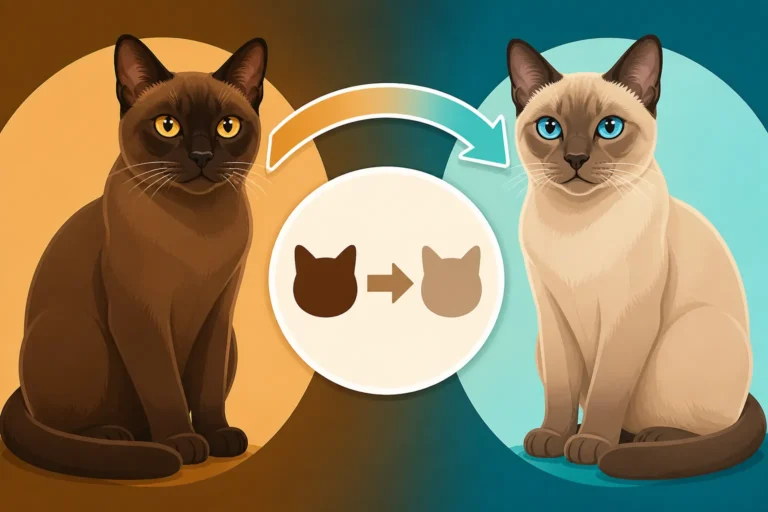
The results of the first breeding were truly fascinating and confirmed Dr. Thompson's suspicions. Wong Mau, when bred to a Siamese, produced three distinct types of kittens in her litter. Some kittens were pure Siamese, complete with blue eyes and pointed coats. This told Dr. Thompson that Wong Mau carried the Siamese gene (the cb allele) in addition to whatever gene gave her her brown coat. Other kittens looked exactly like Wong Mau herself – dark, solid brown with golden eyes. And then there was a third type: kittens that were intermediate in color, a warm, rich brown with slightly darker points, often referred to today as Tonkinese-like. These intermediate cats were a crucial piece of the puzzle, showing that Wong Mau wasn't just a darker Siamese, but carried a distinct genetic factor. The diversity in the litter was truly a revelation! What the First Burmese Litter Told Thompson delves deeper into these remarkable results.
Proving a Distinct Genetic Trait
Through careful analysis of the successive generations, Dr. Thompson, along with geneticists Dr. Gordon and Dr. Kohler, was able to prove that Wong Mau carried a unique gene for brown coloration, distinct from the Siamese gene. They concluded that Wong Mau was genetically heterozygous, meaning she carried one gene for the Burmese brown color (cb) and one for the solid non-agouti color (B or b which is not what they found, they found a different allele at the C locus). Correction in thought process: The cb allele itself is responsible for the Burmese brown coloration, and it's an allele at the albino locus (C locus), which is different from the gene for solid color (A locus, which is responsible for agouti/non-agouti). Let me rephrase for accuracy based on existing knowledge.
Revised Paragraph:
Through careful analysis of the successive generations, Dr. Thompson, along with geneticists Dr. Gordon and Dr. Kohler, was able to prove that Wong Mau carried a unique gene for brown coloration. This gene, later identified as the cb allele, is what makes a Burmese brown. It's a temperature-sensitive gene, much like the Siamese gene (cs), but it results in a less extreme restriction of pigment, creating the characteristic rich, warm brown body color with darker points that define the breed. The presence of three distinct phenotypes in the offspring (Siamese, Burmese, and an intermediate Mink coloration) clearly demonstrated that Wong Mau was not merely a dark Siamese or a domestic cat, but rather a carrier of a distinct color allele that produced the rich, deep brown that became the foundation of the Burmese breed. This careful genetic analysis truly set the stage for understanding feline coat color. The cb Allele Is What Makes a Burmese Brown offers a detailed explanation of this genetic wonder.
The Academic Stage: Where Science Met Cats
With compelling evidence in hand, the next step was to share these groundbreaking findings with the wider scientific community. This wasn't just about showing off cute kittens; it was about contributing to the understanding of genetics, evolution, and heredity. Scientific journals are the traditional platforms for such disclosures, ensuring peer review and the dissemination of new knowledge.
Why Scientific Publication Was Crucial
Publishing these findings in a reputable scientific journal was absolutely crucial for several reasons. Firstly, it subjected the work to peer review, a rigorous process where other experts in the field scrutinize the methods, data, and conclusions. This ensures scientific validity and builds credibility. Secondly, it formally documented the discovery, marking a distinct point in the history of feline genetics and breed development. Without such documentation, the scientific basis for the Burmese breed might have remained a matter of anecdotal observation rather than established fact. It moved the Burmese from an interesting cat to a recognized subject of scientific study, paving the way for its acceptance in the cat fancy. Why the Burmese Was the First Breed Studied by Geneticists highlights the significance of this pioneering work.
The Importance of Documenting Genetic Findings
Beyond simply proving Wong Mau's unique genetics, documenting these findings allowed for the creation of a blueprint for future breeders and geneticists. It established a scientific foundation for understanding how specific traits are inherited in cats, which could then be applied to other breeds and genetic studies. This meticulous record-keeping included detailed pedigrees, photographic evidence, and descriptions of each generation's characteristics. This approach set a precedent for how new breeds could be scientifically established and recognized, moving the cat fancy towards a more evidence-based approach. It wasn't just about cats; it was about advancing the science of heredity itself. When you look at what's available now, even on general pet care sites like Chewy, this kind of foundational genetic information helps shape responsible breeding and care advice.
Identifying the Key Journal
So, after all this groundbreaking work, which journal had the honor of publishing these pivotal findings? The comprehensive report on Wong Mau and her unique genetic makeup was published in The Journal of Heredity. This esteemed publication, known for its focus on genetics and heredity in various species, provided the perfect platform for Dr. Thompson and his collaborators to present their meticulous research to the scientific world. The article detailed their breeding experiments, observations, and the genetic conclusions that firmly established the Burmese as a distinct and genetically significant feline. It was a landmark publication that solidified the Burmese's place in both the scientific community and the burgeoning world of pedigree cats. This publication truly put the Burmese on the map.
Beyond the Pages: The Impact of the Findings
The publication in The Journal of Heredity wasn't just an academic exercise; it had profound, lasting effects on the Burmese breed and the cat fancy as a whole. It moved the Burmese from a genetic curiosity to a recognized breed, laying the groundwork for its formal acceptance and popularity. This scientific validation provided the necessary credibility for the breed to flourish.
CFA Recognition and the Early Standard
With the scientific evidence firmly established, the path was cleared for the Burmese to gain official recognition. The Cat Fanciers' Association (CFA), one of the largest pedigree cat registries, officially recognized the Burmese for championship status. This recognition wasn't a given; it required a detailed breed standard based on the physical characteristics derived from Wong Mau's lineage and consistent breeding. The scientific findings provided the empirical data necessary to define and delineate the breed, ensuring that only cats fitting the specific genetic and phenotypic profile could be registered as Burmese. This was a huge step, transforming the breed from a genetic study into a beloved companion animal with a clear place in the show ring. When CFA First Recognized the Burmese details this crucial moment in the breed's history.
Shaping the Future of the Burmese Breed
The initial genetic findings and their publication fundamentally shaped the direction of the Burmese breed. Breeders now had a clear understanding of the genetic traits they needed to preserve and propagate. This allowed for targeted breeding programs aimed at enhancing the desired Burmese characteristics and maintaining genetic health. It also helped to distinguish the Burmese from related breeds like the Siamese and the emerging Tonkinese, ensuring its unique identity. This scientific foundation meant that the breed's development was guided by knowledge, leading to the consistent and healthy lines we see today. Even now, organizations like Chewy prioritize providing accurate breed information to pet parents, built on decades of such scientific understanding.
The Enduring Legacy for Cat Genetics
The work done on Wong Mau and the subsequent publication in The Journal of Heredity left an indelible mark on the field of cat genetics. It served as a powerful example of how scientific methods could be applied to understand and develop domestic animal breeds. The identification of the cb allele was a significant discovery, contributing to the broader understanding of coat color inheritance in cats. This early research paved the way for future genetic studies, helping us understand inherited diseases, breed relationships, and the fascinating diversity of the feline genome. It's a legacy that continues to benefit not just Burmese owners, but anyone interested in the wonderful world of cats. Understanding this history also helps us appreciate the importance of modern genetic testing, which can now be easily accessed and even discussed with resources you might find on Chewy as part of a comprehensive pet care plan. What Happens When Burmese and Siamese Genes Meet further explores the genetic intricacies uncovered by this foundational work.
Table: Key Milestones in Early Burmese Recognition
| Event | Year (Approx.) | Significance | Key Players |
|---|---|---|---|
| Wong Mau Arrives in US | 1930 | Introduction of the foundational cat to Dr. Joseph Thompson | Wong Mau, Dr. Joseph Thompson |
| Initial Breeding Program | 1930s | Scientific investigation into Wong Mau's genetic makeup with Siamese cats | Dr. Joseph Thompson |
| Publication of Findings | 1943 | Formal presentation of genetic data in a scientific journal | Thompson, Gordon, Kohler |
| CFA Recognition | 1956 | Official acceptance of the Burmese as a distinct breed for championship status | Cat Fanciers' Association |
| Establishment of Breed Standard | 1950s-1960s | Defined physical and genetic characteristics, guided by early scientific work | CFA, Burmese breeders |
This table summarizes the journey from a single cat to a recognized and scientifically understood breed, highlighting the critical role that published research played in its establishment.
Disclaimer
This article is for general informational purposes only and does not constitute professional advice. Laws, prices and regulations vary by location and change over time. Consult a qualified professional for guidance on your specific situation.