How Round a Burmese’s Eyes Should Be
A Burmese’s eyes should look large, open, and rounded, giving the face its familiar alert, gentle expression. But “round” does not mean perfectly circular, bulging, or identical from every angle. This guide explains the breed-standard shape, how American and European Burmese may differ in head type, and how to tell normal variation from an eye change that deserves veterinary attention.
What round Burmese eyes should look like
Large and rounded, not perfectly circular
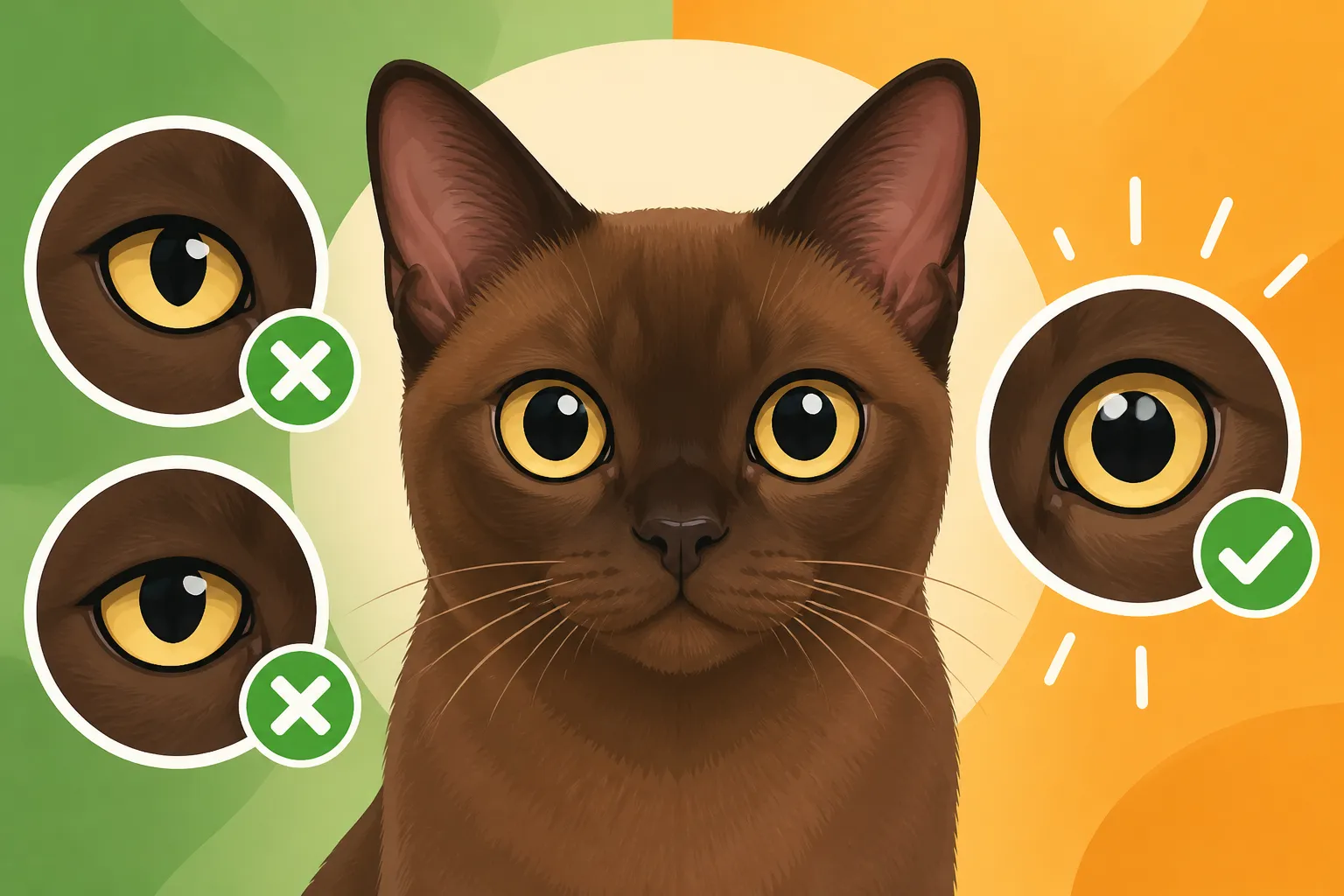
A Burmese’s eyes are meant to be large in proportion to the head and noticeably rounded. Viewed from the front, they should look open and expressive rather than narrow or almond-shaped. The lower line of the eye contributes much of that rounded impression, while the upper line may slope slightly toward the nose. So the outline is not a perfect circle drawn with a compass; it has a subtle shape that fits the cat’s face.
The eyes should also sit well apart. That spacing helps create the Burmese expression: attentive and soft, without making the eyes look crowded together or pushed toward the sides of the head. A cat may have beautifully round eyes and still not show the desired overall look if they are set too close together, too deep, or out of balance with the face.
Think of the standard as describing a combination of features, not a single measurement. There is no everyday ruler test that tells you whether a Burmese’s eyes are “round enough.” Breed standards are written for judging the whole cat, and the eye shape is considered alongside the head, profile, spacing, and expression. For more on the broader picture, see What a Burmese Looks Like Against the Standard.
The expression matters as much as the outline
A Burmese’s eyes should look bright and alert, but they should not appear to bulge out of the face. Roundness is about the shape of the opening and how it contributes to expression—not about an exaggerated, protruding eyeball. A kitten with a particularly round face may make the eyes seem even larger, while a more mature cat’s head proportions can alter the impression slightly.
Lighting and viewing angle can also fool the eye. When a cat is relaxed, its eyelids may sit more softly; when it is watching a toy or a bird, the eyes open wider and look rounder. A close-up taken from below can exaggerate the eyes, while a side view may make them appear less circular. Photos can help you notice general proportions, but a single image is not a reliable way to judge a cat’s conformation.
For a useful comparison, look at the cat from the front while it is calmly alert, then view the head in profile. Ask whether the eyes look large, well spaced, and harmonious with the rest of the face. The way a judge assesses the surrounding structure is explored in How a Burmese's Head Is Judged.
How head type affects the look of the eyes
American Burmese
The American Burmese is generally associated with a rounder head and a shorter, broader facial appearance. That overall shape can make the eyes seem especially prominent and rounded. In a well-balanced face, the eyes should complement the rounded head rather than look oversized or out of place.
That does not mean every American Burmese will have the same eye outline. Individual cats vary, and kittens can look different as their faces develop. A kitten’s eyes may seem enormous against its small head, then look more proportionate as the head and body mature. When comparing cats, consider age and overall proportions instead of judging the eye shape in isolation.
If you want to understand the type’s facial features more closely, What an American Burmese's Head Should Look Like explains the head profile and shape that give the eyes their setting. It is also worth remembering that appearance alone does not establish pedigree or type; registration documents and a reliable breeder’s records matter for that.
European Burmese
The European Burmese is often described as having a more moderate, less rounded head shape than the American Burmese. Its eyes should still be large, expressive, and rounded, but the surrounding contours can change how round they appear. A face with a more moderate profile may frame the eyes differently from the broader, rounder American type.
Breed descriptions and judging language can vary among registries, so avoid assuming that one photo or one show-ring phrase applies identically everywhere. The shared idea is a large, well-spaced eye with a rounded lower line and an alert expression. The distinction is in how the eyes fit the head type, not in a rule that one type must have round eyes and the other must not.
For the European type’s facial outline, see What a European Burmese's Head Should Look Like. A comparison with How the American and European Burmese Split can also help explain why people sometimes see different expressions while still talking about Burmese cats.
| Feature | Burmese appearance to look for | What it does not mean |
|---|---|---|
| Eye outline | Large, open, and rounded, especially along the lower line | A perfectly circular shape |
| Eye placement | Set well apart and balanced on the face | Eyes placed as far apart as possible |
| Expression | Bright, alert, and harmonious with the head | Bulging or startled-looking eyes |
| Upper eye line | May slope subtly toward the nose | A sharply slanted or narrow eye |
| Color | Usually in the yellow-to-gold range, depending on the standard | Eye color determines eye shape |
Eye shape, eye color, and normal variation
Shape and color are separate features
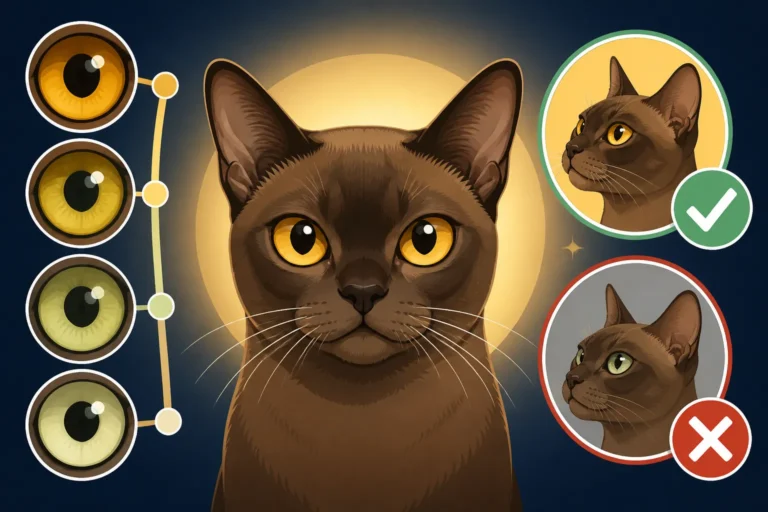
A Burmese can have the desired rounded eye shape without having the strongest possible eye color, and vivid eye color does not make an eye shape more correct. Breed standards discuss these traits separately because they contribute different things to appearance. Eye color is generally described in the yellow-to-gold range, while the shape is judged by roundness, size, spacing, and how the eyes fit the head.
Color can also look different in photographs. Warm indoor lighting may make eyes appear more amber, while cool daylight can make them look paler. A camera’s flash or screen settings can shift the apparent shade as well. If you are comparing two cats, view them in similar natural light rather than relying on images taken under different conditions.
For more detail on color rather than shape, read How a Burmese's Eye Color Is Judged and Which Eye Color a Burmese Should Have. A green-looking eye in a photo may be a lighting effect, but a persistent eye color outside the expected range is a separate question from whether the eye is round. Why a Green Eyed Burmese Is Faulted explains why that distinction can matter in breed judging.
Individual cats are not show-ring diagrams
Even within one breed and one type, faces are not stamped from a single template. Some Burmese have eyes that look rounder at a glance; others have a more noticeable angle along the upper lid. Age, facial proportions, alertness, and the way the cat is holding its head all influence the impression. A pet-quality cat may be a wonderful Burmese companion even if a judge would place a different emphasis on its conformation.
If you are choosing a kitten, look at the whole litter and the parents’ faces rather than fixating on a single close-up. Ask the breeder which registry their cats are registered with and what type they are breeding. A breeder should be able to discuss the lines and show you the kitten in person or in ordinary, unfiltered images. For help distinguishing a Burmese from a similar-looking cat, see How to Tell a Burmese From a Tonkinese.
It is also helpful to separate “not my preferred look” from a health concern. A slightly less rounded eye, by itself, is generally a conformation observation. Squinting, redness, cloudiness, swelling, or discharge is not a breed-standard issue to assess from photographs; it may signal discomfort or illness and should be discussed with a veterinarian.
When an eye change deserves attention
Compare with your cat’s usual appearance
A healthy Burmese’s eyes should generally look clear and comfortable. The most useful comparison is often with that individual cat’s normal face. If one eye suddenly looks smaller, the cat begins squinting, or the eyes appear uneven when they were previously alike, pay attention. Cats can hide discomfort, and a quiet change in expression may be easier to notice than obvious distress.
Watch for repeated pawing at the face, sensitivity to light, unusual tearing, redness, a cloudy surface, or discharge that returns after gentle cleaning. These signs do not tell you what the cause is, and they do not prove that the eye shape itself is abnormal. They do tell you that a veterinary assessment may be appropriate, especially if the change is sudden or worsening.
A cat with a naturally rounded eye should not be assumed to have an eye problem simply because the eyes look prominent in a photo. Conversely, a breed-standard eye shape does not protect a cat from injury or disease. If you are uncertain, describe what changed and when it began rather than trying to diagnose it from the outline alone.
Keep cleaning gentle and ask before using products
For ordinary eye-corner debris, use a clean, soft cloth or gauze dampened with water and wipe gently away from the eye. Use a fresh area of cloth for each eye, and do not press on the eyeball. Avoid human eye drops, medicated products, or home remedies unless a veterinarian recommends them. If discharge is persistent, thick, discolored, or accompanied by squinting or redness, cleaning is not a substitute for an exam.
If you are looking for basic pet-care supplies, a retailer such as Chewy may be one place to compare general options, but choose only items appropriate for use near a cat’s eyes and follow veterinary guidance. Chewy should not be treated as a source of diagnosis: eye products can differ, and a product intended for general grooming is not automatically safe for the eye itself.
Some owners use Chewy to order routine supplies while arranging a veterinary visit, or compare basic items with what their clinic recommends. The important point is not which retailer you use; it is to avoid putting unapproved drops or cleaners into the eye. When a Burmese’s eyes change suddenly, prioritize professional advice over trying several products at home.
A well-rounded understanding of the breed helps put one feature in context. The Burmese eye is best thought of as large, rounded, well spaced, and expressive, with subtle differences depending on head type and individual proportions. It should look natural and balanced—not forced into a perfect circle, and never judged without considering the rest of the face.
Disclaimer
This article is for general informational purposes only and does not constitute professional advice. Laws, prices and regulations vary by location and change over time. Consult a qualified professional for guidance on your specific situation.