The Year the First Burmese Reached San Francisco
For anyone fascinated by the distinct charm and personality of the Burmese cat, it's natural to wonder about their beginnings. Many cat breeds have long, often hazy histories, but the Burmese has a surprisingly well-documented origin story, particularly regarding its introduction to the Western world. This guide will take you back in time to the specific year this captivating breed first set paws in San Francisco, unraveling the story of the pioneering individual who brought this unique feline to American shores and set the stage for one of the most beloved cat breeds today.
Unraveling the Mystery: The Arrival of Wong Mau
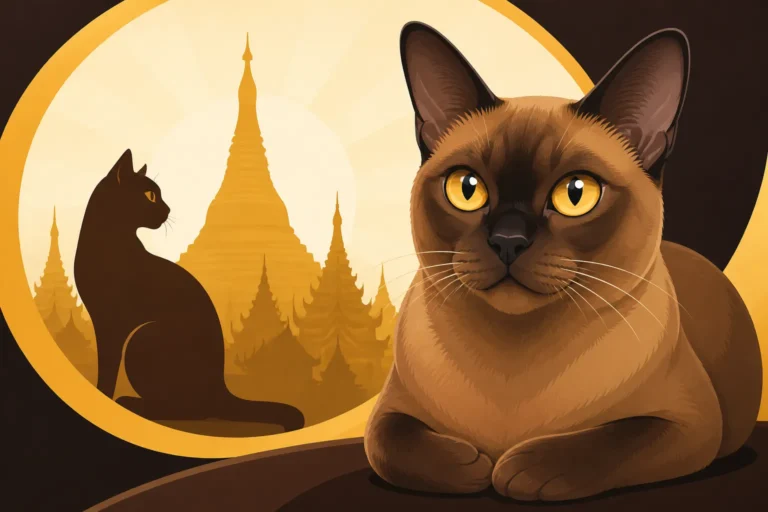
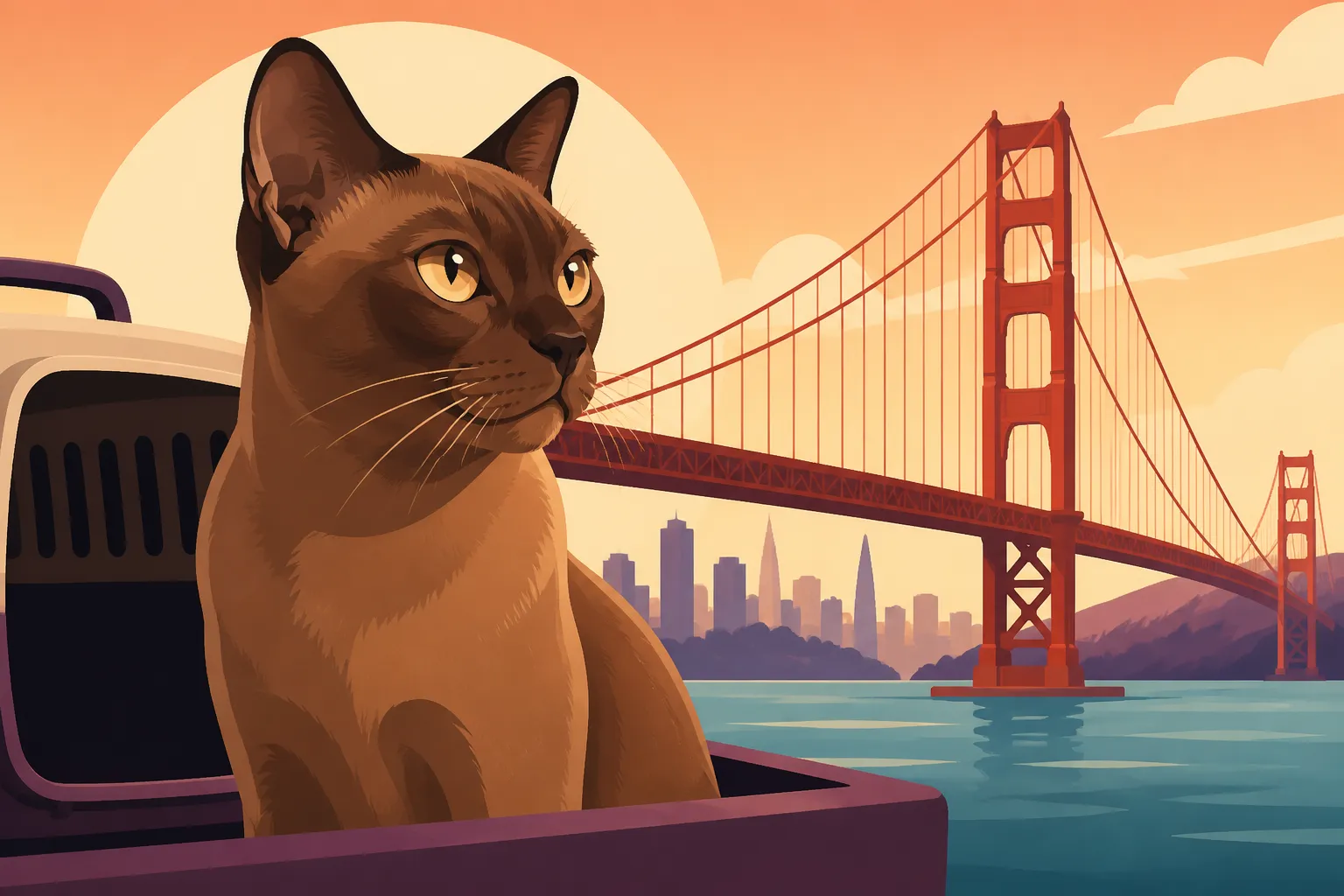
The year 1930 marks a pivotal moment in the history of the Burmese cat. It was in this year that a small, distinctive brown cat arrived in San Francisco, California, brought from Burma (now Myanmar) by a U.S. Navy physician, Dr. Joseph C. Thompson. This wasn't just any cat; this was the foundational feline, the progenitor of an entire breed, known simply as Wong Mau. Her arrival wasn't a casual event; it was a deliberate act of scientific curiosity and a quest to understand a unique feline type that Dr. Thompson had encountered during his travels.
The Journey Across the Pacific
Imagine the long, arduous journey a cat would undertake in the 1930s, traveling thousands of miles across the Pacific Ocean. Wong Mau's voyage from Burma to San Francisco was certainly not one of luxury. She would have traveled by ship, likely as a companion to Dr. Thompson, enduring weeks at sea. This was a time before readily available commercial pet travel, and the dedication required to transport an animal across continents speaks volumes about the doctor's conviction that she was something truly special. Her resilience on this journey foreshadowed the hardy and adaptable nature that would become characteristic of the breed.
Dr. Thompson wasn't just bringing home a souvenir; he was bringing home a living puzzle. He had observed these cats in Southeast Asia, noting their striking appearance – a compact body, expressive eyes, and a coat color that was unlike the pointed Siamese or the solid black domestic cats he was familiar with. He believed Wong Mau represented a distinct type, a "darker Siamese" as some might have called her then, but with unique characteristics that warranted further study. Her arrival in San Francisco wasn't just a geographical transfer; it was the transfer of a genetic blueprint that would soon captivate the nascent American cat fancy.
Dr. Joseph Thompson's Vision
Dr. Joseph Thompson was not merely a cat enthusiast; he was a serious observer with a scientific mind. His interest in Wong Mau wasn't purely aesthetic; it was genetic. He was captivated by her unique coat color and believed she held the key to understanding a previously undefined breed. Upon her arrival in San Francisco, he didn't simply keep her as a pet; he embarked on a deliberate breeding program, driven by a desire to unravel her genetic makeup and establish her as the foundation of a new breed. He reached out to other geneticists and cat fanciers to validate his observations and collaborate on his ambitious project. For more insight into his early work, you might be interested in Dr Joseph Thompson and the Burmese He Bought in 1930.
His vision was clear: to systematically breed Wong Mau to understand how her unique traits were inherited. This methodical approach set the Burmese apart from many other breeds whose origins are shrouded in legend. Dr. Thompson meticulously documented every mating and every litter, an invaluable practice that provided an undeniable scientific basis for the new breed. He understood that without this rigorous documentation, his claims about a distinct new cat type would be dismissed. It was this foresight, rooted in San Francisco, that allowed the Burmese to gain credibility and eventually widespread acceptance.
More Than Just a Pretty Face: Wong Mau's Genetic Revelation
The true significance of Wong Mau's arrival in San Francisco wasn't just her exotic appearance, but the genetic insights she offered. Dr. Thompson's initial breeding experiments, conducted right there in California, quickly revealed that Wong Mau was not a purebred Siamese, nor was she a simple domestic short-hair with unusual coloring. She possessed a unique genetic combination that made her a bridge between these two known feline types, leading to a deeper understanding of cat coat color genetics.
The Siamese Connection
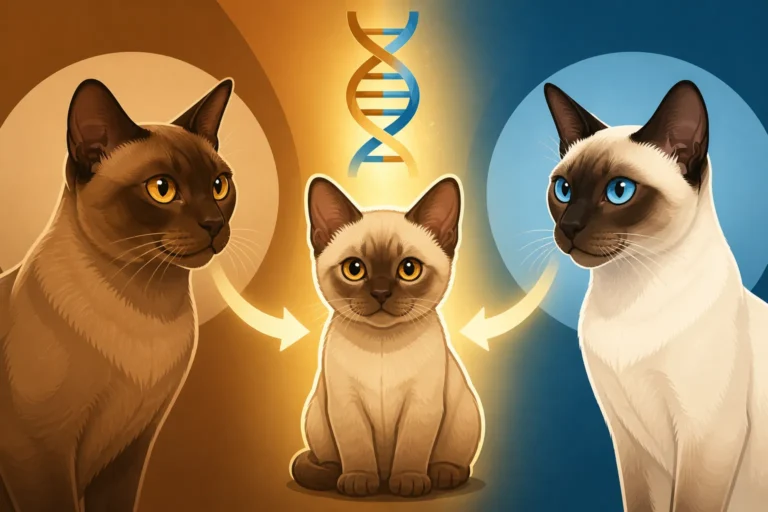
To understand Wong Mau's genetic makeup, Dr. Thompson strategically bred her with a Siamese cat named Tai Mau. This seemingly straightforward pairing yielded fascinating and unexpected results, directly from the breeding efforts based in San Francisco. The kittens produced in that first litter were not all Burmese-like; instead, they presented a mix of phenotypes: some resembled Siamese with their distinct points, some had Wong Mau's rich, warm brown coat, and some were solid brown, even darker than Wong Mau herself. This outcome was a revelation, indicating that Wong Mau carried genes for both the pointed pattern and her own unique brown coloration. To delve deeper into this crucial initial pairing, see Why the First Burmese Was Bred to a Siamese.
This breeding outcome demonstrated that Wong Mau was, in fact, a hybrid, carrying one gene for the solid color and one for the pointed pattern. Her own rich brown color was a diluted form of the solid gene, influenced by the temperature-sensitive enzyme that also gives Siamese their points. This scientific discovery, born from careful observation and selective breeding, cemented the Burmese's place in feline genetics. It showed that the Burmese color was not simply a variant of Siamese, but a distinct expression on its own, capable of producing both pointed and solid offspring when bred back to a Siamese. The implications for understanding cat coat genetics were profound, all starting with a cat in San Francisco.
Understanding the Burmese Color Gene
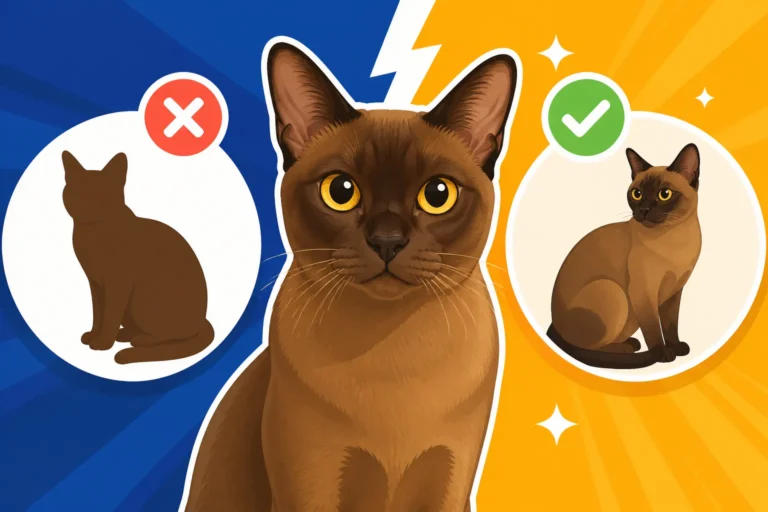
The unique genetic factor responsible for the Burmese's distinctive coat color is now known as the "cb" allele, or the Burmese color restriction gene. This gene is semi-dominant to the Siamese color restriction gene (cs) and recessive to the full-color gene (C). What this means is that a cat with two copies of the cb gene (cb/cb) will express the classic sable (or brown) Burmese color: a rich, warm brown that is darker at the extremities but without the stark contrast of a Siamese. Wong Mau herself, however, was heterozygous, meaning she carried one copy of the Burmese gene and one copy of the Siamese gene (cb/cs). This is why she could produce both Burmese and Siamese kittens when bred to a Siamese. Understanding the "cb" allele is crucial for anyone interested in the genetics behind these beautiful cats, and you can learn more about its impact in The cb Allele Is What Makes a Burmese Brown.
This discovery, pioneered by Dr. Thompson through his work with Wong Mau in San Francisco, fundamentally changed how cat fanciers and geneticists understood color inheritance. It provided a clear, scientific explanation for the beautiful "sable" coat that defines the Burmese. Without Wong Mau's arrival and Dr. Thompson's meticulous record-keeping of her litters, this intricate genetic understanding might have taken much longer to unfold. It highlights the importance of that single cat arriving in California, not just for the breed's existence, but for its contribution to broader feline science.
Laying the Foundation: Early Breeding Efforts
With Wong Mau's genetic significance established through her initial litters in San Francisco, the focus shifted to solidifying the Burmese as a distinct and viable breed. This wasn't a quick process; it required dedication, careful selection, and collaboration among a small but passionate group of cat fanciers. The goal was to produce cats that consistently exhibited Wong Mau's unique appearance and temperament, ensuring the breed's future.
The Initial Breeding Program
Following the groundbreaking discovery from the breeding of Wong Mau and Tai Mau, Dr. Thompson, along with collaborators like Billie Gerst and Virginia Cobb, continued the breeding program. Their initial efforts in the San Francisco area focused on line breeding and selective breeding to intensify the desired traits and to produce more cats with the distinct Burmese coloration. The solid brown kittens from Wong Mau's litters became the foundation for the next generation of Burmese cats. This was a critical phase, as it moved beyond merely understanding the genetics to actively shaping the breed's characteristics. The early breeders were essentially crafting the blueprint for what we recognize as the Burmese today, right there in California.
This early breeding work wasn't without its challenges. Maintaining genetic diversity while concentrating desirable traits is a delicate balance. However, the clear understanding of Wong Mau's genetic contribution provided a strong framework. The foundational breeders aimed to replicate her unique characteristics: the compact, muscular body, the round expressive eyes, and of course, that luscious sable coat. These efforts, stemming directly from Wong Mau's arrival in San Francisco, laid the groundwork for the breed's formal recognition and its subsequent spread across the globe. You can read more about what was learned from those early litters in What the First Burmese Litter Told Thompson.
The Road to Recognition
The path to official recognition for any new breed is often long and arduous, and the Burmese was no exception. After years of careful breeding and meticulous record-keeping, enough consistent examples of the Burmese cat were established to present the breed to governing bodies like the Cat Fanciers' Association (CFA). This crucial step, which largely took place after the foundational work in San Francisco, was vital for the breed to gain legitimacy and widespread acceptance within the cat fancy. The standards had to be written, and the unique characteristics of the Burmese had to be clearly defined and consistently observed across multiple generations of cats.
In 1936, just six years after Wong Mau's arrival in San Francisco, the Cat Fanciers' Association (CFA) officially recognized the Burmese breed. This was a remarkably swift recognition, a testament to the scientific rigor of Dr. Thompson's initial work and the clear distinctiveness of the breed. However, the journey wasn't entirely smooth. Due to concerns about the purity of some lines and the continued interbreeding with Siamese, CFA temporarily suspended Burmese registration in 1947, only to reinstate it in 1956 after stricter guidelines were put in place to ensure pure Burmese bloodlines. Despite these early hurdles, the foundation laid in San Francisco with Wong Mau proved robust, ensuring the Burmese's enduring place in the cat world. Learning about its initial recognition journey provides further context in When CFA First Recognized the Burmese.
The Enduring Legacy of San Francisco's First Burmese
The single cat that arrived in San Francisco in 1930, Wong Mau, created a ripple effect that continues to shape the feline world today. Her journey, her unique genetics, and the dedicated efforts of her early proponents have established a legacy far beyond her initial arrival. The Burmese is now a beloved and well-known breed, recognized globally, all thanks to those pioneering moments in California.
Shaping the Modern Breed
From that single female cat, the entire modern Burmese breed, both American and European types, traces its lineage. The early decisions made in San Francisco about breeding strategies and the emphasis on documenting genetic traits proved invaluable. Over the decades, selective breeding continued to refine the Burmese's appearance and temperament. The breed developed its characteristic muscular, compact body, its short, fine, satin-like coat, and its incredibly social and affectionate personality. These traits, first observed and propagated from Wong Mau, became the hallmarks of the breed.
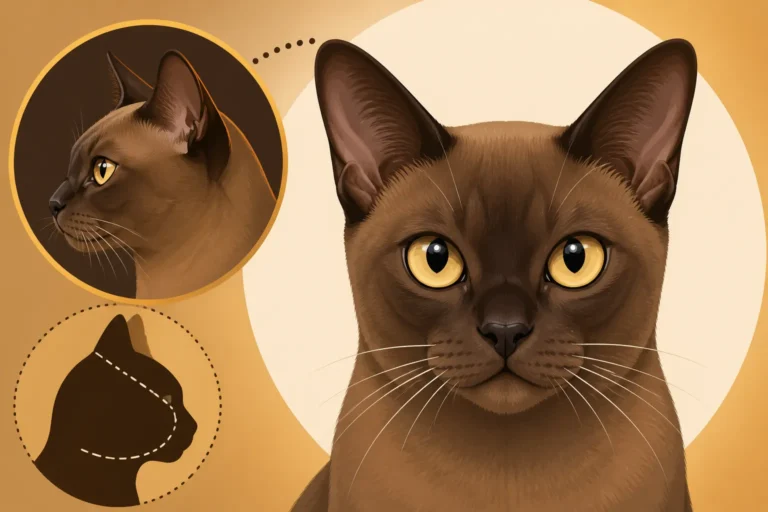
Today, when you see a Burmese cat, whether it's the slightly rounder-headed American type or the more elegant, wedge-shaped European type, you are looking at a direct descendant of that cat who stepped off a ship in San Francisco. The breed's health concerns, like its predisposition to diabetes, are also part of this genetic legacy, reminding us that careful breeding and ongoing health screening are crucial for its continued well-being. Modern owners can find all their Burmese care needs, from specialized low-carb foods to engaging toys, at trusted retailers like Chewy, ensuring the health and happiness of these special cats.
The Continued Fascination
The story of Wong Mau and the birth of the Burmese breed continues to fascinate cat enthusiasts, breeders, and geneticists alike. It's a remarkable example of how a single animal can contribute profoundly to both scientific understanding and the development of an entire species' diversity within domestication. The unique qualities of the Burmese, its "dog-like" personality, its vocal yet not overtly loud nature, and its intense bond with humans, all stem from its foundational characteristics.
The Burmese is celebrated not just for its beauty but for its incredible companionship. They are known for their playful nature, remaining kittenish well into old age, and their unwavering desire for human interaction. It's a testament to the success of Dr. Thompson's vision, starting with Wong Mau in San Francisco, that the Burmese cat remains one of the most cherished and distinctive breeds in the world. Their affectionate nature means they often need mental and physical stimulation, which is why many owners turn to online pet supply stores like Chewy for puzzle feeders or interactive toys to keep their clever companions engaged.
To help visualize the journey and the impact, here's a table summarizing key dates related to the Burmese's early history in San Francisco:
| Event | Year | Significance |
|---|---|---|
| Wong Mau arrives in San Francisco | 1930 | Introduction of the foundational Burmese cat to the Western world. |
| First breeding with Tai Mau (Siamese) | 1930 | Genetic revelation: Wong Mau is a hybrid, not purebred Siamese. |
| CFA provisional recognition | 1936 | Official acknowledgment of the Burmese as a distinct breed. |
| CFA suspension of registration | 1947 | Concerns over purity of bloodlines and Siamese crossbreeding. |
| CFA reinstatement of registration | 1956 | Re-establishment of the breed with stricter purity standards. |
The rich history of the Burmese, beginning with Wong Mau's arrival in San Francisco, is a testament to the dedicated individuals who saw the potential in this unique feline. From her journey across the Pacific to the detailed genetic studies that followed, the Burmese has a story as captivating as the cats themselves. Whether you're a long-time admirer or considering welcoming one into your home, understanding their origins deepens the appreciation for these wonderful companions. When preparing for a new Burmese kitten, consider checking out online resources and stores like Chewy for kitten-specific food and toys to ensure a healthy start. This breed is truly a living piece of feline history, evolving from that crucial year in San Francisco.
Disclaimer
This article is for general informational purposes only and does not constitute professional advice. Laws, prices and regulations vary by location and change over time. Consult a qualified professional for guidance on your specific situation.