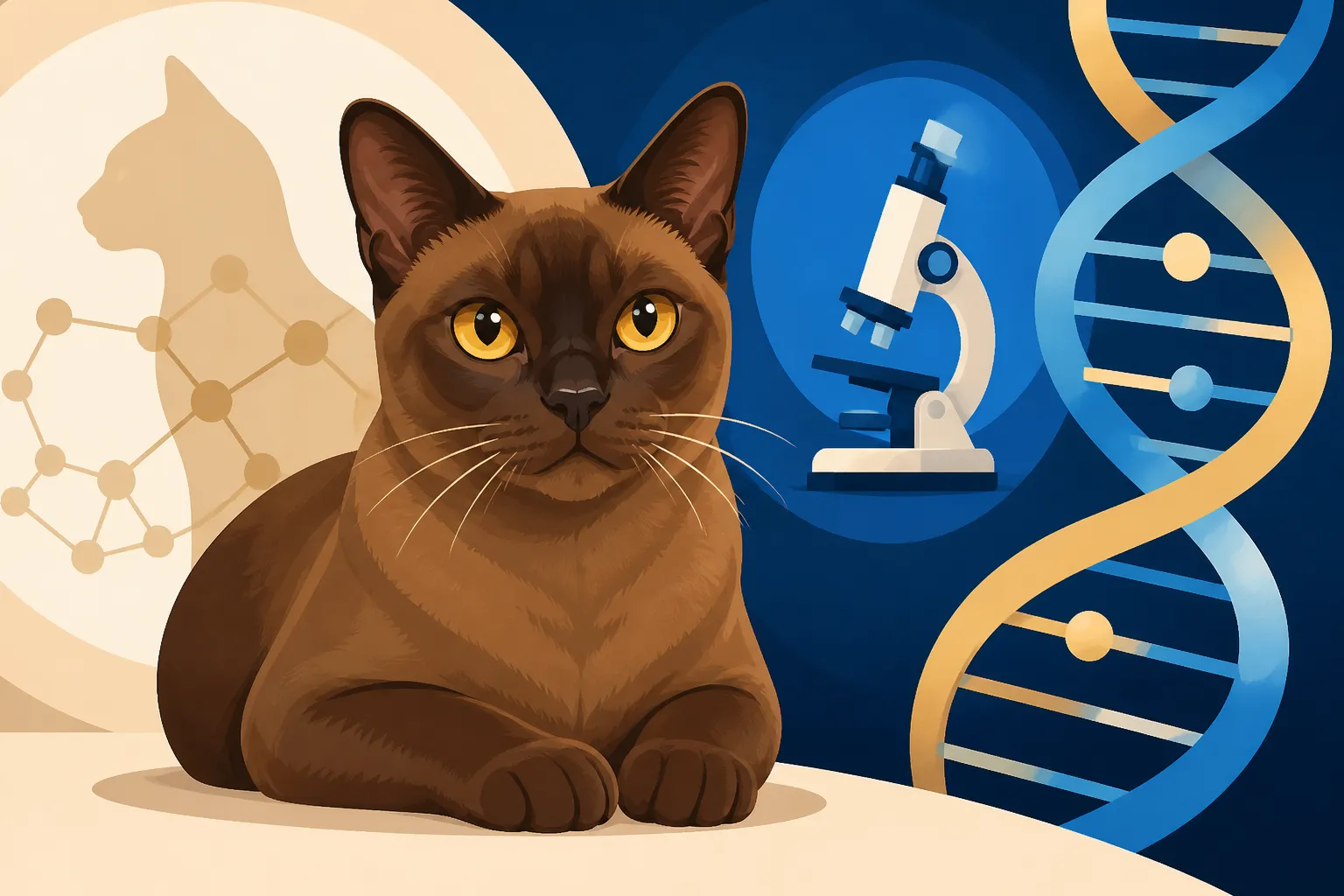
Why the Burmese Was the First Breed Studied by Geneticists
If you've ever gazed into the soulful, golden eyes of a Burmese cat, you've probably been captivated by their sleek, muscular build and that distinctive, rich brown coat. What you might not realize is that this stunning feline isn't just a beloved companion; it's a living piece of scientific history. Back in the early 20th century, the arrival of a single cat from Burma sparked a genetic mystery that laid the groundwork for how we understand feline inheritance today. This guide will take you back to the very beginning, exploring why this unique breed became the first cat to be rigorously studied by geneticists, unraveling mysteries that are still foundational to cat breeding.
The Enigmatic Arrival of Wong Mau
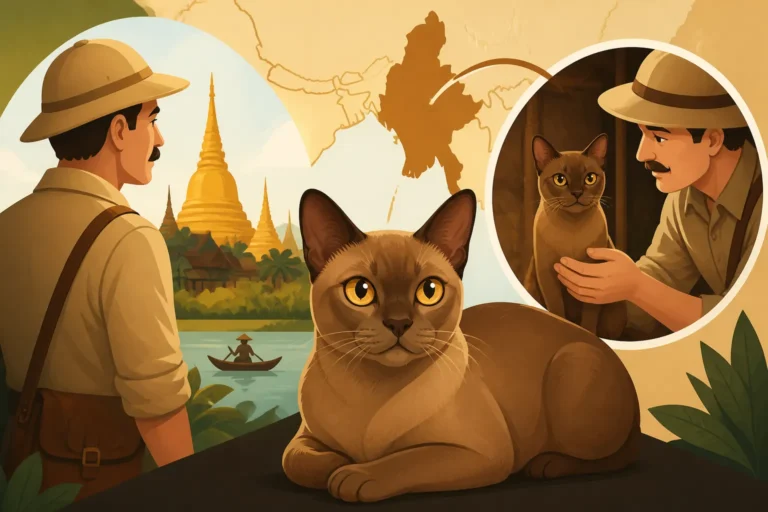
The story of the Burmese cat, and its pivotal role in feline genetics, really begins with one extraordinary individual: a small, dark-brown female cat named Wong Mau. She arrived in San Francisco in 1930, brought from Rangoon (now Yangon), Burma, by a retired U.S. Navy doctor named Dr. Joseph C. Thompson. Dr. Thompson was immediately fascinated by her appearance, which was unlike any cat he had ever seen. She wasn't a Siamese, though she shared some similarities, and she certainly wasn't a standard domestic shorthair. Her coat was a rich, warm brown, darker at the points (ears, face, paws, tail) but not nearly as contrasty as a Siamese, and her body was a lighter shade of that same brown, lacking the distinct pale cream body and dark points of a true Siamese. This intermediate coloring was the first clue to the genetic puzzle she represented.
What Made Wong Mau So Unique?
Wong Mau's appearance was a visual conundrum. She possessed a short, fine coat that felt like satin – a trait that would become a hallmark of the breed. Her eyes were a captivating gold, and her build was surprisingly solid and muscular for her size. She was often described as feeling "a brick wrapped in silk." But it was her color that truly set her apart. While she exhibited some of the "pointed" characteristics seen in Siamese cats, her overall coloration was much deeper and more uniform across her body. She had dark brown points, but her body wasn't cream; it was a warm, medium brown. It was this intriguing blend of traits, hinting at something familiar yet distinctly new, that caught Dr. Thompson's attention and ignited his scientific curiosity. He was determined to understand the genetic basis of her unique phenotype, a term that describes the observable physical properties of an organism.
Dr. Thompson's Initial Observations
Dr. Thompson wasn't just a cat lover; he was a scientist with a keen eye for detail. He meticulously observed Wong Mau, noting every aspect of her physical makeup. He recognized that her coloring hinted at a genetic link to the Siamese, a breed whose colorpoint genetics were already somewhat understood. However, Wong Mau's less extreme contrast suggested a modification or a different allele at the same gene locus responsible for the Siamese pattern. He theorized that Wong Mau might represent a previously unstudied mutation or a hybrid combination. This wasn't just about admiring a beautiful cat; it was about seeking to understand the underlying biological mechanisms that produced such distinct beauty. This dedication to scientific inquiry, even in the realm of cat breeding, was what set the stage for the Burmese to become a groundbreaking subject.
A Living Genetic Puzzle: The Burmese's Unique Coloring
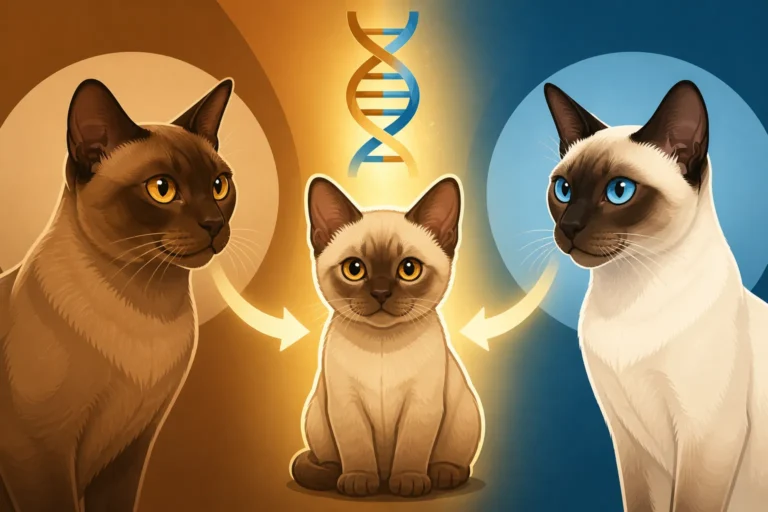
The real "aha!" moment, and what propelled Wong Mau into the scientific spotlight, came when Dr. Thompson decided to breed her. To understand her unique coloring, he knew he had to cross her with a cat whose genetics were well-established and whose offspring would reveal the hidden traits Wong Mau carried. He chose a Seal Point Siamese male, a known quantity in the world of cat genetics, characterized by its pale body and very dark brown points. This strategic mating was a classic genetic experiment designed to reveal recessive or intermediate traits.
Why the First Burmese Was Bred to a Siamese
Breeding Wong Mau to a Siamese was a stroke of genius, scientifically speaking. If Wong Mau was a purebred cat with a distinct new color gene, the offspring would likely all look similar to her, or a blend of her and the Siamese, with a predictable pattern. If she was a hybrid, the first litter would reveal a wider range of possibilities, demonstrating the segregation of traits. The goal was to see what genes Wong Mau was carrying that might be "hidden" by her outward appearance. This particular choice of mate, a well-understood Siamese, allowed for a clear baseline comparison. Why the First Burmese Was Bred to a Siamese explains this in more detail.
The Revelation of the First Litter
The results of that initial mating were nothing short of revolutionary. Wong Mau produced kittens with three distinct color patterns:
- Siamese-pointed kittens: These looked exactly like their Siamese father, with light cream bodies and dark brown points.
- Kittens like Wong Mau: These had the intermediate, rich brown body with darker points, just like their mother.
- Solid dark brown kittens: These were an entirely new color, with no visible points, a deep, uniform sable brown all over.
This single litter provided irrefutable evidence of Wong Mau's unique genetic makeup. It revealed that she was heterozygous, meaning she carried two different versions of a gene for coat color. One version contributed to the Siamese point coloration, and the other was a previously unidentified allele that produced the intermediate Burmese coloration. The solid dark brown kittens were the homozygous expression of this new Burmese allele. What the First Burmese Litter Told Thompson truly opened up the understanding of feline coat color genetics.
Dr. Joseph Thompson's Pioneering Breeding Program
Armed with these fascinating results, Dr. Thompson, in collaboration with geneticist Clyde Keeler of Harvard Medical School and Virginia Cobb, a geneticist, embarked on a systematic breeding program. This wasn't just casual backyard breeding; it was a rigorous scientific endeavor. They continued to breed Wong Mau and her offspring, carefully tracking every mating and every kitten's appearance. Their goal was to isolate and stabilize the distinct genetic traits observed in the first litter.
Identifying the cb Allele
Through careful observation and further breeding experiments, the geneticists were able to identify the specific gene responsible for the Burmese coloration. It was designated as the cb allele, standing for "Burmese color." They determined that this allele was part of the albino series (C locus), which also includes the C allele (full color) and the cs allele (Siamese colorpoint).
Here's a simplified breakdown of how these alleles interact, which was a groundbreaking discovery for feline genetics:
| Genetic Combination | Appearance |
|---|---|
| CC | Full color (e.g., solid black, tabby) |
| Ccb | Full color, carries Burmese (appears full color but can produce Burmese) |
| Ccs | Full color, carries Siamese (appears full color but can produce Siamese) |
| cbcb | Burmese (sable, champagne, blue, platinum) |
| cbcs | Tonkinese (mink pattern, intermediate) |
| cscs | Siamese (pointed pattern) |
This table beautifully illustrates how Wong Mau herself was likely a cbcs genotype, visually presenting as Burmese. When bred to a cscs Siamese, she could produce cscs (Siamese), cbcb (Burmese, though the "solid dark brown" cats would also be cbcb in genetic terms, just with a different modifying gene perhaps), and cbcs (like herself). This understanding of the cb allele was a huge leap forward. The cb Allele Is What Makes a Burmese Brown further elaborates on this genetic marvel.
The Collaborative Scientific Process
The work of Thompson, Keeler, and Cobb wasn't just about breeding cats; it was about applying the principles of Mendelian genetics to a domestic animal in a way that hadn't been done before for complex traits like color. They meticulously recorded pedigrees, analyzed phenotype ratios in litters, and used this data to deduce the underlying genotypes. Their findings were eventually published in scientific journals, solidifying the Burmese's place in genetic history. This kind of collaborative, hypothesis-driven research was revolutionary for cat breeding, transforming it from an art into a science. This scientific rigor established a new precedent for how new breeds could be understood and developed, moving beyond mere selection based on appearance.
The Lasting Legacy: What the Burmese Taught Geneticists
The detailed genetic study of the Burmese cat yielded insights that transcended the specific breed, establishing fundamental principles in feline genetics. The discovery and understanding of the cb allele provided a clear, real-world example of incomplete dominance and co-dominance in action, depending on how you view the intermediate Tonkinese coloration. It demonstrated how different alleles at a single gene locus could produce a spectrum of observable traits.
Expanding Our Understanding of Feline Genetics
Before the Burmese, the genetic basis for many cat traits was speculative. The systematic study of Wong Mau and her descendants provided concrete evidence for how genes are inherited and expressed. It helped geneticists understand the complex interplay of various alleles, not just for color but also how these might interact with other genes. This groundwork paved the way for future studies into other genetic traits, disease markers, and breed development. Why the Burmese Was the First Breed Studied by Geneticists is a title that truly captures the significance of this work.
The Foundation for New Breeds
The genetic understanding gleaned from the Burmese also had practical applications in the development of other breeds. For instance, the intermediate "mink" pattern, seen in cats that carry both the Burmese (cb) and Siamese (cs) alleles, was later recognized as its own distinct pattern and formed the basis for the Tonkinese breed. These cats, genetically cbcs, exhibit a beautiful blend of the Burmese and Siamese coloring, with more contrast than a Burmese but less than a Siamese. What the Founding Burmese Produced Two Breeds is a testament to this legacy. The systematic approach used with the Burmese set a precedent for how breeders and geneticists could collaborate to explore and develop new feline varieties with a scientific basis.
Impact on Responsible Breeding Practices
The scientific investigation into the Burmese's genetics had a profound and lasting impact on responsible breeding practices. It underscored the importance of understanding a cat's genetic background, not just its immediate pedigree. By identifying specific alleles and how they are inherited, breeders could make more informed decisions, aiming to preserve desired traits and avoid undesirable ones. This early genetic research highlighted the value of DNA testing, even before modern technology made it widely accessible, by demonstrating the power of understanding genotype to predict phenotype. This foundational knowledge encourages breeders today to perform comprehensive DNA panels on their breeding cats to screen for various hereditary conditions, ensuring the health and longevity of future generations. It really brings home the message of what What a Burmese Breeder Must Test Before Any Mating means in practice.
The Burmese cat, starting with Wong Mau, truly laid the genetic groundwork for our understanding of cat breeds. From a single fascinating feline, a century of genetic discovery unfolded, forever changing the cat fancy.
Disclaimer
This article is for general informational purposes only and does not constitute professional advice. Laws, prices and regulations vary by location and change over time. Consult a qualified professional for guidance on your specific situation.