How Many Burmese Existed in the 1930s
It’s natural to wonder about the origins of our beloved Burmese cats, especially how many there were when the breed was first getting started. We're so used to seeing them around today, full of personality and affection, that it's hard to imagine a time when they were incredibly rare. This guide delves into the astonishingly humble beginnings of the Burmese breed, exploring just how few of these special felines existed in the 1930s and why their numbers were so astonishingly small.
The Genesis of the Burmese: A Singular Beginning
When we talk about the Burmese cat in the 1930s, we are truly talking about one cat: Wong Mau. This beautiful, unique feline arrived in San Francisco in 1930, brought by a retired U.S. Navy doctor named Joseph C. Thompson. She wasn't part of a large importation or a new wave of exotic breeds sweeping the nation. She was, quite literally, a lone pioneer, a captivating mystery from Burma (modern-day Myanmar) whose striking appearance and gentle nature immediately piqued Dr. Thompson's scientific curiosity.
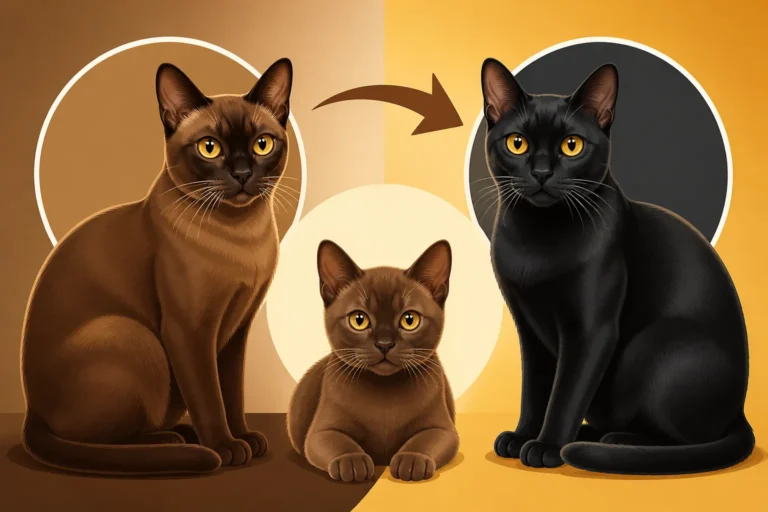
Imagine the scene: a solitary cat, a rich walnut-brown, unlike any other cat Dr. Thompson had seen. She wasn't a Siamese, though she shared some features, and she certainly wasn't a standard domestic shorthair. Dr. Thompson, with a keen eye for detail and a scientific mind, realized he had something truly special on his hands. He acquired Wong Mau with a clear purpose: to understand her genetic makeup and to ascertain if her unique traits could be consistently reproduced. This wasn't about establishing a large cattery; it was about scientific discovery, a focused, almost solitary endeavor.
At this point, the "Burmese population" in the Western world was precisely one: Wong Mau herself. Every single Burmese cat alive today can trace its lineage back to this remarkable matriarch. This singular origin story is fascinating because it means that for the first few years of the 1930s, "how many Burmese existed" was an answer that could be counted on one paw. Dr. Thompson’s dedication to understanding her genetics laid the groundwork for everything that followed, transforming one extraordinary cat into a beloved breed. You can learn more about her story in The Burmese Began With One Cat Called Wong Mau and Dr Joseph Thompson and the Burmese He Bought in 1930.
Building Blocks: The First Breeding Program and Population Nascence
Once Wong Mau arrived, Dr. Thompson didn't just admire her; he embarked on a meticulous breeding program to unravel her genetic secrets. This was the true birth of the Burmese breed, and it started with carefully chosen pairings, not with a rush to produce many kittens. The fundamental goal was scientific observation, not proliferation.
The Revelation of the cb Allele
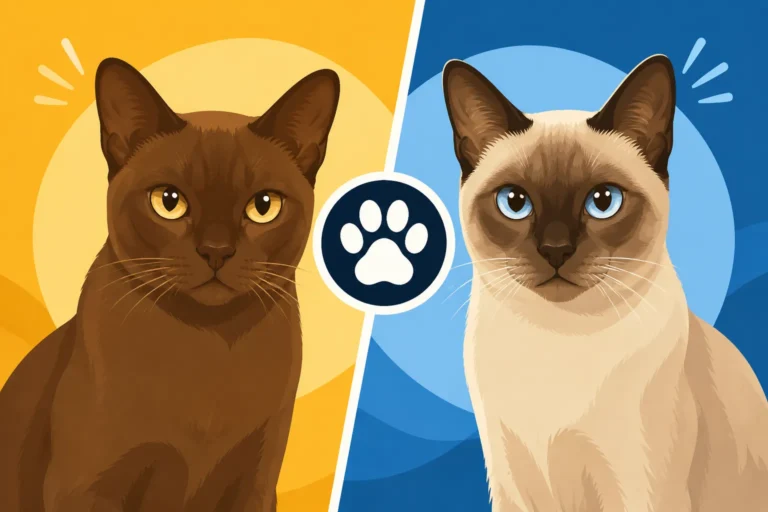
Dr. Thompson initially bred Wong Mau to a Siamese cat named Tai Mau. This might seem counterintuitive if you're trying to create a new breed, but it was a stroke of genius. The resulting litter was a revelation. It wasn't just a mix of Wong Mau and Siamese kittens. Instead, the litter produced three distinct types of kittens: some resembled Siamese, some were a rich dark brown like Wong Mau, and others were an intermediate shade, now recognized as the Tonkinese coloring. This experiment proved conclusively that Wong Mau herself wasn't a purebred in the traditional sense, but rather a natural hybrid carrying both the gene for her unique brown color (what we now call the Burmese allele, or cb) and the Siamese pointed gene (cs). This is a critical point when thinking about numbers; the "Burmese type" had to be isolated and then bred true. This scientific finding is discussed further in What the First Burmese Litter Told Thompson.
Building the Foundation Stock
With this new understanding, Dr. Thompson, alongside geneticists Dr. Clyde E. Keeler and Dr. Gordon C. Lansing, began the careful work of breeding the "Burmese type" kittens from those initial litters back to each other, or to other Siamese cats to consistently isolate the desired characteristics. This process was slow and deliberate. Imagine the painstaking record-keeping, the careful selection of breeding pairs, and the patience required. It wasn't a factory farm; it was a genetic laboratory.
The actual number of cats that could be considered "Burmese" during the mid-1930s was still incredibly small. We're talking about the specific kittens born from Wong Mau and her immediate offspring that exhibited the desired rich, warm brown coat and solid body color, combined with the characteristic golden eyes. By the mid-point of the decade, the total count of cats that genuinely represented the emerging Burmese breed, actively participating in the breeding program or being held as foundation stock, likely numbered only a couple of dozen at most. These were precious, carefully guarded animals, not widely available pets. If you wanted to understand Why the First Burmese Was Bred to a Siamese, it was all about these genetic revelations.
The Fledgling Years: Early Recognition and Numerical Realities
As the breeding program progressed and the unique "Burmese type" became more established and understood, the breed began to gain official notice. This step, while exciting, also highlighted just how small the true population was.
CFA's First Nod (and Subsequent Hesitation)
The Cat Fanciers' Association (CFA), one of the most prominent cat registries, officially recognized the Burmese breed in 1936. This was a monumental moment for the nascent breed. It meant that a specific standard had been set, and cats meeting that standard could be registered and shown. However, this recognition didn't immediately lead to a population explosion. The number of Burmese cats registered in these early years would have been exceedingly low, primarily comprising the foundation cats from Dr. Thompson's program and a very few early enthusiasts who acquired his stock. When CFA First Recognized the Burmese marked a formal acknowledgment, but the numbers remained minuscule.
The inherent rarity and desirability of these early Burmese, coupled with their unique genetic background, created challenges. Some breeders, seeing the popularity, tried to "create" Burmese-like cats by simply breeding Siamese, leading to inconsistent types and diluted pedigrees. This practice blurred the lines between genuine Burmese and cats that merely resembled them. Because of these challenges with maintaining breed purity and consistent pedigrees, the CFA actually suspended Burmese registration in 1947, a decision that had its roots in the late 1930s when issues of improper outcrossing started to become apparent. The concern was that too many cats were being registered as Burmese without truly meeting the genetic and conformational standards. Why CFA Suspended Burmese Registration was a direct result of these early growing pains.
A Look at Official Records
While exact figures are hard to pinpoint from such an early stage, we can infer that the number of registered Burmese in the 1930s was likely in the dozens, perhaps reaching a low hundred by the very end of the decade, globally. This wasn't a breed with thousands of registered cats; it was a tightly controlled, scientifically driven program. The focus was on solidifying the breed's characteristics, not on mass production. The cats were considered rare and valuable, primarily held by dedicated breeders and geneticists who understood the importance of maintaining the integrity of Dr. Thompson's work.
Beyond the Numbers: The Constraints on Early Burmese Population Growth
It’s easy to look at a small number and think it implies a lack of success, but for the Burmese in the 1930s, the limited population was a natural, and even necessary, consequence of its scientific beginnings and the challenges of establishing a new breed.
The Emphasis on Genetic Purity Over Proliferation
As previously discussed, the 1930s for the Burmese breed was fundamentally a decade of genetic exploration and stabilization. Dr. Thompson and his collaborators were dedicated to understanding the cb allele and how to consistently reproduce cats with Wong Mau's distinctive characteristics. This wasn't an era where breeders aimed for large litters or widespread distribution. It was about careful, selective breeding to ensure genetic purity and adherence to a developing standard. Every cat in the program was essentially a living data point. This meticulous approach naturally limited the overall number of Burmese cats being produced. The idea of "three generations pure" was introduced to ensure consistent type before full recognition, a rule that speaks volumes about the purity standards being aimed for. What Three Generations Pure Meant for the Burmese was a direct response to these concerns.
Limited Geographic Spread and Breeder Network
In the 1930s, the Burmese breeding program was primarily centered around Dr. Thompson in San Francisco, California. There wasn't a vast network of breeders across the United States, let alone internationally. The very concept of the breed was new, and the knowledge of how to breed for the correct type was specialized. This limited geographic footprint and small community of dedicated individuals inherently restricted the growth of the population. Unlike today, where you can find breeders across continents and order specialized cat food from places like Chewy with a few clicks, the resources and network were incredibly centralized and nascent. If you wanted to find out How Many European Burmese Breeders Work in America today, you'd find a relatively small but distributed network, a far cry from the 1930s.
The Rarity of the "True" Burmese
For much of the 1930s, owning a "Burmese" truly meant owning a direct descendant of Wong Mau, carefully bred to manifest her unique characteristics. This rarity made them extremely valuable and sought after by a select group of enthusiasts. They weren't readily available in pet stores or advertised widely. Their status as a new, scientifically developed breed meant they were more akin to precious, living artifacts of genetic discovery rather than common household pets. The very definition of a "Burmese" was still being solidified, making any count subject to what one considered a "true" example.
The Impact of Supply and Demand
With such a small, controlled breeding program and a specialized focus, the supply of genuine Burmese kittens was extremely limited. Demand certainly grew as word spread about these charming, affectionate, and distinctive cats, but the infrastructure for mass breeding simply didn't exist, nor was it the goal. Breeders were focused on quality and genetic integrity above all else. This meant that while interest might have been high, the actual number of cats available for pet homes was minimal, contributing to their overall scarcity. It's a stark contrast to how readily available information and pet supplies are now; imagine trying to get specialized dietary advice or products for your new Burmese from somewhere like Chewy back then! The challenges were immense.
In summary, the number of Burmese cats in the 1930s was strikingly small. It started with one exceptional cat, Wong Mau, and slowly grew to a few dozen, perhaps reaching just over a hundred by the decade's end. This wasn't due to a lack of interest, but rather the deliberate, scientific approach taken by Dr. Thompson and his colleagues to meticulously establish a unique and genetically sound new breed.
Here's a simplified look at the progression:
| Year Range | Key Event | Estimated "True" Burmese Population | Notes |
|---|---|---|---|
| Early 1930s | Wong Mau's arrival | 1 | The sole founding cat, focus on initial observation. |
| Mid-1930s | Initial breeding and genetic discoveries | 10-30 | Wong Mau's first litters, selective breeding to isolate the Burmese type. All cats were part of a controlled scientific program. |
| Late 1930s | CFA Recognition, limited spread | 30-100 | Formal recognition, but still very few breeders. Concerns about pedigree purity and outcrossing began to emerge, slowing widespread growth. Numbers remain very small, primarily concentrated in the hands of a few dedicated individuals and their immediate circles. |
This table illustrates that while the breed made significant strides in defining its identity, its physical presence in the world remained incredibly modest throughout its formative decade. It truly was a precious, rare gem in the cat fancy, a testament to its singular origin and the dedicated efforts of its founders.
Disclaimer
This article is for general informational purposes only and does not constitute professional advice. Laws, prices and regulations vary by location and change over time. Consult a qualified professional for guidance on your specific situation.