Whether a Tortie Burmese Is Recognized
A tortoiseshell Burmese can be recognized in some breed registries and excluded in others, which makes breeder listings and pedigree papers confusing. The key is to check the registry and Burmese type named on the cat’s records—not just the color description. This guide explains what “tortie Burmese” means, where the color is accepted, and what to verify before you buy or register a cat.
Is a tortie Burmese an officially recognized color
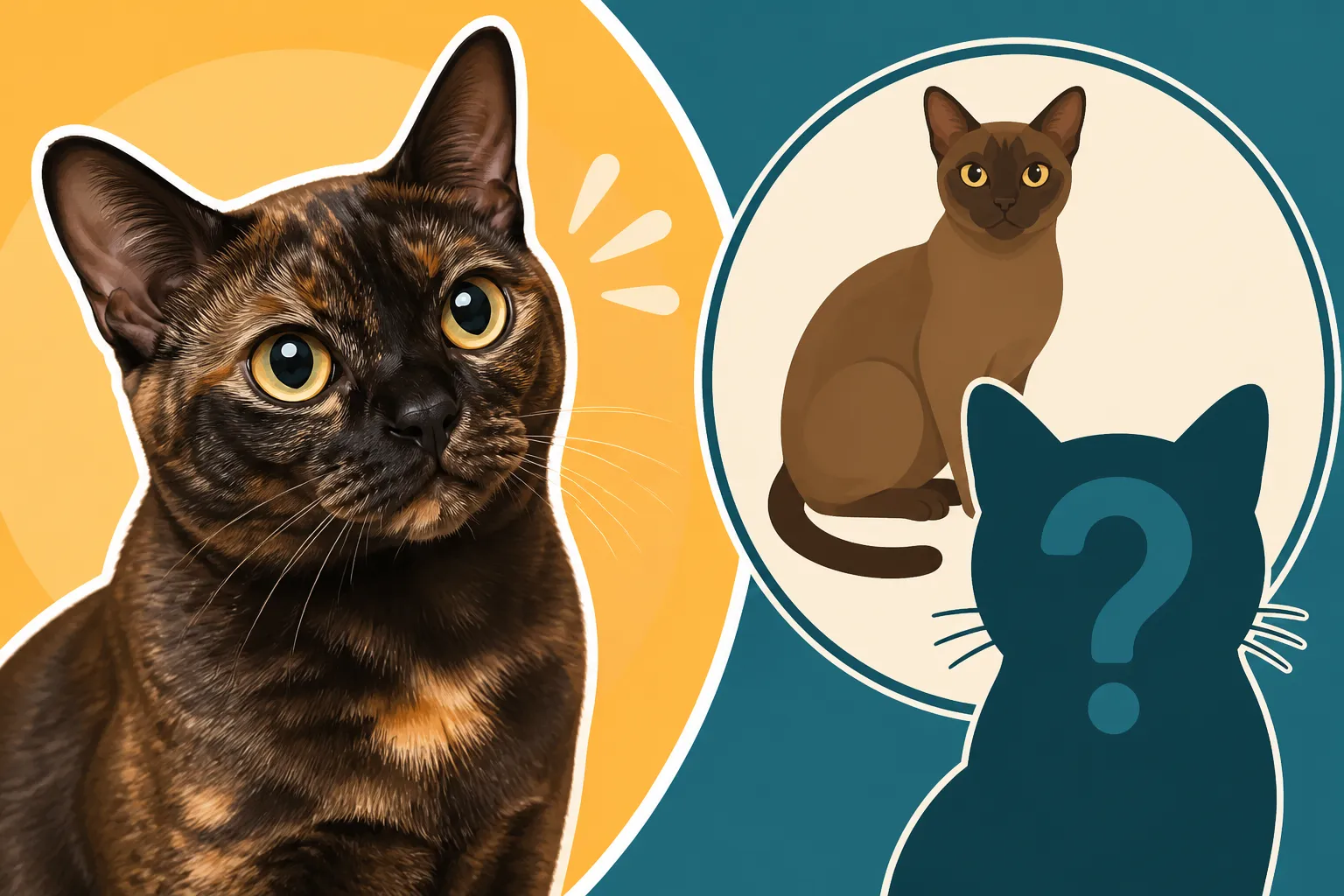
The short answer is: sometimes. “Tortie” describes a coat pattern that combines a red or cream color with another color, such as brown, blue, chocolate, or lilac. Whether that pattern is an accepted Burmese color depends on the breed standard used by the registry.
This is why two breeders can use the phrase “tortie Burmese” differently. One may be describing a Burmese registered in a system that accepts tortoiseshell colors. Another may be using “Burmese” informally to describe a cat with Burmese ancestry or appearance, even though the cat’s registry does not recognize tortie as an allowable Burmese color.
Recognition depends on the registry
In the United States, the Cat Fanciers’ Association, or CFA, recognizes four Burmese colors: sable, champagne, blue, and platinum. Tortoiseshell is not among those colors in its Burmese standard. So a cat with a tortie coat might still have Burmese ancestry, but that does not make the color CFA-recognized for Burmese registration.
Some registries and standards used outside the United States accept a broader range of Burmese colors, including red, cream, and tortoiseshell variations. A tortie may be recognized under those rules, provided the cat also meets the applicable Burmese requirements and has the appropriate pedigree.
For a closer look at the differences between standards, see Which Colors CFA Accepts in a Burmese and Which Colors the European Burmese Standard Adds. The practical takeaway is to ask which registry’s rules apply before interpreting a color label.
“Recognized” can mean two different things
A breeder may say that tortie Burmese are “recognized” because a particular registry accepts them. That statement does not automatically mean every registry accepts them, or that the cat can be transferred into any Burmese register as a tortie.
It also helps to separate two questions: Is the color accepted by the registry? And is the individual cat registered as a Burmese with a pedigree that supports that registration? A color description alone answers neither question. Ask to see the registry paperwork and confirm that the registered breed and color match the breeder’s description.
If you are comparing red, cream, and tortoiseshell listings, Whether a Red or Cream Burmese Is Recognized provides useful context. Those colors can be treated differently across standards, just like tortie patterns.
What tortoiseshell looks like on a Burmese
A tortie coat has patches or a mingled mixture of two color families: a non-red color and red or cream. The exact appearance varies from cat to cat. Some have clearly separated patches; others show a finely blended, almost mottled pattern.
On a Burmese, the coat’s color distribution and shade can make the pattern look different from the familiar tortoiseshell coloring seen in other cats. Burmese coats are shaped by the breed’s color genetics, so the pattern may not look as sharply contrasted as it does on a cat with a different coat type.
Common tortie color combinations
The non-red part of a tortie coat may be a darker or diluted color, while the other part is red or cream. Depending on the standard and terminology in use, you may encounter descriptions such as brown tortie, blue tortie, chocolate tortie, or lilac tortie. Names and accepted combinations are not universal, so a seller’s wording should be checked against the relevant registry.
A blue tortie, for example, combines blue coloring with cream or red-toned areas. A darker tortie may have brown or chocolate areas alongside red. The pattern can be uneven: a cat may have a large patch on one side of the face, scattered flecks on its legs, or subtle color changes that are easier to see in daylight.
Photos can help you understand what a breeder means, but they are not proof of registration. Lighting, camera settings, age, and the cat’s coat development can all change how the color appears in a picture. When the distinction matters for showing or breeding, rely on the recorded color and pedigree, not a photo caption.
Most tortie cats are female
Tortoiseshell coloring is closely associated with the X chromosome. Because female cats typically have two X chromosomes, they can inherit different color instructions on those chromosomes, creating the patchwork of red or cream and another color. That is why tortoiseshell cats are overwhelmingly female.
A male tortie is possible, but unusual. Such cats may have an atypical chromosome pattern, such as XXY, or another rare genetic explanation. A male tortie’s fertility and health should not be assumed from appearance; a veterinarian can advise if questions arise. For a pet owner, the main point is that a male tortie Burmese would be uncommon and deserves careful documentation rather than a casual assumption about its breeding status.
Coat color alone does not tell you whether a cat is healthy, well bred, or suitable for breeding. For background on how Burmese coat colors are described and recorded, see How a Burmese's Color Is Registered.
How to verify a tortie Burmese listing
If you see an advertisement for a tortie Burmese, pause before treating the wording as a guarantee of pedigree or show eligibility. Some listings use breed names loosely, while reputable breeders should be able to explain the cat’s type, registry, pedigree, and registered color clearly.
A seller who says “registered” should be able to identify the registry and provide paperwork that matches the kitten. If the seller cannot explain what the registration covers, ask follow-up questions before paying a deposit.
Ask these questions before you commit
Use direct, specific questions rather than relying on a listing headline:
- Which registry records the kitten?
- What breed and color are written on the registration or pedigree?
- Is the cat registered as Burmese, European Burmese, or another category?
- Does that registry accept tortoiseshell Burmese?
- Can you see the kitten’s pedigree and the parents’ registration details?
- Will the paperwork be transferred to you, and when?
The wording on a pedigree matters. A cat may be described in everyday conversation as Burmese, but its documents may list a different breed category, a color not accepted by a particular standard, or no pedigree registration at all. That may be perfectly understandable for a pet home, but it is not the same as a registered tortie Burmese eligible under a chosen registry’s rules.
To understand why the label can vary, read Which Registry Calls It a European Burmese and How to Tell Which Burmese Type You Are Buying. The distinction between Burmese types and registry systems can affect how a color is described, accepted, and recorded.
Watch for vague or contradictory claims
Be cautious if an advertisement promises that a kitten is “rare” or “show quality” but does not identify the registry or show the supporting pedigree. A rare-looking coat is not proof of a recognized color. Likewise, a breeder’s social media description may not match the official color recorded on the cat’s documents.
A mismatch does not automatically mean a seller is dishonest. It may reflect different terminology, a pet-only placement, or a registry that uses another standard. But the seller should be able to explain the difference plainly. If the paperwork says one thing and the sales description says another, ask for clarification in writing before making a decision.
Price should not be the deciding test of recognition. A tortie pattern does not, by itself, establish pedigree quality or justify a premium. If you are comparing costs, Whether a Tortie Burmese Is Priced Apart can help frame the question without treating color as a substitute for documentation.
Choosing a tortie Burmese for a pet home
If your priority is a loving companion rather than showing or breeding, the registry question may be less important than the cat’s health, temperament, and early care. Still, knowing what you are adopting helps you avoid surprises later, particularly if you plan to enter shows, register the cat, or breed.
Ask the breeder or rescue for the records they have, and keep copies of veterinary paperwork, vaccination history, and any pedigree documents. If the cat is being sold as a registered Burmese, make sure you understand exactly what the registration states. If the cat is a Burmese-type pet without registration, it is better to have that explained clearly than to rely on an ambiguous label.
Focus on health and care as well as color
A tortie pattern is a coat description, not a health assessment. Ask about veterinary checks, family health history, and the care the kitten has received. A responsible breeder should be willing to discuss the parents and provide relevant documentation rather than steering every conversation back to the kitten’s unusual color.
Once the cat comes home, ordinary supplies and routines matter more than the coat label. You might source food, litter, or a soft grooming cloth from a pet retailer such as Chewy, but choose products based on your veterinarian’s advice and the cat’s needs—not on marketing that suggests a special color requires a special diet. Keep receipts and care records alongside the cat’s registration paperwork.
If you are adopting rather than buying from a breeder, ask what is known about the cat’s background. A rescue may not have a pedigree or reliable information about exact breed ancestry, and that is not a reflection on the cat’s worth as a companion. You can still ask a veterinarian to assess general health and discuss an appropriate care plan. Chewy may be one convenient place to look for routine supplies, but a retailer’s breed or color description should not be treated as official proof of registration.
The simplest rule is to match the claim to the paperwork: a tortie Burmese is officially recognized only under a registry that accepts that color and records the cat accordingly. If your cat is a pet, you can enjoy the distinctive coat without needing a show-ring label. When you are buying, registering, or breeding, confirm the exact standard first—and keep the documents that support the claim. Chewy and other pet-supply retailers can help with everyday needs, but recognition comes from the registry and the cat’s records.
Disclaimer
This article is for general informational purposes only and does not constitute professional advice. Laws, prices and regulations vary by location and change over time. Consult a qualified professional for guidance on your specific situation.