Whether a Red or Cream Burmese Is Recognized
The world of Burmese cats is absolutely enchanting, isn't it? Their captivating eyes and that famously silky-smooth coat draw everyone in. But when you start looking into specific colors, especially those beyond the common browns and blues, things can get a little confusing. Many potential owners or even seasoned cat enthusiasts hear whispers of "red" or "cream" Burmese and wonder if these beautiful shades are actually recognized by the official cat registries. It's a valid question, and one that taps into the fascinating history and genetics of this incredible breed. This guide will delve deep into the nuances of Burmese coat colors, clarify which ones are officially recognized, and help you understand the differences between the American and European Burmese standards when it comes to these vibrant hues.
Understanding Burmese Color Genetics and Standards
When we talk about Burmese cat colors, we're really diving into a specific corner of feline genetics. The traditional Burmese look is iconic, and much of that comes down to a special gene that gives them their unique sepia tone. This isn't just about aesthetics; it's fundamental to how the breed developed and how various registries define it.
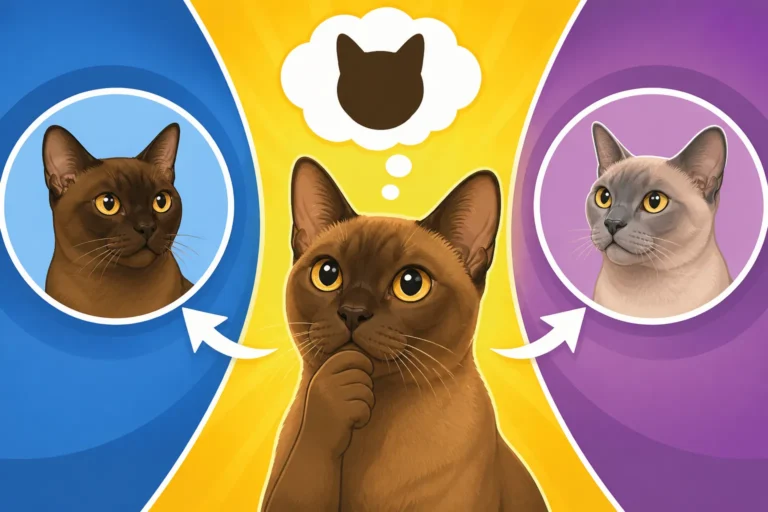
The Core Four: Sable, Champagne, Blue, and Platinum
For the American Burmese, the breed standard has historically been quite specific, recognizing only four distinct colors. These are the ones you'll most commonly see in shows and from reputable breeders adhering to the American standard set by associations like the Cat Fanciers' Association (CFA) or The International Cat Association (TICA) for its American type Burmese.
- Sable: This is the original, quintessential Burmese color. It's a rich, warm, dark brown, often described as a deep sepia. A sable Burmese kitten is usually born much lighter and gradually darkens as it matures. The color is deep and luscious, and it's what most people picture when they think of a Burmese. You might be surprised to learn that How a Burmese's Sable Darkens or Lightens With Age is a common question, as their color can indeed shift slightly throughout their lives, even with temperature changes.
- Champagne: A beautiful warm beige, often likened to milk chocolate. This color is the dilute version of sable. It's softer and lighter but still maintains that characteristic Burmese warmth and depth.
- Blue: A lovely soft grey with a subtle bluish cast. This is the dilute version of black, which combines with the Burmese sepia gene to create this unique hue. It's elegant and understated.
- Platinum: The lightest of the four, platinum is a pale, silvery-grey, almost lilac-grey. It's the dilute version of champagne, resulting in a stunning, ethereal coat.
These four colors are the bedrock of the American Burmese breed. They are the shades developed early in the breed's history and are central to its identity within the American cat fancy.
The Role of the Burmese Color Gene (cb allele)
The reason Burmese cats have these specific colors, and why they look different from, say, a solid black cat or a pointed Siamese, comes down to a particular gene. The Burmese carries two copies of the "cb" allele, which is responsible for the sepia restriction of color. This gene essentially modifies solid colors, making the body slightly lighter than the points (ears, face, paws, tail) where the body temperature is cooler. It's why a Burmese isn't truly solid like a Bombay, but rather has a subtle gradient that makes their coats shimmer with depth. Why a Burmese Is Darker at the Extremities explains this temperature-sensitive color expression in more detail. This genetic trait is what defines the classic Burmese appearance.
Why Red and Cream Are Different
Now, let's talk about red and cream. These colors are produced by an entirely different genetic mechanism. Red and cream in cats come from the "orange" gene, which is located on the X chromosome. This gene overrides other color genes, producing pheomelanin (red pigment) instead of eumelanin (black/brown pigment).
For a cat to be fully red or cream, it needs the orange gene. When you introduce this gene into a Burmese genetic background (which is focused on the sepia allele modifying black/brown pigments), you get a new set of colors. These red and cream colors weren't part of the original genetic makeup of Wong Mau, the founding Burmese cat, nor were they intentionally bred into the lines during the breed's formative years in America. Therefore, they fall outside the traditional American Burmese standard because their genetic origin isn't aligned with the historical development and established genetic profile of the American Burmese.
The Divergence of American and European Standards
It might seem strange that a cat of the same breed could have different recognized colors depending on where in the world it lives, but this is a fascinating aspect of cat fancy history. The American and European Burmese diverged significantly in their development, not just in appearance but also in accepted coat colors.
American Burmese: A Strict Color Palette
In the United States, cat registries like CFA have maintained a very conservative approach to the Burmese standard. The emphasis has always been on preserving the original "Wong Mau" type – a compact, rounded cat with a short muzzle and those deep, rich sepia-restricted colors. This strict adherence means that any colors beyond Sable, Champagne, Blue, and Platinum are not recognized for championship status.
For an American Burmese breeder, introducing red or cream genes would involve outcrossing to other breeds that carry the orange gene, which goes against the established purity of the American lines. The goal has been to maintain the integrity of the original four colors and the specific physical traits developed over decades. So, if you're looking at an "American Burmese" advertised as red or cream, it's generally not recognized within the official show circuit or traditional breeding programs. This also affects how breeders approach health screening; Which Tests Belong on a Burmese DNA Panel is critical, and a responsible breeder will stick to the standard colors to maintain predictability in both health and appearance.
European Burmese: Expanding the Rainbow
Across the Atlantic, particularly in the UK and Europe, the Burmese breed developed along a slightly different path after World War II. Breeders faced a smaller gene pool and, over time, made different choices regarding desired traits and acceptable colors. Registries like the Governing Council of the Cat Fancy (GCCF) in the UK and Fédération Internationale Féline (FIFe) in Europe embraced a broader range of colors.
The European Burmese standard accepts not only the traditional brown (their term for sable), chocolate (champagne), blue, and lilac (platinum), but also red, cream, and various tortoiseshell patterns. This divergence means that a red or cream Burmese is perfectly legitimate and recognized in Europe. These cats were developed through careful breeding programs, often incorporating "red factor" cats into the Burmese lines to introduce these new colors while maintaining the core Burmese temperament and physical characteristics, albeit with a slightly different body type and head shape compared to their American cousins.
The Tortoiseshell Connection
It's also worth noting the strong connection between red and cream and tortoiseshell (tortie) patterns. Since the orange gene is X-linked, female cats can inherit one X chromosome with the orange gene and one with a black/brown gene, resulting in a tortoiseshell pattern – patches of red/cream alongside black/brown/blue/chocolate. Male cats, having only one X chromosome, are either entirely red/cream or entirely black/brown/blue/chocolate (barring rare genetic anomalies).
In the European Burmese, tortoiseshell patterns in the recognized colors (like brown tortie, blue tortie, chocolate tortie, and lilac tortie) are also accepted. These tortie patterns always include patches of red or cream. So, while a solid red or cream male Burmese is possible, female red and cream Burmese often manifest as torties, making the acceptance of these colors even more integral to the European standard.
Navigating Recognition and Registration
Understanding what "recognized" truly means is crucial, whether you're a prospective owner, a breeder, or simply curious about the breed. It impacts everything from a cat's show eligibility to its pedigree value.
What "Recognized" Truly Means for a Breeder and Owner
For a breeder, recognition by a major registry means their cats can be shown, compete for titles, and contribute to the official lineage of the breed. It signifies that their breeding program aligns with the established standards and goals of the cat fancy. For an owner, buying a recognized color means you're getting a cat that fits the widely accepted definition of the breed, complete with a traceable pedigree and predictable characteristics.
When a color isn't recognized, it doesn't mean the cat isn't a Burmese or isn't healthy. It simply means it won't be eligible for championship classes in registries that adhere to stricter standards. These cats might still be registered as "household pets" or shown in non-championship categories, but they can't earn the same titles or contribute to the championship lineage. This distinction can significantly impact the perceived value and breeding potential of a cat. For new owners, this might not matter, but if you have future aspirations of showing or breeding, it's vital to be aware.
If You Encounter a "Red" or "Cream" American Burmese
If you come across a breeder advertising a "red American Burmese" or "cream American Burmese," it's a good idea to proceed with caution and ask many questions. Here's why:
- Mislabeling a European Type: Most likely, what they're calling an "American Burmese" is actually a European Burmese with those colors, or perhaps a crossbreed with American lines. The physical characteristics of the American and European Burmese types are distinct – the American being more cobby and rounded, the European often being longer and more elegant in body, with a different head shape. How to Tell Which Burmese Type You Are Buying can help you discern these differences.
- Mixed Breed: It could be a Burmese mix. While still a lovely cat, it wouldn't be a purebred Burmese according to established standards.
- Unrecognized Color Within an American Line: Very occasionally, a red or cream might pop up in an American line due to a hidden genetic anomaly or a very distant outcross that introduced the gene many generations ago. However, these would not be eligible for championship status.
- Asking for Pedigree and Testing: Always ask for full pedigree papers and genetic testing results. Reputable breeders should be transparent about their lines and genetic health screens, such as What a Burmese Breeder Must Test Before Any Mating. If they can't provide a pedigree proving pure European Burmese lineage for a red or cream cat, or if they insist it's an "American" red, it's a red flag.
Registering a Non-Standard Color
If you own a Burmese-type cat with a non-standard color (like a red or cream cat from American lines), you can typically still register it with some associations, but usually not for breeding or showing in championship categories. For instance, TICA might allow registration of a non-standard color as "New Trait" or "Experimental," acknowledging its heritage but not yet its championship status. Other registries might allow it as a "household pet."
This means your cat's health and happiness are paramount, not its show ring eligibility. If you have a Burmese-type cat with a non-standard color, it can still bring immense joy and be a beloved family member. Ensure you provide it with the best care, proper nutrition, and regular vet check-ups.
| Feature | American Burmese (Standard) | European Burmese (Standard) |
|---|---|---|
| Recognized Colors | Sable (Brown), Champagne (Chocolate), Blue, Platinum (Lilac) | Brown, Chocolate, Blue, Lilac, Red, Cream, Brown Tortie, Blue Tortie, Chocolate Tortie, Lilac Tortie |
| Head Shape | Round, short muzzle | Wedge, moderate muzzle |
| Body Type | Cobby, compact, heavily muscled ("brick wrapped in silk") | More elegant, moderate length, less extreme cobby |
| Registries | CFA, TICA (American Burmese category) | GCCF, FIFe, TICA (European Burmese category) |
| Red/Cream Status | Not recognized for championship | Fully recognized for championship |
The Practicalities of Owning a Red or Cream Burmese
No matter the color of their coat, a Burmese is a Burmese at heart. These cats are renowned for their incredibly affectionate, dog-like personalities. They are the ultimate companion cats, often described as "Velcro cats" because they want to be right by your side, always. So, while color recognition might matter in the show ring, it's the love and care you give that truly counts in the home.
Health and Temperament Are Paramount
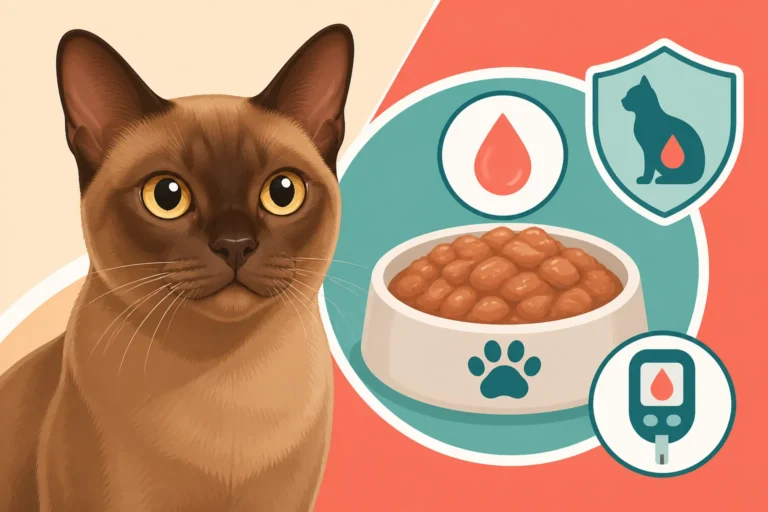
Regardless of whether your Burmese is sable, blue, red, or cream, their health and temperament remain the most important considerations. All Burmese cats, regardless of color, can be prone to certain breed-specific health issues. For example, they are predisposed to diabetes, making Why Portion Control Is Medical Care in a Burmese a vital part of their daily routine. They can also carry genes for conditions like hypokalemia or head defects. This is why choosing a reputable breeder who prioritizes health screening and provides guarantees is crucial, even if you are seeking a less common color. Don't let the allure of a rare color overshadow the importance of robust health and sound genetics. Look for a breeder who is open about their cats' health histories and performs all recommended DNA tests, as detailed in Which Diseases the Burmese Actually Carries.
The endearing "dog in a cat's body" personality of the Burmese shines through in every color. A red Burmese will be just as likely to ride on your shoulder or engage in a game of fetch as a blue one. A Burmese Is Still Playing at Fifteen illustrates their lifelong playful nature. Their need for companionship and interaction is a hallmark of the breed, so be prepared for a highly involved feline friend who thrives on human attention and companionship. This is why many breeders advocate for getting a pair, as Why Burmese Breeders Sell Them in Pairs helps prevent loneliness and anxiety.
Finding a Reputable Breeder for These Colors
If your heart is set on a red or cream Burmese, your best bet is to seek out breeders who specialize in European Burmese lines. These breeders are recognized by the relevant international registries (like GCCF or FIFe) and have a long history of carefully breeding for these colors within the European standard.
When contacting breeders:
- Ask about their breeding philosophy: Understand why they chose to work with these colors and how they maintain the breed's health and temperament.
- Request comprehensive health records: Ensure both parent cats have been screened for common Burmese genetic conditions. A good breeder will be transparent about their DNA panel results.
- Verify registration: Confirm that their cats are registered with an association that officially recognizes red and cream Burmese (e.g., GCCF, FIFe, or TICA under its European Burmese standard).
- Visit the cattery: If possible, visit to see the kittens and parents in person. Observe their living conditions and the cats' socialization. A good cattery will have happy, confident cats that are well-adjusted.
- Discuss diet and care: A good breeder will also provide advice on proper nutrition, especially given the breed's diabetes risk. High-quality, low-carbohydrate options align with a healthy Burmese diet.
Remember, a responsible breeder, regardless of the colors they produce, will always prioritize the health and welfare of their cats above all else. They'll also be transparent about the recognition status of their kittens' colors within various registries. Consider pet insurance from providers like Healthy Paws from the start, especially for a breed prone to certain conditions.
Feeding a Burmese, Regardless of Color
Regardless of their coat color, all Burmese cats share a common dietary need: a diet carefully managed for carbohydrate content. As we mentioned, Burmese cats have a higher predisposition to diabetes. This means that Why Carbohydrate Load Matters More in a Burmese is a scientific fact that every owner must take seriously.
Whether your Burmese is red, cream, or one of the traditional four, their food choices are a medical decision. Free-feeding dry kibble is generally discouraged for this breed. Instead, portion-controlled, high-protein, low-carbohydrate wet food is often recommended to help maintain a healthy weight and minimize diabetes risk. Companies like Chewy offer a wide selection of cat foods, making it easier to find suitable low-carb options. Always consult your veterinarian to establish the best dietary plan for your individual Burmese cat, paying close attention to their unique needs and activity level. Why a Burmese Should Never Be Free Fed is a cardinal rule for this breed, as it directly impacts their long-term health.
Disclaimer
This article is for general informational purposes only and does not constitute professional advice. Laws, prices and regulations vary by location and change over time. Consult a qualified professional for guidance on your specific situation.