Why Carbohydrate Load Matters More in a Burmese
For many Burmese cat owners, the biggest worry often revolves around their beloved feline friend's insatiable appetite. You might notice your Burmese always seems hungry, constantly begging for food, and then quickly gaining weight despite seemingly reasonable portions. This isn't just a quirky trait; it's a critical health concern, as the Burmese breed has a unique metabolic makeup that makes them significantly more susceptible to diabetes, with carbohydrate load in their diet playing an outsized role. This comprehensive guide will explain exactly why managing the carbohydrate content in your Burmese's food isn't just a good idea, but an essential part of their medical care, offering practical advice to keep them healthy and happy for years to come.
The Unique Metabolic Challenge of the Burmese
The Burmese cat, with its striking looks and affectionate personality, carries a secret within its genes: a heightened predisposition to certain metabolic challenges, particularly concerning how its body processes carbohydrates. This isn't something to overlook; it's a fundamental aspect of their physiology that every Burmese owner needs to understand.
Genetic Predisposition to Insulin Resistance
It's not just bad luck; there's a strong genetic component at play that makes the Burmese breed distinct. Studies have pointed to certain genetic markers that contribute to a higher risk of insulin resistance in these cats. Insulin is the hormone responsible for allowing sugar (glucose) from food to enter cells for energy. When a cat becomes insulin resistant, its cells don't respond as effectively to insulin, meaning the pancreas has to produce more and more of it to try and get the job done. This constant overwork eventually exhausts the pancreas, leading to insufficient insulin production and, ultimately, full-blown diabetes. For a Burmese, this genetic blueprint means their system is already working with a handicap, making dietary choices even more impactful.
The "Thrifty Gene" Hypothesis
One theory that helps explain the Burmese's metabolic quirks is the "thrifty gene" hypothesis. This idea suggests that, historically, the ancestors of the Burmese might have come from environments where food was often scarce. In such conditions, having genes that allowed them to efficiently store calories as fat during times of plenty would have been a significant survival advantage. While this was beneficial for their wild ancestors, it becomes a liability in our modern world of readily available, often calorie-dense, and carbohydrate-rich commercial cat foods. Their bodies are essentially programmed to hold onto energy, making them highly efficient at converting excess calories, particularly from carbohydrates, into fat. This efficiency, coupled with their genetic predisposition, creates a perfect storm for weight gain and metabolic disease.
Why Burmese are Different from Other Breeds
You might wonder why this is such a big deal for a Burmese when other cat breeds seem to handle their kibble just fine. While all cats are obligate carnivores and not naturally designed for high-carb diets, the Burmese's specific genetic makeup amplifies this general feline vulnerability. Their response to dietary carbohydrates is more pronounced. Where another cat might develop a mild intolerance or some digestive upset, a Burmese is significantly more likely to progress to serious metabolic issues like diabetes. It's not just about a higher chance of getting diabetes; it's about how rapidly and severely their system can be overwhelmed. This is why you'll often hear veterinarians and breeders stress that Feeding a Burmese Is a Medical Decision, Not a Preference. Their unique physiology demands a more proactive and specific dietary approach.
Understanding Carbohydrates in a Cat's Diet
Before we dive deeper into why carbs are such a big deal for Burmese cats, it's important to understand what carbohydrates are, why they're in commercial cat food in the first place, and why a cat's biology isn't really built to handle them efficiently.
What Are Carbohydrates and Why Are They in Cat Food?
At its simplest, carbohydrates are organic compounds that serve as the primary energy source for many animals, including humans. In cat food, they typically come in the form of starches (from grains like corn, wheat, rice, potatoes, peas) and sugars. Manufacturers often include carbohydrates in cat food for several reasons: they are a cheaper source of calories than meat protein, they act as binders to create kibble shapes, and they can make food more palatable to some cats. They also contribute to the texture and stability of processed foods. However, this convenience for manufacturers doesn't necessarily translate into health benefits for your feline.
The Feline Carnivore: Why a Cat's Body Isn't Designed for Carbs
Cats, including your beautiful Burmese, are obligate carnivores. This isn't just a fancy term; it defines their entire digestive and metabolic system. Their bodies are designed to derive energy primarily from animal protein and fat, not carbohydrates. For instance, cats lack significant amounts of salivary amylase, an enzyme found in the saliva of omnivores (like humans and dogs) that starts carbohydrate digestion in the mouth. Their digestive tracts are shorter and their liver enzymes are geared towards processing protein and fat. When cats do need glucose (which their brains and some cells require), they primarily perform gluconeogenesis – converting protein and fat into glucose – rather than relying on dietary carbohydrates. Feeding them a diet high in carbohydrates forces their system to constantly process something it's not well-equipped for, putting a significant strain on their pancreas and other organs.
Hidden Carbs: The Surprising Sources in Commercial Foods
You might think you're choosing a healthy food, but carbohydrates can be hidden in unexpected places. Dry kibble, by its very nature, almost always contains a significant amount of carbohydrates because starches are necessary to form the kibble pieces. Even some wet foods, particularly those with gravy or thick sauces, can contain higher carbohydrate levels than you'd expect. Many popular cat treats are also packed with sugars and starches, making them delightful for cats but detrimental for their long-term health, especially for a Burmese. Even some veterinary "prescription" diets, formulated for various health issues, can be surprisingly high in carbohydrates, making label-reading an absolutely vital skill for any Burmese owner. Always remember that for your Burmese, Why Low Carbohydrate Food Matters for a Burmese.
The Link Between Carbohydrates and Diabetes in Burmese Cats
This is where the rubber meets the road for our beloved Burmese. Their unique metabolism, combined with a diet high in carbohydrates, creates a direct pathway to feline diabetes, a condition that is unfortunately far too common in this particular breed.
Insulin's Role and the Burmese Predicament
Every time your cat eats carbohydrates, its body breaks them down into glucose, which enters the bloodstream. In response to this rise in blood sugar, the pancreas releases insulin to usher the glucose into cells. For a cat on a high-carbohydrate diet, especially a genetically predisposed Burmese, this means constant, significant insulin spikes. Imagine your pancreas as a diligent worker. If it's constantly being asked to work overtime, day in and day out, it will eventually get tired. In the case of the Burmese, their cells start becoming less responsive to insulin's signal – this is insulin resistance. The pancreas, trying to compensate, ramps up insulin production even further, leading to even more strain. It's a vicious cycle that their system is poorly equipped to handle.
Progression to Type 2 Diabetes
This persistent state of high insulin demand and insulin resistance eventually leads to pancreatic exhaustion. The beta cells in the pancreas, which produce insulin, simply can't keep up with the overwhelming demand. When they fail, the cat's body can no longer effectively regulate blood sugar, and glucose levels in the blood remain chronically high. This is the definition of Type 2 diabetes, a condition where the body either doesn't produce enough insulin or doesn't use insulin properly. For a Burmese, this progression can be alarmingly quick compared to other breeds, turning a seemingly minor dietary oversight into a serious, lifelong medical condition. You might start noticing signs like increased thirst and urination, which means Why a Burmese Drinking More Needs Testing That Week.
The Higher Statistical Risk in Burmese
It cannot be stressed enough: the Burmese has one of the highest rates of diabetes among all cat breeds. This isn't anecdotal; it's backed by significant veterinary research. Why a Burmese Is Four Times More Likely to Become Diabetic isn't an exaggeration; some studies indicate even higher figures. This elevated risk means that dietary prevention isn't just a suggestion; it's a critical preventative health measure that begins the moment you bring your Burmese kitten home. Ignoring this breed-specific vulnerability is, unfortunately, setting your cat up for a difficult future. The breed's popularity in places like Australia and Europe, where breeding lines may have inadvertently concentrated this genetic predisposition, further highlights the global impact of this issue.
Identifying High-Carbohydrate Cat Foods
Navigating the pet food aisle can feel like deciphering a secret code. Labels are often designed to appeal to human sensibilities rather than accurately reflecting what's best for a carnivore. For a Burmese owner, learning to identify high-carbohydrate foods is a superpower in preventative healthcare.
Deciphering the Guaranteed Analysis
The "Guaranteed Analysis" on pet food labels provides percentages for crude protein, crude fat, crude fiber, and moisture. What it often doesn't explicitly state is the carbohydrate content. This is where a little math comes in handy. You can estimate the carbohydrate content by subtracting the listed percentages for protein, fat, fiber, and moisture from 100%.
Example Calculation (Dry Matter Basis):
Let's say a can of wet food lists:
- Crude Protein: 10%
- Crude Fat: 5%
- Crude Fiber: 1%
- Moisture: 80%
First, calculate the dry matter content: 100% – 80% moisture = 20% dry matter.
Now, convert the listed nutrients to a dry matter basis:
- Protein (DM): (10% / 20%) * 100% = 50%
- Fat (DM): (5% / 20%) * 100% = 25%
- Fiber (DM): (1% / 20%) * 100% = 5%
Finally, estimate carbohydrates on a dry matter basis:
- Carbohydrates (DM): 100% – 50% (protein) – 25% (fat) – 5% (fiber) = 20%
For a Burmese, we are generally aiming for a diet where carbohydrates are well below 10-12% on a dry matter basis, ideally even lower. A food with 20% carbs is already pushing it, and many dry kibbles can easily be 25-40% or even higher!
Here's a quick reference table for interpreting guaranteed analysis for carbohydrate estimation:
| Nutrient Category | Typical % (As Fed) | Dry Matter % Calculation | Impact on Burmese |
|---|---|---|---|
| Protein | 8-12% (Wet), 30-45% (Dry) | (As Fed % / Dry Matter %) x 100 | Higher is generally better for muscle, satiety. |
| Fat | 4-8% (Wet), 15-25% (Dry) | (As Fed % / Dry Matter %) x 100 | Essential for energy, but too high can cause weight gain. |
| Fiber | 0.5-2% (Wet), 1-5% (Dry) | (As Fed % / Dry Matter %) x 100 | Low amounts are fine; too high can reduce nutrient absorption. |
| Moisture | 70-85% (Wet), 5-10% (Dry) | Crucial for calculating Dry Matter (DM) basis. | Higher moisture content generally means lower carb content (better). |
| Carbohydrate (Estimated) | Calculate as 100 – (Protein+Fat+Fiber+Moisture) | Calculate as 100 – (Protein DM + Fat DM + Fiber DM) | Lower is always better for Burmese; aim for <10-12% DM. |
Ingredient Lists: Spotting Fillers and Starches
Beyond the numbers, the ingredient list is your narrative guide. Ingredients are listed by weight, so the first few items tell you the most. For a Burmese, you want to see meat as the very first ingredient, followed by other animal-based proteins.
Ingredients to Watch Out For:
- Grains: Corn, wheat, barley, rice, oats. These are common fillers and high in carbohydrates.
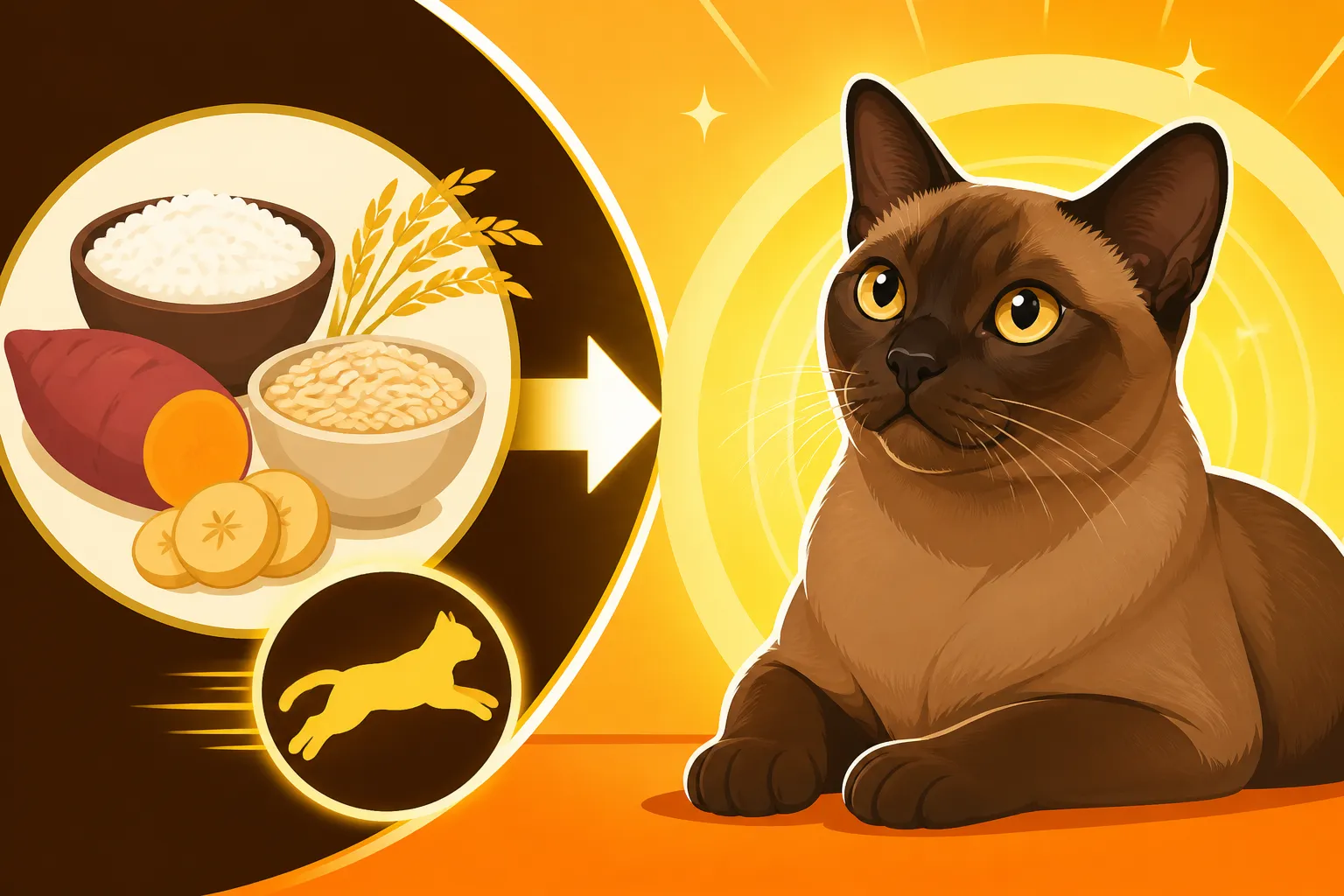
- Starches: Potatoes, sweet potatoes, peas, tapioca, lentils. While often seen in "grain-free" foods, these are still carbohydrate-dense and problematic for an obligate carnivore.
- Sugars: Dextrose, corn syrup, molasses, even fruit (like cranberries or blueberries if high up on the list). These add to the carbohydrate load and are unnecessary for cats.
- Vegetables (in large quantities): Carrots, pumpkins, squash. While some small amounts are okay, if they're high on the list, they can contribute significantly to the carb count.
Remember, a food can be "grain-free" but still loaded with potatoes or peas, making it just as high-carb as a traditional kibble. Don't be fooled by marketing jargon! Look for actual animal protein sources as the dominant ingredients.
The Myth of "Grain-Free" as Low-Carb
This is a huge misconception that trips up many well-meaning pet owners. "Grain-free" simply means no grains like corn, wheat, or rice. Unfortunately, many manufacturers replace these with other carbohydrate-rich ingredients like potatoes, sweet potatoes, tapioca, or peas to maintain kibble structure or add bulk. These alternatives can be just as problematic, if not more so, than grains when it comes to carbohydrate load for a Burmese cat. Always check the full ingredient list and, if possible, do the carbohydrate calculation. A truly low-carb diet for a Burmese will be meat-based, often found in high-quality wet foods. You can find many options on online retailers like Chewy or Amazon, but you'll still need to scrutinize the labels carefully.
Transitioning Your Burmese to a Low-Carbohydrate Diet
Switching your Burmese's diet needs to be a thoughtful and gradual process. Cats, by nature, can be finicky eaters, and sudden changes can lead to digestive upset or, worse, a complete refusal to eat, which can be dangerous.
Slow and Steady Wins the Race
The golden rule for any dietary change in cats, especially for a Burmese, is to do it slowly. Aim for a transition period of 7-10 days, or even longer if your cat is particularly sensitive or set in their ways. Start by mixing a very small amount of the new low-carb food with their current food. Over several days, gradually increase the proportion of the new food while decreasing the old. Monitor your Burmese closely for any signs of digestive upset like vomiting or diarrhea, or if they're simply not eating. If you notice any issues, slow down the transition even further. Patience is key here; rushing the process will only create stress for both you and your cat.
Choosing the Right Wet Food
For most Burmese cats, especially those prone to or already managing diabetes, a high-quality, low-carbohydrate wet food is the ideal choice. Wet food naturally has a higher moisture content, which is beneficial for feline urinary health and can help them feel fuller. When selecting wet food, prioritize options that list meat (chicken, turkey, beef, fish) as the first ingredient, contain minimal plant-based fillers, and, crucially, have a low estimated carbohydrate content (ideally under 10% on a dry matter basis). Look for brands specifically marketed as high-protein and grain-free, but always verify the actual carbohydrate percentage using the calculation method described earlier. Many excellent options are available from reputable pet food suppliers, and you can conveniently compare nutritional information and ingredients on platforms like Chewy or Amazon to find suitable choices.
Avoiding Relapses: The Pitfalls of Treats and Occasional "Cheats"
Once your Burmese is on a low-carb diet, consistency is paramount. Even small amounts of high-carb treats or "stolen" food can undo your hard work and spike their blood sugar. It's incredibly tempting to give in to those insistent Burmese eyes, especially when they're begging. Remember, Why a Burmese Never Stops Asking for Food is partly due to their genetic makeup. However, it's crucial to resist. If you must give treats, choose freeze-dried meat treats (single-ingredient chicken, salmon, etc.) which are naturally low in carbohydrates. Even then, offer them sparingly and factor them into their daily caloric intake to prevent weight gain. Educate everyone in the household about the importance of strict adherence to the diet. A small "cheat" for a human might be harmless, but for a diabetes-prone Burmese, it can have significant consequences.
Managing a Diabetic Burmese Cat Through Diet
If your Burmese has already been diagnosed with diabetes, diet isn't just a preventative measure; it becomes a cornerstone of their treatment. A carefully managed low-carbohydrate diet can dramatically impact their prognosis and quality of life.
Diet as a Cornerstone of Diabetic Treatment
For many diabetic cats, particularly Burmese, dietary management is as critical as, if not more important than, insulin therapy. A low-carbohydrate diet helps to stabilize blood glucose levels by reducing the amount of glucose absorbed from meals, thereby reducing the demand on the struggling pancreas. In some cases, especially if diabetes is caught early and managed aggressively with diet and appropriate medication, it's possible for a cat to go into diabetic remission. This means they no longer require insulin injections, or their dose can be significantly reduced. This often comes down to Which Diet Puts a Burmese Into Remission, which is almost always a strict low-carb, high-protein wet food.
Working with Your Veterinarian on a Dietary Plan
While this guide provides valuable information, managing a diabetic cat requires close collaboration with your veterinarian. They will help you formulate an individualized dietary plan tailored to your Burmese's specific needs, considering factors like their current weight, overall health, and severity of diabetes. Your vet will also guide you on how to introduce the new diet and monitor your cat's blood glucose levels during the transition. Regular check-ups and glucose monitoring are essential to adjust insulin dosages (if needed) and ensure the diet is effectively managing their condition. Remember, How a Diabetic Burmese Is Diagnosed involves specific tests, and your vet's expertise is irreplaceable in interpreting these and guiding treatment.
Supporting Remission and Preventing Recurrence
Achieving diabetic remission is a huge victory, but it's not a license to revert to old dietary habits. A Burmese who has achieved remission on a low-carb diet must remain on that diet for life to prevent recurrence. Any deviation, even occasional high-carb treats, can quickly lead to a relapse. This long-term commitment involves consistently providing the prescribed low-carb food, diligently avoiding forbidden treats, and continuing regular veterinary check-ups to monitor their health. Even in remission, the genetic predisposition to insulin resistance remains, making strict dietary adherence crucial for maintaining their health and preventing the return of active diabetes. It might feel restrictive, but the health and well-being of your Burmese depend on it.
The Importance of Consistent Portion Control
Even with the perfect low-carbohydrate food, the quantity your Burmese consumes is equally critical. For a breed so prone to weight gain and diabetes, portion control isn't just about preventing obesity; it's a fundamental aspect of their medical care.
Why Even Low-Carb Food Can Lead to Weight Gain
It's a common misconception that if a food is "healthy" (like low-carb wet food), you can feed unlimited amounts. Not so for the Burmese! While low-carb foods are metabolically superior, they still contain calories. The Burmese has a strong drive to eat and a highly efficient metabolism, meaning they can easily consume more calories than they burn, even on a perfectly formulated diet. Excess calories, regardless of their source, will be stored as fat, and we already know How Much Weight Raises a Burmese's Diabetes Risk. Therefore, simply switching to low-carb isn't enough; you must also meticulously control how much your Burmese eats.
The Crucial Role of Regular Weigh-Ins
To effectively manage your Burmese's weight and prevent overfeeding, regular weigh-ins are non-negotiable. Aim to weigh your Burmese weekly, or at least bi-weekly, using a small kitchen scale for accuracy. How to Weigh a Burmese Accurately at Home involves getting them comfortable with the scale and perhaps using positive reinforcement. Keep a log of their weight to track trends. Even small fluctuations can be an early warning sign of either overfeeding or, conversely, a potential health issue if weight is dropping unexpectedly. Your veterinarian can help you determine an ideal healthy weight range and target calorie intake for your individual cat. Remember, Why a Burmese Is Heavier Than It Looks, so don't just go by how they feel in your arms; the scale doesn't lie.
Structured Meal Times vs. Free Feeding
For a Burmese, free feeding (leaving food out all day) is a definite no-go. This practice almost guarantees overconsumption, leading to weight gain and significantly increasing their diabetes risk. Instead, implement a strict schedule of two to three portion-controlled meals per day. This allows you to precisely measure their intake and ensures they don't overeat. Structured meal times also give you a better idea of their appetite, making it easier to spot changes if they suddenly refuse a meal, which can be an early indicator of illness. For a Burmese, Why a Burmese Should Never Be Free Fed is one of the most important pieces of advice you'll ever receive, directly tying into their metabolic health and diabetes prevention.
Long-Term Health Benefits of a Low-Carb Lifestyle for Your Burmese
Adopting a low-carbohydrate diet for your Burmese isn't just about warding off diabetes; it's an investment in their overall health and vitality that pays dividends throughout their life. The benefits extend far beyond blood sugar control, touching upon multiple aspects of their well-being.
Beyond Diabetes: Better Weight Management
While diabetes prevention is the primary driver for a low-carb diet in Burmese cats, sustained healthy weight management is a massive side benefit. By focusing on high-protein, moderate-fat, and low-carbohydrate meals, you're providing nutrient-dense food that supports lean muscle mass while minimizing fat storage. Protein is more satiating than carbohydrates, helping your Burmese feel fuller for longer and reducing those persistent hunger cues that can lead to overeating. A lean, healthy weight reduces the strain on their joints, cardiovascular system, and other organs, contributing to a longer, more active lifespan. This is essentially Why Weight Is the Only Lever a Burmese Owner Has for so many health outcomes.
Improved Dental Health and Gum Receding
Dental health is another area where a low-carb diet can make a difference. While wet food doesn't offer the same abrasive cleaning action as some kibble (and many dental kibbles are too high in carbs for a Burmese), reducing sugars and starches in the diet can still contribute to better oral hygiene. Carbohydrates provide fuel for the bacteria in your cat's mouth that produce plaque and tartar. A diet lower in these components, combined with regular home dental care like brushing (if your cat tolerates it), can help slow the progression of dental disease. Given that Why a Burmese's Gums Recede Early is a known breed predisposition, anything to support oral health is a win.
Enhanced Coat Health and Energy Levels
A diet rich in animal protein and essential fatty acids, characteristic of a low-carb approach, provides the building blocks for a healthy, lustrous coat and robust energy levels. The Burmese is renowned for its short, fine, satin-like coat, and proper nutrition ensures it maintains its characteristic shine and feel. When their body is receiving optimal nutrition that aligns with their carnivorous biology, you'll often observe increased vitality, a more playful demeanor, and better muscle tone. Their systems simply operate more efficiently when fueled by what they're naturally designed to consume, allowing their playful, kittenish nature to shine even as they age. This truly contributes to The Sixteen to Eighteen Years a Well Bred Burmese Gets when properly cared for.
Disclaimer
This article is for general informational purposes only and does not constitute professional advice. Laws, prices and regulations vary by location and change over time. Consult a qualified professional for guidance on your specific situation.