Why Sunlight Lightens a Burmese’s Coat
It’s a common moment for Burmese cat owners: you look at your beautiful companion lounging in a sunbeam, and suddenly you notice a subtle shift in their famously rich, deep coat color. Perhaps that stunning sable is looking a little more tawny, or your gorgeous blue has developed a softer, almost lilac hue. You’re not imagining things, and it’s perfectly natural to wonder why your cat’s coat seems to be lightening. This guide will delve into the fascinating reasons behind this phenomenon, particularly focusing on the often-overlooked impact of sunlight and how your Burmese's unique genetics play a starring role.
Understanding the Burmese Coat and Color Genetics
The Burmese cat is truly a marvel, not just for its incredibly affectionate personality but also for its distinctive coat. That "satin" feel and glossy appearance aren't just pretty; they're down to specific genetic traits that influence everything from texture to color depth. When we talk about a Burmese coat, we're discussing something quite unique in the feline world, and understanding its genetic underpinnings is key to figuring out why it changes.
The Special Satin Coat
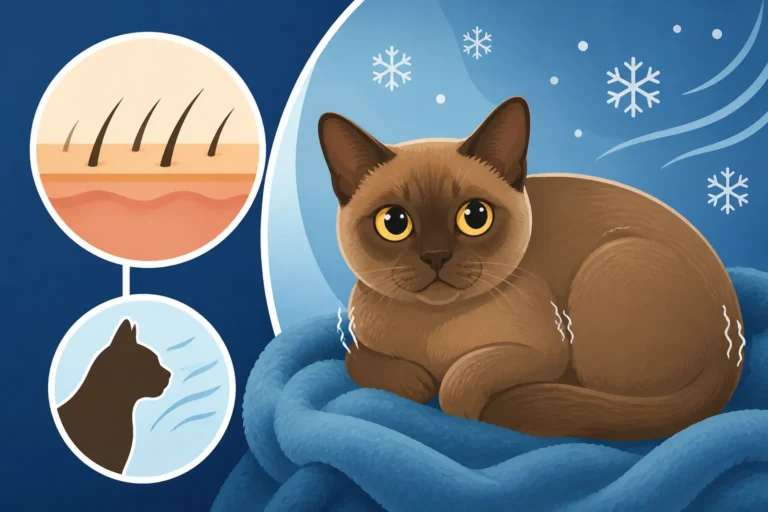
First off, let's appreciate the luxurious quality of a Burmese coat. It’s often described as feeling like warm satin or polished silk, a sensation unlike almost any other cat breed. This isn't just hyperbole; it's a direct result of their particular hair structure. Unlike many cats that have a dense double coat with both guard hairs and a thick undercoat, the Burmese typically has a single, very fine, short coat. The individual hairs lie incredibly close and flat against the body, giving it that smooth, sleek appearance and extraordinary tactile quality. This lack of a thick undercoat, which normally acts as insulation, also plays a role in how they perceive temperature and how their coat color manifests. You might find yourself just running your hand over them absentmindedly, enjoying that unique texture. It’s certainly a conversation starter for anyone new to the breed! What Makes a Burmese's Coat Satin Rather Than Silky goes into more detail about this.
The cb Allele and Temperature Sensitivity
Now, let's get into the real science behind the Burmese's signature colors. All Burmese cats carry a specific gene mutation known as the cb allele. This is a form of partial albinism, and it's what gives them their unique sepia-toned colors like sable (often called brown in Europe), champagne (chocolate), blue, and platinum (lilac). What's truly fascinating about this gene is that it's temperature-sensitive. The enzyme responsible for producing melanin – the pigment that gives hair its color – works less efficiently at warmer temperatures and more efficiently at cooler temperatures.
This is why a Burmese kitten is often born a paler shade and gradually darkens as it grows older. Their time in the warm womb means less pigment development, leading to a lighter initial coat. As they're exposed to the cooler ambient air, their extremities (ears, paws, tail, nose) become darker, as these areas of the body are typically a few degrees cooler than the core. This is a hallmark of the Burmese color pattern, giving them a subtle shading that deepens at these "points" but isn't as dramatic as the distinct points seen in a Siamese cat. The overall body color remains warmer and lighter than the points. For a deeper dive, check out How a Burmese's Color Gene Reacts to Temperature and Why a Burmese Kitten Darkens as It Grows.
How This Gene Produces Classic Burmese Colors
The cb allele, when inherited from both parents, results in the classic Burmese sepia coloration.
- Sable (Brown): This is the original and most common Burmese color, a rich, warm brown that can range from a milk chocolate to a deeper, darker shade. It's the darkest of the Burmese colors, but still shows that characteristic warmer body and darker points. What a Sable Burmese Looks Like offers a vivid description.
- Champagne (Chocolate): A lighter, warm beige or fawn color, with points that are a richer, warmer brown.
- Blue: A soft, medium grey with a distinctly warm, almost dove-grey tone. The points are a deeper blue-grey.
- Platinum (Lilac): The palest of the four recognized colors, a frosty, pale grey with pinkish undertones, and points that are a slightly darker lilac-grey.
Each of these colors, while distinct, operates under the same temperature-sensitive genetic mechanism. This foundational understanding is crucial because it sets the stage for how external factors, like sunlight, can visibly alter their appearance.
The Sun's Role in Coat Lightening
Now that we understand the inherent temperature-sensitivity and pigment production mechanism of a Burmese coat, it becomes clearer why sunlight can have such a pronounced effect. It's not just a trivial change; it's a scientific process influenced by UV radiation.
How UV Radiation Affects Hair Pigment
Think of your own hair: if you spend a lot of time in the sun, you might notice natural highlights appearing, or your overall hair color lightening. The same principle, to an extent, applies to your Burmese, but with a twist due to their specific genetics. Ultraviolet (UV) radiation from the sun is a powerful force. When it hits hair, it can break down melanin, the pigment responsible for color. This process is called photodegradation. The UV rays essentially degrade the pigment molecules, making them appear lighter.
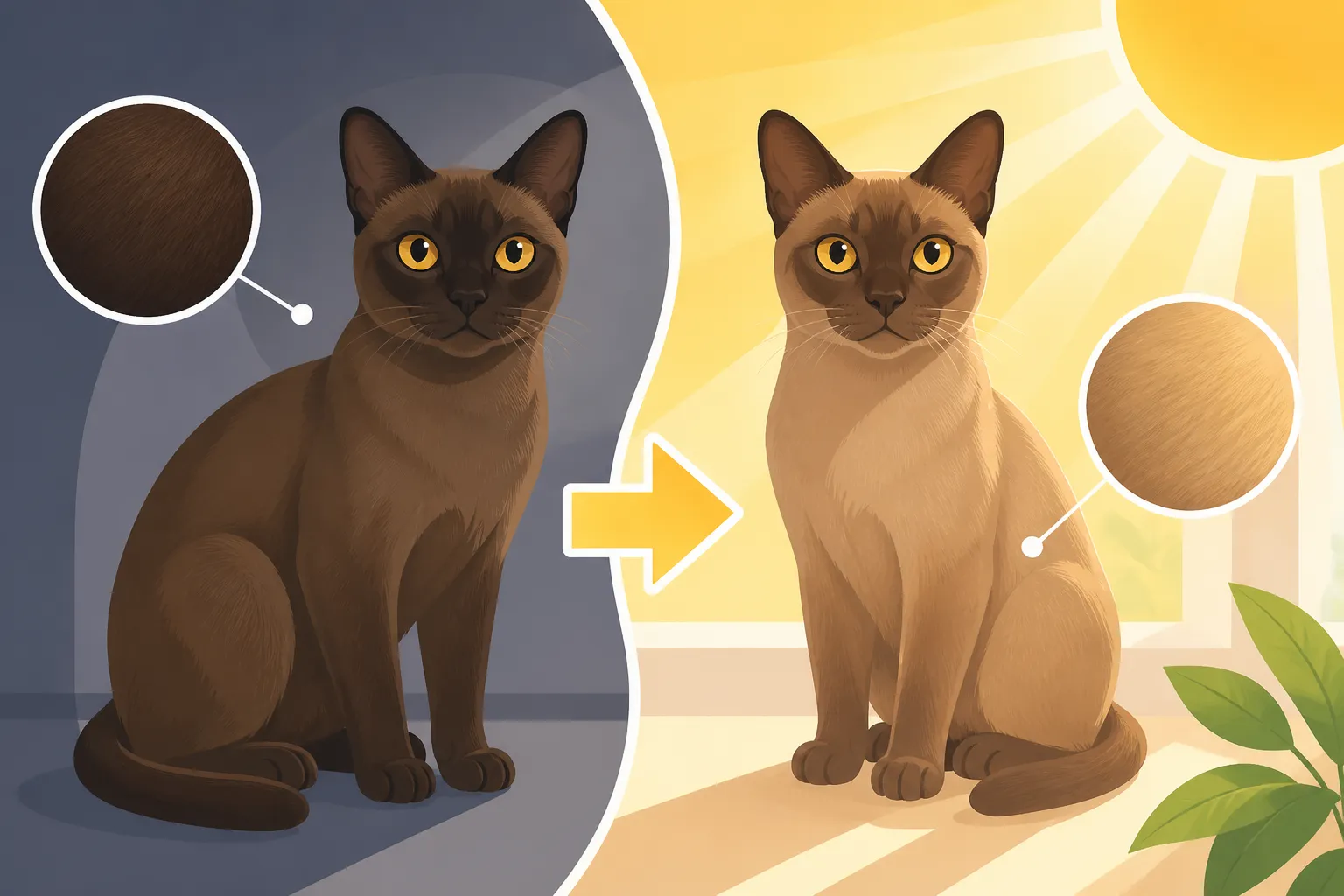
For a Burmese, this means that prolonged exposure to direct sunlight can cause the rich, warm pigments in their coat to fade. A sable might become a lighter, more reddish-brown, almost sun-bleached. A blue Burmese might turn a washed-out, almost dusty grey, losing its vibrant cool tones. It's not a permanent change in the cat's genetic code, but rather a chemical alteration to the pigment already present in the hair shaft. As new hair grows in, it will return to its genetically determined color, provided the cat isn't continuously exposed to intense sunlight.
Why a Burmese Is Particularly Susceptible
So, why does this seem more noticeable in a Burmese compared to, say, a domestic shorthair tabby? There are a few key reasons:
- Unique Pigment: The specific type of melanin produced by the cb allele is inherently more prone to photodegradation. It's a different chemical structure than the full melanin found in a solid black cat, for example, making it less stable when exposed to UV light.
- Single, Fine Coat: As discussed earlier, Burmese cats have a single, very short, fine coat with little to no undercoat. This means the hair shafts are more directly exposed to sunlight. A cat with a thick, dense double coat might have more layers of hair to offer some protection to the underlying pigment. The thinness of the Burmese coat offers less natural shielding.
- Color Contrast: The rich, deep tones of a healthy Burmese coat mean that any fading is often very noticeable. A slight lightening on a pale cat might go unnoticed, but on a deep sable, the reddish, bleached effect stands out. Their vibrant, uniform colors make any deviation more apparent.
Imagine your beautiful, deep sable Burmese, luxuriating for hours in a sunny window, day after day. Over weeks and months, you’ll start to see those gorgeous dark tones mellow and lighten, particularly along their back and sides – the areas most exposed to the sun. It’s like leaving a dark fabric out in the sun; it will eventually fade.
The Difference Between Sun-Lightened and Natural Color Variations
It's important to distinguish between a coat that has lightened due to sun exposure and natural color variations.
- Sun-lightened: This is an acquired change to the existing hair pigment. It tends to be uneven, often appearing more intensely on the areas most exposed to the sun (back, sides, top of the head). The color often looks "bleached" or "reddened" rather than a true, uniform lighter shade. It will revert as new hair grows in if sun exposure is reduced.
- Natural Color Variation: This refers to the genetically determined range of shades within a particular Burmese color, or the subtle darkening that occurs with age and cooler temperatures. For example, a young sable kitten will naturally darken to its adult shade as it matures, and its points will deepen in cooler weather. These are uniform, genetically programmed changes. For example, How a Burmese's Coat Changes With Age describes how sable kittens deepen naturally.
Knowing the difference helps you understand if the change you're seeing is a temporary environmental effect or part of your cat's natural development.
Factors Influencing Coat Color Change Beyond Sunlight
While sunlight is a major player in coat lightening for Burmese cats, it's not the only factor at work. Several other elements can influence the depth, vibrancy, and overall appearance of their luxurious coats. Understanding these helps you appreciate the dynamic nature of your Burmese's beauty and how to best care for them.
Age and Development
Just like us, cats experience changes as they age, and their coat is no exception.
- Kittens Darkening: As mentioned, Burmese kittens are often born quite pale, sometimes almost creamy, particularly the blue and platinum varieties. This is because of the warm uterine environment inhibiting melanin production. As they grow and are exposed to ambient temperatures, their cb allele works more effectively, and their true adult color deepens significantly. This transformation from a pale kitten to a richly colored adult can be quite striking and is a completely natural part of their development. This is why Why a Burmese Kitten Darkens as It Grows is such a fascinating read.
- Senior Cats and Dullness: As a Burmese enters their golden years, typically from around twelve years old, you might notice a subtle dulling or slight lightening of their coat. This isn't usually due to sun exposure, but rather a general metabolic slowdown. Older cats might not groom themselves with the same vigor, their skin might produce less oil, and their hair follicles might produce slightly less pigment over time. It’s part of the aging process, much like humans might get grey hairs or drier skin. Their satin coat might lose a bit of its famous luster, but it still feels wonderfully soft.
Ambient Temperature
We've touched on this, but it bears repeating because it's so fundamental to Burmese color. The cb allele's temperature sensitivity means that a Burmese cat living in a consistently cooler environment might have a deeper, richer body color and more pronounced points than one living in a warmer climate. Conversely, a cat living in a very warm house, or one that spends a lot of time snuggled under duvets or near radiators, might have a slightly paler body color because their core temperature is consistently higher, inhibiting pigment production in those areas. This isn’t a bleaching effect; it’s the gene expressing itself differently based on environmental temperature cues. Why a Short Coated Burmese Feels the Cold also explains why they often seek out these warmer spots, influencing their coat color.
Diet and Nutrition
What your Burmese eats can absolutely influence the health and vibrancy of their coat. While diet won't turn a sable into a platinum, a poor diet can certainly lead to a dull, dry, or even discolored coat.
- Protein and Essential Fatty Acids: A high-quality diet rich in animal protein provides the necessary building blocks (amino acids) for healthy hair growth. Essential fatty acids, particularly Omega-3 and Omega-6, are crucial for skin health and producing a shiny, lustrous coat. A deficiency can result in a dry, brittle coat that might appear duller and less vibrant.
- Vitamins and Minerals: Micronutrients like zinc, copper, and B vitamins also play a role in coat health and pigment production. While rare in commercially prepared quality cat foods, severe deficiencies could theoretically impact coat color or texture.
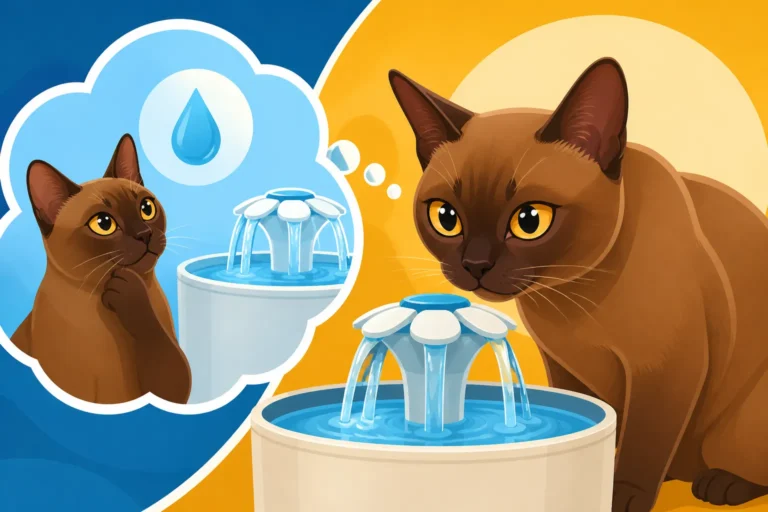
- Hydration: Adequate water intake is vital for overall health, including skin and coat. A dehydrated cat will likely have a duller coat. Why a Burmese's Food Bill Is a Health Decision emphasizes the link between diet and overall health, including coat quality.
Health Conditions
In some rare instances, changes in coat color or quality can signal an underlying health issue. While not a common cause of general lightening, certain conditions might manifest with coat abnormalities:
- Thyroid Issues: Both hyperthyroidism and hypothyroidism can affect coat quality, leading to dullness, thinning, or changes in texture.
- Liver Disease: Severe liver issues can sometimes manifest with a greasy or poor-quality coat.
- Nutritional Deficiencies (Severe): While less common with balanced commercial diets, severe malabsorption or specific deficiencies could lead to coat changes.
- Stress or Illness: A cat that is chronically stressed or unwell might neglect grooming, leading to a dull, matted coat that appears less vibrant.
If you notice significant, rapid, or unusual changes in your Burmese's coat that are accompanied by other symptoms (lethargy, changes in appetite, weight loss/gain), always consult your veterinarian to rule out any underlying medical conditions.
Practical Tips for Managing Your Burmese's Coat Color
While some coat color changes are inevitable due to genetics and aging, there are several practical steps you can take as a Burmese owner to help maintain the richness and luster of their magnificent satin coat. It's all about thoughtful care and understanding their unique needs.
Limiting Direct Sun Exposure
This is the most direct way to mitigate sun-induced lightening. While a sun-worshipping Burmese is a common sight, moderation is key.
- Window Management: If your Burmese loves to nap in a particular sunny window, consider drawing blinds or curtains during the brightest parts of the day. You don't have to block out all light, but reducing direct, intense UV exposure can make a difference. Sheer curtains can filter UV rays without completely darkening the room.
- Dedicated Indoor Spaces: Encourage your cat to nap in cooler, shadier spots indoors during peak sun hours. A comfy bed in a favorite, less sunny corner might appeal.
- Catios or Supervised Outdoor Time: If you have an outdoor enclosure (catio) or allow supervised outdoor time, ensure there are ample shaded areas for your Burmese to retreat to. Their short, single coat also means they can get sunburned, especially on their delicate ears and nose, so shade is crucial for their skin health too. Why a Cat Flap Is Wrong for a Trusting Burmese also speaks to the importance of controlled environments for this breed.
Optimal Nutrition for Coat Health
A vibrant coat starts from within. Feeding a high-quality, balanced diet is paramount for your Burmese's overall health and the condition of their coat.
- High Protein, Moderate Fat: Look for cat foods with high animal-based protein content. This provides the amino acids essential for strong, healthy hair. Ensure the diet includes a good balance of healthy fats, particularly omega-3 and omega-6 fatty acids, which are crucial for skin and coat health. Many premium brands, available through retailers like Chewy or Amazon, prioritize these ingredients.
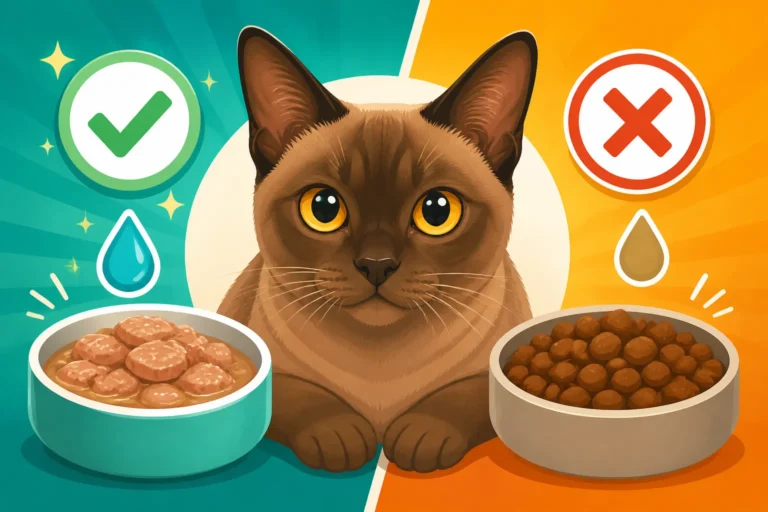
- Wet Food Preference: As a general rule for cats, wet food is often preferable to dry kibble for its higher moisture content and often lower carbohydrate count, which is particularly beneficial for Burmese given their propensity for diabetes. Good hydration supports healthy skin and a shiny coat. Why Wet Food Beats Kibble for a Burmese explains more about the benefits.
- Supplements (Consult Vet First): If your cat's coat seems dull despite a good diet, discuss with your vet whether a fatty acid supplement might be beneficial. Never add supplements without professional advice, as an imbalance can do more harm than good.
Consistent, Gentle Grooming
The Burmese's short, satin coat is famously low-maintenance, but a little regular attention can go a long way in maintaining its shine and color.
- Weekly Wipes: You won't need brushes or combs much for a Burmese, as their coat has almost no undercoat and sheds minimally. However, a quick wipe down with a soft chamois cloth or a grooming mitt a couple of times a week can work wonders. This removes loose hairs, distributes natural skin oils, and buffs the coat to a magnificent shine. Which Chamois Brings Up a Burmese's Satin Shine delves into the best tools. This also turns into a bonding ritual that most Burmese adore. How Many Minutes a Month a Burmese's Coat Takes is surprisingly low, making this an easy task.
- Check for Skin Issues: During your grooming sessions, take a moment to gently check their skin for any dryness, flakiness, or lesions. A healthy coat comes from healthy skin.
- Bathing (Only When Necessary): Burmese cats generally don't need frequent bathing. Their coats are self-cleaning and usually stay pristine. Only bathe them if they get exceptionally dirty or if advised by your vet for a specific skin condition. Over-bathing can strip natural oils, leading to a duller coat.
By implementing these care routines, you’re not just addressing coat color; you’re investing in your Burmese’s overall health and well-being, ensuring they remain a stunning and cherished member of your family for years to come.
Disclaimer
This article is for general informational purposes only and does not constitute professional advice. Laws, prices and regulations vary by location and change over time. Consult a qualified professional for guidance on your specific situation.