Why a Short Coated Burmese Feels the Cold
If you've ever owned a Burmese cat, you know they are absolute cuddle bugs, always seeking out the warmest lap, the snuggest blanket, or the coziest sunbeam. But what many new Burmese owners might not realize is that this isn't just a quirky preference; it's a fundamental biological need. Their unique, stunning coat, while beautiful and low-shedding, actually leaves them much more susceptible to the cold than other cat breeds, making understanding their warmth requirements crucial for their health and happiness. This guide will dive deep into why your short-coated Burmese feels the chill so keenly and what you can do to keep them comfortably warm all year round.
The Unique Anatomy of a Burmese Coat
When you run your hand over a Burmese, the sensation is unmistakable: it's like stroking satin. This isn't just a descriptive flourish; their coat genuinely has a texture unlike most other cats. This distinctive feature is precisely what makes them so vulnerable to lower temperatures. To truly understand why your Burmese is always burrowing under the duvet, we need to talk about what their fur is, and perhaps more importantly, what it isn't.
Why the Satin Feel Means Less Insulation
Most cats, especially those adapted to cooler climates, possess a double coat. This means they have an outer layer of guard hairs, which are tougher and provide protection from the elements, and a dense, fluffy undercoat. This undercoat is the real hero when it comes to insulation, trapping a layer of warm air close to the skin, much like a down jacket. It's what allows a Maine Coon or a Siberian to romp in the snow without a second thought.
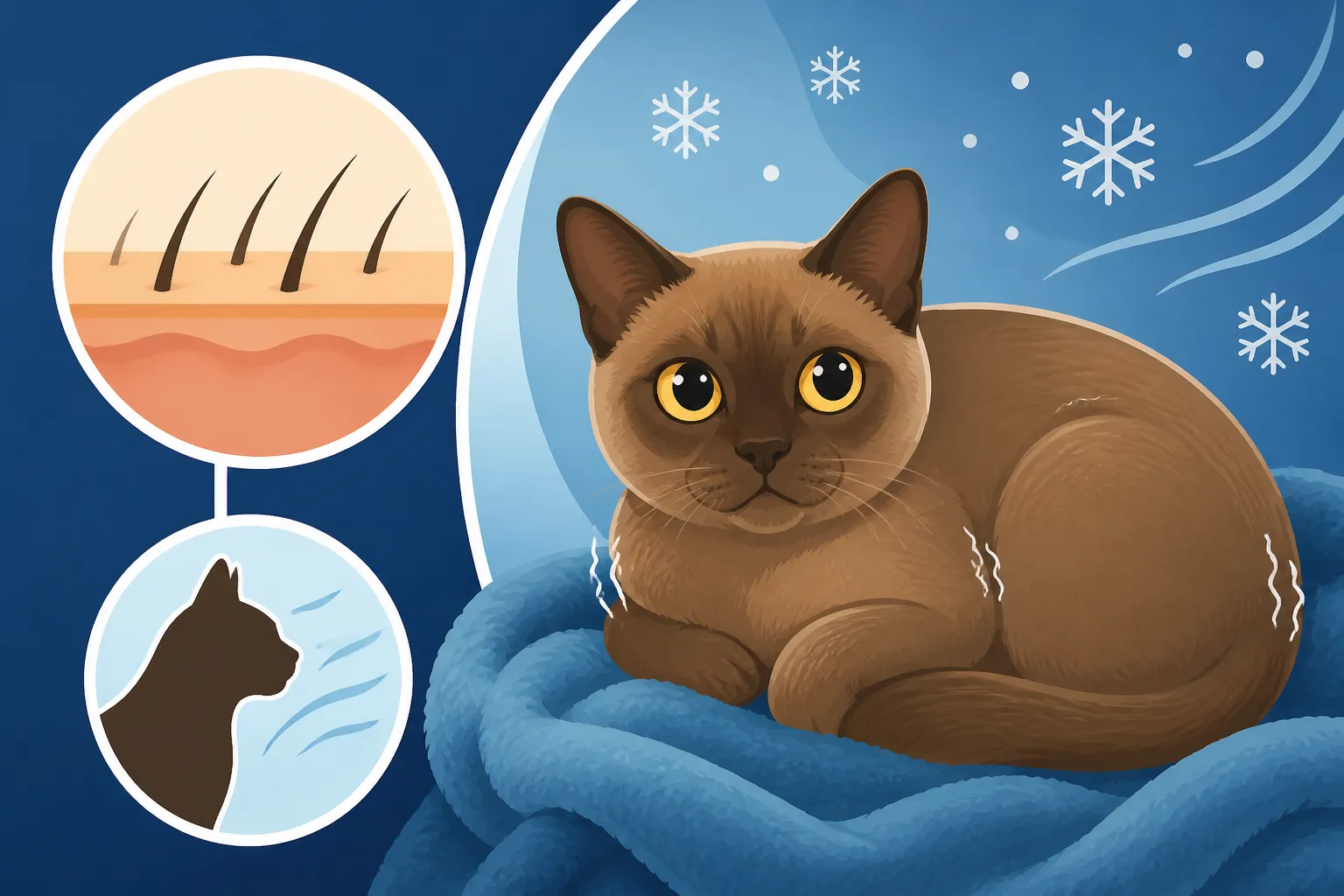
The Burmese, however, is a different story entirely. They have an incredibly short, fine single coat that lies extremely close to their body. The individual hairs are thin and lack the loft or density that would create that insulating air barrier. Imagine wearing a thin silk shirt on a chilly day compared to a thick wool sweater; that's the difference in insulation quality we're talking about. There's simply no substantial undercoat to trap heat. This lack of a dense inner layer is what gives their coat its renowned satin-like texture and brilliant sheen, but it also leaves them with significantly less natural protection against the cold. It's a trade-off: unparalleled elegance for reduced thermal regulation.
How a Burmese's Coat Differs From Other Breeds
To illustrate this difference more clearly, let's consider how a Burmese coat stacks up against other popular breeds.
| Feature | Burmese Coat | Typical Domestic Shorthair Coat | Long-Haired Cat (e.g., Persian) |
|---|---|---|---|
| Length | Very short, lies flat against the body | Short to medium | Long, flowing |
| Texture | Fine, soft, satin-like, smooth | Varies, often slightly coarser | Silky, fluffy, sometimes dense |
| Undercoat | Almost non-existent or very sparse | Present, provides some insulation | Very dense and thick, excellent insulation |
| Insulation | Minimal, poor heat retention | Moderate, reasonable protection against mild cold | Excellent, designed for cold weather |
| Shedding | Low to moderate, individual hairs less noticeable | Moderate to high, depending on season | Moderate to high, can mat if not groomed |
| Feel to Touch | Like velvet or satin | Varies, often feels like standard fur | Luxuriously soft, dense |
As you can see, the Burmese stands out with its minimalist approach to fur. This means that while they might feel incredibly luxurious to pet, their body has to work harder to maintain a stable core temperature, especially when the ambient temperature drops. For more on their specific coat characteristics, you might find How Short a Burmese's Coat Actually Is insightful.
Why Less Fur Means More Cold
It's not just about comfort; the way a Burmese's body is built, coupled with its thin coat, means they genuinely struggle to stay warm in conditions that other cats would find perfectly acceptable. This isn't just a quirk; it's a physiological reality that owners need to be aware of.
The Role of Metabolism and Body Heat
Cats, like all mammals, generate their own body heat through metabolism. This internal furnace needs to be fueled and regulated. For a Burmese, because they lack that insulating undercoat, a lot of that precious body heat dissipates much more quickly into the environment. It's like having a house with poor insulation; you have to crank up the heating more frequently and it still feels drafty.
This means their metabolism has to work harder to keep them warm, especially in cooler conditions. While a healthy, well-fed Burmese is certainly capable of this, it adds a subtle stress to their system. In extreme cold, or if they are unwell, this extra demand can become a problem. You might notice your Burmese shivering, huddling tightly, or desperately seeking out warm spots like radiators or your lap. This is their natural instinct kicking in, trying to compensate for their lack of natural thermal protection. This is also why Why a Short Coated Burmese Seeks Body Heat is such a common observation among owners.
Environmental Factors That Make a Burmese Shiver
It's not just freezing outdoor temperatures that can make a Burmese feel cold. Our indoor environments, which we might consider perfectly comfortable, can often be too cool for them.
- Drafts: Even a subtle draft from a window or door can feel like a biting wind to a Burmese with its thin coat. They don't have the fur density to create a barrier against moving air.
- Cool Floors: Tile, wood, or linoleum floors, especially in winter, can pull heat away from a cat's body very quickly. This is why you'll often see them gravitate towards carpets, blankets, or soft beds.
- Air Conditioning: While we might appreciate a blast of cool air in summer, too much air conditioning can leave a Burmese feeling uncomfortably chilly, leading them to hide under blankets or on top of warm electronics.
- Nighttime Temperatures: Even in a heated home, temperatures often drop a few degrees at night. For a Burmese, this slight dip can be enough to send them seeking warmth under your duvet or snuggling against a sibling. Why a Burmese Gets Under the Duvet is a classic Burmese behavior for a good reason!
- Age and Health: Older Burmese cats, or those with underlying health issues like diabetes or kidney disease, will have an even harder time regulating their body temperature. Their metabolism might be less efficient, or they might simply have less muscle mass to generate heat. This is why How to Keep an Old Burmese Warm is particularly important for senior Burmese.
Keeping Your Burmese Warm and Toasty
Since their natural coat isn't doing them any favors in the warmth department, it's up to us, their devoted human companions, to ensure they're always comfortably warm. Thankfully, there are many simple and effective ways to create a cozy environment for your Burmese.
Creating Warm Resting Spots
One of the easiest ways to help your Burmese is to provide a variety of warm, inviting places for them to rest. Think about where they naturally gravitate and enhance those spots.
- Heated Beds: These are a game-changer for many Burmese owners. Brands available on platforms like Amazon or Chewy offer various styles, from orthopedic memory foam beds with subtle warming elements to simple self-warming pads that reflect the cat's own body heat. These are particularly wonderful for older cats or those prone to stiffness. You'll definitely want to check out Whether a Burmese Needs a Heated Bed for more on this.
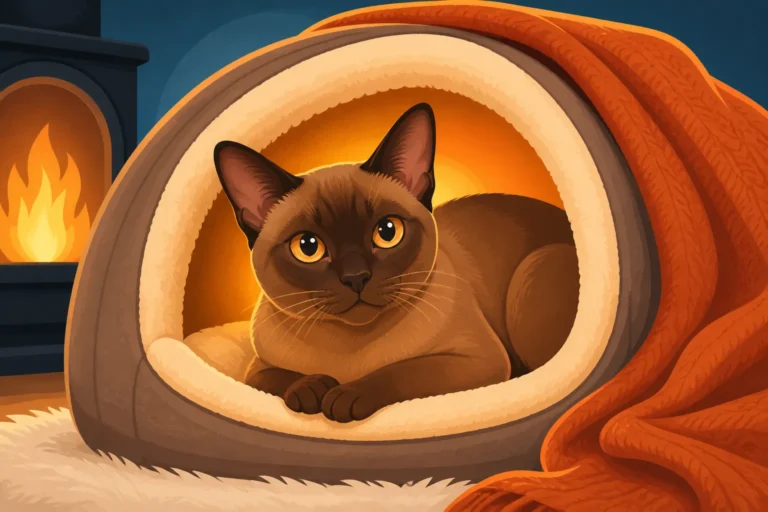
- Soft Blankets and Cuddly Caves: Lots of plush blankets, fleece throws, or even old sweaters can be piled up in their favorite napping spots. Many Burmese love to burrow, so a "cuddle cave" bed, which is essentially a hooded bed with a soft interior, can be a huge hit. Place these in sunny spots or near a heat source, but never directly on top of a hot register.
- High Perches: Heat rises, so a tall cat tree, especially one with soft beds or hammocks, can be a surprisingly warm spot for your Burmese. If it's near a window where the sun streams in, even better!
- Your Lap: Of course, the ultimate warm spot for a Burmese is always your lap. Don't underestimate the power of physical contact; it's not just for affection, it's also a major source of warmth for them. This is also why Why a Burmese Sleeps Against Another Cat or even a dog, is so common – they're just looking for that shared body heat.
Regulating Indoor Temperatures
While you don't need to turn your home into a sauna, being mindful of your thermostat can make a big difference for your Burmese.
- Maintain a Consistent Temperature: Avoid drastic temperature swings. A steady, comfortable indoor temperature, ideally between 70-75°F (21-24°C), will prevent your Burmese from constantly having to adjust.
- Block Drafts: Check windows and doors for drafts, especially in winter. Weather stripping or draft stoppers can make a noticeable difference.
- Sunlight Access: Ensure your Burmese has access to sunny windows where they can bask. A window perch can be a fantastic way for them to soak up natural warmth, even on a chilly day. Why a Burmese Sleeps on the Radiator is another common way they find ambient warmth.
- Avoid Over-Air Conditioning: In the summer, be careful not to blast the air conditioning too low. While it keeps you cool, it might be too much for your short-coated friend. Consider setting zones or giving them access to warmer rooms if possible.
Other Considerations for Warmth
Beyond beds and thermostats, a few other things can contribute to your Burmese's overall warmth and well-being.
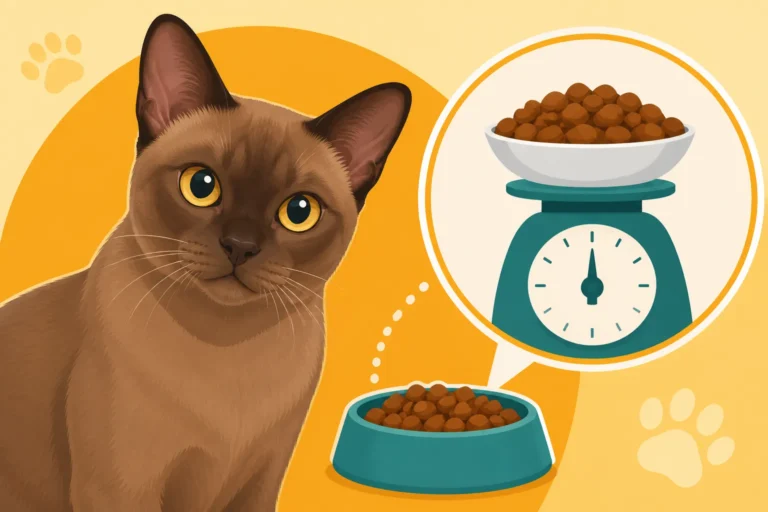
- Diet: A healthy, balanced diet, rich in protein, fuels their metabolism and helps them generate internal heat. Whatever you feed them, ensure it is high-quality and meets their nutritional needs. Why Portion Control Is Medical Care in a Burmese also ties into their overall health and ability to regulate body temperature.
- Avoid Cold Outdoor Exposure: A Burmese should generally be an indoor-only cat. Their lack of protective fur makes them highly susceptible to hypothermia in cold weather, and even mild temperatures can make them uncomfortable. If you absolutely must take them outside, such as for a vet visit, ensure they are in an insulated carrier and kept warm. Why a Burmese Refuses to Go Out in Cold Weather isn't just stubbornness; it's self-preservation.
- Cat Sweaters/Clothing: For some Burmese, especially very young, old, or thin individuals, a cat sweater or coat might be an option for very cold days indoors or for short outdoor excursions (like going from the house to the car). Ensure it's comfortable, non-restrictive, and made of breathable material. Always supervise them when they're wearing clothing to ensure they don't get tangled or overheat.
Recognizing When Your Burmese Is Too Cold
Knowing the signs that your Burmese is uncomfortably cold is just as important as providing warmth. They can't tell us in words, but their body language and behavior will speak volumes.
Behavioral Indicators
A Burmese that is feeling too cold will often change its behavior in noticeable ways. Learning to read these cues can help you adjust their environment before they become genuinely distressed.
- Huddling and Curled Up Tight: This is perhaps the most obvious sign. Instead of stretching out, a cold Burmese will curl into a tight ball, tucking its paws under its body and often wrapping its tail around itself, trying to minimize heat loss. They might also actively seek out small, enclosed spaces.
- Shivering or Trembling: Just like humans, cats shiver involuntarily to generate heat when they're cold. This can be subtle at first but becomes more pronounced if the cold persists.
- Seeking Warm Spots Obsessively: While a Burmese naturally seeks warmth, an excessive drive to be under blankets, on laps, or right against a heat source (like a radiator, which is covered in Why a Burmese Sleeps on the Radiator) suggests they are struggling to maintain their temperature. They might become restless, moving from one warm spot to another in search of more heat.
- Reluctance to Move or Play: If your usually playful Burmese is unusually lethargic and seems disinclined to move, especially when it means leaving a warm area, they might be cold. They conserve energy by reducing activity.
- Cold Extremities: Gently feel their paws and the tips of their ears. If they feel noticeably cooler than the rest of their body, it's a good indication they're feeling the chill.
Physical Signs and When to Act
While behavioral signs are usually the first to appear, there are also physical indicators, and in severe cases, these can point to a more serious issue like hypothermia.
- Pale Gums: If their gums appear pale or bluish, it's a serious sign of poor circulation and hypothermia, requiring immediate veterinary attention.
- Slow or Shallow Breathing: Cold can affect a cat's respiratory rate. If their breathing seems unusually slow or shallow, it's a warning sign.
- Stiff or Uncoordinated Movement: In advanced stages of hypothermia, a cat's muscles can become stiff, and they may appear disoriented or uncoordinated. This is an emergency.
- Lack of Responsiveness: If your Burmese is unresponsive, unconscious, or showing severe signs of distress, it's a veterinary emergency. Wrap them in warm blankets (warm, not hot, to avoid burns) and get them to the vet immediately.
In most cases, simply increasing the room temperature, providing a heated bed, or wrapping your Burmese in a soft blanket will be enough to bring them back to a comfortable state. However, understanding the subtle signs of cold can help you prevent a minor chill from turning into a health concern. Your sensitive, short-coated Burmese relies on you to be their personal thermostat, and with a little attentiveness, you can ensure they live a warm, cozy, and contented life.
Disclaimer
This article is for general informational purposes only and does not constitute professional advice. Laws, prices and regulations vary by location and change over time. Consult a qualified professional for guidance on your specific situation.