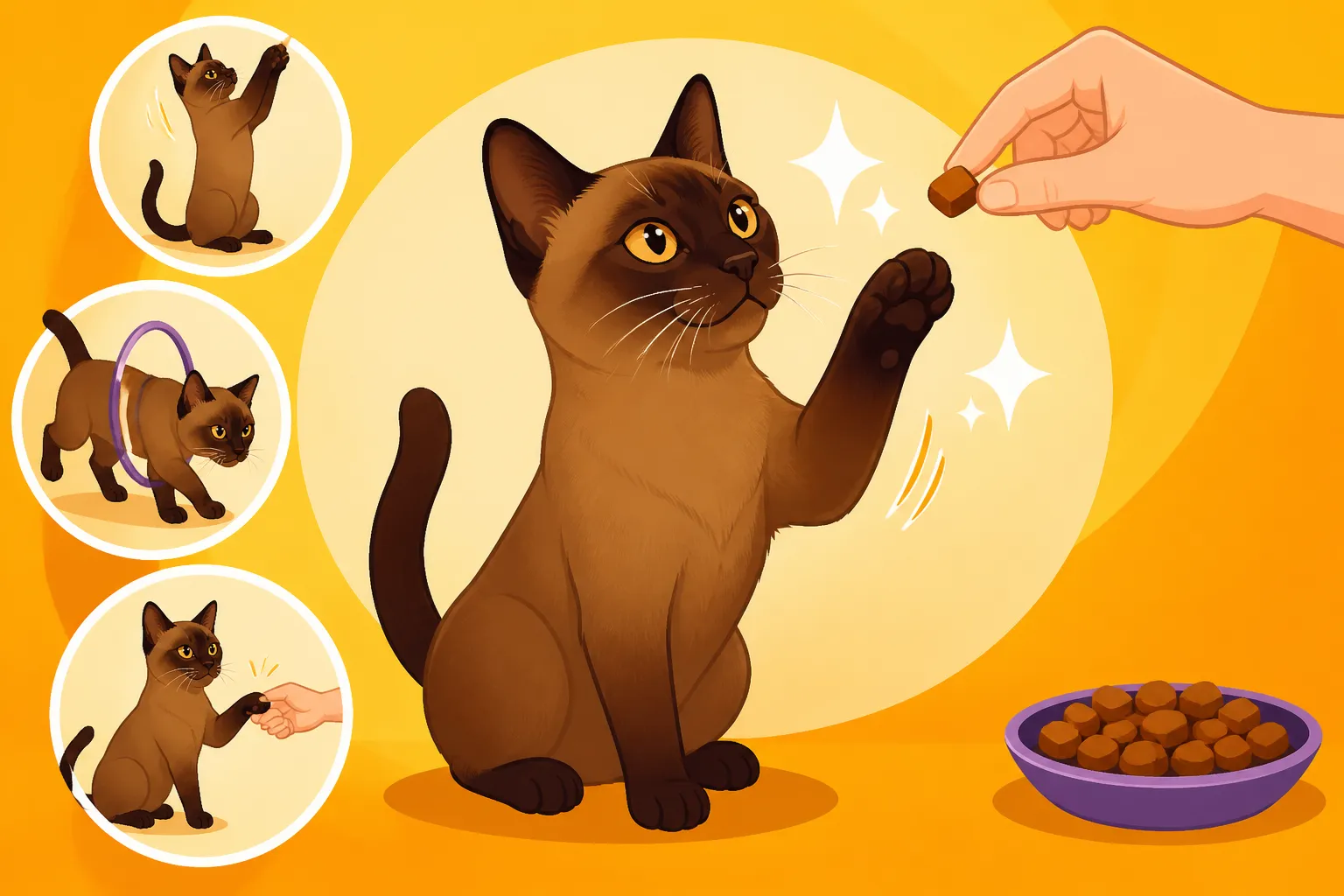
Which Tricks a Burmese Learns for a Piece of Food
Many cat owners throw up their hands, convinced that training is something only dogs do, leaving them feeling frustrated when their intelligent feline friends seem to ignore every command. But if you're lucky enough to share your home with a Burmese, you're in for a delightful surprise! These incredibly smart, people-oriented cats thrive on interaction, and with the right motivators – especially a tasty treat – they can learn an astonishing array of tricks, strengthening your bond and enriching their lives in the process. This guide will walk you through leveraging your Burmese's natural intelligence and love for food to teach them some fun and useful behaviors.
Why Your Burmese Is So Primed for Learning
It’s no secret among those who know and love them: the Burmese is often affectionately called Why the Burmese Is Called a Dog in a Cat's Body. They possess a unique blend of canine-like loyalty, intelligence, and an almost insatiable desire for interaction that sets them apart from many other cat breeds. This isn't just a charming personality quirk; it's a huge advantage when it comes to teaching them tricks.
Their Canine-Like Drive for Interaction
Unlike some more aloof cat breeds, a Burmese doesn't just tolerate your presence; they actively seek it out. They crave companionship and validation from their human family, which means they are highly motivated by your attention, praise, and, yes, a delicious food reward. This deep desire to be involved in whatever you're doing translates beautifully into training sessions. They're not just learning a trick; they're engaging with you, earning your approval, and getting a treat – a win-win-win situation in their eyes! This strong bond makes them eager participants, often coming when called or following you from room to room just to be near. They thrive on routines that include their humans, and training can become a wonderful part of that shared schedule.
High Intelligence and Problem-Solving Skills
Burmese cats are incredibly intelligent creatures, a trait that makes them quick studies when it comes to new commands and complex behaviors. They pick up on patterns rapidly and are adept at understanding cause and effect. If they do X, they get Y. This natural problem-solving ability means they can quickly associate a specific action with a vocal cue or hand signal, especially when there's a tasty incentive involved. Their keen observational skills also mean they're watching you, learning your habits and anticipating your next move. This intelligence, combined with their playful nature, means they genuinely enjoy the mental stimulation that trick training provides, seeing it as another form of engaging play with their favorite person.
The Power of Food Motivation in a Burmese
Let's be honest: a Burmese is rarely shy about their love for food. They often possess a robust appetite, and this can be your greatest asset in training. While praise and affection are important, a small, high-value treat can provide immediate and tangible reinforcement that speeds up the learning process dramatically. It's not just about satisfying hunger; it's about providing a clear, positive consequence for performing the desired action. However, this powerful food drive comes with a responsibility. Burmese cats are prone to weight gain and, unfortunately, The Burmese Has the Highest Diabetes Rate of Any Cat Breed. This means that every treat you use for training needs to be factored into their daily calorie intake, making Feeding a Burmese Is a Medical Decision, Not a Preference. We'll dive more into responsible treating later, but understanding that their love for food is a double-edged sword is crucial.
Basic Tricks to Get Started with Your Food-Motivated Burmese
Starting with simple, achievable tricks builds confidence in both you and your Burmese. These foundational commands are not only fun but can also be incredibly useful in day-to-day life, especially when combined with their natural inclination to be near you.
Teaching "Sit" and "Stay"
"Sit" is often the gateway trick for any animal, and your Burmese can master it quickly. Hold a small, high-value treat near their nose and slowly move it upwards and slightly backward over their head. As their nose follows the treat, their rear end will naturally lower to the ground. The moment their bottom touches, say "Sit!" enthusiastically and give them the treat. Repeat this a few times in short sessions. Once they consistently sit, you can introduce "Stay." Have them sit, say "Stay," take a tiny step back, then immediately step forward and reward if they remain seated. Gradually increase the distance and duration before rewarding. Remember to keep sessions brief and positive.
These commands might seem trivial for a cat, but they can be incredibly helpful. Imagine being able to ask your cat to "sit" politely instead of weaving around your legs during meal prep, or to "stay" while you open a door to prevent an accidental dash outside. Practicing these skills in short bursts throughout the day, especially before meals or when they're particularly attentive, will reinforce the behavior. Their inherent people-focus means they'll want to please you, and the food reward solidifies the learning.
The Reliable "Come" Command
Your Burmese likely already comes running when they hear the rustle of a treat bag or the sound of their food bowl. Building on this natural inclination, you can teach a formal "Come" command. Start in a quiet room. Kneel a short distance away, say "Come!" in a cheerful voice, and immediately offer a high-value treat or a favorite toy that you’ll wave to entice them. The moment they reach you, give the reward and lavish them with praise. Slowly increase the distance and add distractions. Practice before meal times when they are already highly motivated.
Having a reliable "Come" is invaluable. It’s perfect for ensuring they come in from the yard (if they have supervised outdoor access) or simply for gathering them up from another room when it’s time for cuddles or a Burmese's Annual Visit Includes a Glucose Reading. Many Burmese are so attached to their humans that they follow them anyway, but a specific cue with a reward makes it a formal, reinforced behavior. They will begin to associate your call with a pleasant outcome, further strengthening their bond and making them even more responsive to your voice. This also ties into their natural curiosity; they'll often come just to see what you're up to.
The Engaging "High-Five"
This is a fun trick that often delights visitors and shows off your Burmese's cleverness. Hold a treat in your closed fist, extending it towards your cat at shoulder height. They'll likely try to bat at your hand to get the treat. The moment their paw touches your hand, open your hand, say "High-five!" and give them the treat. Repeat this, and once they consistently bat your hand, you can introduce the verbal cue and remove the treat from your fist, instead having it ready in your other hand to reward immediately.
The "high-five" is a wonderful way to showcase your Burmese's playful side and reinforces their willingness to interact. It’s a trick that relies on their natural pawing behavior, channeled into a specific, rewarded action. For a breed that thrives on attention and being part of the family, performing a "high-five" is another way to engage with you and receive positive feedback. It’s a small trick that brings a lot of joy and demonstrates just how attentive and responsive your Burmese can be when they know a reward is coming.
Beyond the Basics: Advanced Tricks for Your Agile Burmese
Once your Burmese has mastered the basics, you can move on to more complex and mentally stimulating tricks. Their agility, intelligence, and persistent nature make them excellent candidates for advanced training that might surprise even seasoned cat owners.
Retrieving Toys and "Find It" Games
Many Burmese enjoy a good game of fetch! Start with a small, lightweight toy that your cat already shows interest in. Toss it a short distance. If they go to it, praise them. If they pick it up, even better! When they bring it back, immediately offer a treat. If they don't bring it back, walk over, pick up the toy, and encourage them to follow you back to the starting point with a treat. Gradually increase the distance and always reward when they return the toy to you or near you. Their natural play drive, combined with food motivation, makes this very achievable. Which Toys Keep a Burmese Busy When You Are Out can be great for this.
The "Find It" game leverages their keen sense of smell and intelligence. Show your Burmese a favorite treat, then hide it in an obvious spot while they watch. Say "Find it!" and encourage them to go get it. Once they understand the concept, you can make the hiding spots progressively harder, eventually moving to hiding it in another room. This is a fantastic mental exercise that keeps their minds sharp and satisfies their hunting instincts in a safe, controlled environment. Both retrieving and "Find It" are excellent ways to bond and provide enrichment, especially for a cat that A Burmese Is Still Playing at Fifteen.
Learning to Walk on a Leash
While it might sound like a dog thing, many Burmese actually enjoy walking on a leash, especially if introduced correctly. Their trusting nature and desire to explore with you make them uniquely suited for it. Start by getting your cat comfortable with wearing a harness indoors. Put it on for a few minutes before mealtimes, associating it with positive experiences and treats. Once they're okay with the harness, attach the leash and let them drag it around the house under supervision. Gradually, you can hold the leash and let them lead you, offering treats for calm walking. Leash Training a Burmese That Follows You Anyway often happens naturally for these curious cats.
The key is positive reinforcement. Never force your Burmese to wear the harness or walk. Make it a fun adventure, and always bring treats to reward them for calm behavior and for walking politely by your side. A secure, well-fitting harness is essential, as Burmese are notoriously good at wriggling out of things. This activity provides wonderful mental and physical stimulation, especially if you have a safe, quiet outdoor space like a fenced yard or a catio where they can explore under your watchful eye. It’s an extension of their desire to be with you, just in a new setting.
The Art of Food Motivation: Choosing and Using Treats Wisely
When using food as a motivator for your Burmese, it's not just about giving them any treat. The type of treat, its size, and how it's incorporated into their diet are all critical considerations to ensure effective training without compromising their health.
Selecting the Right High-Value Treats
Not all treats are created equal in the eyes of a Burmese. For training, you need high-value treats – something they absolutely adore and don't get all the time. Think small pieces of cooked chicken, plain boiled shrimp, or commercial cat treats specifically designed to be low-calorie and palatable. Many freeze-dried meat treats available on Amazon are excellent for this because they are single-ingredient, highly aromatic, and can be broken into tiny, pea-sized pieces. Avoid anything with high carbohydrates or excessive fats, especially given the Burmese's predisposition to diabetes.
| Treat Type | Pros | Cons | Ideal Use for Burmese Training |
|---|---|---|---|
| Freeze-Dried Chicken/Salmon | High protein, single ingredient, very palatable, easy to break | Can be a bit dusty, potentially more expensive | Excellent for high-value rewards, easily portioned |
| Boiled Chicken/Shrimp | Very high value, healthy, easy to prepare, no additives | Requires preparation, can be messy | Top-tier reward for new or difficult tricks |
| Commercial Soft Treats | Palatable, often pre-portioned, good variety | Can be higher in carbs or less healthy if not chosen carefully | Good for daily reinforcement, check ingredient list |
| Small Pieces of Kibble | Convenient, low calorie (if they love their kibble) | Not always high-value enough for motivation | For maintenance of learned tricks, or if very food-motivated |
Remember, variety can also keep things interesting. Rotating between a few different high-value treats can maintain their enthusiasm and prevent them from getting bored. The goal is to find something so irresistible that they'll do almost anything to earn it.
Portion Control and Timing for Health
This is where the "medical decision" aspect really comes into play. Why Portion Control Is Medical Care in a Burmese cannot be overstated. Every single treat given during a training session must be accounted for in their daily calorie intake. If you're doing multiple short sessions throughout the day, those little treats add up quickly. Consider reducing their main meal portion slightly to compensate for the training rewards. This is vital because How Much Weight Raises a Burmese's Diabetes Risk is a very real concern for this breed.
Timing is also crucial for effective training. Deliver the treat immediately – within 1-2 seconds – of the desired behavior. This instant gratification helps your Burmese make the direct connection between their action and the reward. If you delay, they might not understand what they're being rewarded for. Furthermore, training sessions should be short (5-10 minutes max), positive, and end on a high note. Frequent, brief sessions are far more effective than long, drawn-out ones, especially when managing their caloric intake. A food scale on Amazon can be incredibly helpful for weighing out their daily food, including treats, to ensure accuracy.
Troubleshooting and Managing Expectations in Burmese Trick Training
Even with the most food-motivated and intelligent Burmese, you might encounter bumps along the road. It's important to approach training with patience, consistency, and realistic expectations. Remember, they are still cats, and while they can be trained, they retain their feline independence.
Dealing with Distractions and Inconsistent Progress
Cats, even the highly focused Burmese, can be easily distracted. If your training sessions aren't going well, consider the environment. Is it too noisy? Are there other pets or people vying for attention? Start in a quiet, low-distraction area and gradually introduce more stimulating environments as your cat becomes more proficient. If your Burmese seems to lose interest, don't push it. End the session, and try again later. They learn best when they are engaged and enjoying the process.
Inconsistent progress is also normal. Some days your Burmese will be a superstar, nailing every command. Other days, they might seem to have forgotten everything. Don't get discouraged! This is part of the learning curve. Simply revert to easier steps, offer higher-value treats, and celebrate small successes. Consistency from you, the trainer, is key. Even if your cat isn't performing perfectly, a few minutes of interaction and positive reinforcement will keep the foundation strong.
Setting Realistic Goals and Maintaining Engagement
While your Burmese is incredibly smart, they're unlikely to perform complex routines like a circus animal. Set realistic goals. Focus on tricks that are fun, beneficial, and align with their natural behaviors. Some cats might love fetch, while others prefer to learn intricate sequences for food puzzles. Which Puzzle Feeder Slows a Greedy Burmese Down can be a great way to challenge them mentally and provide enrichment even when you're not actively training.
To maintain engagement, keep training fun and varied. Don't always work on the same trick in the same way. Incorporate play and affection alongside the food rewards. For a cat that thrives on attention, your positive reinforcement and joyful tone are just as valuable as the treat itself. If your Burmese suddenly stops responding to a trick they once knew, consider if their food motivation has changed, if they're bored, or if there might be an underlying health issue. A cat that stops engaging or following you might be unwell, so it's always worth observing their overall behavior.
Avoiding Accidental Reinforcement
One common pitfall in training is accidentally reinforcing unwanted behaviors. For instance, if your Burmese meows incessantly or paws at your leg for a treat, and you give in, you've just taught them that those behaviors get results. The key is to ignore unwanted behaviors and only reward the actions you want to see. This requires patience, especially when your Burmese is being particularly charming or persistent.
Your Burmese's love for food is powerful, and they are excellent manipulators! Why a Burmese Begs Harder Than Any Other Cat is a common complaint. While it’s tempting to give in, especially to those adorable pleading eyes, it’s crucial to stick to your training plan and only reward the desired actions. By doing so, you'll teach your Burmese to communicate their desires in positive ways, like sitting politely for a treat, rather than resorting to annoying habits. Using positive reinforcement consistently will shape them into a well-behaved and happily engaged companion.
Disclaimer
This article is for general informational purposes only and does not constitute professional advice. Laws, prices and regulations vary by location and change over time. Consult a qualified professional for guidance on your specific situation.