What a Camera Catches a Lonely Burmese Doing
Leaving your beloved Burmese cat alone can often feel like a necessary evil in our busy lives, but the quiet worry about how they cope while you’re out is a common, often unspoken, burden for owners of this incredibly social breed. You might come home to a perfectly behaved cat, yet still wonder what goes on when you’re not there. This guide is all about pulling back that curtain, helping you understand what a camera catches a lonely Burmese doing, and offering real, empathetic solutions to ensure your feline friend feels loved and secure, even in your absence.
The Subtle (and Not-So-Subtle) Signs of a Lonely Burmese
Burmese cats are renowned for their people-oriented personalities, often dubbed "dog-like" for their devotion. This wonderful trait, however, comes with a unique challenge: they thrive on companionship. When that companionship is absent for long stretches, their behaviors can shift, sometimes subtly, sometimes dramatically.
The 'Velcro Cat' Syndrome in Overdrive
You know that feeling when your Burmese is practically glued to your side? That's the "Velcro cat" syndrome, and it's one of their most endearing qualities. When you're home, they might ride on your shoulder, follow you from room to room, or insist on snuggling under the covers. It's a testament to their deep bond with their humans. However, if you're consistently leaving them alone for extended periods, this natural clinginess can morph into something more intense and anxiety-driven when you are around. They might become even more demanding of your attention the moment you walk through the door, as if trying to soak up every second of interaction they missed.
A camera, set up to observe their behavior, can reveal a stark contrast. While you're gone, you might see them pacing near the door you exited, waiting. Or perhaps they spend a disproportionate amount of time in spots where you usually sit, like your favorite armchair or on your bed, even if it's not their usual napping spot, almost as if trying to absorb your lingering scent. When you return, the camera might catch them erupting into frantic greetings, a behavior that, while seemingly affectionate, can signal a deep yearning for contact. It’s hard not to feel a pang of guilt seeing these moments, but understanding them is the first step toward making things better.
Uncharacteristic Vocalizations and How They Change
Burmese cats aren't typically known for the ear-splitting wails of a Siamese; instead, they often communicate with a distinctive, rasping rumble. It’s a throaty, conversational sound that speaks volumes about their mood and desires. They might use it to greet you, to ask for food, or simply to express contentment while purring on your lap. This is their normal, charming way of "talking." What a Burmese's Rasping Voice Sounds Like
However, loneliness and anxiety can dramatically alter these vocal patterns. A camera might pick up prolonged periods of quiet, punctuated by sudden, mournful rasps or cries directed at empty rooms, or at the door. It's not the usual 'conversation' they have with you; instead, it's often a more insistent, almost desperate sound, repeated at intervals. You might notice them sitting by a window or door, letting out these plaintive calls, seemingly trying to summon someone, anyone, to alleviate their solitude. These aren't just expressions of boredom; they are often heartfelt pleas for company, and hearing them on playback can be genuinely heartbreaking.
Destructive Behaviors Born from Boredom and Anxiety
It’s easy to assume that when your cat chews on the corner of your rug or scratches your couch, they're simply being "naughty." But for a lonely Burmese, these behaviors are almost never acts of defiance. Instead, they are often coping mechanisms, outward manifestations of inner turmoil stemming from lack of stimulation, stress, or separation anxiety. A Burmese needs mental and physical engagement, and when they don't get it, they'll find their own ways to release that pent-up energy and stress.
A camera can provide clear evidence of this. You might witness your usually well-behaved cat engaging in fabric chewing – perhaps on blankets, clothing, or even your beloved throw pillows. Some Burmese will take to obsessive scratching, not just on designated scratching posts, but on furniture, door frames, or carpets, often in areas associated with your departure or arrival. In more severe cases, you might even see them over-grooming, pulling out their own fur, leading to bald patches on their belly or legs. These aren't simply "bad habits" to be disciplined; they are cries for help, indicating significant stress or boredom. They’re telling you, in the only way they know how, that their needs for companionship and interaction are not being met. What Separation Anxiety Looks Like in a Burmese
The Camera's Unbiased Eye: What the Footage Reveals
Setting up a camera is like having a silent, objective observer in your home. It removes the guesswork and shows you exactly what your Burmese is up to when you're not around. The insights gained can be invaluable in understanding their needs.
The Constant Quest for Human Contact (Even When You're Not There)
One of the most profound things a camera often reveals about a lonely Burmese is their relentless, almost ritualistic, search for human presence. They might not be able to find you, but they will often try to find evidence of you, or at least a suitable substitute for your company. This isn't just a brief wander; it can be a sustained pattern of behavior.
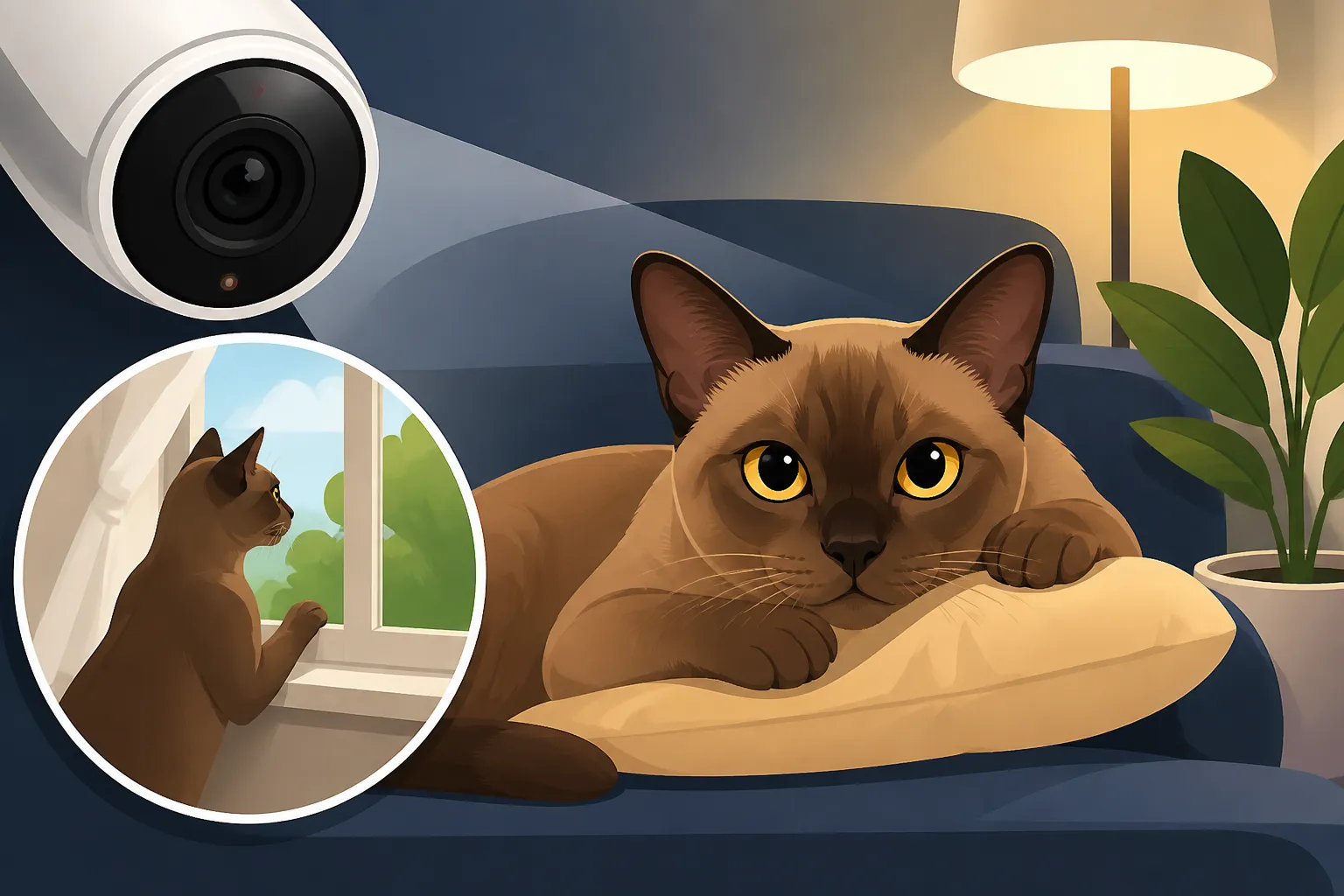
Footage might show your Burmese pacing back and forth near the main entrance for long periods after you've left, seemingly hoping for your immediate return. They might jump up onto your favorite chair, lie on your pillow, or even sniff around your shoes, trying to find your scent. Some cameras capture the heartbreaking sight of a Burmese sitting perfectly still for extended periods, simply staring at the door or out a window, a picture of quiet resignation. Others might show them restlessly moving from room to room, never quite settling, always searching. This constant, unfulfilled quest for contact highlights just how deeply their well-being is tied to human interaction, and how much they struggle with prolonged solitude. Why a Burmese Cannot Let You Leave the Room
Obsessive Grooming or Lack Thereof
Grooming is a natural and important part of a cat's life, keeping their coat healthy and clean. For a Burmese, their short, satin-like coat is usually low maintenance, requiring minimal effort to keep it gleaming. However, the camera can shed light on how loneliness impacts this essential activity, revealing either an excess or a deficiency.
Anxious Burmese cats may resort to obsessive grooming as a self-soothing mechanism. The constant licking and pulling can be clearly observed on camera, focusing on particular areas like their belly, legs, or tail. Over time, this can lead to visible bald patches, skin irritation, or even open sores. This is a clear indicator of elevated stress levels and a desperate attempt to cope with emotional discomfort. Conversely, a deeply depressed or apathetic Burmese might exhibit a noticeable lack of grooming. Their usually pristine satin coat might start to look dull, greasy, or matted, indicating a general disinterest in self-care. The camera provides irrefutable evidence, showing a cat that either excessively licks away its worries or simply stops caring about its appearance due to profound unhappiness. Both extremes are significant red flags that your Burmese is struggling emotionally.
Changes in Eating, Drinking, and Litter Box Habits
Behavioral changes around food, water, and the litter box are often the first, and sometimes only, physical indicators that something is amiss with your cat. While these can also signal underlying medical conditions, a camera can help you correlate them with your absence, pointing towards loneliness or anxiety as a contributing factor.
Some lonely Burmese cats might engage in stress-eating, consuming their meals much faster than usual, or begging incessantly for food the moment you walk in. Others might become finicky or refuse to eat altogether when alone, only picking at their food once you've returned. You might also notice an increase in water consumption, captured by the camera, which can be a sign of stress, or, more seriously, an early indicator of conditions like diabetes. Why a Burmese Drinking More Needs Testing That Week Even litter box habits can change; a lonely Burmese might start urinating or defecating outside the box. This isn't a "protest" or "spite"; it's a sign of extreme stress or insecurity, often related to feeling vulnerable or unhappy in their environment. The camera offers objective proof of these changes, allowing you to document the frequency and context, which can be crucial information for your vet.
| Behavior Type | Normal Burmese Behavior | Lonely Burmese Behavior (Camera Reveals) |
|---|---|---|
| Affection/Seeking | Greets you warmly, follows you, enjoys lap time and cuddles when you are home. | Paces by door, waits by windows, sits in your favorite spots, frantic greetings upon return, follows more intently. |
| Vocalization | Gentle rasps, rumbles, conversational meows. | Prolonged, mournful cries or rasps directed at empty rooms, silence for extended periods. |
| Destructive Acts | Uses scratching posts, chews on appropriate toys if offered. | Fabric chewing (blankets, clothes), excessive scratching on furniture/doorframes, pulling out own fur. |
| Grooming | Regular, thorough self-grooming, satin coat is sleek. | Obsessive licking leading to bald patches, or neglect of grooming (dull, unkempt coat). |
| Eating/Drinking | Eats two measured meals with enthusiasm, consistent water intake. | Stress-eats rapidly, refuses food when alone, increased water consumption. |
| Litter Box | Consistently uses clean litter box. | Urinates/defecates outside the box, especially in prominent locations or near your scent. |
| Activity Level | Playful, seeks interaction, naps when you nap. | Restless pacing, constant searching, or prolonged periods of stillness and apparent apathy. |
Beyond the Footage: Addressing Burmese Loneliness
Discovering your Burmese is suffering from loneliness via camera footage can be tough, but it's also empowering. You now have the information you need to make changes and improve their quality of life. The solutions often revolve around their fundamental need for companionship and engagement.
The Irreplaceable Value of Companionship: Why Two is Better Than One
For a Burmese, the single most impactful solution to loneliness is often another cat. These aren't solitary creatures by nature; they thrive on social interaction and often develop incredibly strong bonds with their feline housemates. Think of it this way: even if you can provide ample attention, you can't be a cat. You can't engage in their specific play, grooming, or communication rituals. Another cat can fill this void beautifully, offering constant companionship, playful wrestling, mutual grooming, and a warm body to curl up against during naps.
Many experienced Burmese breeders will actually recommend (and sometimes even require) that you adopt two kittens together, or at least have another cat in the home. They understand the breed's deep need for connection. Why Burmese Breeders Sell Them in Pairs When you bring a pair home, they effectively provide each other with round-the-clock company, reducing the chances of separation anxiety and boredom-induced behaviors. Watching two Burmese cats interact on camera – grooming each other, chasing toys together, or simply napping in a tangled heap – is a world away from seeing one lonely cat pacing by the door. This isn't just about "fixing" a problem; it's about enriching their lives exponentially. Why Two Burmese Settle Each Other
Enrichment Strategies for When You're Away
While another cat is often the best solution, it's not always feasible or immediate. In such cases, and even with a companion, enriching their environment is crucial for a Burmese left alone. Their intelligence and active nature mean they need mental and physical stimulation to prevent boredom and anxiety from taking root.
Interactive toys are a lifesaver. Look for puzzle feeders that dispense treats slowly, encouraging them to "hunt" for their food rather than devouring it in seconds. There are also automated toys, like laser pointers or feather wands on timers, that can engage them for short bursts throughout the day. You can find a huge variety of these options on platforms like Amazon, offering different levels of challenge and engagement. Which Toys Keep a Burmese Busy When You Are Out Vertical space is another often-overlooked necessity. Burmese cats love to climb and observe their territory from a high vantage point. Investing in a sturdy cat tree or installing wall-mounted shelves can provide both exercise and a sense of security. Again, a quick search on Amazon will show you countless options, from towering cat condos to sleek, modern wall perches. Rotating toys, leaving out different puzzle feeders each day, and ensuring they have access to sunny windows for bird-watching can all help break up the monotony of their day.
Considering Professional Help and Lifestyle Adjustments
If your Burmese is exhibiting severe signs of loneliness or anxiety, or if the destructive behaviors are persistent despite environmental enrichment, it's always wise to consult your veterinarian first. Rule out any underlying medical issues that could be contributing to the behaviors. Sometimes, what looks like anxiety can have a physical cause.
Beyond medical checks, consider how your lifestyle impacts your Burmese. Can you adjust your work schedule to spend more time at home? Is a pet sitter an option for daily visits, especially if you have a single cat? Remember, a Burmese doesn't do well with just a quick check-in; they need real interaction. Why a Burmese Needs Someone in the House, Not Checking In If you frequently travel, boarding might not be the best option for this breed, as the isolation in an unfamiliar environment can exacerbate their anxiety. A trusted pet sitter who can stay at your home, or even a friend or family member, is often a much better choice. For severe cases of separation anxiety, a veterinary behaviorist might be able to offer specific training plans or even temporary medication to help your cat cope. These professionals can provide tailored strategies that go beyond what you can learn from watching camera footage.
Setting Up Your Home Surveillance for Insight
Using a home camera isn't about being a "helicopter parent" for your cat; it's about gathering objective data to better understand and respond to their needs. The right setup can provide invaluable insights without being overly intrusive.
Choosing the Right Camera System
When selecting a camera to monitor your Burmese, you don't necessarily need a complicated, expensive system. Many affordable, user-friendly options are available that offer key features perfect for pet monitoring. What you're looking for is a reliable device that can capture clear footage, especially when you're not home.
Look for cameras with motion detection, so you're only recording when something is happening, saving you from sifting through hours of uneventful footage. Night vision is crucial if you want to monitor overnight or in dimly lit rooms. Many pet owners also find two-way audio incredibly useful; it allows you to speak to your Burmese, and sometimes, even hear their responses, which can be reassuring for both of you. Some cameras offer cloud storage for recorded footage, while others allow you to store it locally on a memory card. Brands found on platforms like Amazon often highlight these features clearly, making it easy to compare and select one that fits your budget and specific monitoring needs. The goal is to observe, not necessarily to interact constantly, so a robust recording and alert system is usually more important than live-streaming all day.
Optimal Camera Placement and Usage Tips
Once you have your camera, strategic placement is key to capturing the most insightful footage. You want to cover areas where your Burmese spends most of their time, or where they might exhibit anxious behaviors.
Start by placing cameras in high-traffic areas, like near the front door (where you leave), in the living room where your family typically congregates, and perhaps in your bedroom if that's where your cat usually sleeps. You might also consider placing one near their food and water bowls, and even near the litter box, to monitor those vital habits. If you've noticed specific areas of damage, like a chewed rug corner or a scratched sofa, placing a camera there can confirm if and when these behaviors occur. Remember, the purpose is observation, so try to avoid constantly checking the feed or interrupting their solitude unless it's genuinely necessary (e.g., to intervene in a dangerous situation). The data you gather will be most useful if it reflects their natural, uninfluenced behavior. Review the footage regularly, looking for patterns, triggers, and any new behaviors. This objective evidence can guide your discussions with your vet or help you implement more targeted enrichment strategies for your cherished Burmese.
Disclaimer
This article is for general informational purposes only and does not constitute professional advice. Laws, prices and regulations vary by location and change over time. Consult a qualified professional for guidance on your specific situation.