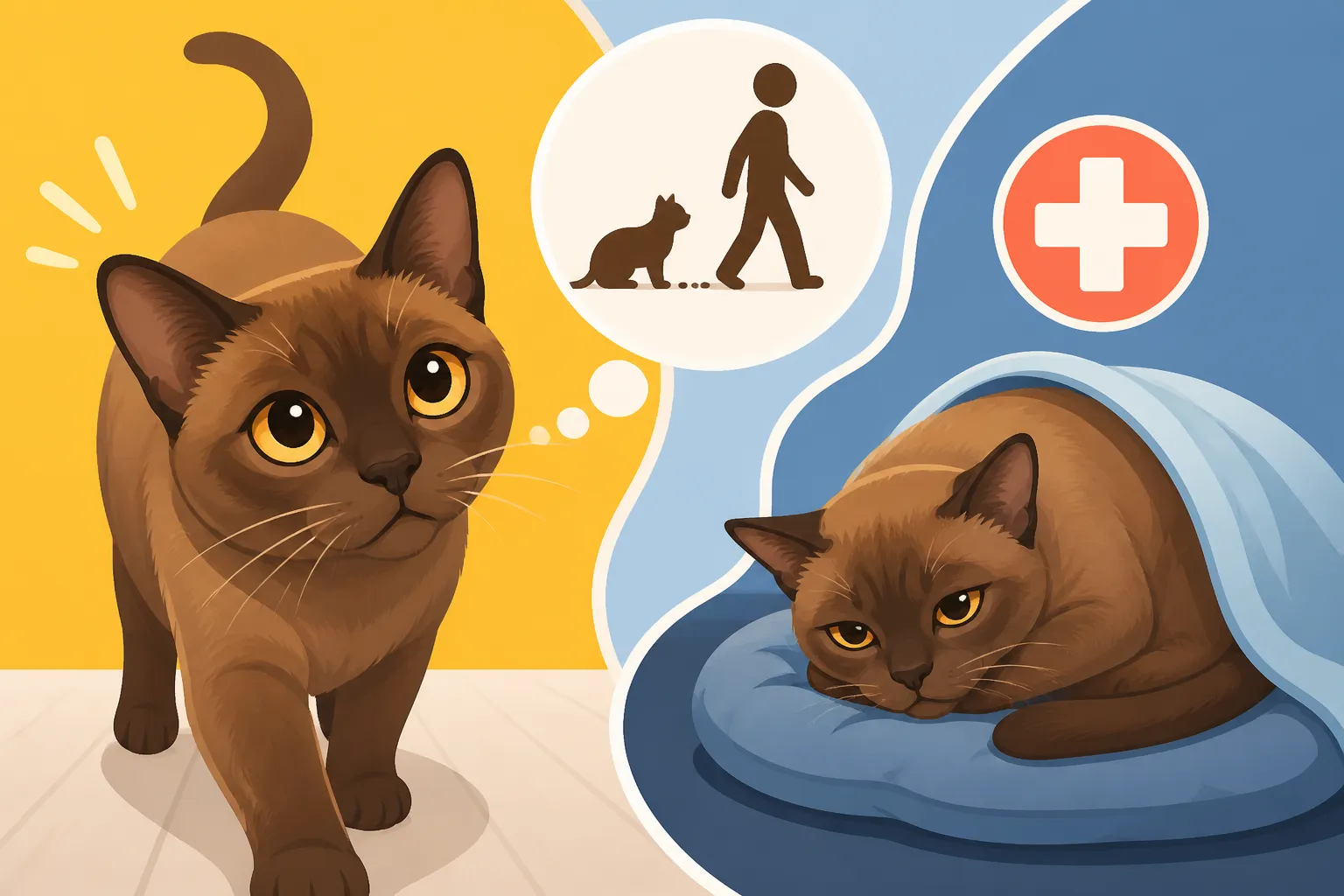
Why a Burmese That Stops Following You Is Unwell
One of the most endearing, and sometimes exasperating, qualities of a Burmese cat is their relentless companionship. They are truly the "Velcro cats" of the feline world, shadowing your every move. So, when your typically shadow-like Burmese suddenly stops following you from room to room, it’s not just a curious change in behavior; it’s a blaring alarm bell signaling that something is likely very wrong with their health. This guide will walk you through why this shift is so significant and what immediate steps you need to take.
Understanding the Burmese's Inherent 'Velcro' Nature
If you live with a Burmese, you know exactly what I mean by "Velcro cat." These aren't your aloof, independent felines that grant you an audience only at mealtimes. No, a Burmese cat is utterly devoted, constantly seeking out human interaction, and forming incredibly strong bonds with their chosen people. This isn't just a cute quirk; it's a fundamental aspect of their breed personality, bred into them over generations.
Think of it: your Burmese probably greets you at the door, weaves through your legs as you walk, sits on your shoulder while you do dishes, and is undoubtedly curled up under the duvet with you at night. The Burmese Is the Velcro Cat of the Cat Fancy. They thrive on being part of your life, an active participant in everything you do. They’re often compared to dogs in their loyalty and desire for company, always wanting to be right there, in the thick of things, observing or participating. This constant presence isn't just about demanding attention; it's about feeling secure and connected to their family. They love to push their face into your palm for pets and will follow you to the ends of the earth, or at least to the bathroom, just to be near you. Why a Burmese Pushes Its Face Into Your Palm.
Because of this deeply ingrained need for closeness, any deviation from this shadowing behavior is highly unusual. It's not like a cat that might occasionally prefer a quiet nap in a sunbeam over your lap. For a Burmese, being with you is their default, their comfort zone, their very definition of happiness. If they’re not doing it, something has fundamentally shifted within them.
Sudden Changes in Following Behavior: A Red Flag for Health
When your Burmese, a creature notorious for being underfoot, suddenly starts to keep its distance, to lie alone, or to simply watch you from afar without joining you, it’s a massive warning sign. This isn't just a mood swing or a new preference for solitude; it's almost always an indication of underlying physical unwellness. Their affectionate nature means that they often hide pain or discomfort until it's quite advanced, but a change in their "velcro" behavior is one of the clearest early indicators that something is amiss.
Picture this: You walk into the kitchen, and instead of Muffin weaving figure-eights around your ankles, she remains on the sofa, simply watching you. Or perhaps you head to the bedroom, and instead of her customary sprint to beat you to the bed, she stays put, looking slightly disengaged. These seemingly subtle shifts are incredibly important. A healthy Burmese, even an older one, typically retains their desire to be near you, perhaps just moving a little slower. What an Old Burmese Still Wants to Play. The complete cessation of their characteristic following is them telling you, in the most profound way they know how, that they are not feeling well.
They might not cry out, limp noticeably, or refuse food outright in the early stages, because cats are masters of disguising vulnerability. This instinct comes from their wild ancestors, where showing weakness could mean becoming prey. So, while your Burmese may still purr and seek gentle pats when you approach, the lack of their usual active engagement and trailing you around the house is a stark signal. It suggests a level of discomfort, pain, or profound lethargy that overrides their natural desire for companionship. Why a Burmese Hides Illness Behind Its Affection. They are conserving energy, protecting themselves, or simply too unwell to maintain their typical social patterns.
Specific Health Concerns to Consider When Your Burmese Stops Following
When a Burmese stops being your shadow, a host of health issues could be at play, each requiring prompt veterinary attention. Their robust, muscular build often masks subtle symptoms, making these behavioral cues even more vital.
Pain and Discomfort
One of the most common reasons a cat withdraws is pain. Even if your Burmese isn't overtly limping or vocalizing, chronic pain can make movement uncomfortable, leading them to stay put rather than follow you.
- Arthritis: As Burmese cats age, they can develop arthritis, particularly in their hips or spine. While they often remain playful well into their senior years, the constant movement of shadowing you can become too much. They might still play enthusiastically for short bursts, but the idea of constantly getting up and down, following you from room to room, becomes daunting. Imagine having achy joints – you'd choose comfort over constant motion too. An older Burmese might prefer to stay curled up in a heated bed rather than venturing out. Why an Old Burmese Still Wants a Lap.
- Dental Disease: Burmese are prone to gum disease and tooth resorption, often losing teeth in their teens. Why a Burmese's Gums Recede Early. Painful gums or teeth can make them feel generally unwell and less inclined to engage. Chewing might become painful, impacting their appetite, and contributing to overall lethargy. While you might not directly link a toothache to a lack of following, the systemic discomfort can be significant.
- Injury: Though less common for indoor cats, a subtle injury, like a muscle strain or a sprain, could make movement painful. They might not show an obvious limp, but the general discomfort makes them hesitant to move much.
Lethargy and Weakness
Many illnesses can cause a general sense of lethargy and weakness, making the energetic act of following their human simply too exhausting.
- Diabetes Mellitus: Burmese cats have the highest diabetes rate of any cat breed, and it's a serious concern, especially as they get older. The Burmese Has the Highest Diabetes Rate of Any Cat Breed. Early signs of diabetes can include increased thirst and urination, but also a noticeable drop in energy and vitality. A diabetic Burmese might feel perpetually tired, making their usual shadowing behavior impossible. They might still come for cuddles when you're stationary, but they lack the drive to initiate movement. What Diabetes Looks Like in a Burmese. If your Burmese is drinking more, combine that with a lack of following, and you need to see a vet that week. Why a Burmese Drinking More Needs Testing That Week.
- Hypokalemia (Burmese Hypokalemic Polymyopathy): This is a genetic condition unique to Burmese cats, causing episodes of muscle weakness due to low potassium levels. Hypokalemia Is the Burmese Disease With a DNA Test. While severe episodes can lead to them being unable to lift their head, milder forms might just manifest as generalized weakness and a reluctance to move. If their muscles feel weak and tired, they won't want to follow you. This condition can affect kittens, but some Burmese will carry the gene silently and show signs later in life. How Hypokalemia First Shows in a Burmese Kitten.
- Kidney Disease: This is a common ailment in older cats, including Burmese. Early symptoms are often subtle but include increased thirst, urination, and a gradual loss of appetite and energy. How Kidney Disease Arrives in an Old Burmese. As kidney function declines, toxins build up in the body, making the cat feel nauseous and generally unwell, which certainly dampens their desire to be your constant companion.
- Hyperthyroidism: Another condition more prevalent in senior cats, hyperthyroidism causes an overactive thyroid gland. While it can cause weight loss despite increased appetite, it can also lead to muscle weakness, lethargy, and a general feeling of being unwell, impacting their usual active social behavior. Why Hyperthyroidism Catches an Older Burmese.
Other Illnesses
Beyond these, various other conditions can lead to a withdrawn, less interactive Burmese.
- Gastrointestinal Upset: Chronic nausea, indigestion, or conditions like inflammatory bowel disease can make a cat feel miserable. They might associate movement with discomfort or simply feel too sick to engage.
- Urinary Tract Infections (UTIs): Pain or discomfort during urination can make a cat withdrawn. They might spend more time in the litter box or squat in unusual places, and the general malaise can impact their desire to follow you.
- Heart Conditions: While less common to present primarily as a change in following, conditions like hypertrophic cardiomyopathy (HCM) can cause generalized weakness or breathing difficulties, making exertion of any kind less appealing. Whether the Burmese Gets HCM.
The key takeaway here is that a change in this foundational behavior is a strong signal that your beloved Burmese needs medical attention. Don't dismiss it as them "growing out of it" or "just being lazy."
What to Do When Your Burmese Stops Following You
Discovering your shadow-cat isn't shadowing you can be unsettling, but knowing what steps to take immediately can make all the difference. This isn't a situation for a "wait and see" approach; prompt action is key.
Observe and Document Other Changes
Before you even call the vet, take a moment to observe your Burmese for any other subtle changes. The more information you can provide, the better your vet can help.
Consider these aspects:
- Appetite and Thirst: Has their food intake changed? Are they eating less, refusing certain foods, or eating more (a red flag for diabetes)? Is their water consumption noticeably higher or lower? Why a Burmese Drinking More Needs Testing That Week.
- Litter Box Habits: Are they urinating more or less? Are there any changes in stool consistency or frequency? Is there any straining when they go to the bathroom?
- Vocalization: Is their characteristic rasping rumble different? Are they quieter, or perhaps making unusual noises? What a Burmese's Rasping Voice Sounds Like.
- Grooming: Are they over-grooming a particular area (which can indicate pain or discomfort), or are they neglecting their grooming, leading to a duller coat?
- Posture and Movement: Do they seem stiff when they move? Are they hesitant to jump onto furniture? Do they hold their head differently? Why a Hypokalemic Burmese Walks Stiffly.
- Hiding: While Burmese are social, an unwell one might seek out quiet, secluded spots to hide. This is a significant indicator of illness.
Create a little mental log or even jot down notes. A timeline of when you first noticed the change, combined with these observations, will be invaluable.
| Behavioral Change | Potential Significance |
|---|---|
| Stops following, stays distant | Pain, lethargy, general malaise (primary indicator for Burmese) |
| Decreased appetite / Refusal to eat | Nausea, dental pain, systemic illness, kidney disease, IBD |
| Increased thirst | Diabetes, kidney disease, hyperthyroidism |
| Increased urination | Diabetes, kidney disease, urinary tract infection |
| Hiding/seeking solitude | Pain, fear, severe illness (cats hide vulnerability) |
| Reduced grooming | Lethargy, pain, feeling unwell |
| Changes in vocalization (quieter/raspier) | Pain, discomfort, respiratory issues |
| Hesitation to jump/stiff movement | Arthritis, joint pain, muscle weakness (e.g., Hypokalemia) |
Schedule an Immediate Veterinary Visit
Given the Burmese's affectionate nature, a sudden cessation of following behavior is a strong indicator of illness, not just a shift in mood. Therefore, your next step is to call your veterinarian that day. Explain that your Burmese, usually your constant shadow, has stopped following you and describe any other changes you've observed. Why a Withdrawn Burmese Should See a Vet That Day.
The vet will likely want to see your cat as soon as possible for a thorough examination. They will check their temperature, listen to their heart and lungs, palpate their abdomen, and check their mouth and joints. Blood work (to check for diabetes, kidney function, thyroid issues, and electrolyte imbalances like potassium for hypokalemia) and a urinalysis are almost always recommended. Which Blood Panel a Burmese Should Have Yearly. They might also suggest imaging, like X-rays, if they suspect orthopedic pain or internal issues.
Remember, early detection and intervention for many of the common Burmese health conditions, like diabetes and kidney disease, can significantly improve their prognosis and quality of life. Don't wait until other, more obvious symptoms appear; the change in their following behavior is often one of the first, most reliable indicators something is wrong.
Supporting Your Unwell Burmese at Home
While awaiting your vet appointment, or if your vet advises monitoring for a short period, ensure your Burmese is as comfortable as possible.
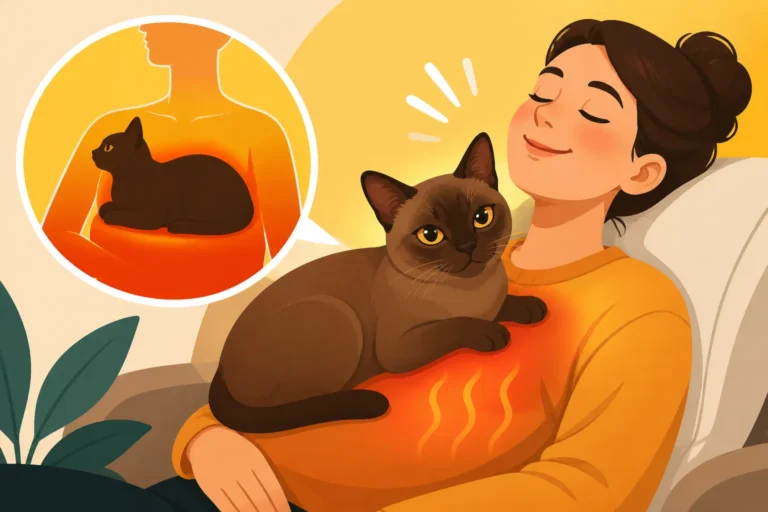
- Warm, Quiet Space: Provide a cozy, warm spot away from household hustle and bustle. A heated bed can be incredibly comforting, especially for a short-coated Burmese who feels the cold more. Why a Burmese Needs Somewhere Warm to Sleep.
- Easy Access to Essentials: Ensure food, water, and a litter box are easily accessible and close to where your cat is resting. Don't make them travel far if they're in pain or feeling weak.
- Gentle Affection: Offer gentle pets and reassurance, but don't force interaction if they seem reluctant. Let them dictate the terms of physical contact. A Burmese might still appreciate your presence nearby even if they don't want to be touched.
- Monitor Closely: Continue to observe their behavior, appetite, and litter box habits. Any new symptoms or worsening of existing ones warrant another call to your vet. Keep track of how much they eat and drink, as this data is crucial. Why a Burmese's Appetite Goes When It Is Unhappy.
Your Burmese cat is more than just a pet; they're a deeply connected member of your family. Their unique "Velcro" personality means that a deviation from their typical shadowing behavior is a serious sign of distress. By understanding their nature, recognizing the warning signs, and acting swiftly to get veterinary care, you can help ensure your beloved companion receives the care they need to return to their happy, healthy, shadow-like self.
Disclaimer
This article is for general informational purposes only and does not constitute professional advice. Laws, prices and regulations vary by location and change over time. Consult a qualified professional for guidance on your specific situation.