What a European Burmese’s Head Should Look Like
European Burmese head shape features, including wedge outlines, rounded contours, full cheeks, and balanced muzzles.
Is this the right one for you?
Origins and temperament, size and coat, what living with one is actually like, and how it compares to the breeds people weigh against it.
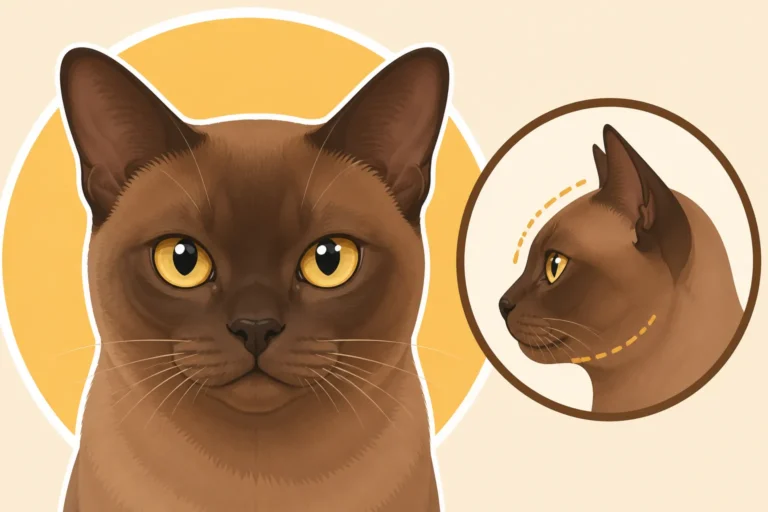
European Burmese head shape features, including wedge outlines, rounded contours, full cheeks, and balanced muzzles.
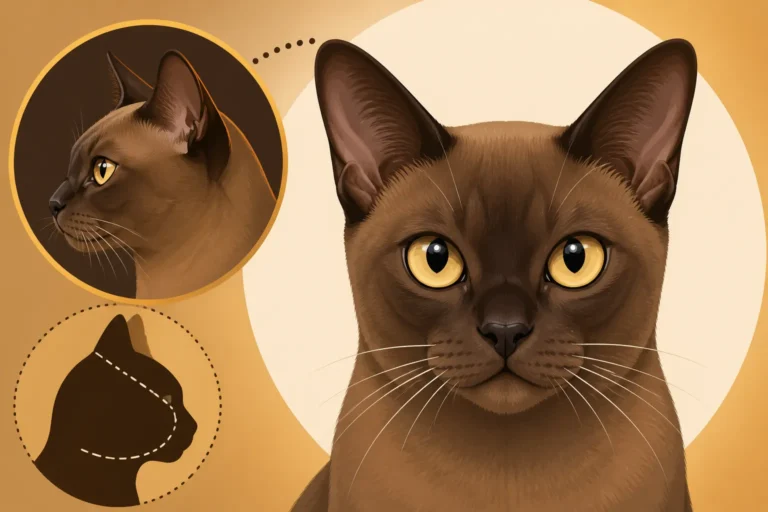
The American Burmese head features broad curves, full cheeks, a short broad muzzle, large round eyes, and a firm chin.
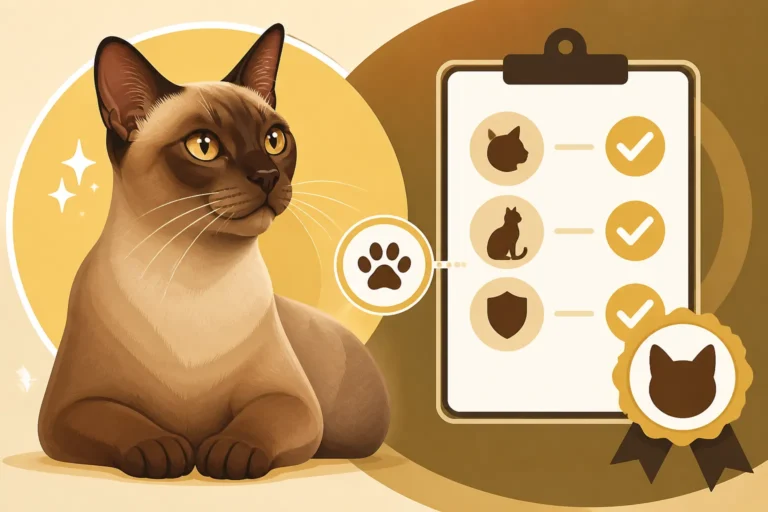
GCCF registration for Burmese cats records pedigree and ancestry details under UK rules, excluding health guarantees or show promises.
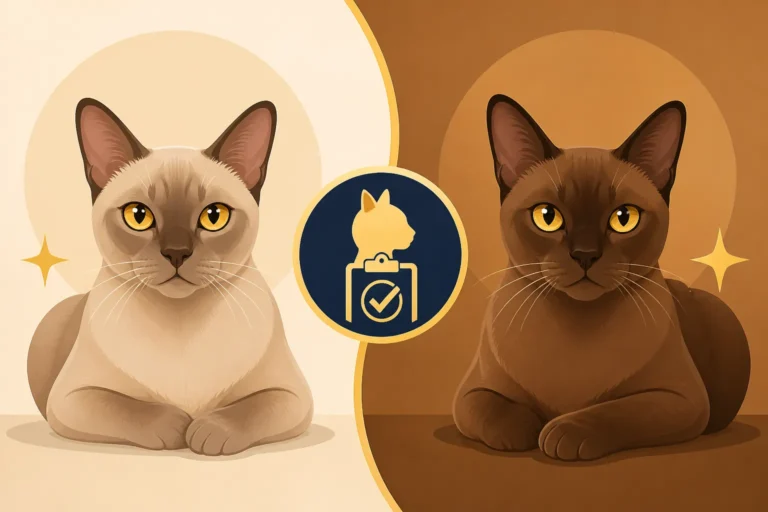
TICA registration details for American and European Burmese cats clarify ancestry, breed standards, and lineage designations.

The Cat Fanciers Association registers European Burmese cats under a broader Burmese breed category rather than a separate one.
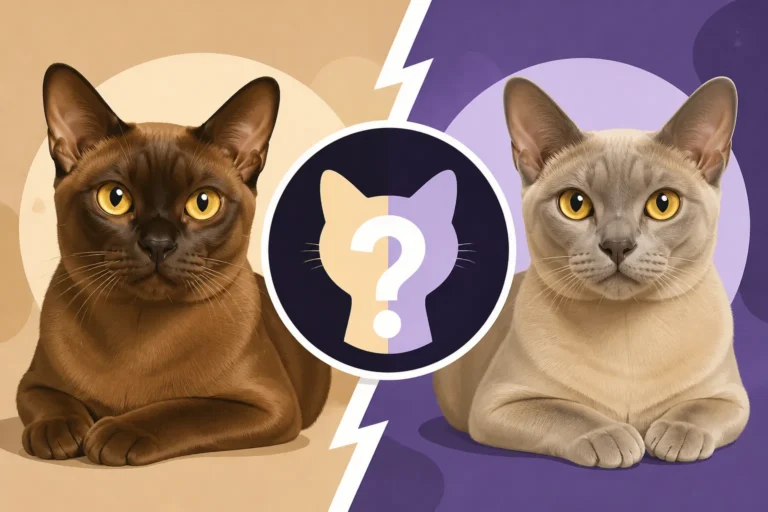
American and European Burmese cat types differ in appearance and registry standards, depending on pedigree rules and shared ancestry.
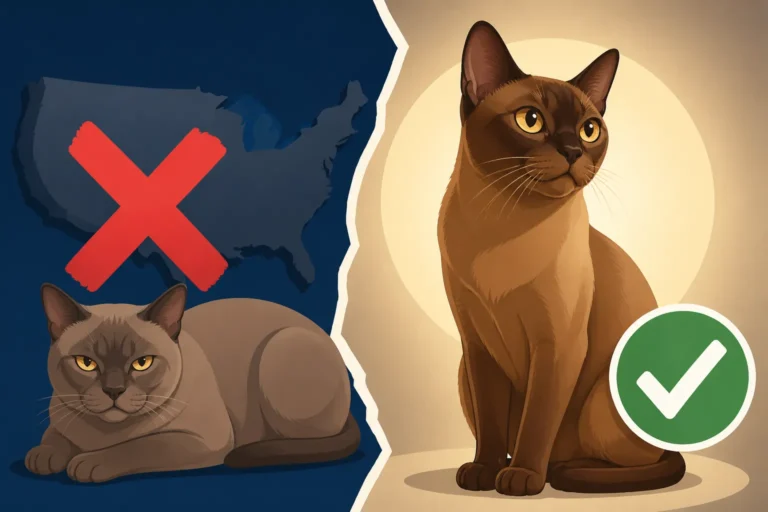
British and American breeders created different Burmese cat appearances through generations of selection for distinct head and body shapes.
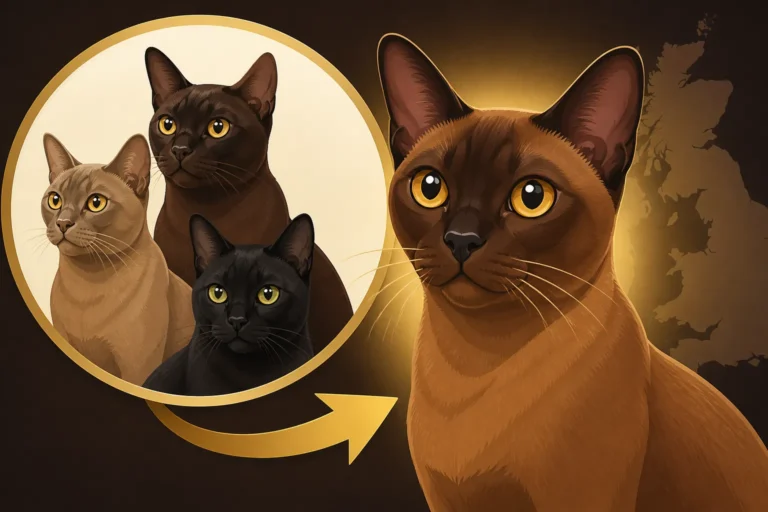
British Burmese cats originated from imported American Burmese and Siamese crosses, developed through selective breeding by British breeders.
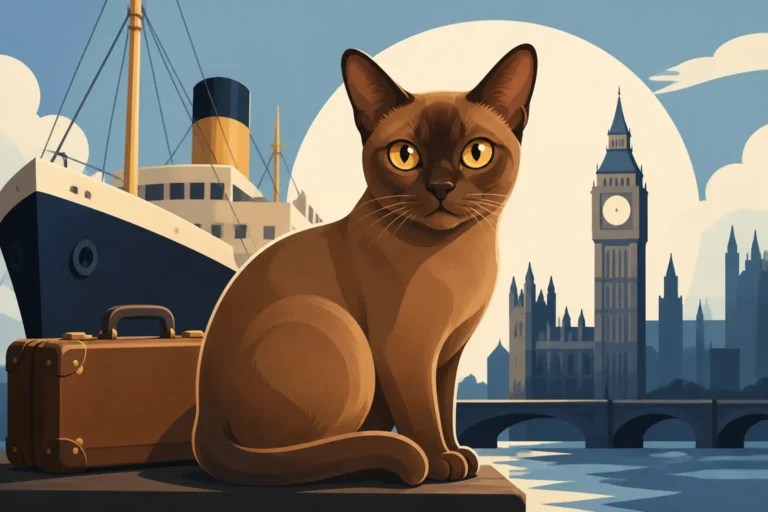
Postwar British Burmese cats originated from American imports arriving in 1947, tracing back to Wong Mau in 1930.
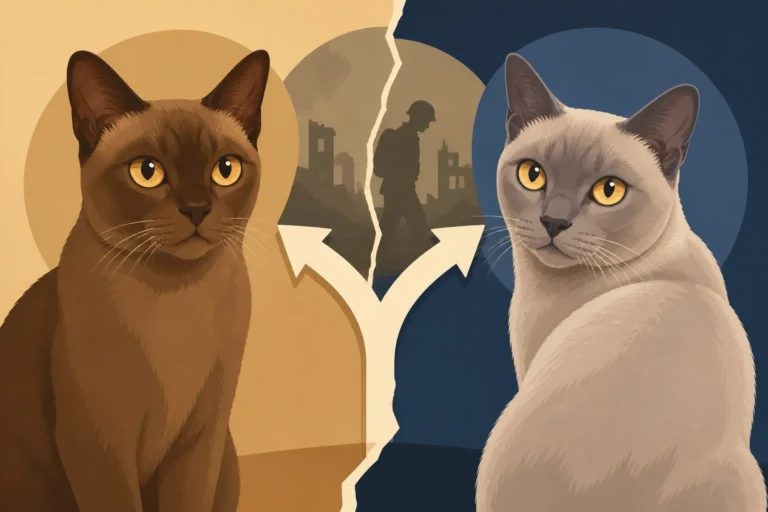
Postwar British Burmese cats diverged from American lines because breeders selected a more moderate, elegant outline.