How the British Burmese Diverged After the War
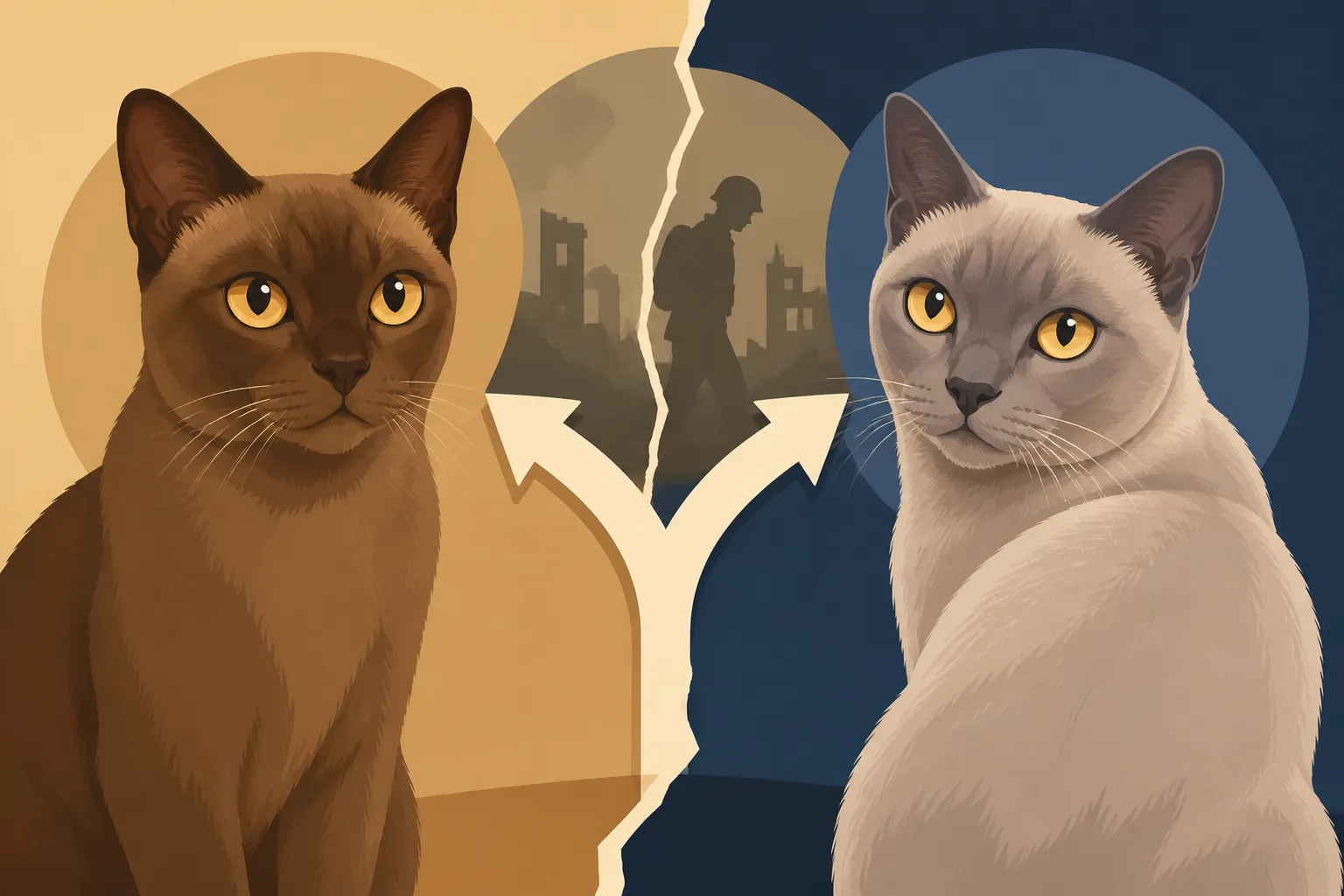
The British Burmese did not emerge as a separate breed overnight. After the Second World War, a small number of Burmese cats reached Britain, where breeders built a local population and selected for a different look from the increasingly compact American Burmese. This guide traces how that divergence happened, what shaped it, and why “British” and “American” still cause confusion.
How Burmese cats reached Britain after the war
A breed rebuilt from a small number of cats
The Burmese story begins before the British branch took shape. In 1930, a cat named Wong Mau arrived in the United States and became central to an early breeding program. Her descendants helped establish the Burmese as a recognized breed, although the first generations involved deliberate matings with Siamese cats. For the background, see The Burmese Began With One Cat Called Wong Mau and Why the First Burmese Was Bred to a Siamese.
World War II disrupted cat breeding across Europe. Once the war ended, British breeders had to develop their Burmese population from a limited number of cats brought in from elsewhere, rather than from a large, established local group. The Burmese began arriving in Britain in the postwar period, with imported cats forming the starting point for the British breeding community. When the Burmese Reached Britain gives more background on that arrival.
A small founding population has consequences. Breeders have fewer unrelated cats to choose from, and each mating can matter more to the future shape of a line. That makes early decisions about type, health, and suitable pairings especially influential. The British Burmese was therefore not simply an American Burmese living in Britain; it became a regional breeding tradition shaped by the cats available and the choices breeders made.
The early challenge of building a stable population
When a breed is established from only a few founders, breeders face a practical balancing act. They want kittens that resemble the desired Burmese type, but they also need enough genetic variety to avoid narrowing the population too far. In the early years, maintaining a healthy, viable breeding pool could be as important as choosing a particular head shape or body outline.
The same issue had appeared in the breed’s American history. Burmese registration was suspended by the Cat Fanciers’ Association after concerns that some pedigrees included too much Siamese ancestry. The episode shows how seriously registries treated breed identity and pedigree records, especially while the population was still small. For a closer look, read Why CFA Suspended Burmese Registration and What CFA Required Before Reinstating the Burmese.
It helps to keep the timeline in perspective: the postwar British Burmese developed from an existing breed, but from a relatively narrow group of imported cats. That is different from saying that British breeders invented an entirely new breed after the war. The divergence was gradual, coming through generations of breeding and changing preferences rather than one dramatic split or a single official decision.
Why British Burmese began to look different
Breeders selected for a different type
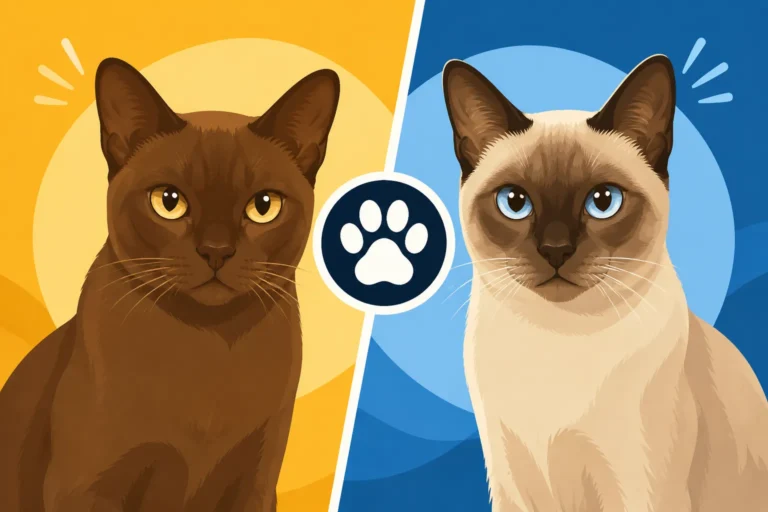
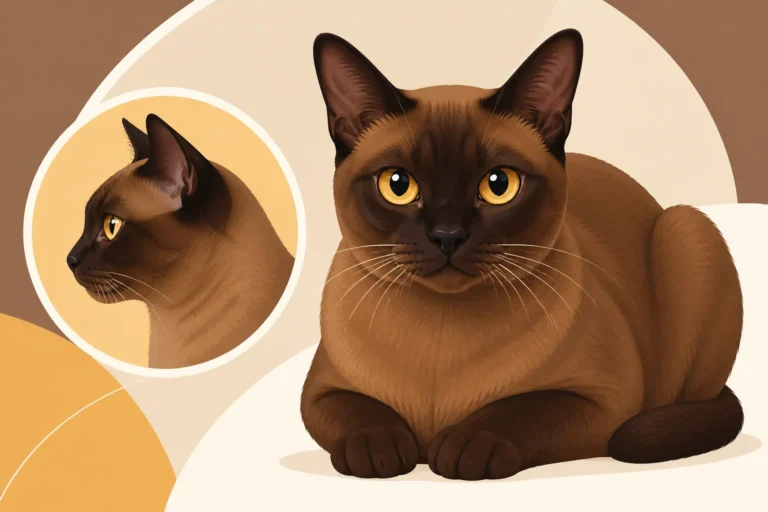
Cat breeds change in appearance because people select particular traits over generations. In Britain, breeders increasingly favored a more moderate, elegant outline: a cat with a balanced body, a less rounded head, and a more tapered muzzle than the compact, rounded American Burmese favored by many US breeders. The difference is easiest to understand as a shift in emphasis, not as a simple contrast between “correct” and “incorrect.”
The American Burmese standard developed toward a compact, substantial cat with a notably rounded head and broad, expressive eyes. British breeders, meanwhile, selected for a more refined and open expression, with a less rounded overall silhouette. These preferences were reinforced by local breeding choices and show standards, which gave breeders a shared picture of what they were aiming for. Why Britain Rejected the American Burmese Type explores the distinction in more detail.
The contrast can be subtle when you see individual cats rather than show photographs. A British-type Burmese can still be muscular, affectionate, and unmistakably Burmese. An American Burmese can also vary from the most extreme show example. The labels describe broad breeding traditions and standards, not a guarantee that every cat will match a single rigid template.
| Feature | British or European-style Burmese | American-style Burmese |
|---|---|---|
| Overall impression | More moderate and elegant | More compact and rounded |
| Head shape | Less rounded, with a more tapered outline | Rounder head and fuller muzzle |
| Body | Muscular but generally less cobby in outline | Compact, solid, and substantial |
| Breeding tradition | Developed through British and wider European lines | Developed through American lines |
| What the label tells you | A broad type and breeding background | A broad type and breeding background |
Standards helped make the difference visible
A breed standard is a written description used by judges and breeders to assess how closely a cat matches a desired type. Standards do not create every difference on their own, but they make preferences consistent. When breeders repeatedly choose cats that fit the same description, those characteristics become more common in later generations.
The British and European tradition favored a different balance of features from the American one. That did not mean British breeders stopped caring about the Burmese’s defining qualities, such as its close-lying coat, expressive eyes, and famously solid, muscular feel. Rather, they emphasized those qualities within a more moderate outline. You can compare the descriptions in What the European Burmese Standard Asks For and What the American Burmese Standard Asks For.
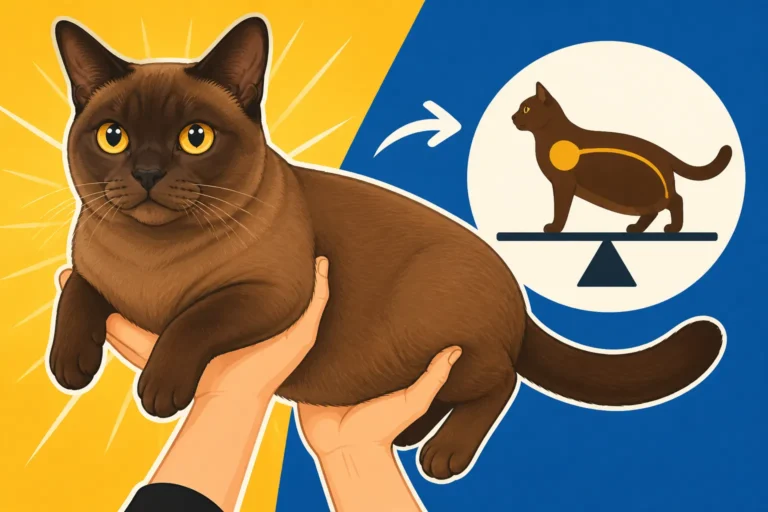
This is why photographs can be misleading. A pose, camera angle, age, or body condition can make a cat look rounder or slimmer than it is. A kitten’s features also change as it matures. For a fair comparison, look at adult cats, study pedigrees, and ask which standard the breeder follows instead of relying on a single image or an informal label.
From British Burmese to European Burmese
A regional tradition became a wider type
The British Burmese did not remain confined to Britain. Breeding lines and show traditions spread across Europe, and “European Burmese” became a useful way to describe a broader type associated with that history. In everyday conversation, people may use “British Burmese” to refer to the British-origin tradition, while registries and breeders may use “European Burmese” for cats bred to a related European standard.
Those names are not always used identically by everyone. A breeder may describe a cat by its country of origin, its pedigree, or the registry’s classification. That means two people can use different terms while discussing cats from closely related lines. If you are researching a particular animal, its pedigree and the registry that records it are more informative than the label alone.
The American and European traditions can also be treated differently by cat registries. Some organizations maintain separate classifications or standards, while others handle the types under their own rules. For a registry-focused explanation, see How CFA Registers a European Burmese. The important point is to check the specific organization rather than assuming that one system’s terminology applies everywhere.
More colors broadened the breed’s image
Appearance differences are not limited to body shape and head type. Over time, a wider range of coat colors became associated with European Burmese breeding than with the traditional four-color palette often linked to American Burmese. Red, cream, and tortoiseshell patterns are among the additional colors people may encounter in European lines, though recognition depends on the registry and its standard.
That difference can surprise someone who knows the Burmese mainly as a sable, champagne, blue, or platinum cat. Color variation does not necessarily mean a cat is a different breed, but it can signal that the animal belongs to a different registry tradition or breeding population. It is worth checking which colors the relevant registry recognizes and how the cat’s pedigree is recorded.
A breeder’s explanation should connect the color and type to the cat’s documented background. If someone simply advertises a Burmese as “rare” without clarifying its pedigree, standard, or registry, ask for details. Which Colors Only the European Burmese Has offers a more focused look at how the recognized palettes differ.
What the divergence means for today’s cat owners
“British” does not always mean a separate breed
One common point of confusion is whether the British Burmese and American Burmese are two entirely separate breeds. In practice, the answer depends on the registry and the way the terms are being used. They share a Burmese history, but their breeding traditions and standards have developed different expectations of type. Whether the Two Burmese Types Are Separate Breeds explains why a straightforward yes-or-no answer can be misleading.
When comparing kittens, ask the breeder which standard they follow and how the parents are registered. Request the pedigree and look for consistent terminology throughout it. If the paperwork names a particular type or registry, that gives you a clearer basis for understanding the kitten than a casual description in an advertisement.
It is also sensible to ask what the breeder means by “British Burmese.” They may be referring to a European-style cat, a line with British ancestry, or simply a Burmese bred in Britain. Those descriptions are not interchangeable. A clear answer should include the parents’ background and the registry under which the litter is recorded.
Choose for fit, not just for a label
The difference in type may matter greatly to someone who follows cat shows or wants a cat bred to a particular standard. For most households, though, a cat’s temperament, health, socialization, and breeder practices are at least as important as whether its head is more rounded or its outline more elegant. A well-raised Burmese can be a close companion whichever type it belongs to.
When visiting a breeder, notice how the cats behave in their home environment. Ask how kittens are socialized, what health information is available for the parents, and what support the breeder offers after the kitten comes home. A thoughtfully bred kitten should come with clear records and a breeder who can explain the line without relying on vague claims about rarity or appearance.
The practical details of bringing home any Burmese matter too. You will need a secure carrier, appropriate food, litter, and basic grooming supplies. Some owners use retailers such as Chewy to look for everyday supplies, while also asking the breeder which food and litter the kitten already knows. Keeping familiar routines at first can make the move less stressful for a kitten.
If you are still comparing cats, read Which Household a Burmese Fits and How a Burmese Differs From a Tonkinese. Those comparisons can help you focus on what living with the breed is actually like, rather than getting caught up only in the history of its show type.
Disclaimer
This article is for general informational purposes only and does not constitute professional advice. Laws, prices and regulations vary by location and change over time. Consult a qualified professional for guidance on your specific situation.