How to Spot Weight Gain on a Muscular Burmese
It's incredibly frustrating when you know your beloved Burmese cat needs to maintain a healthy weight, but their naturally dense, muscular physique makes it so challenging to actually see if they're gaining a few extra pounds. You might look at them and think, "They just look solid!" but those subtle changes can lead to serious health issues down the line. This guide is here to walk you through exactly how to spot those sneaky signs of weight gain on your muscular Burmese, giving you the tools to keep them in peak condition.
The Burmese Physique: More Than Just a Pretty Face
Burmese cats are truly unique, not just in their charming personalities but also in their physical build. Unlike many slender, elegant breeds, a Burmese has a substantial, compact body that can easily mislead you about their true weight. It’s this very characteristic that makes monitoring their weight such a critical, yet often overlooked, part of their care.
"Brick Wrapped in Silk" – Understanding the Breed Standard
You've probably heard the term "brick wrapped in silk" used to describe a Burmese, and it's absolutely spot on. They are remarkably muscular and dense for their size. When you pick up a Burmese, you'll often be surprised by how much heavier they feel than they look. This isn't fluff or fat in a healthy cat; it's pure, solid muscle. Their bone structure is heavy, and their bodies are compact and rounded, giving them a very robust feel. This means that a healthy Burmese will already feel quite substantial in your arms. The challenge, then, becomes distinguishing this healthy heft from the beginnings of unhealthy weight gain. It's not about them becoming visibly 'fat' in the way a less muscular cat might; it's about a subtle increase in overall density that pushes them beyond their ideal body condition. Understanding What a Burmese's Body Type Is Called is the first step in appreciating this unique aspect.
The Deceptive Satin Coat
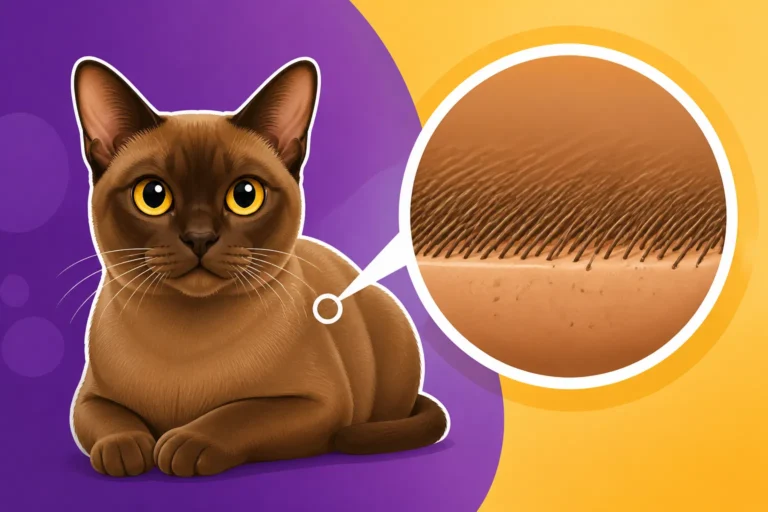
Adding to the deception is their exquisite satin-like coat. It's incredibly short, fine, and lies very close to their body, almost like velvet. Unlike long-haired breeds where extra weight might be hidden under layers of fur, the Burmese's sleek coat actually hugs their contours. You might think this would make weight gain obvious, but it can actually make it harder. Instead of looking "fluffy" when they gain weight, a Burmese tends to simply get rounder and more uniformly plump. Their smooth coat can stretch over a thickening body without revealing the early tell-tale signs of fat rolls or sagging skin that you might notice on other breeds. This smoothness can make their shape appear consistent, even as their internal fat stores increase.
Why Early Weight Gain Detection Matters for Your Burmese
While weight gain is a concern for any cat, for the Burmese, it’s not just about looking good; it's a critical health issue. This breed carries a predisposition to certain conditions that are significantly exacerbated by even a small amount of extra weight, making early detection and prevention paramount. It’s a crucial part of Why Portion Control Is Medical Care in a Burmese.
The Silent Threat of Diabetes
This is perhaps the biggest reason why every Burmese owner needs to be hyper-vigilant about weight. The Burmese cat breed has an alarmingly high genetic predisposition to Type 2 diabetes. We’re talking about a breed that is Why a Burmese Is Four Times More Likely to Become Diabetic than many other cats. Even a slight increase in body fat significantly raises their risk. Fat cells are metabolically active and can interfere with insulin sensitivity, meaning their bodies struggle to use insulin effectively to regulate blood sugar. What might be a minor weight issue in another cat breed can be a direct fast-track to a diabetes diagnosis for a Burmese. Catching weight gain early isn't just a recommendation; it's a medical imperative that can literally prolong their healthy life and potentially prevent the onset of this serious, life-altering condition. Learning about How Many Calories a Diabetes Prone Burmese Should Get is fundamental here.
Strain on Joints and Organs
Beyond diabetes, extra weight puts undue strain on your Burmese's entire system. Their joints, particularly hips and knees, can suffer from the added burden, potentially leading to arthritis or exacerbating existing joint issues, even in a breed known for its agility. Imagine carrying an extra backpack all day, every day – that's what even a few extra pounds feel like to your cat. Furthermore, internal organs like the heart and liver have to work harder, increasing the risk of cardiovascular disease and fatty liver disease. A heavier cat is also often less active, leading to a vicious cycle where reduced movement contributes to more weight gain, further impacting their quality of life and lifespan. Their overall vitality, playfulness, and even their ability to groom themselves effectively can be compromised, leading to a poorer quality of life long before more serious diseases manifest.
Hands-On Assessment: Feeling for Changes
Since their muscular build and sleek coat can hide visual cues, your hands become your most important tool for assessing your Burmese's body condition. This isn't about guesswork; it's about learning what a healthy Burmese feels like and regularly checking for subtle deviations.
Rib and Spine Palpation
This is the golden standard for assessing body condition in any cat, but especially important for a Burmese. You need to get comfortable with what your cat's healthy rib cage feels like.
First, gently run your open palms along your Burmese's sides, just behind their shoulders. In a healthy Burmese, you should be able to feel their ribs individually, much like feeling the knuckles on your hand when your palm is flat. You shouldn't see them poking out, but you should definitely be able to distinguish them under a thin layer of muscle and skin. If you have to press firmly to feel the ribs, or if they feel obscured by a soft, squishy layer, your cat is likely carrying too much weight.
Next, move your hands to their spine. Run your fingers gently down the length of their back. You should be able to feel the individual bumps of their vertebrae, again, without them being sharply prominent. If the spine feels like a smooth, rounded cylinder, or if it's hard to distinguish the individual bones even with light pressure, it's a strong indicator of excess fat accumulation along their back. A healthy Burmese should have a strong, firm feel to their musculature, not a soft, yielding one. This tactile examination is often far more reliable than just looking at them.
The Tummy Tuck Test
This visual and tactile check helps you assess their waistline and belly. When looking at your Burmese from above, a healthy cat should have a slight 'tuck' in behind their ribs, creating a gentle hourglass shape. It's not as pronounced as in some svelte breeds, but it should definitely be there. If you're looking down and see a straight line from their ribs to their hips, or worse, a bulge outwards, that's a red flag.
Now, for the tactile part: run your hand along their belly. A healthy Burmese should have a lean abdomen with no significant sag or pouch. While some cats develop a primordial pouch (a loose flap of skin and fat along their belly) as they age, especially after spaying or neutering, it should be just skin and a minimal layer of fat, not a firm, pendulous belly. If their belly feels full and rounded, or if there's a distinct layer of fat that wiggles independently from their muscle as they walk, they are likely overweight. This 'tummy tuck test' helps confirm what your hands felt on their ribs and spine, giving you a more complete picture of their body condition. This is how you really gauge How to Feel a Burmese's Ribs Under a Satin Coat.
Observing Movement and Agility
Subtle changes in your Burmese's behavior and movement can also be early indicators of weight gain. Burmese cats are renowned for their playful, kittenish nature, often remaining active and agile well into their senior years. They love to leap, climb, and pounce with enthusiasm.
If you start noticing your Burmese is a little less eager to jump onto high surfaces, like a cat tree or your shoulder, or if they seem to struggle slightly with these maneuvers, it could be due to carrying extra weight. Maybe their zoomies are shorter, or they're more content to lounge than engage in an energetic play session. They might not chase their favorite wand toy with the same gusto, or they might seem to tire more quickly during playtime. Look for decreased flexibility during stretching or grooming, or perhaps a slightly slower, more deliberate gait. These aren't just signs of getting older; they can be early warnings that their body is finding movement more cumbersome due to accumulated pounds. Because A Burmese Is Still Playing at Fifteen, any notable reduction in activity at a younger age warrants investigation.
Routine Monitoring: The Scales Are Your Friend
While hands-on assessment is vital, nothing beats the objectivity of regular weight measurements. Integrating routine weigh-ins into your Burmese's care schedule provides concrete data to track trends and catch weight gain before it becomes a significant problem. Many Burmese owners find a good digital pet scale to be an invaluable tool. You can find excellent options on platforms like Chewy or Amazon.
Weekly Weigh-Ins
Making weekly weigh-ins a consistent habit is one of the most effective ways to monitor your Burmese's weight. Given their predisposition to diabetes and their solid build, subtle changes often accumulate slowly but surely. Weighing them once a week, preferably at the same time of day (e.g., before their first meal), allows you to establish a baseline and quickly spot upward trends. Even half a pound might seem insignificant, but over weeks and months, it adds up. If you notice a consistent upward trend over two or three weeks, it’s a clear signal that adjustments to their diet or activity level are needed.
To make this less stressful for your cat, make the scale a positive experience. Keep it in a quiet, accessible spot. Entice your Burmese onto the scale with a small, healthy treat, or make it part of a petting routine. You can also place a familiar blanket on the scale to make it more appealing. For very squirmy cats, you might need to weigh yourself holding the cat, then weigh yourself alone, and subtract the difference. It's really helpful to know How to Weigh a Burmese Accurately at Home.
Maintaining a Weight Log
Taking a weight measurement is only half the battle; the other half is meticulously tracking it. A simple notebook, a spreadsheet on your computer, or a dedicated pet app can serve as your weight log. Record the date, your Burmese’s weight, and any relevant notes (e.g., "just ate," "active day").
This log provides a visual history of their weight fluctuations. You can easily see if they're maintaining, gaining, or losing. It helps you correlate weight changes with dietary adjustments, new treats, or changes in activity levels. When you visit your vet, this log will be invaluable. Instead of guessing, you can provide concrete data, allowing your vet to make more informed recommendations regarding diet, exercise, or further diagnostic tests, especially as Why a Burmese's Glucose Should Be Checked From Seven. This consistent data is your best defense against the stealthy creep of unwanted weight.
Understanding Body Condition Scoring (BCS)
Body Condition Scoring (BCS) is a standardized, visual, and tactile system used by veterinarians and informed owners to assess a pet's fat reserves. It provides a more nuanced understanding of your Burmese's weight than just a number on the scale because it takes into account their individual build.
The 1-9 BCS Scale Explained
The most common BCS system uses a scale from 1 to 9, where 1 is emaciated, 5 is ideal, and 9 is morbidly obese. Think of it as a spectrum, not just a pass/fail.
- BCS 1-3 (Underweight): Ribs, spine, and pelvic bones are easily visible or easily felt with no fat covering. Obvious waist and abdominal tuck. Muscle mass loss might be apparent.
- BCS 4-5 (Ideal): Ribs are easily felt but not seen. Waist is apparent when viewed from above. An abdominal tuck is present. This is where you want your Burmese to be. Their muscle mass should be firm and dense.
- BCS 6-7 (Overweight): Ribs are difficult to feel, requiring firm pressure. Waist is absent or barely visible. Slight abdominal tuck, but may have a rounded abdomen. A layer of fat is noticeable over the spine and tail base. This is the stage where weight gain becomes noticeable even in a muscular Burmese.
- BCS 8-9 (Obese): Ribs are very difficult or impossible to feel due to a thick fat layer. No waist or abdominal tuck. Obvious fat deposits on the spine, tail base, and around the face and limbs. Pronounced abdominal distension.
Regularly assessing your Burmese against this scale, combining both visual and tactile cues, helps you put their measured weight into context. It helps you recognize Why a Muscular Burmese Is Mistaken for a Fat One when they are actually at a healthy weight, and vice versa.
Visual Cues for Ideal vs. Overweight
Beyond feeling, learning to see the subtle differences from various angles is key, especially given the Burmese's deceiving coat.
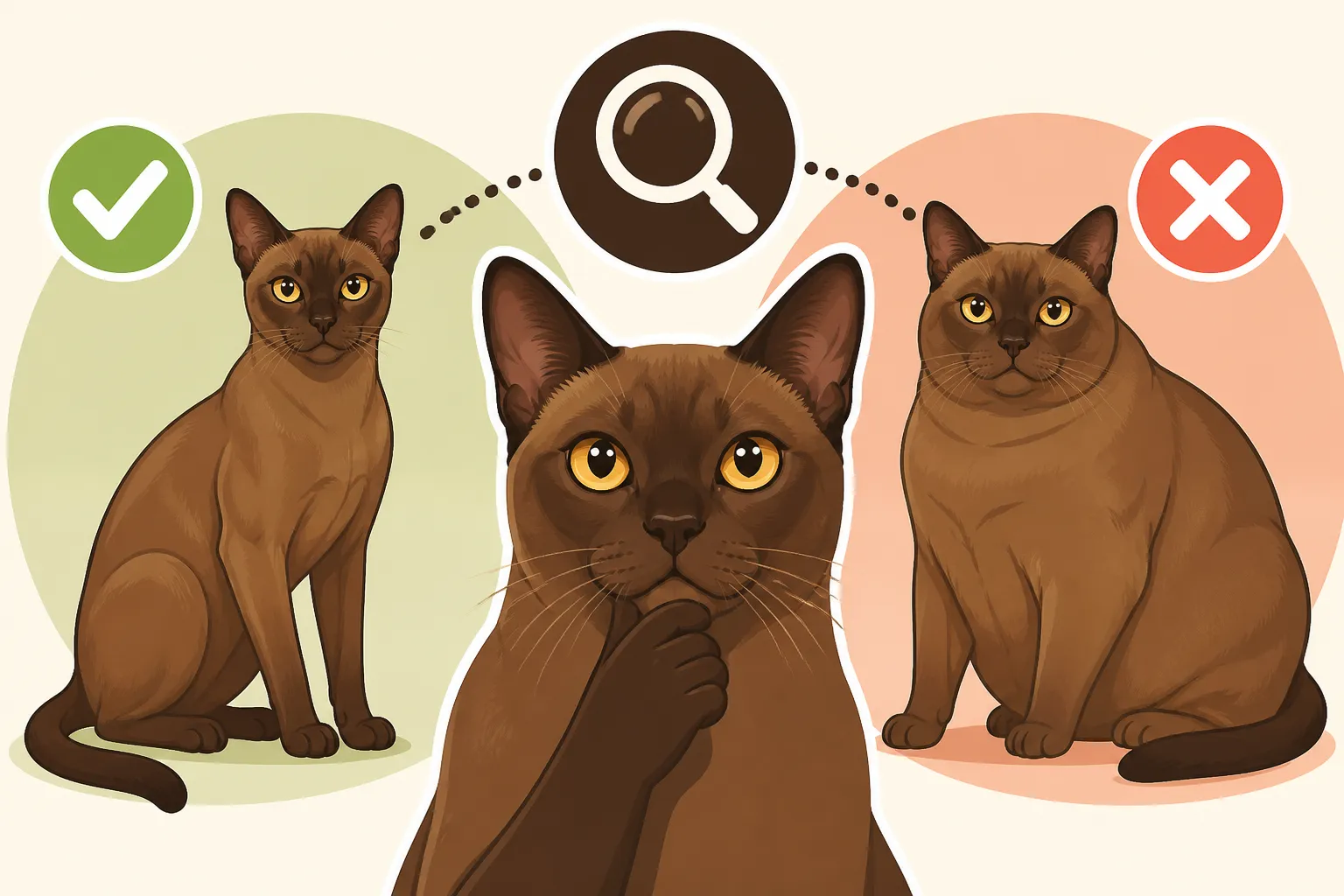
When looking at your Burmese from above, an ideal body condition will show a definite waistline behind the ribs. It won't be as dramatic as some breeds, but there should be a clear indentation. If their body looks like a straight line from their shoulders to their hips, or even bulges outwards, they are likely overweight.
From the side, an ideal Burmese will have a visible abdominal tuck – their belly should rise slightly from their chest to their hind legs, rather than hanging low or appearing distended. If their belly appears rounded or sags, or if they have a prominent "primordial pouch" that feels thick with fat rather than just loose skin, they're likely carrying too many pounds.
Here’s a simple table to help you compare the visual and tactile cues:
| Characteristic | Ideal Burmese (BCS 5) | Overweight Burmese (BCS 6-7+) |
|---|---|---|
| Ribs (Tactile) | Easily felt with light pressure, like knuckles when palm flat. | Difficult to feel, requires firm pressure, obscured by fat. |
| Spine (Tactile) | Individual vertebrae bumps easily felt. | Smooth, rounded, or difficult to distinguish individual bones. |
| Waist (Top View) | Visible slight hourglass shape behind ribs. | Absent or barely visible, straight line or outward bulge. |
| Abdomen (Side View) | Lean, with a distinct abdominal tuck (rising curve). | Rounded, sagging, or prominent fat pouch; no clear tuck. |
| Coat/Feel | Smooth, firm muscle under sleek coat. | Smooth but with a soft, squishy layer beneath the coat. |
| Activity Level | Energetic, agile, eager to jump and play. | Slightly less active, hesitant to jump, tires more quickly. |
Remember, your goal isn't to make them skinny, but to ensure they are at their optimal weight, allowing you to feel their sturdy frame without excess padding. This visual check complements your hands-on assessment and weekly weigh-ins to give you the most accurate picture.
Nutritional Adjustments and Preventing Future Gain
Once you've identified that your muscular Burmese is carrying extra weight, it's time to take action. Preventing future weight gain, and gently reversing current gain, is primarily achieved through careful dietary management and ensuring adequate exercise. This proactive approach directly contributes to Why a Burmese Is Heavier Than It Looks in a healthy way, not an overweight one.
Rethinking Portions and Treats
The most common culprit for weight gain in cats, especially those with insatiable appetites like the Burmese, is simply too much food. It's often not about the type of food, but the quantity. You need to be incredibly precise with portions. Start by consulting with your vet to determine an ideal calorie intake for your Burmese based on their current weight, ideal target weight, and activity level. Then, stick to that number religiously.
This usually means using a kitchen scale to weigh out every meal, rather than relying on scoops, which can be notoriously inaccurate. You can find reliable and affordable kitchen scales on Amazon or Chewy. Why a Burmese's Food Should Be Weighed on Scales cannot be stressed enough; it’s the most accurate way to manage their intake. Divide their daily allowance into two or three smaller meals to keep them satisfied and prevent begging.
And let's talk about treats. Oh, those pleading Burmese eyes! It’s hard to resist, but treats are often calorie bombs that quickly derail weight loss efforts. If you must give treats, ensure they are low-calorie and factor them into their daily calorie allowance. Consider healthy alternatives like a tiny piece of cooked chicken or a lickable paste. Puzzle feeders can also slow down eating and make mealtime more engaging without adding extra calories.
The Role of Diet Type
While portion control is king, the type of food your Burmese eats also plays a significant role, particularly due to their diabetes risk. Many vets recommend a high-protein, moderate-fat, and low-carbohydrate diet for Burmese cats. This is a critical point because many commercial dry kibbles are high in carbohydrates, which can contribute to weight gain and exacerbate insulin resistance.
Transitioning your Burmese to a wet food diet that meets these criteria is often a beneficial step. Look for canned foods that explicitly state low carbohydrate content. Always check the nutritional analysis of any food you choose. Your vet can provide specific brand recommendations and help you calculate the carbohydrate percentage. Understanding Which Carbohydrate Percentage a Burmese Should Stay Below is vital.
Moving to a new diet should be done gradually over several days to avoid digestive upset. Mix a small amount of the new food with their old food, slowly increasing the proportion of the new diet over a week or two. This ensures your Burmese adjusts well, and you continue to nurture their long-term health. Because What an Adult Burmese Should Weigh is often misunderstood, careful diet management is key to achieving it.
Disclaimer
This article is for general informational purposes only and does not constitute professional advice. Laws, prices and regulations vary by location and change over time. Consult a qualified professional for guidance on your specific situation.