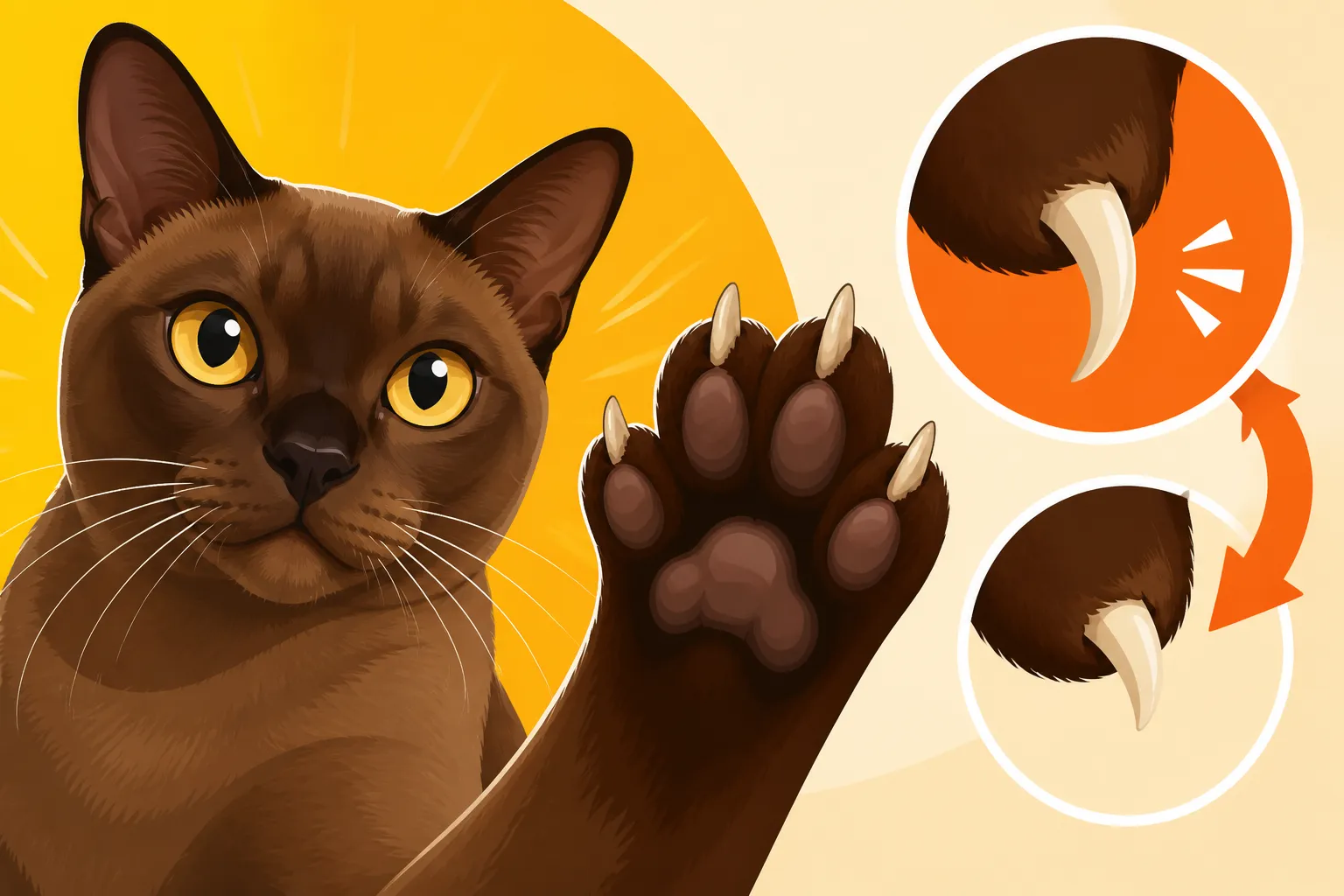
How Fast a Burmese’s Claws Grow Back
Oh, the age-old question for every Burmese cat owner: didn't I just trim those claws? It often feels like you turn your back for a moment, and suddenly your beloved "brick wrapped in silk" has talons capable of scaling Everest, or at least your favorite armchair. It’s a common frustration, and you're not imagining things – Burmese cats, with their robust health and active lifestyles, can indeed seem to grow their claws at an astonishing rate.
This guide is going to dive deep into the fascinating world of your Burmese's claws. We'll explore exactly what influences their growth, how quickly you can realistically expect them to grow back after a trim, and most importantly, how to keep them healthy and manageable so your furniture (and your lap) stands a fighting chance.
Understanding the Burmese Claw – More Than Just a Nail
It’s easy to think of a cat's claw as just a sharp bit at the end of their paw, but there's a lot more going on beneath the surface. For a Burmese, a breed known for its agility and constant curiosity, those claws are essential tools for exploration, play, and expressing themselves, whether it's by scaling a cat tree or giving your leg an affectionate (if sometimes painful) hug.
The Anatomy of a Burmese Claw
Imagine your own fingernail, but with superpowers. A cat's claw is made of keratin, just like ours, but it's designed for much more. Each claw consists of a hard, outer shell that protects the delicate inner structure. Inside this outer shell is the "quick," which contains blood vessels and nerve endings. This quick is pinkish and visible if your Burmese has clear or light-colored claws, but it can be harder to spot on darker claws, which is why trimming them carefully is so important.
What makes a cat's claw truly unique, especially compared to a dog's, is its retractable nature. Your Burmese can extend and retract its claws at will, keeping them sharp and out of the way until needed for climbing, grabbing, or self-defense. This retraction protects the sharp points from dulling on everyday surfaces, contributing to their seemingly perpetual sharpness. Understanding where the quick ends is paramount to safe and comfortable trimming, preventing any pain or bleeding that can make future trims a battle.
The Growth Cycle of a Cat's Claws
Cat claws, including those of your gorgeous Burmese, grow continuously throughout their lives. This isn't a "grow once and done" scenario; it's an ongoing process, much like our own hair and nails. As the claw grows from the base, the older, outer layers can become dull or flaky. To keep their claws in prime condition, cats naturally shed these outer layers, revealing the sharper, newer claw underneath. This shedding process is often misunderstood as the claw breaking or being damaged, but it's a perfectly normal and healthy part of their claw maintenance.
You might find these little "nail sheaths" around your scratching posts or even stuck in your carpet. Finding them is a good sign that your Burmese is actively using its scratching surfaces and keeping its claws healthy. Think of it as a natural pedicure, keeping those tips keen and ready for action. Without proper scratching opportunities, these outer layers can build up, making the claws thicker and potentially causing discomfort or snags.
How Fast is "Fast" for a Burmese?
So, how quickly do those Burmese claws actually grow back? While it varies from cat to cat, you can generally expect a noticeable amount of regrowth within two to three weeks after a trim. This means that for many Burmese, a trimming schedule of every 2-4 weeks is ideal to prevent them from becoming too long or sharp.
It's not an exact science, though. Factors like your individual cat's genetics, age, and activity levels will all play a part. A young, active Burmese kitten, full of boundless energy and constantly exploring, might grow claws faster than a senior cat who prefers naps to acrobatics. Similarly, a healthy diet supports robust growth everywhere, including their claws. While "fast" might feel like an exaggeration when you're facing down a determined climber, understanding this general timeframe helps you establish a realistic and effective claw care routine.
Factors Influencing Burmese Claw Growth Rate
Just like every other aspect of your Burmese's health and vitality, the rate at which their claws grow isn't just a random occurrence. Several factors come into play, from their internal biology to their daily environment. Understanding these can help you anticipate their needs and adjust your grooming schedule accordingly.
Age and Metabolism
One of the most significant factors influencing claw growth is age. Think about kittens – they're little bundles of energy, growing at an incredible pace, and their claws are no exception. A Burmese kitten's metabolism is often running at top speed, fueling rapid development of all tissues, including their claws. You might find yourself Trimming a Burmese's Claws While It Sits on You more frequently in their early months. This is also why Why a Burmese Kitten Needs an Early Vet Check is so important; a vet can assess overall health and development, including claw health.
As your Burmese matures, their growth rate will stabilize. Then, as they enter their senior years – typically around seven years old and beyond – their metabolism might slow down again. Older cats can sometimes have claws that become thicker, more brittle, and might even grow a bit slower, or sometimes irregularly, requiring even more attentive care. What an Old Burmese Slows Down From often includes changes in nail texture and growth, necessitating careful monitoring.
Diet and Nutrition
What goes into your Burmese's bowl has a direct impact on the health and growth of their claws. A high-quality, protein-rich diet provides the essential building blocks for strong, healthy keratin. If your Burmese isn't getting adequate nutrition, their claws might become brittle, flaky, or grow more slowly. This isn't just about appearance; poor claw health can lead to discomfort, breakages, and even infections.
Given that Burmese cats are prone to certain health conditions, Why Portion Control Is Medical Care in a Burmese extends to their claw health. A balanced diet, low in carbohydrates and rich in animal protein, supports not only their metabolic health but also the integrity of their skin, coat, and yes, their claws. High-quality wet foods that fit the nutritional needs of a Burmese can promote strong claws and overall vitality. Ensuring they have all the necessary vitamins and minerals means their body can produce new claw material efficiently, contributing to that “fast” growth you notice.
Activity Levels and Environment
The more active your Burmese is, and the more appropriate surfaces they have to scratch, the more their claws will wear down naturally. An indoor Burmese, which is where most of these trusting and affectionate cats reside for their safety, relies heavily on provided scratching posts to maintain their claws. If your Burmese is constantly climbing, playing, and stretching on scratching surfaces, they'll naturally abrade the tips of their claws, meaning they might seem to grow slower because they're being filed down regularly.
However, if your Burmese isn't getting enough exercise or doesn't have suitable scratching options, those claws will just keep growing without natural wear. This can lead to overgrown claws that curl under, potentially digging into their paw pads, causing pain and difficulty walking. Providing a variety of scratching posts – sisal, cardboard, vertical, horizontal – is key. Whether a Burmese Prefers Sisal or Cardboard can vary by individual cat, so offering both is a good strategy. Make sure these posts are sturdy and tall enough for a full stretch; Where a Burmese Wants Its Scratching Post is often in prominent areas where they like to mark their territory and stretch after a nap.
Managing Burmese Claw Growth Effectively
Even with all the natural wear and tear, and the best diet in the world, your Burmese's claws will still require your attention. Effective management isn't just about preventing damage to your furniture; it's a crucial part of their overall health and well-being. Ignoring claw care can lead to painful conditions, impact their mobility, and even lead to infections.
Regular Trimming Schedule
The most direct way to manage how fast a Burmese's claws seem to grow is by establishing a consistent trimming schedule. For many Burmese, this means a trim every two to four weeks. If you start this routine when your Burmese is a kitten, they'll often grow to accept it as a normal part of their care. Remember, they thrive on routine!
The goal isn't to cut them as short as possible, but to trim the sharp tip just before the quick. If your Burmese has lighter claws, you can usually see the pink quick. For darker claws, it's safer to just snip the very sharp tip, taking off small amounts at a time. This prevents you from cutting too far back, which can be painful and cause bleeding. If you're unsure, your vet or a professional groomer can show you the ropes. Overgrown claws can snag on carpets, get caught on things, and make walking uncomfortable. Regular trims keep them neat and prevent these issues.
Providing Adequate Scratching Opportunities
While trimming is essential, encouraging natural scratching is equally important. Your Burmese needs outlets for this innate behavior. Scratching isn't just about sharpening claws; it's also a way for cats to stretch their muscles, mark their territory, and relieve stress. If they don't have appropriate places to scratch, they'll find their own – and that's usually your sofa, carpet, or even the curtains.
Invest in a few good quality scratching posts. As mentioned, Whether a Burmese Prefers Sisal or Cardboard is a personal preference for cats, so offering different textures can be beneficial. Place them in prominent areas where your Burmese likes to lounge, play, or stretch. You might find that a tall, sturdy sisal post is a favorite, allowing them to get a full body stretch. Many excellent and durable options are available on Amazon, from simple cardboard scratchers to elaborate cat trees with sisal-wrapped posts. Providing these outlets helps them naturally shed those outer claw layers and keeps the claws from becoming too long between trims.
Monitoring for Health Issues
Your Burmese's claws can also be a surprising indicator of their overall health. Changes in claw texture, color, or growth pattern can sometimes signal an underlying health issue. For example, claws that become unusually brittle, split easily, or grow irregularly might suggest nutritional deficiencies, fungal infections, or other systemic problems. If you notice persistent issues, don't hesitate to consult your veterinarian.
Similarly, if the quick seems to be growing longer than usual, or if a claw appears inflamed around the base, it's time for a vet check. Burmese cats are incredibly affectionate but are also masters at hiding illness, so paying attention to subtle signs like changes in their claws can be very insightful. Why a Burmese Hides Illness Behind Its Affection means you, the owner, need to be observant of all physical cues, including their paws. Regular claw maintenance isn't just a chore; it's an opportunity for a quick health check of their paws, ensuring everything looks normal and healthy. It's part of the comprehensive care that helps your Burmese enjoy The Sixteen to Eighteen Years a Well Bred Burmese Gets.
Here’s a quick overview of factors that can affect how quickly your Burmese’s claws grow:
| Factor | Impact on Claw Growth | Notes |
|---|---|---|
| Age | Kittens: Faster | Younger Burmese have higher metabolism; Seniors: Slower/Thicker |
| Diet | Good: Healthy/Fast | High-quality, protein-rich food supports strong growth; poor diet can lead to brittle claws. |
| Activity | High: Wears Down | Active cats using scratching posts naturally file their claws. Less active cats might need more frequent trimming. |
| Genetics | Varies | Some individual cats naturally grow claws faster or slower due to inherited traits. |
| Health | Impacts Quality | Underlying health conditions (e.g., fungal infections, nutritional deficiencies) can affect claw texture and growth. Consult vet if concerned. Why a Burmese's Gums Recede Early also indicative of general health. |
Ultimately, how fast a Burmese's claws grow back isn't just about the biology of the claw itself, but a combination of their genetics, diet, activity, and your dedicated care. By understanding these elements, you can create a routine that keeps your Burmese comfortable, healthy, and happy, ensuring those beautiful paws are always in tip-top shape. Just don't be surprised if you still feel like you're constantly reaching for the clippers – it just means your Burmese is thriving! How Often a Burmese Needs a Dental is another aspect of routine care that might feel frequent, much like claw trims.
Disclaimer
This article is for general informational purposes only and does not constitute professional advice. Laws, prices and regulations vary by location and change over time. Consult a qualified professional for guidance on your specific situation.