The Burmese Began With One Cat Called Wong Mau
If you've ever had the pleasure of sharing your home with a Burmese cat, you know they're not just pets; they're furry, purring shadows that follow you from room to room, demanding attention with their soulful eyes and distinctive rasping rumble. But have you ever stopped to wonder about the origins of this incredibly affectionate, "dog-like" feline? Their story is far from ancient myth; it's a tale of scientific curiosity, deliberate breeding, and the immense impact of one remarkable cat named Wong Mau. This guide delves deep into the captivating history of the Burmese cat, charting its journey from a mysterious arrival to becoming one of the most cherished breeds in the cat fancy.
The Mysterious Arrival of Wong Mau: A Cat Like No Other
Imagine a time when the cat world was primarily populated by well-known breeds like the Siamese, and then, suddenly, a feline unlike any other arrived on the scene. This is where our story begins, in the early 20th century, with a cat whose unique appearance would spark a revolution in cat breeding.
From Burma to San Francisco: A Feline Enigma
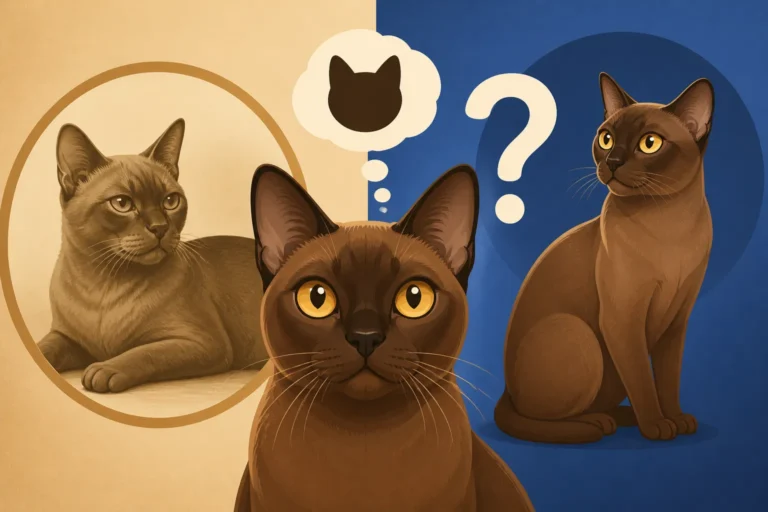
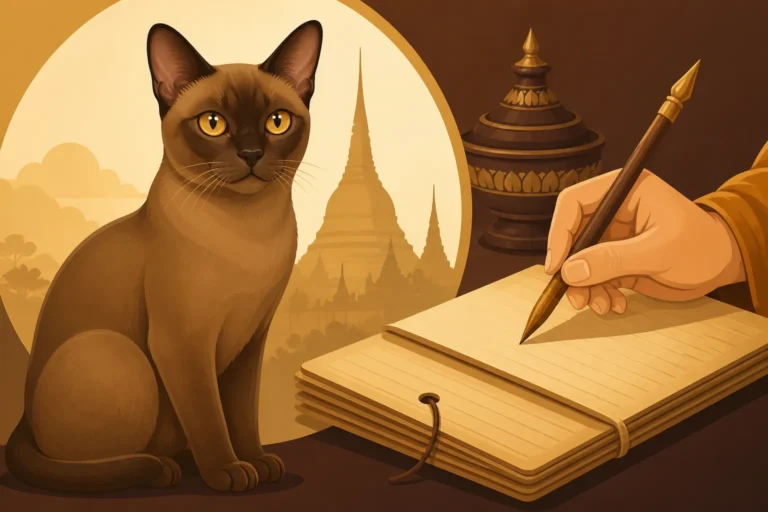
In 1930, a retired U.S. Navy psychologist named Dr. Joseph C. Thompson brought a small, dark brown cat from Rangoon, Burma (modern-day Yangon, Myanmar) to San Francisco, California. This extraordinary feline, whom he named Wong Mau, was unlike any cat commonly seen in the West. She possessed a rich, warm brown coat, a compact yet muscular body, and large, expressive golden eyes. She was certainly not a Siamese, but she shared some subtle similarities that piqued Thompson's interest. He couldn't quite place her, and neither could other cat enthusiasts of the time. This was a cat that presented a genuine puzzle, challenging existing notions of feline genetics and breed types.
The Intriguing Appearance of a Walnut-Brown Beauty
Wong Mau's physical traits were a fascinating blend. Her coat, described often as "walnut brown," was darker on her back and head, gradually lightening towards her belly. It had a unique, almost satin-like texture that lay close to her body. Her head was more rounded than the angular Siamese, and her eyes, an intense golden-yellow, held an intelligent, almost human-like gaze. She was distinctly different from the long, slender, pointed Siamese cats, yet possessed a similar exotic charm. This combination of traits made her an instant object of fascination, suggesting a genetic blueprint not yet understood in Western cat populations. People were used to seeing solid-colored cats or those with distinct color points, but Wong Mau's gradient brown was something new.
Why Wong Mau Defied Easy Categorization
Before Wong Mau, breeders and geneticists understood basic coat colors and patterns, including the pointed gene responsible for Siamese cats' distinctive markings. However, Wong Mau didn't fit neatly into any existing category. She wasn't a solid black, chocolate, or sable, nor was she a traditional pointed cat. She possessed a subtle shading that hinted at a unique genetic inheritance. This ambiguity was precisely what made her so interesting to Dr. Thompson, who believed she represented a completely new genetic strain, a challenge to the prevailing understanding of cat genetics. Her unique phenotype, a mix of known and unknown traits, compelled him to embark on a scientific breeding program to unravel her secrets.
Dr. Joseph Thompson's Scientific Pursuit: Unraveling Wong Mau's Genetics
Dr. Joseph Thompson wasn't just a cat lover; he was a scientist with a keen eye for detail and a burning desire to understand the genetic underpinnings of Wong Mau's unique appearance. His systematic approach laid the groundwork for the entire Burmese breed. Dr Joseph Thompson and the Burmese He Bought in 1930 tells more about the man behind the cat.
A Veterinarian's Curiosity: The Quest for Understanding
Thompson's background as a psychologist, combined with his love for cats, made him uniquely suited to the task of scientific breeding. He didn't just want to admire Wong Mau; he wanted to understand her. He recognized that her distinct characteristics likely stemmed from a specific genetic mutation or combination of genes not yet isolated or studied. His aim was to systematically breed Wong Mau to determine how her unique traits were inherited and whether they could be consistently reproduced. This was a true scientific endeavor, moving beyond mere aesthetic appreciation to a deeper genetic investigation. He wanted answers, not just beautiful kittens.
The Seminal Cross: Wong Mau and a Siamese
To uncover Wong Mau's genetic secrets, Thompson made a crucial decision: he bred her to a seal point Siamese cat named Tai Mau. This pairing was not arbitrary; it was a carefully considered genetic experiment. The Siamese breed was well-established and its genetics understood, making it an excellent control for observing how Wong Mau's traits would manifest in their offspring. He hypothesized that if Wong Mau carried a recessive gene for her unique brown color, breeding her to a Siamese would help reveal it in the first generation. This initial cross was the very first step in scientifically establishing the Burmese breed, a pivotal moment in its history. Why the First Burmese Was Bred to a Siamese offers further insight into this critical decision.
The Unexpected Colors of the First Litter
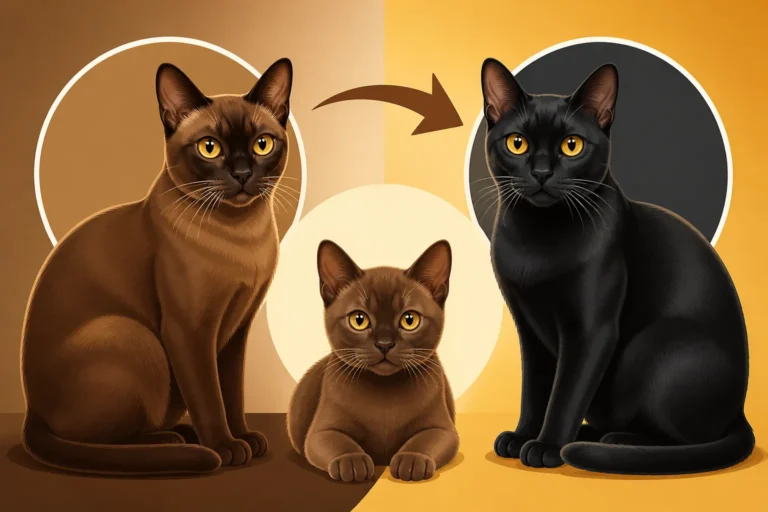
The results of Wong Mau's first litter with Tai Mau were nothing short of revelatory, and for Dr. Thompson, they confirmed his suspicions. The kittens were not all alike. Some were classic seal point Siamese, showing the dominant Siamese phenotype. But crucially, others were a rich, dark brown, much like Wong Mau herself, and some were an intermediate shade, a warm, sepia-toned brown that resembled neither parent exactly. This diverse litter provided concrete evidence that Wong Mau was not a purebred Siamese, nor was she simply a dark variant of another known breed. She carried a distinct genetic factor, later identified as the Burmese gene (cb), which when combined with the Siamese gene (cs) in heterozygous form, produced the intermediate "Tonkinese" phenotype, and when present in homozygous form (cbcb), produced the true Burmese color. What the First Burmese Litter Told Thompson delves into these fascinating genetic discoveries.
The Birth of the Burmese Breed: Establishing a New Standard
With the genetic puzzle slowly unraveling, the next step was to define what this "new" type of cat would be. This meant establishing a breed standard and gaining recognition within the burgeoning cat fancy.
Defining the Ideal: Early Breed Characteristics
Based on Wong Mau and her offspring, early breeders began to delineate the characteristics that would define the Burmese. The goal was to establish a breed that was distinct from both the Siamese and the intermediate Tonkinese type. Key features included the compact, muscular body that would famously be described as "a brick wrapped in silk," the short, fine, satin-like coat, and the striking golden eyes. The desired color was a rich, warm brown, free from ghost tabby markings or distinct pointing. The temperament, too, became a defining trait: affectionate, intelligent, and highly social. These early characteristics were crucial in setting the Burmese apart and forming its unique identity. What a Burmese Looks Like Against the Standard further details these breed requirements.
Initial Enthusiasm and Formal Recognition
The discovery of this new, charming breed was met with significant enthusiasm within the cat fancy. Cat fanciers were captivated by the Burmese's striking appearance and utterly devoted personality. The cats were quick to win hearts, not just for their beauty but for their incredibly engaging nature. This led to rapid progress towards formal recognition. The Cat Fanciers' Association (CFA) officially recognized the Burmese breed in 1936, a remarkably swift endorsement considering its recent origins. This recognition was a testament to the clarity of Dr. Thompson's genetic work and the immediate appeal of the Burmese to breeders and the public alike. When CFA First Recognized the Burmese explores this period of early acceptance.
The Challenge of Maintaining Purity: Early Crossings
However, this early recognition was also the beginning of a significant challenge. Because the original Burmese population was so small, and the new breed had emerged from a cross with a Siamese, some breeders continued to use Siamese cats in their breeding programs to expand the gene pool. While understandable from a genetic diversity perspective, it led to a proliferation of cats that were not "pure" Burmese but rather first-generation crosses, often exhibiting the intermediate Tonkinese phenotype. This practice blurred the lines between the developing Burmese and Siamese breeds, making it difficult for registries to ensure the authenticity of registered Burmese cats. This issue would soon lead to a major crisis for the nascent breed.
A Setback and a Stronger Foundation: CFA's Suspension and Reinstatement
The initial enthusiasm for the Burmese was soon tempered by a controversy that threatened to derail the breed's progress. It was a challenging time that ultimately forged a stronger foundation for the Burmese.
The Threat of Hybridization: Why Registries Stepped In
The problem of continued crossbreeding with Siamese cats became a critical concern for governing bodies like the CFA. As more "Burmese" cats were registered that were actually first-generation hybrids or had Siamese ancestry too close in their pedigree, the distinctiveness and purity of the Burmese breed were called into question. Registries are tasked with maintaining breed integrity, and this rampant hybridization directly undermined that mission. It created confusion for owners, breeders, and judges alike, as the lines between a true Burmese and a Burmese-Siamese cross became increasingly fuzzy. This situation compelled the CFA to take drastic action to protect the newly recognized breed. Why CFA Suspended Burmese Registration discusses this critical period in detail.
The Strict Requirement: "Three Generations Pure"
In 1947, the CFA made the difficult but necessary decision to suspend the registration of Burmese cats. This was a severe blow to breeders but was intended to safeguard the future of the breed. To be reinstated, a Burmese cat had to prove "three generations pure" – meaning its pedigree had to show three consecutive generations of Burmese-to-Burmese breeding, without any recent Siamese ancestors. This strict requirement forced breeders to be meticulous in their record-keeping and breeding choices, ensuring that only true Burmese cats with established lineages were recognized. It was a rigorous test, but one that was essential for solidifying the breed's genetic identity and preventing its dilution. The breeders who persevered through this challenge became the bedrock of the modern Burmese breed.
Rebuilding Trust: The Breed's Return to Favor
Over the next few years, dedicated Burmese breeders diligently worked to meet the CFA's stringent requirements. They focused on careful selection and responsible breeding practices, gradually building up lines of Burmese cats that consistently produced true-to-type kittens. This commitment eventually paid off. In 1956, after a nine-year suspension, the CFA reinstated the Burmese breed for championship status. This reinstatement marked a pivotal moment, affirming the breed's genetic stability and the dedication of its proponents. It solidified the Burmese as a distinct and respected breed within the cat fancy, ready to charm cat lovers for generations to come.
The Great Divide: American and European Burmese Types Emerge
As the Burmese breed flourished and spread beyond the United States, subtle differences in breeding preferences and interpretations of the standard began to emerge. This led to the fascinating development of two distinct types: the American Burmese and the European Burmese.
Across the Atlantic: Divergent Breeding Goals
When Burmese cats were first introduced to Great Britain in the late 1940s and early 1950s, British breeders embarked on their own breeding programs. While starting from the same genetic foundation, they began to favor slightly different physical characteristics than their American counterparts. This divergence was influenced by existing British cat show preferences and perhaps a desire to further distinguish their lines. American breeders typically focused on a more compact, rounded, and cobby body, with a distinctly broad, short muzzle and rounded eyes. British breeders, however, leaned towards a more moderate body type, a slightly longer, more wedge-shaped head, and eyes that were more almond-shaped. These subtle shifts in preference eventually solidified into two recognizable styles.
Comparing the Standards: Head, Body, and Eye Shape
The differences between the American and European Burmese types are most noticeable in their head shape, body conformation, and eye placement. The American Burmese is often described as having a "cobby" body, meaning compact and muscular, with a round head and full cheeks, a distinct short muzzle, and round, wide-set eyes. They tend to give a more "puppy-like" expression. In contrast, the European Burmese generally has a more athletic, elegant body, often described as more svelte. Their head is a modified wedge, with slightly more tapering to the muzzle, and their eyes are typically almond-shaped and obliquely set, giving them a more "sophisticated" or "oriental" look. The differences, though subtle to the untrained eye, are significant to breeders and judges, leading to separate breed standards in many international registries. How the American and European Burmese Split offers more details on this fascinating divergence.
| Feature | American Burmese | European Burmese |
|---|---|---|
| Body Type | Cobby, compact, very muscular, "brick in a silk pillow" | Moderate, elegant, athletic, slightly less dense |
| Head Shape | Round, full cheeks, distinct short muzzle | Modified wedge, slightly tapered muzzle, softer contours |
| Eye Shape | Round, wide-set, expressive golden | Almond-shaped, obliquely set, often golden or amber |
| Ear Placement | Medium-sized, set far apart | Medium-sized, slightly more upright |
| Overall Impression | Sweet, rounded, cobby | Elegant, sleek, often described as more "oriental" |
Preserving Unique Lines: The Ongoing Separation
Today, the American and European Burmese are largely bred as separate types. While they share a common ancestor in Wong Mau, their respective breed standards and breeding programs have ensured their distinct evolution. Many registries recognize them as distinct breeds or, at the very least, distinct varieties within the Burmese breed. This separation allows breeders to focus on perpetuating the specific traits that define each type, ensuring genetic integrity and diversity. For prospective owners, understanding these differences is key to choosing the Burmese that best fits their aesthetic preferences and expectations. Both types, however, retain the core Burmese temperament: affectionate, playful, and deeply devoted to their human companions.
Wong Mau's Enduring Influence: A Legacy of Affection and Beauty
The story of Wong Mau is not just the origin story of the Burmese cat; it's a testament to the power of careful observation, scientific inquiry, and dedicated breeding. Her legacy extends far beyond the beautiful cats that bear her breed's name.
The Progenitor of Several Beloved Breeds
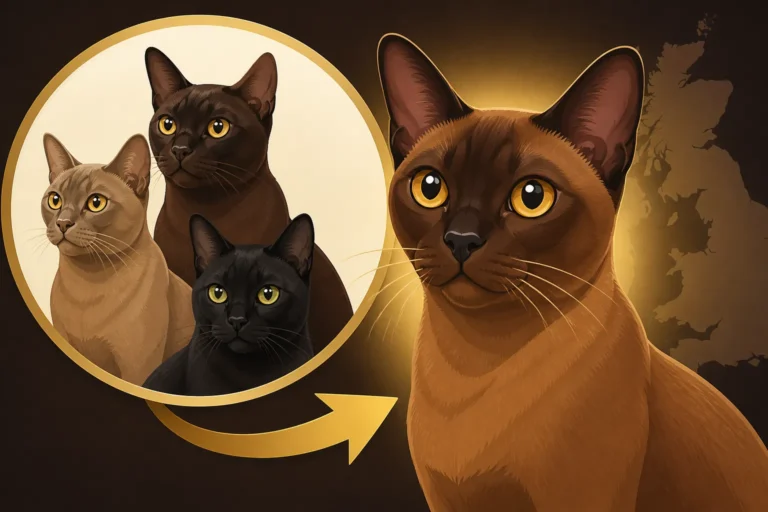
Wong Mau's genetic contribution didn't stop with the Burmese. Her unique genetic makeup, specifically the gene that gives the Burmese its distinctive "sepia" coloration, became a foundation for the creation of several other popular cat breeds. For instance, the captivating Tonkinese, with its aqua eyes and mink-colored coat, is a direct result of crossing Burmese and Siamese cats, essentially recreating the intermediate phenotype seen in Wong Mau's first litter. The striking Bombay, often called "the mini-panther," was also developed using the Burmese to achieve its sleek, jet-black coat and gold eyes. Even the elegant Burmilla can trace its lineage back to the Burmese. The Bombay and the Tonkinese Came Out of the Burmese provides more details on these related breeds. Her genetic footprint is truly remarkable and speaks to her unique place in feline history.
The Burmese Today: An Unmistakable Companion
Today, the Burmese cat remains one of the most popular and beloved breeds worldwide. Known for their "velcro" personalities, their tendency to follow their owners from room to room, and their unwavering affection, they truly live up to their reputation as "dogs in cat suits." Their playful nature often lasts well into their senior years, and their intelligence makes them receptive to training, even learning tricks like fetch. Owning a Burmese means having a constant companion who thrives on interaction and being an integral part of family life. Whether you're considering adopting a Burmese kitten or an older cat, their affectionate nature is undeniable. Finding the right supplies, like engaging puzzle toys or a comfy bed, is easy with retailers like Chewy, ensuring your new companion has everything they need to thrive.
Choosing a Burmese: What to Look For
When considering bringing a Burmese into your home, it’s important to understand what makes them special. Beyond their distinctive appearance, their personality is paramount. You're looking for a cat that is confident, friendly, and eager for interaction. A responsible breeder will prioritize health and temperament, ensuring their kittens are well-socialized. They'll also provide documentation, often including genetic testing results for common Burmese health concerns like hypokalemia or diabetes predisposition. It's a breed that truly flourishes with companionship, so many breeders even recommend acquiring two kittens so they can keep each other company, especially if you have a busy household. Whether a Burmese Is the Right Cat for You offers further guidance on deciding if this affectionate breed is a good match for your lifestyle. The rich history, starting with Wong Mau, has culminated in a truly exceptional feline companion.
Disclaimer
This article is for general informational purposes only and does not constitute professional advice. Laws, prices and regulations vary by location and change over time. Consult a qualified professional for guidance on your specific situation.