What the First Burmese Looked Like
When Dr. Joseph Thompson brought Wong Mau home to San Francisco in 1930, he didn't just bring a cat; he brought a mystery wrapped in a unique, satin-soft coat. Many people wonder what this foundational cat, the very first Burmese, actually looked like, especially given the distinct types we see today. This guide will take you on a journey back in time to explore Wong Mau's captivating appearance, how she differed from the familiar Siamese, and why her look was so pivotal in creating the beloved Burmese breed we know and adore.
The Arrival of Wong Mau
Imagine a time before easy international travel for pets, when a cat arriving from halfway across the world was truly a remarkable event. Wong Mau’s journey was the starting point of the Burmese breed, and her physical presence was the first puzzle piece.
Her Journey to America
Wong Mau didn't just appear out of thin air; she had a fascinating origin story that added to her mystique. She was brought to America from Burma (modern-day Myanmar) by a sailor, and her arrival in San Francisco marked a significant moment in feline history. It wasn't a planned expedition to find a new breed, but rather a chance encounter that blossomed into something extraordinary. Dr. Thompson, a U.S. Navy medical doctor, was captivated by her unique appearance, which was clearly different from the Siamese cats popular at the time, yet also shared some similarities. This unexpected arrival set the wheels in motion for a scientific and breeding endeavor that would forever change the landscape of the cat fancy. It's truly a story of how a single, special cat could inspire such dedication and curiosity. If you're curious about her exact origins, you can read more in Where the Founding Burmese Wong Mau Came From. And for the full tale of her transatlantic voyage, check out Why a Sailor Brought the First Burmese to America.
Initial Observations by Dr. Thompson
Upon first seeing Wong Mau, Dr. Thompson, with his keen eye for detail, knew he had something special on his hands. She wasn't just another domestic shorthair. Her coat, her eyes, her very structure set her apart. He noted her smaller, more compact body compared to the lean, angular Siamese cats that were common then. Her head shape, too, was distinct – rounder, with a shorter muzzle. These initial observations were critical because they were the first clues that this cat might represent a completely new breed, or at least a distinct variation worthy of focused study. He meticulously documented these features, which laid the groundwork for understanding what made Wong Mau unique. These early observations weren't just casual notes; they were the first steps in a scientific approach to understanding feline genetics, paving the way for further breeding experiments.
Wong Mau's Distinctive Features
So, what exactly did this groundbreaking feline look like? Her appearance was a blend of known characteristics and entirely novel ones, making her a truly fascinating subject for study.
The Walnut Brown Coat
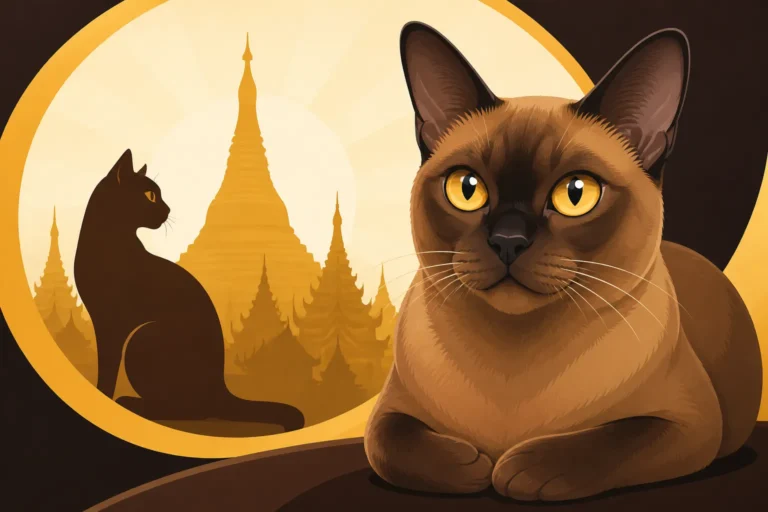
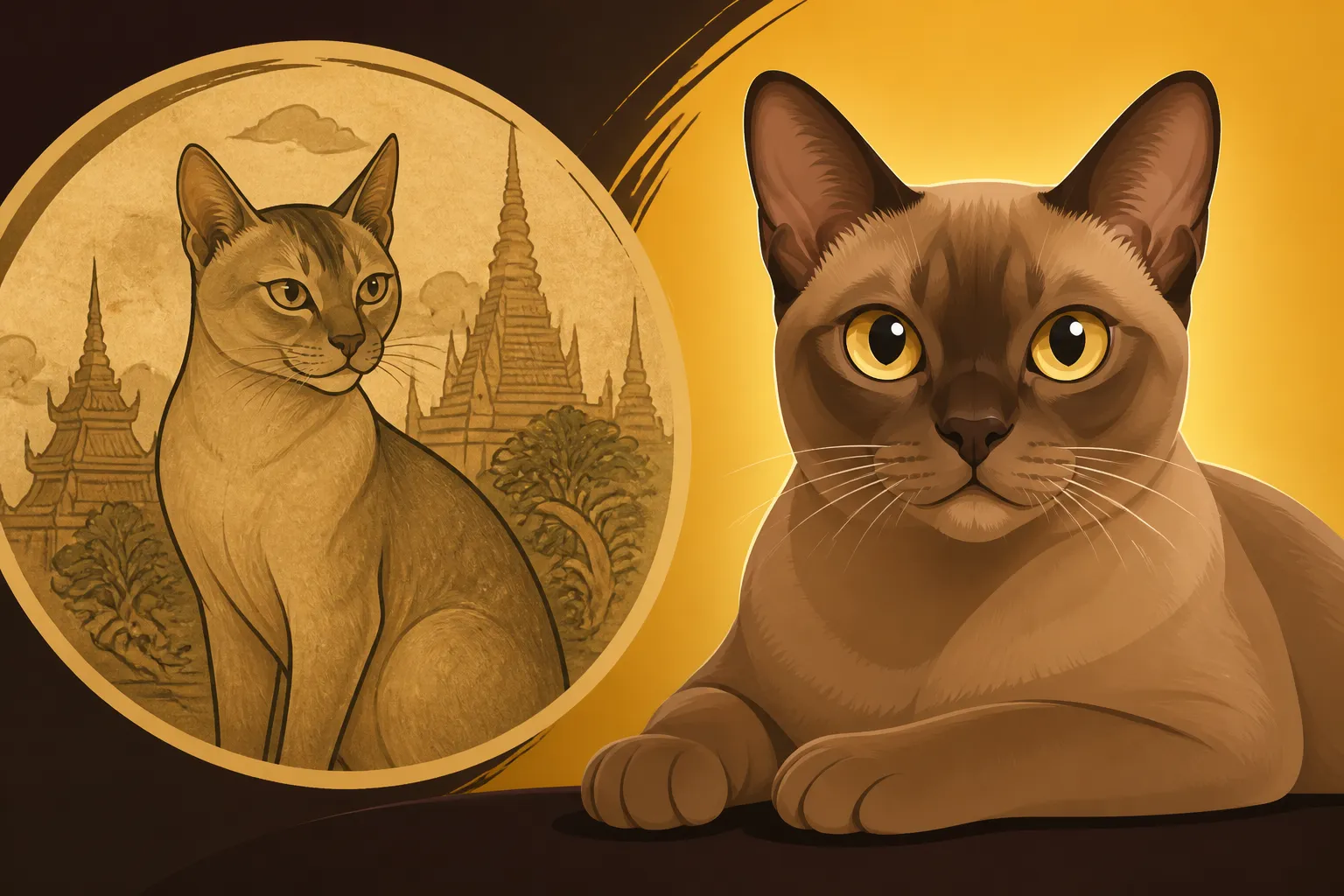
Perhaps the most striking feature of Wong Mau was her coat. It was described as a rich, warm "walnut brown," a color that was unlike any other cat known in the Western world at the time. This wasn't a solid black or a standard tabby; it had a depth and luminosity all its own. What was particularly intriguing was the subtle shading. While the body was a consistent, deep brown, her points—her ears, face, paws, and tail—were noticeably darker, almost a dark chocolate. This "pointed" pattern, similar to a Siamese but with a much less stark contrast, became a hallmark of the emerging Burmese breed. The way her color deepened at the extremities was a key genetic indicator that Dr. Thompson would later investigate. It felt like soft, warm silk to the touch, and this luxurious texture, combined with the unique color, was a huge part of her appeal. This beautiful, almost iridescent brown is what defines the original Burmese. You can learn more about the genetic basis for this unique coloring in What the cb Allele Does to a Burmese's Color and Why a Burmese Is Darker at the Extremities.
Unique Eye Color and Shape
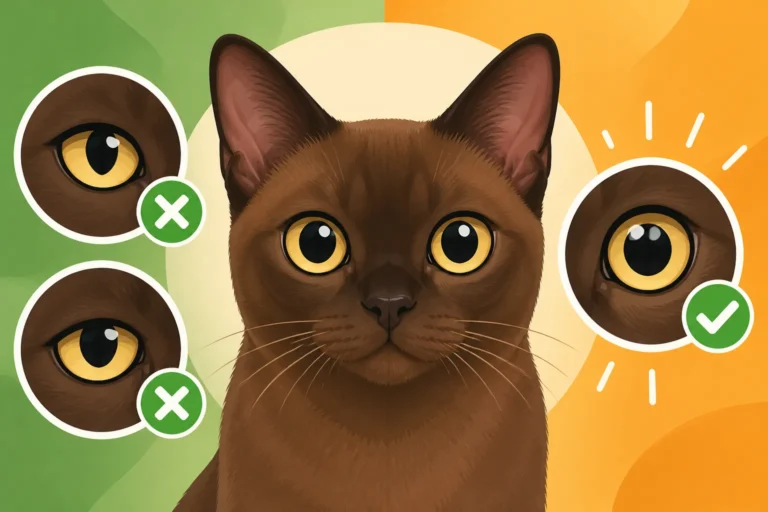
Beyond her stunning coat, Wong Mau's eyes were another captivating feature. They were described as having a golden-yellow hue, which was quite distinct from the vivid blue eyes of the Siamese. This rich, warm eye color provided a striking contrast to her deep brown fur, giving her an intensely expressive gaze. The shape of her eyes was also noteworthy. They weren't quite as almond-shaped as a traditional Siamese, nor were they perfectly round. Instead, they held a slightly rounded, almost oriental, tilt, contributing to her overall exotic allure. This combination of shape and color gave Wong Mau a soft, intelligent, and very engaging expression, further distinguishing her from other known cat breeds of the era. This unique eye trait was another piece of the genetic puzzle that Dr. Thompson was trying to solve.
Body Type and Build
Wong Mau's physique was also a significant departure from what was typically seen in purebred cats of the 1930s. Unlike the long, svelte, and almost ethereal build of the Siamese, Wong Mau possessed a more compact, muscular, and substantial body. She wasn't delicate; she was robust and surprisingly weighty for her size, often described as feeling like "a brick wrapped in silk." Her bone structure was moderate, neither fine nor cobby, striking a balance that suggested strength and agility. This solid, athletic build gave her an air of quiet power, a stark contrast to the lithe grace of her Siamese relatives. Her legs were proportionate to her body, and her tail was of medium length, tapering to a rounded tip. This distinctive body type, characterized by its muscularity and surprising heft, quickly became another defining characteristic of the nascent Burmese breed.
Comparing Wong Mau to Existing Breeds
When Wong Mau first arrived, there weren't many purebred cats recognized in the US. The Siamese was one of the more prominent, and naturally, Wong Mau was initially thought to be a variation of it. However, Dr. Thompson’s careful observation quickly revealed crucial differences.
Distinguishing Her from Siamese
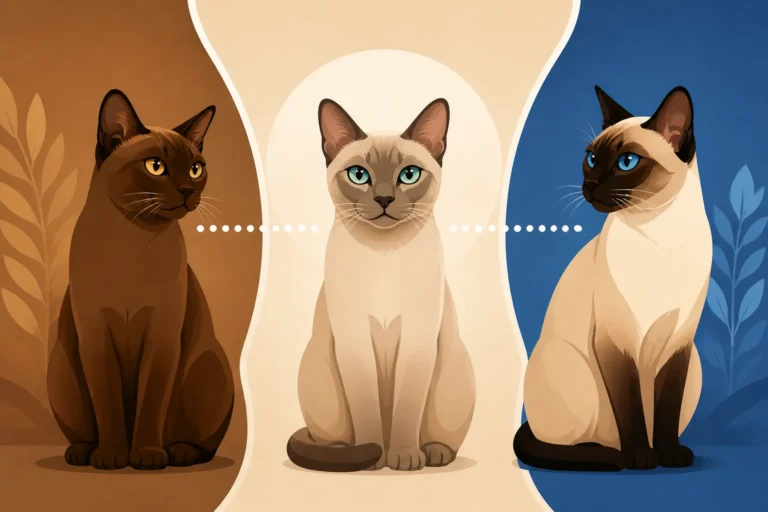
The immediate comparison point for Wong Mau was, understandably, the Siamese cat. Both breeds share the "pointed" gene, meaning their extremities (ears, face, paws, tail) are darker than their body. However, the degree of contrast and the base color were vastly different. A Siamese typically has a very light, almost white or cream body, with sharply defined, dark brown or blue points and striking blue eyes. Wong Mau, on the other hand, had a much deeper, warm walnut brown body with slightly darker, but not black, points, and those captivating golden-yellow eyes.
Beyond color, their body types were almost opposites. The Siamese is renowned for its long, slender, tubular body, fine boning, and triangular head. Wong Mau was characterized by her compact, muscular build and rounded head with a shorter muzzle. These differences were significant enough to tell Dr. Thompson that he wasn't looking at just another Siamese; he was looking at something new. This realization was the catalyst for his extensive breeding program. What the First Burmese Litter Told Thompson goes into more detail about how these differences became apparent in breeding.
The "Missing Link" Idea
Dr. Thompson began to theorize that Wong Mau might represent a "missing link" between the Siamese cat and a solid-colored cat breed. He hypothesized that her unique coloring was due to an intermediate gene, different from both the full-color gene and the Siamese colorpoint gene. To test this, he bred Wong Mau with a Siamese. His breeding experiments were groundbreaking because they were among the first systematic attempts to understand feline genetics. The resulting kittens presented a fascinating array of colors: some looked like Wong Mau, some looked like Siamese, and some were solid dark brown. This incredible variety of phenotypes in the first litter provided compelling evidence for his hypothesis that Wong Mau carried a distinct gene. This scientific approach was unprecedented in the cat fancy, marking the Burmese as Why the Burmese Was the First Breed Studied by Geneticists.
Early Genetic Insights
Through careful observation and test breedings, Dr. Thompson, alongside geneticists such as Dr. Clyde E. Keeler, confirmed that Wong Mau carried a unique gene, later identified as the cb allele, responsible for the Burmese coloration. This gene is a form of partial albinism that results in reduced pigment, but not as much as the cs allele found in Siamese cats. When Wong Mau was bred to a Siamese, the offspring demonstrated the heterozygous nature of her gene. The solid brown cats in the litter were a particularly important discovery, as they represented the homozygous expression of Wong Mau's gene, a rich, dark brown that deepened uniformly over their entire body. This meticulous work transformed the understanding of cat coat genetics and firmly established the Burmese as a distinct breed with its own genetic signature. The journal publications of these findings were pivotal; to know more about where they were published, check out Which Journal Published the Burmese Findings.
Why Her Appearance Was So Important
Wong Mau's look wasn't just beautiful; it was foundational. Every aspect of her physical being played a crucial role in shaping the future of an entire cat breed.
Foundational for the Burmese Breed
Wong Mau's distinct appearance was literally the foundation upon which the entire Burmese breed was built. Without her unique walnut brown coat, her golden eyes, and her compact, muscular body, there would have been no "Burmese" as we know it. Dr. Thompson's initial fascination with her particular set of traits led him down the path of selective breeding to isolate and perpetuate these characteristics. She wasn't just one cat among many; she was the template. Every Burmese cat alive today, whether American or European, traces its lineage back to her and carries some aspect of her original physical blueprint. Her look defined the breed from its inception, setting a clear visual target for early breeders. This is why discussions about What the First Burmese Looked Like are so central to understanding the breed's identity.
Impact on Early Breeding Programs
Her unique appearance directly dictated the direction of early breeding programs. Dr. Thompson and other pioneering breeders meticulously selected cats that expressed Wong Mau's traits, breeding them together to fix these characteristics within the gene pool. This involved carefully planning pairings, observing litters, and making decisions based on which kittens most closely resembled Wong Mau. The goal was to eliminate the Siamese-like features and amplify the distinctive Burmese look. This scientific approach to breeding, focused on specific physical attributes and genetic inheritance, was revolutionary for its time in the cat fancy. It was all about preserving and perfecting that original, captivating look that Wong Mau brought from Burma.
Setting the Stage for Breed Standards
Once Wong Mau's unique traits were understood and consistently reproduced, it became possible to write a formal breed standard. A breed standard is essentially a written description of the ideal appearance and temperament of a breed, guiding breeders and judges. Wong Mau's physical characteristics – her warm brown coat, her rounded head, her specific eye color, and her muscular build – formed the core of these initial standards. These early standards were crucial for ensuring that future generations of Burmese cats maintained a consistent and recognizable look, preventing the breed from fragmenting or losing its identity. This commitment to a defined aesthetic, directly derived from Wong Mau, helped solidify the Burmese as a distinct and respected breed within the cat fancy. When the First Burmese Standard Was Written goes into more detail about this process.
Here's a quick comparison of Wong Mau's key features versus a traditional Siamese, based on historical accounts:
| Feature | Wong Mau (The First Burmese) | Traditional Siamese (Contemporary) |
|---|---|---|
| Body Color | Warm walnut brown (deeper than Siamese) | Cream, fawn, or white (much lighter) |
| Point Color | Darker brown, subtle contrast | Dark brown, seal, or blue, strong contrast |
| Eye Color | Golden-yellow | Brilliant blue |
| Head Shape | Rounded, shorter muzzle | Long, wedge-shaped, fine muzzle |
| Body Type | Compact, muscular, weighty | Long, slender, svelte, fine boning |
| Ears | Medium size, set well apart, rounded tips | Large, wide at base, pointed tips |
The Legacy of Wong Mau's Look
Wong Mau's initial appearance didn't just define the Burmese; it also initiated a fascinating journey of breed evolution and divergence, influencing what we see in Burmese cats today.
How Her Traits Persist Today
Even now, decades after her arrival, Wong Mau's foundational traits are clearly visible in modern Burmese cats. That rich, short, satin-like coat, whether in sable (brown), champagne, blue, or platinum, directly stems from her original coloring and texture. The expressive, roundish-gold eyes, so characteristic of the American Burmese, are a direct echo of Wong Mau's gaze. While selective breeding has led to variations and refinements, the core "Burmese look" – the compact, muscular build and the intense, engaging expression – remains inextricably linked to its progenitor. Breeders continue to work to maintain the health and beauty of these ancestral traits, ensuring that Wong Mau's legacy lives on in every purring, affectionate Burmese.
The American vs. European Split
It's fascinating to consider how Wong Mau's original appearance ultimately contributed to the divergence between the American and European Burmese types. Initially, there was one vision for the Burmese based on Wong Mau. However, as the breed developed independently in different parts of the world, particularly in the United Kingdom, different interpretations of the ideal Burmese emerged.
In America, breeders largely focused on solidifying Wong Mau's original characteristics: a more compact, cobby body, a distinctly rounded head, and full, round eyes, leading to what we now call the American Burmese. This type maintains a soft, expressive face that many find utterly irresistible. When looking at What an American Burmese's Head Should Look Like, you can truly see the strong connection to Wong Mau's initial facial structure.
In contrast, European breeders, over time, leaned towards a slightly different aesthetic, developing a cat with a more oriental look: a somewhat longer body, a more triangular head, and eyes that are slightly more slanted. This is the European Burmese, which, while still clearly Burmese, has a distinct elegance. You can explore What a European Burmese's Head Should Look Like to see these differences in detail.
This split wasn't intentional at the start, but rather a natural evolution where different regions emphasized certain traits that were present, to varying degrees, in Wong Mau's diverse genetic makeup. Both types are beautiful, and both honor the original beauty of Wong Mau, but they represent different branches of her magnificent family tree. This divergence highlights the dynamic nature of breed development and how a single origin can lead to a rich tapestry of variations over time.
Disclaimer
This article is for general informational purposes only and does not constitute professional advice. Laws, prices and regulations vary by location and change over time. Consult a qualified professional for guidance on your specific situation.