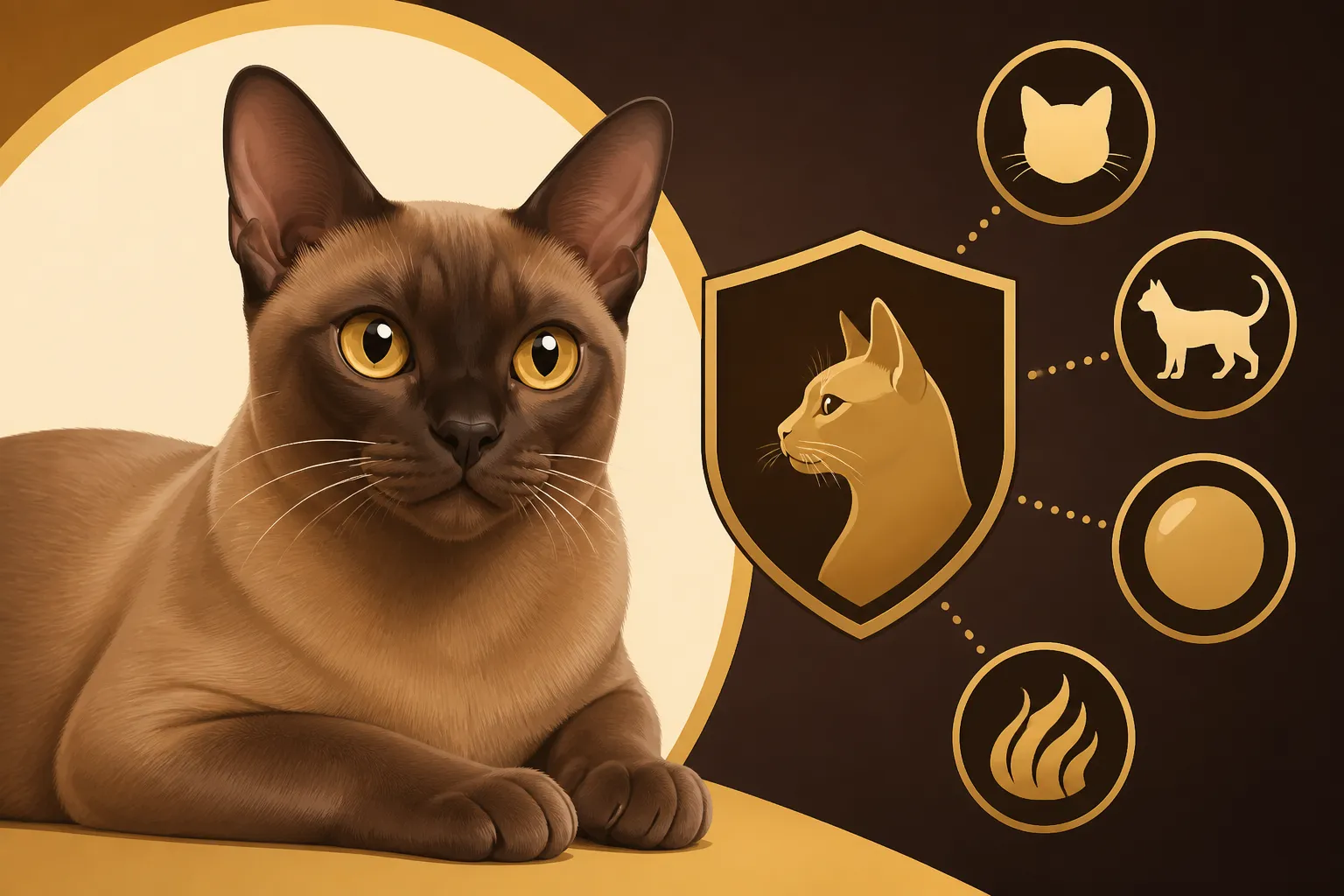
What the European Burmese Standard Asks For
It's incredibly frustrating when you're researching a beloved breed like the Burmese, only to discover there are two distinct types, and their standards can feel like comparing apples to very different oranges! This can make understanding what a truly well-bred European Burmese looks like feel like a puzzle. Fear not, fellow cat lover, because this guide is here to untangle the nuances and lay out exactly what the European Burmese standard asks for, helping you appreciate the unique beauty and characteristics of this elegant feline.
Understanding the European Standard's Philosophy
When we talk about the European Burmese, we're not just discussing a geographical difference; we're delving into a distinct aesthetic and historical lineage that carved its own path. The standards for this type reflect a particular vision, one that emphasizes elegance, moderation, and a unique silhouette.
The Divergence from the American Type
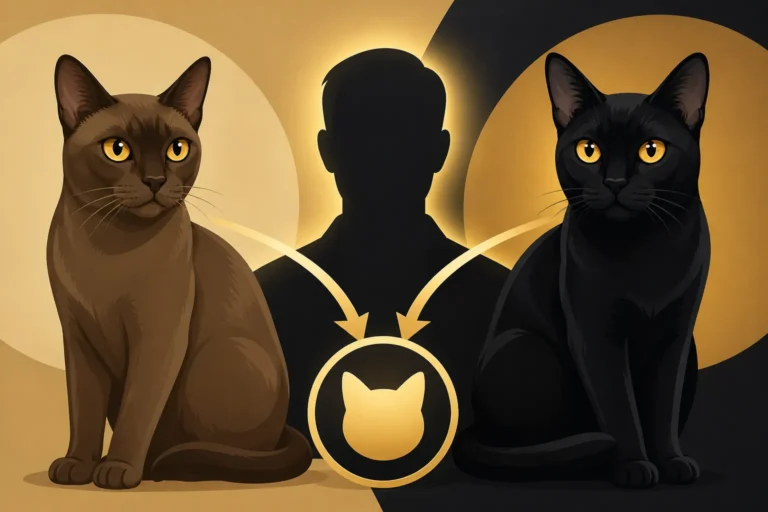
The split between the American and European Burmese types is a fascinating piece of cat fancy history. After World War II, as breeding programs were being re-established, particularly in the UK, breeders began to develop the Burmese along a slightly different trajectory than their counterparts in the United States. While both types trace their ancestry back to the foundational cat, Wong Mau, the interpretation of the ideal Burmese evolved differently. European breeders gravitated towards a cat with a more "foreign" or "oriental" appearance, favoring a slightly longer body and a less rounded head than what was becoming popular in America.
This wasn't an accidental drift; it was a deliberate choice by breeders who were passionate about cultivating a specific look. They aimed for a cat that, while retaining the deep affection and characteristic satin coat, presented a more refined and athletic profile. This divergence eventually led to separate breed standards and, in many registries, two distinct designations for the Burmese. It's why, even today, discussing the "Burmese" isn't as straightforward as it is with some other breeds; you really have to specify which type you're referring to. The commitment to these separate ideals has been strong, even leading to restrictions on crossing the two types in many breed clubs. It truly highlights the passion and vision breeders poured into shaping this remarkable cat. How the American and European Burmese Split
A Focus on Elegance and Elongation
At the heart of the European Burmese standard is an unwavering commitment to elegance and elongation. Imagine a cat that combines athletic grace with a sleek, almost aristocratic bearing. This isn't a stocky, compact feline; rather, it’s designed to be medium in size but with a decidedly longer body and legs, giving it a stretched, lithe appearance. This translates into a sense of movement that is fluid and unhurried, a picture of poised confidence.
This focus on a more elongated form is one of the most immediate visual distinctions when comparing the European Burmese to its American cousin. Where the American standard often speaks of a "brick wrapped in silk," implying a surprising weight for its size and a more compact build, the European standard leans into refinement. Every line, from the tip of its nose to the end of its tail, is intended to flow smoothly, creating a harmonious and balanced outline. It’s a cat that carries itself with inherent dignity, yet remains incredibly agile and playful. This elegance isn't just about looks; it's about the entire presentation, the way the cat holds itself, moves, and interacts with its surroundings, embodying a truly graceful spirit.
The European Burmese Head: A Study in Refinement
The head of a European Burmese is a crucial aspect of its distinctive appearance, clearly setting it apart from other breeds and even its American counterpart. It's all about balanced proportions and a gentle, refined wedge shape that contributes to its elegant overall impression.
Wedge, Muzzle, and Chin
Unlike the distinctly rounder head often seen in the American Burmese, the European standard calls for a modified wedge shape. This means the head should be neither completely round nor sharply pointed, but rather a soft, gently tapering wedge that is broad at the cheekbones and narrows slightly towards the muzzle. When you look at a European Burmese from the front, you should notice a definite, yet subtle, tapering from the ears down to the chin. The profile is equally important, showing a gentle curve rather than a flat plane or an abrupt stop.
The muzzle itself should be short and broad, forming a gentle curve to the chin. It should feel full and well-developed, but never appear pinched or overly narrow. The chin, in particular, must be firm and well-defined, aligning with the nose to create a strong, clean profile. It's these subtle, harmonious curves and lines that define the European Burmese head, giving it an expression of intelligence and mild curiosity. If you're comparing kittens, paying close attention to these nuances in head shape, even at a young age, can help you identify if a breeder is truly adhering to the European standard. What a European Burmese's Head Should Look Like
Eye Shape, Placement, and Color
The eyes of a European Burmese are one of its most captivating features, often described as luminous and expressive. The standard specifies that the eyes should be large and set well apart, giving the cat an open, alert look. Their shape is typically oval to almond-shaped, reflecting that elegant, slightly oriental influence, rather than the perfectly round eyes sometimes seen in the American type. This oval shape contributes significantly to the sophisticated expression that is so characteristic of the European Burmese.
Color is also paramount, with the standard calling for variations of yellow to amber. The deeper and richer the color, the more desirable it is considered, as it enhances the overall warmth and vibrancy of the cat's face. While many Burmese will have striking gold eyes, a beautiful amber or even a yellowish-green tinge can also be acceptable, as long as the color is clear, intense, and free from any cloudiness. However, a distinctly green eye color is generally considered a fault under the European standard, as it detracts from the desired warm palette. The eyes should always be clear, brilliant, and convey the intelligence and affection for which the breed is renowned. Which Eye Color a Burmese Should Have
Ear Set and Size
The ears of the European Burmese play a vital role in completing the head's refined wedge shape and contributing to the cat's alert expression. The standard asks for ears that are medium in size, neither overly large nor disproportionately small. They should be set well apart on the head, following the lines of the wedge, rather than being placed too high or too close together. This wide placement helps to emphasize the breadth across the cheekbones and further enhances the gentle taper of the head towards the muzzle.
Another important characteristic is that the ears should be broad at the base, giving them a sturdy yet graceful appearance. The tips can be slightly rounded, adding to the overall softness of the head's contours. When you look at a European Burmese, the ears should be in perfect harmony with the rest of the head, contributing to a balanced and elegant silhouette without ever appearing too prominent or out of place. It’s this careful balance of size, placement, and shape that allows the ears to seamlessly integrate into the overall aesthetic, reinforcing the breed’s distinguished appearance.
Body and Tail: Graceful Proportions
While the head draws you in, the body and tail of the European Burmese truly showcase its graceful athleticism. The standard for these features emphasizes strength and elegance, demanding a harmonious balance that speaks to both power and refinement.
Muscular Yet Elegant Body Structure
The body of the European Burmese is described as medium in size, but here's where the elegance truly shines: it must be long and athletic, a stark contrast to a cobby or stocky build. When you pick up a European Burmese, you'll immediately notice that while it feels surprisingly heavy for its apparent size – indeed, all Burmese are known for their dense musculature – this weight is distributed across a lean, well-proportioned frame. The standard calls for a body that is neither bulky nor frail, but rather a perfect blend of strength and grace. The chest should be full and rounded, the back level, and the flanks tucked in, creating a streamlined appearance.
This elongated body is supported by fine, well-muscled legs that are in proportion to the body, ending in neat, oval paws. The overall impression is one of a cat capable of great agility and strength, yet never losing its refined outline. Breeders strive for that perfect "middle ground" where the cat is robust enough to be active and playful, but never appears coarse or heavy. This is a cat built for leaping onto your shoulder with ease, then draping itself elegantly across your lap, embodying both dynamism and serene beauty (see How Big an Adult Burmese Gets).
The Tail's Importance in Balance
The tail of the European Burmese is not just an appendage; it's an integral part of the cat's overall balance and aesthetic. The standard specifies a tail that is medium to long in length, directly in proportion to the elongated body. It should be neither excessively short nor disproportionately long, but rather a natural extension of the cat's graceful spine. The tail should taper gradually from the base to a rounded tip, like a fine whip.
When the cat is alert or moving, the tail should be carried with an elegant curve, often held high, adding to the cat's confident and poised demeanor. It acts as a natural counterbalance, especially during their famously agile leaps and bounds. A kinked or abnormally short tail would be considered a fault under the standard, as it disrupts the smooth lines and harmonious proportions that are so highly valued. Just as every other feature, the tail contributes to the overall picture of a European Burmese as a cat of refined beauty and athletic grace.
Coat and Color: The Signature Satin
The European Burmese's coat is one of its most defining and beloved characteristics. It's not just about color, but about an utterly unique texture and an unmistakable sheen that truly sets the breed apart.
The Famed Satin Coat
The European Burmese boasts a coat that is famously short, fine, and incredibly close-lying to the body. This isn't a fluffy coat or one with a pronounced undercoat; in fact, the European Burmese has almost no undercoat to speak of. This unique structure is what gives it that signature "satin" feel – incredibly soft, smooth, and luxurious to the touch, like running your hand over a piece of fine silk. When you stroke a Burmese, you’ll notice the fur practically melts under your fingers.
This sleekness isn't just for show; it also means that the European Burmese sheds remarkably little, making it a dream for those who prefer minimal cat hair around the house. The coat is designed to lie flat against the body, showcasing the cat's muscular contours and elegant lines. It also contributes to the breed's ability to seek out warmth, as their short coat offers less insulation. Maintaining this glorious coat is surprisingly easy; a simple wipe with a chamois cloth once a week is often all it takes to bring up that magnificent shine, removing any loose hairs and enhancing its natural luster. What Makes a Burmese's Coat Satin Rather Than Silky You can find excellent quality chamois cloths on sites like Chewy that are perfect for this quick grooming routine.
Recognized Colors and Their Nuances
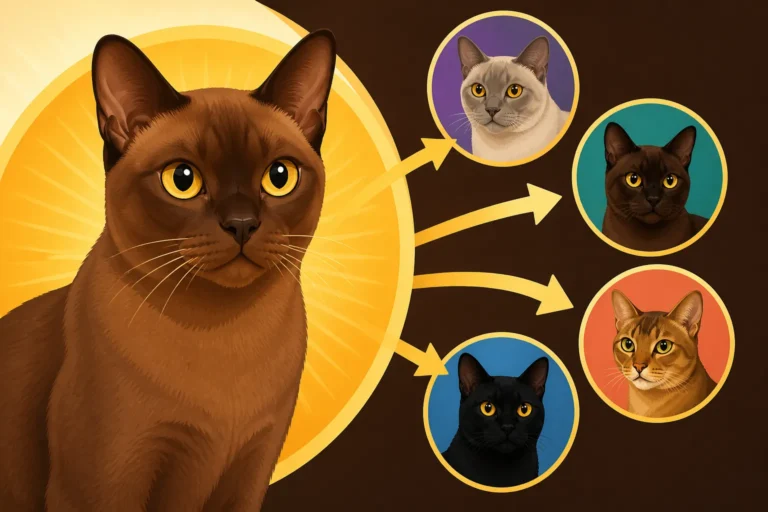
The European Burmese standard recognizes a wider range of colors than the American type, reflecting the different breeding paths taken over the decades. The original and most common color is Sable, a rich, warm brown that deepens slightly at the points (ears, face, paws, tail). However, the European standard also embraces a beautiful spectrum of dilute and red-based colors. These include the elegant Blue, a soft, warm grey with a slight bluish cast; Chocolate (often called Champagne in the US), a delightful warm honey-beige; and Lilac (often called Platinum in the US), a delicate, pale grey with a pinkish cast.
Beyond these four traditional colors, European Burmese breeders have also developed and gained recognition for Red, Cream, and various Tortie patterns (Blue Tortie, Chocolate Tortie, Lilac Tortie), adding even more diversity and visual appeal to the breed. All of these colors share the distinctive Burmese pattern, which is known as "Burmese restriction." This means the pigment is darker at the cooler extremities of the body (points) and lighter on the warmer torso, though the contrast is much more subtle than in a Siamese. This temperature-sensitive gene ensures that a Burmese kitten, born pale, will gradually darken to its full adult color as it grows. The depth and evenness of these colors, along with the tell-tale sheen of the satin coat, are meticulously judged against the standard. Which Colors the European Burmese Standard Adds
Temperament and Movement: The Living Standard
Beyond physical attributes, the European Burmese standard also implicitly acknowledges the breed's characteristic temperament and how it moves. These living aspects are just as crucial to the overall picture of a well-bred cat as its physical appearance.
The Energetic and Affectionate Disposition
Any Burmese owner will tell you that the breed's personality is as much a part of its standard as its physical traits. The European Burmese is renowned for its incredibly outgoing, playful, and deeply affectionate nature. These are cats that thrive on human companionship, often described as "Velcro cats" because of their desire to be constantly with their people. They’re intelligent and curious, always keen to participate in whatever you’re doing, whether it’s helping you type on the keyboard or simply supervising from your shoulder. This breed forms intense bonds with their families, often attaching strongly to one or two individuals, but they are generally gregarious and friendly with everyone, including visitors.
They retain their kittenish playfulness well into old age, always up for a game of fetch or chasing a wand toy. This vibrant energy means they integrate wonderfully into busy households. Their vocalizations are also unique: instead of a loud Siamese-like wail, they often use a raspy rumble or a quiet, conversational chirp to communicate. Their dog-like devotion and social needs are so profound that breeders often recommend getting them in pairs, or ensuring they have plenty of company. It's part of their intrinsic being, and a true European Burmese embodies this joyful, devoted spirit. Why the Burmese Is Called a Dog in a Cat's Body
Agile and Fluid Movement
The physical standard for the European Burmese, with its emphasis on an elegant and elongated body, naturally translates into a particular style of movement. A well-bred European Burmese should move with an effortless grace and agility that belies its solid muscularity. Their gait should be fluid, lithe, and well-coordinated, showcasing their athletic build. You won't see a clumsy or lumbering step; instead, every movement is purposeful and smooth, whether they are pouncing on a toy, stretching out for a nap, or navigating a busy room.
This fluidity in movement is a testament to their well-balanced proportions and strong, yet refined, bone structure. They are capable of quick bursts of speed and impressive leaps, but always with an inherent poise. A European Burmese navigating a room often looks like a dancer, light on its feet and fully aware of its body. This confident and athletic movement is a key component of the overall picture, demonstrating not just physical health and soundness, but also the vibrant and active nature of the breed.
Distinguishing the European Burmese in a Lineup
Understanding the subtleties of the European Burmese standard can be challenging, especially when you're presented with a range of cats. A side-by-side comparison is often the best way to truly grasp the distinct traits that define this elegant type.
Side-by-Side with the American Type
When you place a European Burmese next to an American Burmese, even an untrained eye can often spot the differences, though sometimes they are subtle until you know what to look for. The European type generally presents a more elongated, athletic body, with a head that is a modified wedge, tapering gently from broad cheekbones. Their eyes are typically oval to almond-shaped, contributing to a more oriental expression. In contrast, the American Burmese tends to have a more compact, cobby body, often described as "brick-like," with a distinctively rounder head and rounder eyes.
| Feature | European Burmese Standard | American Burmese Standard |
|---|---|---|
| Head Shape | Modified wedge, broad cheekbones, gentle taper | Round, full, broad, with considerable breadth between ears |
| Muzzle | Short, broad, forming gentle curve to chin | Short, well-developed, rounded, not pointed |
| Eyes | Large, oval to almond, set well apart, yellow to amber | Large, round, set well apart, gold to amber |
| Body Type | Medium size, long, athletic, well-muscled | Medium size, compact, well-muscled, surprising weight |
| Legs & Paws | Fine, proportionate, oval paws | Neat, round paws |
| Ear Placement | Medium size, set well apart, broad at base | Medium size, well-set, rounded tips |
| Overall Impression | Elegant, graceful, lithe, refined | Compact, solid, powerful, "brick wrapped in silk" |
This table highlights the key physical distinctions, but remember, both types share that incredible satin coat and intensely affectionate personality. It's largely the "packaging" that differs. Understanding these nuances is not about saying one is "better" than the other, but about appreciating the unique vision each standard upholds. If you're looking to acquire a specific type, knowing these differences is invaluable. How to Tell Which Burmese Type You Are Buying
Why Standards Matter for Breeders and Owners
Breed standards might seem like abstract guidelines, but they are incredibly important for both breeders and owners, serving as the blueprint for maintaining the integrity and health of a breed. For breeders, the standard is their guide, ensuring they are selectively breeding for desired traits, temperament, and genetic soundness. It helps to prevent dilution of the gene pool and ensures that future generations continue to embody the qualities that make the European Burmese unique. Adhering to the standard also promotes ethical breeding practices, encouraging health testing and careful consideration of pedigrees. Without a clear standard, a breed can quickly lose its distinctive characteristics and fall prey to random breeding, leading to inconsistent types and potential health issues.
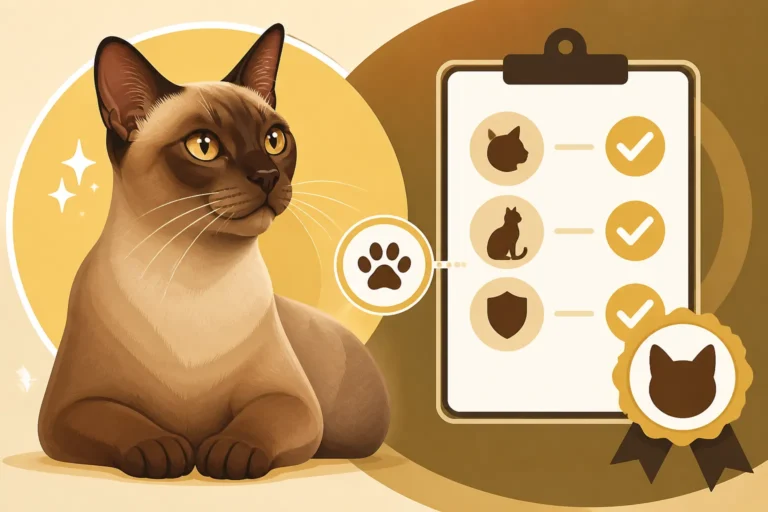
For prospective owners, understanding the standard provides a clear expectation of what a purebred European Burmese should look and act like. It empowers you to ask informed questions of breeders, ensuring you are purchasing a cat that meets your expectations and embodies the traits you admire. It helps you recognize a reputable breeder who is committed to the breed's welfare and preservation, rather than someone simply selling "Burmese-looking" cats. Furthermore, it allows you to truly appreciate the exquisite qualities of your own European Burmese, understanding the history and dedication that went into creating such a magnificent companion. It's a testament to the passionate individuals who've worked for decades to preserve this beautiful and unique feline. What a Burmese Looks Like Against the Standard
Disclaimer
This article is for general informational purposes only and does not constitute professional advice. Laws, prices and regulations vary by location and change over time. Consult a qualified professional for guidance on your specific situation.