Why the First Burmese Was Called Walnut Brown
Many of us, when we first encounter the striking beauty of a Burmese cat, are captivated by their unique, lustrous coat and incredibly affectionate personality. Yet, delving into the breed's history, you often stumble upon an intriguing detail: the very first Burmese cat, the foundation queen Wong Mau, was initially described as "walnut brown." This can feel a little perplexing, especially if you're picturing the deep, rich sable that is so iconic today. This guide aims to clear up that historical curiosity, explaining the nuances of early cat fancy terminology and the scientific discoveries that clarified the true nature of the Burmese's exquisite coloring.
The Arrival of Wong Mau and the Early Observations
The story of the modern Burmese cat really begins in 1930 with the arrival of a small, nut-brown cat in San Francisco. This cat, named Wong Mau, was brought from Burma (now Myanmar) by Dr. Joseph C. Thompson, a U.S. Navy medical officer. Thompson was immediately captivated by her unique appearance, which was distinctly different from the Siamese cats that were popular at the time, yet shared some similarities. She was smaller, more compact, and had a softer, richer brown coat. This unique coloring was the subject of much fascination and scientific inquiry from the very beginning.
Wong Mau: The Original Burmese
Wong Mau was truly one of a kind in the Western world at that time. She wasn't just another exotic import; she was the cornerstone of a new breed. Her physical characteristics, particularly her coat color and texture, were meticulously documented. Thompson and his colleagues noted her dark brown points—ears, face mask, paws, and tail—which were darker than her body, but the contrast wasn't as stark as in a Siamese. Her body color was a warm, medium brown. It was this overall impression that led to the descriptive "walnut brown" moniker. It was a term of observation, an attempt to capture the essence of her hue with familiar references.
Thompson's observations were crucial. He wasn't just a casual cat lover; he was approaching this with a scientific mind, eager to understand the genetic underpinnings of her appearance. He saw potential for a new breed, distinct from the popular Siamese, and set about a controlled breeding program to explore this. This careful attention to detail in the early days, though perhaps using less precise color terms by today's standards, laid the groundwork for everything we know about the Burmese.
Dr. Thompson's Initial Investigations
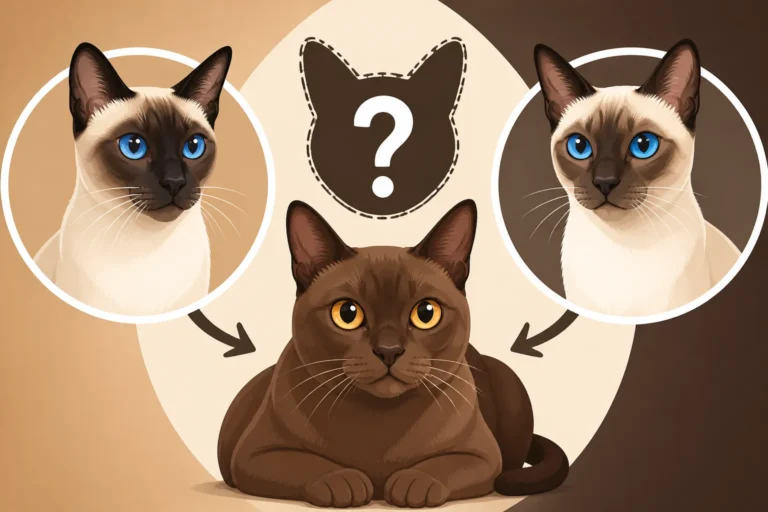
Dr. Thompson's journey with Wong Mau was driven by a desire to understand her genetic makeup. He understood that to establish a new breed, he needed to prove that her unique traits were heritable and consistent. To do this, he undertook a strategic breeding program. He famously bred Wong Mau to a Siamese cat, which was a logical choice given her subtle pointing and overall Oriental type. This pairing was a brilliant scientific move, as it helped to reveal the genetic secrets of her coat.
The kittens produced from this first breeding were fascinating. Some looked like Wong Mau, some looked like Siamese, and some were in between, with a lighter brown body and darker points, a phenotype that would eventually be recognized as the Tonkinese. This demonstrated that Wong Mau carried genes for both solid and pointed colors, and her own "walnut brown" appearance was a distinct expression of those genes. Without this careful, scientific approach from Dr. Thompson, the specific genetic allele responsible for the Burmese coloration might have remained a mystery for much longer. For more on this, you can read about The Burmese Began With One Cat Called Wong Mau and Dr Joseph Thompson and the Burmese He Bought in 1930.
Deciphering the "Walnut Brown" Description
The term "walnut brown" might seem a bit vague to us now, especially since modern Burmese are typically described by very specific color names like sable, champagne, blue, or platinum. However, in the 1930s, before the intricate genetic understanding of cat coat colors was widespread, people relied on evocative comparisons to describe new and unusual hues.
Color Descriptions Before Genetic Understanding
Before the advent of genetic testing and detailed color charts in the cat fancy, descriptive terms were often the best way to communicate a cat's color. Imagine trying to describe a color you've never seen before to someone who also hasn't seen it! You'd lean on common objects or natural elements. "Walnut brown" would have immediately conjured an image of a rich, deep, yet slightly muted brown, perhaps with undertones of reddish gold, much like the shell or meat of a walnut. This description was an attempt to capture the richness and warmth of Wong Mau's coat, which wasn't simply black, nor was it the pale cream of a traditional Siamese point.
This era was all about visual interpretation. The nuances of light, shadows, and even the cat's mood could subtly alter how its coat appeared to an observer. Unlike the precise genetic codes we use today, these early descriptors were subjective yet widely understood in common parlance. They served their purpose in distinguishing Wong Mau's unique look from other known breeds.
The Influence of Environment and Lighting
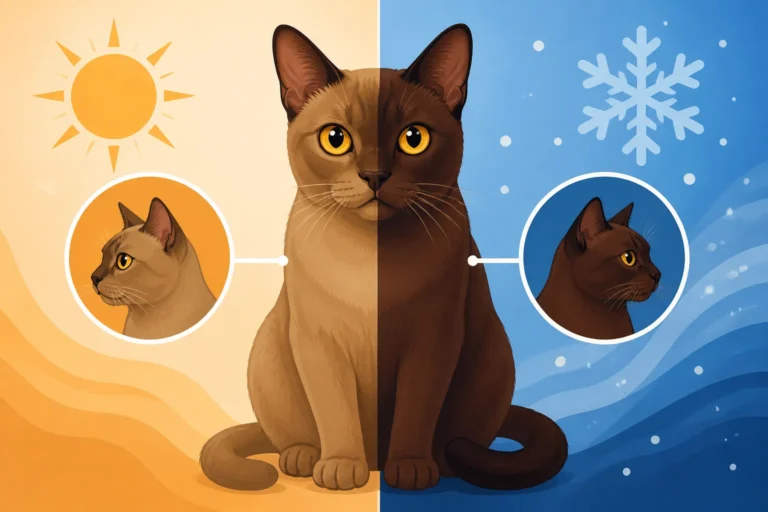
It's also worth remembering that a cat's coat color can appear different under various lighting conditions. Natural daylight versus incandescent light, or even the time of day, can dramatically alter how a color presents itself. Wong Mau likely spent time in various environments, and the term "walnut brown" could have been a composite impression formed under different observations. Furthermore, the early photographic methods and reproduction in print might not have captured the exact shade with perfect fidelity, leading to some variations in how her color was perceived and remembered.
Consider how your own Burmese cat's sable coat, for instance, can look almost black in dim light but reveal stunning warm, reddish undertones in bright sunshine. This phenomenon would have been even more pronounced when there wasn't a universal standard for what a Burmese should look like. Wong Mau was the standard unto herself, and her appearance was interpreted through the eyes of those observing her, influenced by ambient conditions.
Comparing "Walnut Brown" to Modern Sable
Today, the most common color for the Burmese is Sable (sometimes called 'Brown' in the UK and Australia). This is a rich, warm, dark brown, often likened to dark chocolate or a deep seal. When we look at photos of Wong Mau, her coat does indeed align very closely with what we now call sable. The "walnut brown" descriptor likely aimed to capture the depth and slight reddish-brown warmth of this color, distinguishing it from a flat, solid black or a pale fawn.
The shift from "walnut brown" to "sable" reflects a move towards more standardized and precise terminology within the cat fancy. While "walnut brown" was an excellent descriptive term for its time, "sable" has become the accepted, consistent term that accurately reflects the genetic underpinnings and visual presentation of the breed's foundational color. It's less about a change in the cat's appearance and more about a refinement in how we describe it. What the First Burmese Looked Like offers a glimpse into this historical appearance.
The Genetic Revelation of Burmese Coloration
The true understanding of Wong Mau's "walnut brown" coat came not just from observation, but from the groundbreaking genetic studies conducted by Dr. Thompson and his collaborators, notably Dr. Clyde Keeler and Dr. Gordon Davis. These scientists discovered the unique genetic mechanism that gives the Burmese its distinctive color.
The Unique cb Allele
The key to the Burmese's coloration lies in a specific gene, known as the cb allele (for Burmese color). This gene is responsible for what is called "Burmese restriction." Unlike the C allele (full color) or the cs allele (Siamese point), cb causes a partial restriction of color pigment to the warmer parts of the body. This means that the extremities—the points—are darker than the body, but not as intensely dark or sharply defined as a Siamese cat's points. The body color is a rich, warm brown, rather than the cream or white of a Siamese's body.
When a cat inherits two copies of this cb allele (one from each parent), the result is the classic Sable Burmese, which was Wong Mau's color. This double dose of the Burmese gene creates that unique, almost solid-looking brown body with only slightly darker points. This genetic discovery was monumental, as it explained exactly why Wong Mau looked the way she did and why her offspring varied. Understanding The cb Allele Is What Makes a Burmese Brown is essential to appreciating the breed's genetic uniqueness.
How the cb Gene Interacts with Other Colors
The beauty of genetics is how different alleles interact. The cb allele doesn't just create sable; it modifies other underlying colors. For example, if a cat would genetically be black, the cbcb genotype turns it sable. If the cat would be genetically blue, the cbcb genotype turns it blue Burmese (a soft grey-blue). This is why Burmese cats come in a spectrum of colors, all with that characteristic "Burmese restriction."
This interaction means that the cb allele is a form of partial albinism, allowing some pigment expression but modifying its distribution. It's a fascinating example of how a single genetic mutation can have a profound impact on an animal's appearance, leading to a whole new breed type. The genetic research on Wong Mau and her progeny truly helped decode the complex world of cat coat color genetics, demonstrating that Where the Burmese Color Gene Sits is crucial for the breed's identity.
The Spectrum of Burmese Hues
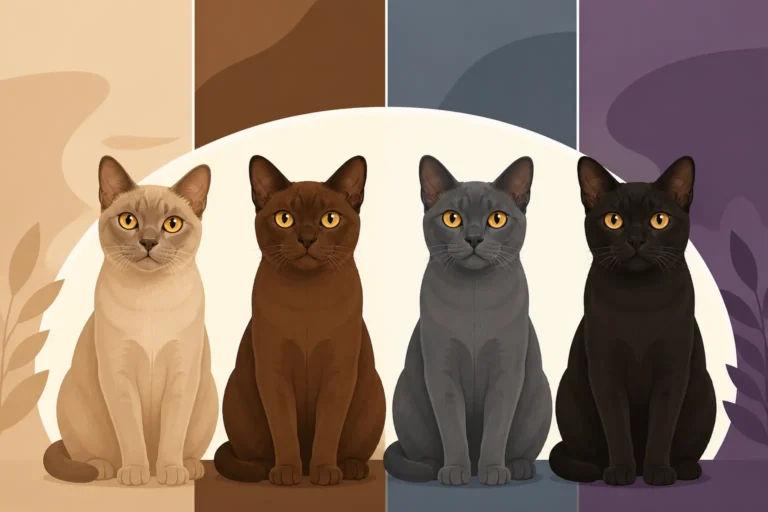
While "walnut brown" captured the essence of Wong Mau, the cb allele allows for a beautiful range of colors in the Burmese breed, all stemming from that initial genetic foundation. The most widely recognized colors include Sable (the original "walnut brown"), Champagne (a warm, honey-beige dilution of sable), Blue (a soft, silvery grey dilution of sable), and Platinum (a pale, almost lavender-grey dilution of champagne). Each of these colors carries the characteristic Burmese restriction, giving them a distinct depth and sheen.
These colors are not just random variations; they are predictable outcomes of specific genetic combinations. For example, the Champagne Burmese is essentially a dilute sable. This genetic understanding allows breeders to predict litter colors and maintain the integrity of the breed's appearance. It's a far cry from the descriptive terms of the 1930s, showing how scientific understanding has refined our appreciation for the breed's diversity.
Here's a simplified look at the progression of color description:
| Era | Description for Wong Mau's Color | Characteristics | Underlying Genetic Understanding |
|---|---|---|---|
| Early 1930s | Walnut Brown | Rich, warm, medium brown; not solid black, not Siamese | Purely observational and comparative |
| Mid-20th Century | Brown, later Sable | Deep, dark brown; subtle pointing, lustrous sheen | Recognition of distinct Burmese gene (cb) |
| Modern Cat Fancy | Sable (or Brown) | Dark chocolate brown, warm tones, minimum contrast | Homozygous for cb allele (cb/cb) |
The Evolution of Burmese Color Terminology
The language used to describe Burmese colors has evolved significantly over the decades, moving from subjective, descriptive terms to precise, genetically informed classifications. This evolution mirrors the progress of the entire cat fancy, striving for consistency and scientific accuracy.
Standardizing Breed Colors
As the Burmese breed gained recognition and popularity, particularly through organizations like the Cat Fanciers' Association (CFA), it became necessary to standardize the color descriptions. "Walnut brown" was a lovely personal observation, but it lacked the precision needed for a breed standard. A breed standard defines the ideal characteristics of a breed, including its accepted colors. This ensures consistency in breeding and judging across the globe.
The term "sable" emerged as the universally accepted term for the original, darkest brown Burmese color. It's a word that evokes richness, depth, and a lustrous quality, fitting the Burmese perfectly. This standardization wasn't just about semantics; it was about solidifying the breed's identity and providing clear guidelines for breeders and judges alike. This formalization helped the breed thrive and be consistently recognized worldwide. You can explore this further by considering When the First Burmese Standard Was Written.
Why "Walnut Brown" Faded From Use
The term "walnut brown" didn't fade away because it was inaccurate, but because it was replaced by more precise and scientific terminology. Once the cb allele was understood and accepted, and breed standards were established, a more clinical, yet descriptive, term like "sable" took its place. It allowed for easier categorization and communication among breeders and enthusiasts. It also allowed for the clear differentiation of other Burmese colors like champagne, blue, and platinum, which "walnut brown" couldn't encompass.
Today, while the history of "walnut brown" is a charming anecdote and a nod to the breed's origins, using "sable" ensures clarity and adherence to established breed standards. It's a testament to how far cat genetics and breed development have come since Wong Mau first graced Dr. Thompson's home. And if you're looking for high-quality, low-carbohydrate wet food to keep your Sable Burmese's coat glossy and healthy, many owners find a great selection available from reputable online retailers like Chewy, which can be delivered right to your door.
This historical journey reminds us that the language of cat fancy, much like the cats themselves, is ever-evolving. While the name might have changed, the captivating beauty and unique genetics of the original "walnut brown" Burmese continue to delight and inspire. Ensuring your Burmese has the right nutrition, perhaps sourced from a convenient place like Chewy, will also help that gorgeous sable coat shine its brightest.
Disclaimer
This article is for general informational purposes only and does not constitute professional advice. Laws, prices and regulations vary by location and change over time. Consult a qualified professional for guidance on your specific situation.