Whether a Cream Burmese Is Recognized
A cream Burmese can be officially recognized in some breed registries, but not all. That’s why you may see a cat advertised as a “cream Burmese” and still hear that cream is not an accepted Burmese color. The answer depends on the registry and the type of Burmese being registered, so check those details before relying on a breeder’s wording.
Is a cream Burmese officially recognized
The short answer depends on the registry
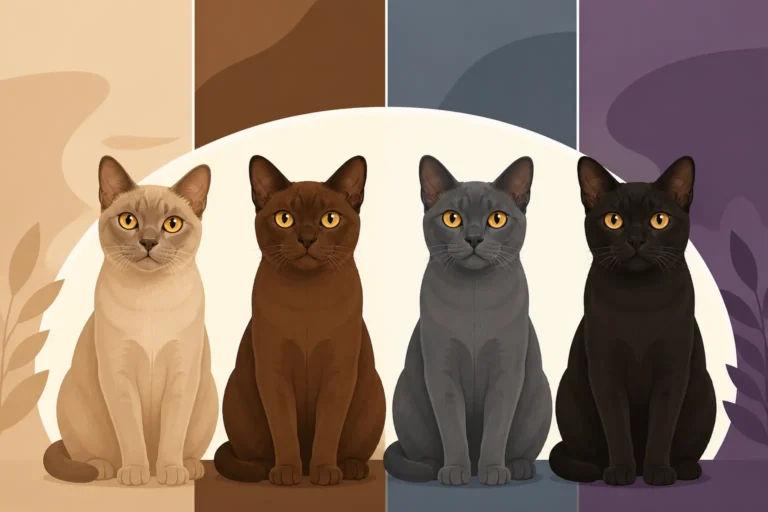
There is no single worldwide list of Burmese colors used by every cat registry. In the American Burmese standard used by the Cat Fanciers’ Association, the recognized colors are sable, champagne, blue, and platinum. Cream is not among those four colors. So, under that standard, a cream-colored cat would not be registered as a Burmese in an accepted color.
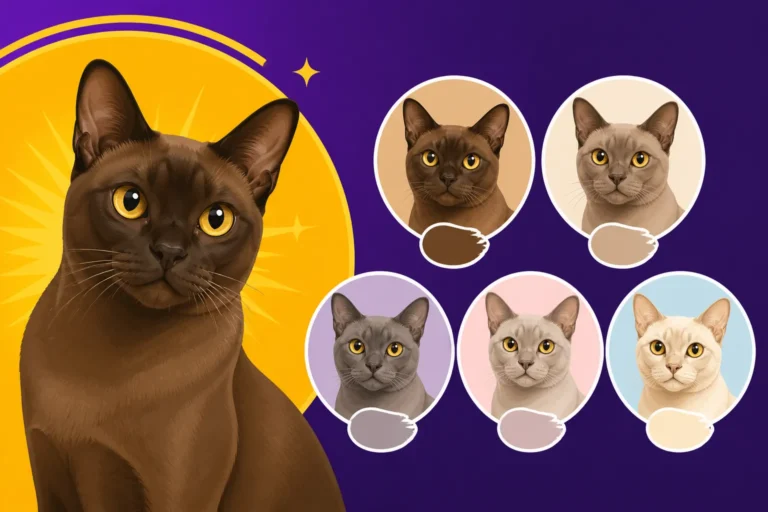
The situation is different for the European Burmese. Some registries recognize additional colors, including red and cream, as well as tortoiseshell combinations. That means a cream European Burmese may fit the color standard used by the registry in question. For a broader explanation of those color differences, see Which Colors the European Burmese Standard Adds.
This is why a simple yes or no can be misleading. “Cream Burmese” may be a valid description in one registry or breeding context and an inaccurate sales label in another. The registry named on the cat’s pedigree matters more than a general claim that cream is or is not a Burmese color.
American and European Burmese standards differ
The American and European Burmese developed along different paths, and their standards are not interchangeable. The American Burmese standard is associated with four recognized colors: sable, champagne, blue, and platinum. The European Burmese standard has a wider color range in some registries, including cream.
That does not mean one cat is more legitimate or better than the other. It means the registry is applying a particular breed standard to the cat. A color can be accepted within one standard and excluded from another, just as breed descriptions and registration rules can vary between organizations. The distinction between the two types is explained further in How the American and European Burmese Split and What a European Burmese Standard Asks For.
If you are looking at a cream kitten, ask the breeder which registry the parents are registered with and what color appears on their official records. A breeder may use everyday color language to describe a kitten, but the registry’s official color name may be different—or the color may not be accepted for registration as a Burmese at all.
How registry rules affect a cream Burmese
Check the organization, not just the breed name
The word “Burmese” on a listing does not tell you which color standard is being used. Ask for the name of the registry and whether the cat is registered as an American Burmese, European Burmese, or under another relevant classification. Registries differ in how they name and record Burmese types, so it is worth checking the details rather than assuming that a familiar label means the same thing everywhere. You can learn more from Which Registry Calls It a European Burmese.
A responsible breeder should be able to show you the pedigree or registration paperwork and explain how the kitten’s color is recorded. If the answer is only “the parents are Burmese” or “cream is a rare Burmese color,” ask for clarification. Those statements do not establish whether the kitten can be registered under the standard the breeder claims to follow.
It also helps to distinguish between being a Burmese by ancestry and meeting a registry’s requirements for a particular color or class. A cat may have Burmese ancestors but still not qualify for registration as a Burmese in a specific color category. For a closer look at how color details appear on official paperwork, see How a Burmese's Color Is Registered.
A color description is not the same as official registration
Breeder advertisements, social media posts, and retail descriptions often use color terms informally. A seller might call a kitten cream based on its appearance, while a registry might use a different color designation or not accept that color for Burmese registration. The description can be useful for identifying what the cat looks like, but it is not proof of registry status.
The same caution applies to online shopping and general breed information. Chewy can be useful for routine cat supplies, but a product listing or breed description there should not be treated as confirmation that a particular color is accepted by a cat registry. If you are browsing Chewy for food, litter, or grooming items for a Burmese, use the registry’s own standards and the breeder’s paperwork for questions about breed and color. Chewy is a retailer, not the authority that determines pedigree eligibility.
A second example: imagine a breeder has a kitten with a pale, warm-toned coat and calls it cream. Before placing a deposit, ask whether the kitten will receive registration papers, which registry will issue them, and what color will be entered. If the kitten is being sold as a pet without registration, the seller should still be clear about its parentage and why the color label is being used.
How to verify a cream Burmese listing
Ask these questions before you commit
A few precise questions can prevent a lot of confusion. Ask the breeder:
- Which registry are the kitten’s parents registered with?
- Is the kitten considered American Burmese or European Burmese under that registry?
- Is cream an accepted Burmese color in that registry’s standard?
- What color will appear on the kitten’s registration or pedigree paperwork?
- Can you see the parents’ registration documents and the kitten’s available records?
A clear answer should connect the color claim to a registry and paperwork. “Cream is recognized” is incomplete without saying where. “It is a Burmese because the parents look Burmese” is also incomplete if you need a registered pedigree or want to understand which standard applies.
If you are unfamiliar with the difference between the two types, compare the breeder’s description with How to Tell Which Burmese Type You Are Buying. And if a listing does not identify the type at all, Why a Burmese Sold Without a Type Is a Warning explains why that missing information deserves a follow-up question.
Be cautious with “rare color” claims
A rare-color label can make a kitten sound especially desirable, but rarity alone does not prove that the color is recognized, that the kitten is registered, or that the breeding was responsible. Ask for verifiable details instead of paying more simply because the advertisement uses words such as “rare,” “exclusive,” or “unusual.”
A breeder should be comfortable discussing how the kitten’s color is described and what the relevant registry permits. If the breeder avoids naming the registry, will not show paperwork, or insists that the color is officially accepted without identifying the standard, pause before making a decision. A transparent breeder will understand why you want to confirm the claim.
If you are comparing kittens from different listings, make a small note of the registry, Burmese type, color recorded on paperwork, and whether the kitten is being sold with registration. That gives you a fair comparison. A cream kitten may be a suitable choice as a pet even if its color is not registrable as Burmese under a particular standard, but you should know exactly what you are buying.
What to know before choosing a cream Burmese
Appearance and registration are separate questions
Cream describes a coat color; it does not, by itself, prove a cat’s breed. A cat may look cream-colored and have Burmese ancestry, yet still fall outside a registry’s accepted Burmese colors. Conversely, a cream cat may be recognized as a Burmese under a registry that accepts that color for the European Burmese.
That distinction matters most when you are choosing a pedigreed kitten, planning to show a cat, or considering breeding. For a family looking for a companion, color may be a matter of preference. For someone who needs official registration or intends to enter shows, the exact registry rules become essential. The standards are not simply interchangeable, as discussed in Whether the Two Burmese Types Are Separate Breeds.
Do not rely only on photographs when judging a kitten’s color. Lighting, age, camera settings, and the way a coat changes as a kitten grows can affect how its color appears. Ask the breeder how the color has been identified and whether the description matches the registry documentation.
Make the decision with paperwork in hand
Before you choose a kitten, request the written details: the registry, the parents’ registered type, and the color designation expected on the kitten’s paperwork. If official registration is important to you, confirm that the registry recognizes the kitten’s color and category before paying a deposit. A verbal assurance is not a substitute for documentation.
If the seller is offering a cream-colored cat as a pet without registry papers, that does not automatically mean the cat will be a poor companion. It does mean you should be careful about treating “cream Burmese” as a verified pedigree claim. Ask about the kitten’s history, health records, and what the seller can substantiate. For day-to-day supplies, Chewy may be one place to browse food, litter, and basic care products, but those purchases are separate from establishing a cat’s breed or registration. Keep those questions with the breeder and the relevant registry.
The practical answer is: cream is not accepted in every Burmese standard, but it is recognized in some European Burmese contexts. The safest way to decide whether a specific cream Burmese is officially recognized is to identify the registry, confirm the Burmese type, and check the color shown on the cat’s paperwork. Don’t let a confident listing substitute for those details, whether you found it through a breeder’s site, a social post, or while browsing Chewy for cat-care supplies.
Disclaimer
This article is for general informational purposes only and does not constitute professional advice. Laws, prices and regulations vary by location and change over time. Consult a qualified professional for guidance on your specific situation.