Whether a Burmese’s Chip Is Registered to You or the Breeder
Bringing a new Burmese kitten home is an absolute whirlwind of joy, purrs, and discovering just how much personality can fit into such a small, silky package. Amidst all the excitement of new toys and settling into routines, one crucial detail often gets lost in the shuffle: the microchip. You might assume everything's taken care of, but understanding whether your Burmese's chip is properly registered to you or still to the breeder can be the difference between peace of mind and heartbreak if your curious companion ever wanders off. This guide is here to untangle that question and give you the actionable steps to ensure your beloved Burmese is always traceable back to you.
The Initial Microchip: Breeder's Responsibility or Yours?
When you bring home a new kitten, especially a purebred like a Burmese, there's a lot of paperwork and information to absorb. The microchip is one of those vital pieces, often mentioned during the sale, but its registration status can be a source of confusion. It's not uncommon for new owners to assume that once the chip is in, everything else just falls into place, but there's a critical distinction between a microchip being implanted and it being correctly registered to the person responsible for the cat.
The Breeder's Role in Microchipping Kittens
Reputable Burmese breeders understand the importance of early identification. It's standard practice for them to have kittens microchipped before they leave for their new homes, typically around the time they receive their first vaccinations, usually before 12 or 13 weeks of age. This initial microchip serves several purposes. Firstly, it provides a permanent form of identification, linking the kitten back to the breeder's records, which is crucial for tracking health lines and pedigree. Secondly, it offers a safeguard; should a kitten somehow get lost or go missing during the brief period between chipping and going to its new family, it can be traced back to the breeder.
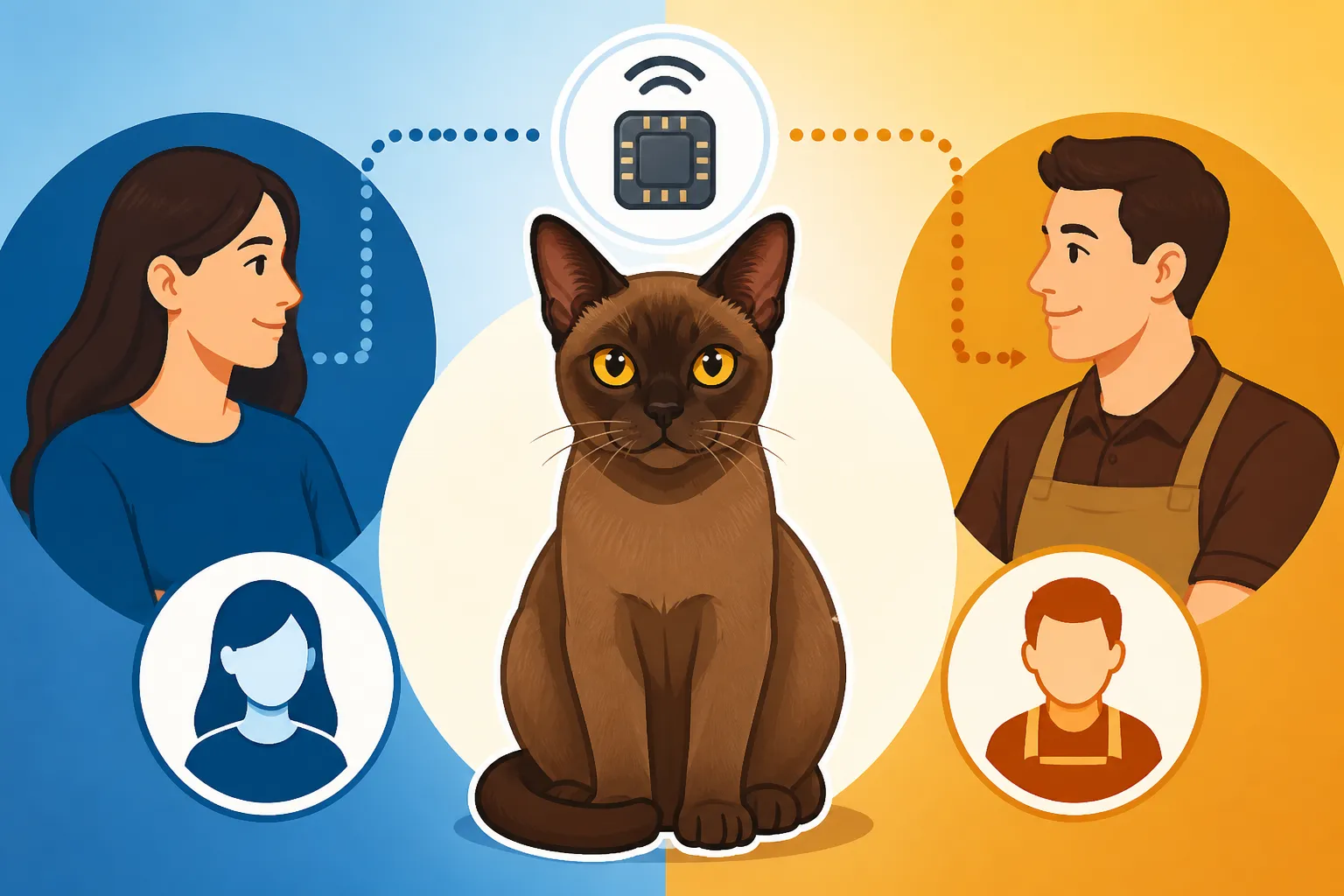
Often, when a breeder first implants the microchip, they'll register it temporarily in their own name or their cattery's name with the microchip company. This makes sense from their perspective, as they are still legally and practically responsible for the kitten at that point. They'll have a record of the microchip number and which kitten it belongs to, and this information should be clearly provided in your kitten's health records or purchase contract. It's a sign of a responsible breeder, someone who takes their commitments seriously, like those focused on ensuring their cats are free from hereditary conditions such as What a Burmese Breeder Must Test Before Any Mating. They'll be keen to see their kittens go to good homes where they are safe, and a microchip is a fundamental part of that safety net.
The New Owner's Obligation for Registration Transfer
Here's where the ball often gets dropped, leading to potential issues down the line. While your breeder has done their part by implanting the microchip and possibly even registering it initially, the ultimate responsibility for transferring that registration to your name falls squarely on you, the new owner. Think of it like buying a car; the dealership might handle some initial registration, but you're responsible for getting the title and updating the registration with the DMV in your name. With a Burmese, it's even more critical because it's about a living, breathing creature.
The transfer of registration means updating the microchip company's database so that the unique ID number embedded in your cat is permanently linked to your contact information: your name, address, and current phone numbers. This isn't just a formality; it's the single most important step in ensuring that if your adventurous Burmese ever slips out the door – and believe me, their curiosity and trusting nature mean they can be escape artists – they can be quickly identified and returned to you. Without this transfer, the chip might still be registered to the breeder, which means if your cat is found, the rescue or vet clinic will call the breeder, causing delays and confusion. Imagine the stress and worry of your beloved The Burmese Is the Velcro Cat of the Cat Fancy being found but not easily identifiable as yours!
Navigating the Microchip Registry System
Understanding how microchip systems work can feel a bit like deciphering ancient texts, but it’s actually quite straightforward once you know the basics. The key is to realize that the chip itself is just a passive piece of technology; it’s the database that holds the crucial information linking your Burmese back to you.
How Microchip Registration Works
A microchip is essentially a tiny transponder, about the size of a grain of rice, that's implanted under your cat's skin, usually between the shoulder blades. It doesn't have a battery, so it only activates when a scanner passes over it, emitting a unique identification number. This number is what needs to be registered. The microchip itself doesn't contain any personal data. Instead, that unique ID number is stored in a national database, alongside your contact information.
There are several major microchip registry services out there, such as AKC Reunite, PetLink, HomeAgain, and others. When a pet is found and scanned, the unique microchip number is usually entered into a universal microchip lookup tool. This tool then tells the person who found the pet which specific registry company holds the contact information for that particular chip number. From there, the registry can provide your contact details to facilitate a reunion. This system is incredibly effective, but it hinges entirely on your information being accurate and up-to-date in the correct database. If your Burmese were to get lost, say during an unexpected move or even just a quick dash out the door, this system is your best friend.
Checking the Current Registration Status
So, how do you find out if your Burmese's microchip is properly registered to you? It's easier than you might think, and it's a step every new cat owner should take.
First, locate the microchip number. This should be on your kitten's vet records, the health certificate provided by your breeder, or possibly on the purchase contract. If you can't find it, your veterinarian can easily scan your cat at their next appointment to retrieve the number.
Once you have the number, head to a universal microchip lookup website. A common one is petmicrochiplookup.org, which aggregates data from various registries. Simply enter your cat's microchip number. The site will tell you which company holds the registration for that chip and provide their contact information. It might show "Registered to Breeder" or "Unregistered," or ideally, "Registered to Owner" with your details. If it points to a specific company, you can then go directly to that company's website to look up the status or initiate a transfer. This simple check gives you invaluable insight and peace of mind.
The Process of Transferring Ownership
If you discover the chip is still registered to the breeder, or worse, unregistered, don't panic! The process for transferring ownership is usually quite straightforward, though it requires a few steps on your part.
- Obtain Transfer Documentation: Your breeder should have provided you with a microchip registration form or a transfer code. This is usually a physical form that needs to be filled out with your information and the breeder's details, or an online code that lets you claim ownership. If you didn't receive one, contact your breeder immediately to request it. A responsible breeder will be happy to assist with this, as they want their kittens to be safely rehomed.
- Fill Out and Submit the Form: Complete the form with your current name, address, phone number(s), and email address. Ensure all information is accurate and legible. If it's an online transfer, follow the prompts on the microchip registry's website.
- Pay Any Fees: Many microchip registries charge a small fee for initial registration or for transferring ownership. This is a one-time cost, and it's a small price to pay for your cat's safety. Check the specific registry's website for their current fees. Don't let a small fee deter you; consider it an essential part of your What a Burmese Costs Over Sixteen Years budget.
- Confirm the Transfer: After submitting, it's a good idea to follow up with the microchip company after a week or two to confirm that the transfer has been processed and your contact information is now officially linked to your Burmese's microchip. Some registries will send you a confirmation email or physical certificate. Keep this confirmation safe with your other important pet documents. You can also re-check using the universal lookup tool to verify the change.
Why Proper Microchip Registration is a Lifesaver for Your Burmese
While Burmese cats are known for their indoor companionability and devotion, even the most dedicated "velcro cat" can find itself in an unexpected outdoor adventure. Their trusting nature, which makes them such wonderful pets, also means they might approach strangers or not instinctively flee danger, making proper identification even more critical.
The Perils of an Unregistered or Misregistered Chip
Imagine the unthinkable: your curious Burmese, perhaps chasing a butterfly or startled by a loud noise, slips out an open door or window. Hours turn into days, and you're beside yourself with worry. This is every pet owner's worst nightmare. Now, imagine someone finds your beautiful cat and takes them to a local shelter or vet. They scan the microchip, get the number, and look it up.
If the chip is unregistered, that number is essentially meaningless. It's a key without a lock, offering no path back to you. The shelter has no way to contact anyone, and your cat could end up being held for a mandatory period before being put up for adoption. If the chip is misregistered (i.e., still in the breeder's name), the shelter will call the breeder. While a good breeder will try to help, it adds a significant delay, requires them to contact you, and can cause immense stress and confusion for everyone involved, especially your already scared cat. This delay can be agonizing and completely avoidable. Why a Burmese That Stops Following You Is Unwell – and being lost is definitely going to make them feel unwell!
Legal and Safety Implications
Beyond the emotional distress, there can be legal implications. In some municipalities or states, microchipping and registering your pet is a legal requirement. Failure to do so could result in fines. More importantly, proper registration provides indisputable proof of ownership. In the unfortunate event of a dispute over ownership if your cat is found, having the microchip registered to you with your current details can be invaluable in proving that the cat belongs to you.
It’s also about peace of mind. Knowing that your Burmese carries a permanent, tamper-proof identification that links directly to you offers an unparalleled sense of security. It's a silent guardian, working even when collars come off or tags get lost. Consider it an investment in your cat's lifelong safety, just like choosing high-quality food from a brand like Chewy or investing in pet insurance from Healthy Paws for their overall well-being.
Beyond Microchips: Other Safety Measures
While microchipping is paramount, it's part of a broader strategy for keeping your Burmese safe. Due to their trusting and highly social nature, Burmese cats thrive as indoor-only pets. Their "dog in a cat's body" persona means they often lack the street smarts of some other breeds and are far too friendly to fend for themselves outdoors. Why a Burmese Trusts Strangers Too Much to Roam is a real danger.
However, accidents happen. Always ensure your Burmese wears a collar with an ID tag displaying your phone number, even if they are indoor-only. Make sure the collar is a breakaway style for safety. Keep current photos of your cat, including unique markings, in case you need to create "Lost Cat" posters. Regularly check that all windows and doors are securely closed, and consider screening any open windows. A catio can offer a safe outdoor experience, but direct, unsupervised outdoor access is generally ill-advised for this affectionate and vulnerable breed.
Common Scenarios and What to Do
The path to proper microchip registration isn't always perfectly smooth. Sometimes issues arise, and knowing how to handle them can save a lot of heartache and effort.
What if the Breeder Hasn't Microchipped or Registered?
While reputable Burmese breeders almost universally microchip their kittens, occasionally you might encounter a situation where your new kitten isn't microchipped, or the breeder hasn't initiated any registration. This is a significant red flag and should prompt immediate action on your part.
First, schedule an appointment with your veterinarian as soon as possible to have your Burmese microchipped. It’s a quick, relatively painless procedure, similar to a vaccination. Your vet will implant the chip and provide you with the unique identification number. Then, you'll be responsible for registering this chip in your name with a reputable microchip registry service. Your vet clinic can often provide you with information about different registry options and even help you with the initial paperwork. Don't delay this step; it's a fundamental part of responsible pet ownership, especially for a breed like the Burmese who can become distraught if separated from their people, as discussed in What Separation Anxiety Looks Like in a Burmese.
If your breeder explicitly stated the kitten was microchipped and it wasn't, or if they failed to provide the necessary transfer documents, this should make you question the breeder's practices. It underscores the importance of choosing a breeder who transparently provides all health and ownership records, and who understands Which Diseases a Burmese Breeder Must Declare.
Dealing with a Breeder Who Won't Transfer Registration
This is a more serious scenario, but unfortunately, it can happen. If you've been provided with a microchipped Burmese, but the breeder is uncooperative in transferring the registration into your name, you have a few options.
- Communicate Clearly and Firmly: Start by politely but firmly explaining the importance of the transfer. Remind them of your purchase agreement and their responsibility to facilitate proper identification for the cat they sold you. Sometimes, it's an oversight or a misunderstanding on their part.
- Gather Proof of Ownership: Collect all documents that prove you are the rightful owner: your purchase contract, veterinary records showing you've been caring for the cat, adoption papers, and any communication with the breeder.
- Contact the Microchip Registry Directly: With your proof of ownership, contact the microchip registry company that currently holds the registration (which you can identify using the lookup tool). Explain the situation and ask about their protocol for forced transfers or disputes. Many companies have a process for this, especially with sufficient documentation. They may require a waiting period or attempts to contact the registered party (the breeder) themselves.
- Seek Legal Advice (as a last resort): If all else fails and the breeder remains uncooperative, you might need to consult with an attorney specializing in animal law, especially if your cat is still registered to the breeder after a significant amount of time. This is usually a rare and last-ditch effort, but it's an option to consider for your cat's long-term safety.
Keeping Your Information Up-to-Date
Once your Burmese's microchip is properly registered to you, the job isn't entirely done. Life happens, and your contact information might change. You might move to a new house, get a new phone number, or switch email addresses. Every time your contact details change, it is absolutely crucial to update this information with the microchip registry.
Imagine if your Burmese, with their penchant for following their favorite person around the house and even outside, as explored in Why a Burmese Cannot Let You Leave the Room, decided to wander off while you were settling into a new home. If your old address and phone number are still linked to the chip, reunion efforts will be severely hampered. Make it a habit: whenever you update your address with the post office or change your phone provider, add "update pet microchip registry" to your checklist. A quick call or visit to the registry's website is all it takes to keep your beloved Burmese safe and sound, ensuring that if they ever get lost, the path home is clear and direct.
| Microchip Status | What it Means | Action for Owner |
|---|---|---|
| Unregistered | Microchip implanted, but no owner info in database. | Register with a reputable registry immediately, providing your current contact details. |
| Registered to Breeder | Breeder's contact info linked to chip. | Obtain transfer form/code from breeder, complete, and submit to registry. Follow up to confirm. |
| Registered to Owner | Your contact info linked to chip. | Verify details are current. Update immediately if any information (address, phone) has changed. |
| Registered (Old Info) | Your contact info linked, but it's outdated (old address/phone). | Log into your registry account or call them to update all contact information to current details. |
| Inactive/Expired | Rare, but sometimes old records are purged or services lapse. | Contact the registry to reactivate or re-register the chip with current details. |
Disclaimer
This article is for general informational purposes only and does not constitute professional advice. Laws, prices and regulations vary by location and change over time. Consult a qualified professional for guidance on your specific situation.