Whether a Burmese Should Travel in the Cabin or the Hold
Making the decision to travel with your beloved Burmese cat can be incredibly stressful, and one of the biggest anxieties for any owner is whether they should travel in the airplane cabin with you or in the cargo hold. This isn't just about convenience; it's about your cat's safety, comfort, and emotional well-being. This comprehensive guide will walk you through the crucial factors to consider, help you understand airline policies, and provide practical advice to ensure the safest possible journey for your cherished companion, alleviating some of that significant worry.
Understanding the Risks and Realities of Air Travel for Burmese Cats
When you consider flying with your Burmese, the choice between the cabin and the cargo hold isn't just about where your cat physically sits; it's about two entirely different experiences with vastly different implications for their stress levels and health. As a devoted Burmese owner, your cat's comfort is paramount, and understanding these differences is the first step in making the best decision.
Why the Cabin is Usually Preferred
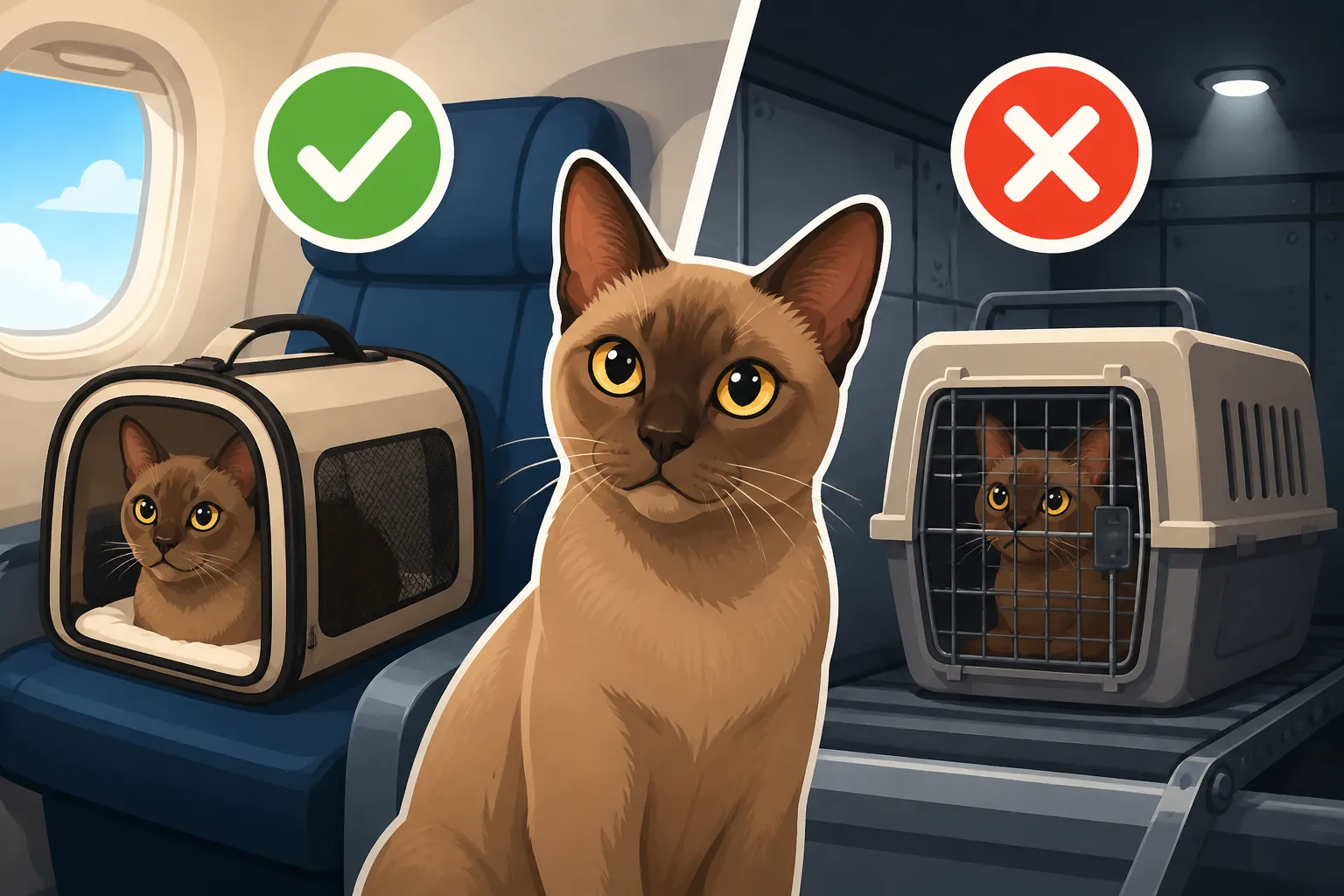
For most cat owners, and especially for those with a breed as affectionate and people-oriented as the Burmese, having them in the cabin is the overwhelming preference. The biggest advantage here is direct supervision. Your cat is right there with you, tucked under the seat in front, where you can see them, talk to them reassuringly, and monitor their condition. This immediate presence can be incredibly calming for a Burmese, who are often described as "Velcro cats" due to their intense attachment to their humans.
In the cabin, your Burmese benefits from a stable, climate-controlled environment. The air pressure and temperature are the same as what you experience, minimizing potential physiological stress. You're also present to offer a familiar scent, a gentle touch through the carrier, or simply a comforting voice, which can make a world of difference for a sensitive feline. The noise levels, while present, are generally less extreme than in the cargo hold, allowing for a somewhat calmer experience. For a breed that thrives on companionship and readily seeks out a warm lap, the cabin offers the closest approximation to their normal routine, even if it's within the confines of a carrier.
The Realities of the Cargo Hold
The cargo hold, in stark contrast, presents a much more challenging environment for a cat. While these compartments are pressurized and generally temperature-controlled, they are still separate from the passenger cabin, meaning your Burmese will be entirely alone, without your comforting presence. For a breed known for its profound need for human interaction and prone to separation anxiety, this can be incredibly distressing. Why a Burmese Cannot Be Left Alone All Day The feeling of isolation, combined with unfamiliar sounds and vibrations, can lead to significant stress.
Furthermore, despite airline efforts, temperature fluctuations can occur, especially during tarmac transfers or in extreme weather conditions. These can be dangerous for any animal, let alone a cat sensitive to change. The noise from the engines and other cargo can be intense and disorienting. There's also the element of limited human interaction; staff in the cargo area are responsible for many tasks, and while they are trained to handle live animals, they cannot provide the constant reassurance your Burmese typically expects. The cargo hold is often considered a last resort for pet travel dueowing to these inherent stressors and the lack of direct oversight, which can be a huge source of worry for any pet parent.
Health Considerations for Air Travel
Any form of air travel places a certain amount of stress on an animal's body, and it's essential to consider your Burmese's individual health. While Burmese cats are generally robust, their affectionate nature means they can be highly sensitive to environmental changes and separation. Stress can manifest in various ways, from mild anxiety to gastrointestinal upset, or even suppression of their immune system, making them more vulnerable to illness post-travel. Why a Burmese Hides Illness Behind Its Affection
One common concern for travel is related to brachycephalic (short-nosed) breeds, who can have breathing difficulties. While the Burmese is not typically classified as a brachycephalic breed in the same way a Persian or Himalayan might be, their unique head structure can still make them susceptible to respiratory issues under stress or in extreme temperatures. Any pre-existing respiratory conditions, heart murmurs, or other health issues could be exacerbated by the altitude changes, noise, and overall stress of flying. This is why a thorough vet check-up is absolutely non-negotiable before any flight, regardless of where your cat will be traveling on the plane. You want to ensure your beloved companion is in peak condition to handle the journey.
Navigating Airline Policies and Pet Carrier Requirements
Understanding and adhering to airline policies is perhaps the most daunting part of flying with your Burmese. These rules are strict, vary wildly from one airline to another, and often dictate whether your cat can even travel, let alone where. You'll need to do your homework well in advance.
Cabin Pet Policies
If you're hoping for your Burmese to join you in the cabin, you'll find that airlines have very specific requirements, primarily centered around the carrier itself. The carrier must be small enough to fit comfortably under the seat in front of you. This means soft-sided carriers are often preferred, as they offer a little more flexibility to conform to the space. Airlines will also have maximum dimensions (length, width, height) and often a combined weight limit for the pet and carrier. This can be tricky, as a muscular Burmese can be heavier than they appear.
Beyond size, airlines limit the number of pets allowed in the cabin per flight, which means booking your cat's spot early is absolutely critical. Some airlines also require your cat to remain in the carrier for the entire flight, which can be a long time for an active Burmese. You’ll need to research each specific airline's policy thoroughly, especially since international flights often have even stricter rules or outright bans on cabin pets. Always double-check with the airline directly, as policies can change without much notice.
Cargo Pet Policies
Should cargo be your only option, the requirements become far more stringent. Your Burmese will need an IATA-compliant kennel, which is a rigid, hard-sided carrier with specific ventilation, labeling, and construction. These kennels must be large enough for your cat to stand up, turn around, and lie down comfortably, without any part of their body touching the top or sides. Food and water dishes must be attachable to the inside of the door and refillable from the outside without opening the kennel. Padding, absorbent material, and clear "Live Animal" labels are also mandatory.
Many airlines have breed restrictions for cargo travel, often banning brachycephalic breeds due to respiratory risks, though this typically doesn't apply to the Burmese. Crucially, most airlines impose temperature embargoes, meaning they won't transport animals in cargo if ground temperatures at departure, transfer, or arrival points are too hot or too cold. This can severely limit travel options, especially during summer and winter months, and might require choosing specific flights or even alternative travel dates. This is where meticulous planning is not just advisable, but absolutely essential to avoid last-minute heartbreak. Why a Burmese Is the Velcro Cat of the Cat Fancy
Necessary Documentation and Health Certificates
Regardless of whether your Burmese travels in the cabin or cargo, a visit to the veterinarian for a health check-up and necessary documentation is paramount. You'll need an up-to-date health certificate issued by a licensed veterinarian, usually within a very specific timeframe (e.g., 10 days) of your travel date. This certificate confirms your cat is healthy enough to fly and free of contagious diseases.
Additionally, your Burmese will need to be current on all required vaccinations, especially rabies, and you'll need proof of these. If you're traveling internationally, the requirements become even more complex, often involving microchipping, specific parasite treatments, and endorsements from government agencies, which can take weeks or even months to process. Always check the specific entry requirements for your destination country well in advance of your planned travel. It’s also wise to consider pet insurance from providers like Healthy Paws before traveling, as unforeseen veterinary needs can arise, and a good policy can offer peace of mind. Discussing your travel plans with your vet will help you understand what Which Blood Panel a Burmese Should Have Yearly is needed and ensure all paperwork is in order.
Preparing Your Burmese for Travel: Stress Reduction and Safety Measures
Once you've navigated the labyrinth of airline policies, the next crucial step is preparing your Burmese for the journey itself. This involves practical steps to minimize stress and ensure their comfort and safety. A little forethought goes a long way, especially for a cat that thrives on routine and familiarity.
Acclimating Your Burmese to the Carrier
One of the most effective ways to reduce travel stress is to make the carrier a safe, familiar, and even enjoyable space for your Burmese long before travel day. Don't let the carrier only appear when it's time for a vet visit or a trip. Instead, leave it out in a common area of your home with the door open. Put a soft blanket, a favorite toy, or a tasty treat inside. Encourage your cat to explore it, nap in it, and generally view it as a cozy den.
You can feed meals near or even inside the carrier to create positive associations. Over several weeks, gradually practice closing the door for short periods, then carrying the carrier around the house, and eventually taking short car rides. This desensitization process will significantly reduce anxiety on travel day. A comfortable, familiar carrier from a reputable pet supply store like Chewy can make all the difference, providing ample ventilation and enough room for your cat to be comfortable during the journey. Making the Carrier Somewhere a Burmese Sleeps
Feeding and Hydration Strategies
What and when your Burmese eats and drinks before and during travel needs careful consideration. It's generally recommended to feed a smaller meal approximately 4-6 hours before travel, especially for flights, to minimize the risk of an upset stomach or accidents in the carrier. Avoid feeding a large meal right before departure. For hydration, ensure your cat has access to fresh water right up until you leave for the airport.
For in-flight hydration, if your Burmese is traveling in the cabin, you might be able to offer a small amount of water from a collapsible bowl during a long layover, provided it doesn't cause stress. For cargo travel, the IATA-compliant kennels require water dishes that can be refilled from the outside, ensuring your cat has access to water during the journey, especially on longer flights. Avoid over-hydrating right before the flight, but ensure they are not dehydrated. Always pack a small bag of their regular food, just in case of delays or unexpected layovers. Their usual high-quality, palatable food ensures they get their normal nutrition without upsetting their stomach with new brands.
Managing Travel Day Stress
Travel day itself can be chaotic, and your Burmese will pick up on your stress. Remaining calm yourself is paramount. On the day of travel, keep your routine as normal as possible. Place a pheromone spray, like Feliway, inside the carrier about 15-30 minutes before your cat enters it, as this can have a calming effect. A familiar blanket or an item of your clothing with your scent can also provide comfort.
The use of sedatives for air travel is generally discouraged by veterinarians. While it might seem like a good idea to calm an anxious cat, sedatives can interfere with their ability to regulate body temperature and balance, which can be dangerous, particularly at altitude. Always consult your vet about any calming aids you are considering. During the journey, talk to your Burmese in a soft, reassuring voice, even if they are in the cabin and can't see you. The sound of your voice can be very comforting. A Burmese is usually very vocal and expressive, often using a distinct rasping rumble rather than a loud meow, so listening to their vocalizations can give you clues about their stress levels. Why a Burmese Rumbles Rather Than Cries in a Car
Decision Making: Cabin vs. Hold for Your Burmese
Ultimately, the choice of cabin or cargo for your Burmese comes down to a careful weighing of factors, tailored to your cat's personality, health, and the specifics of your journey. There's no single right answer, but an informed decision is always the best one.
Factors Favoring Cabin Travel
Cabin travel offers the most significant advantages for your Burmese. The most important is your ability to directly monitor and interact with your cat. This reduces separation anxiety, a common issue for such an attached breed, and allows you to respond immediately if they show signs of distress. The stable environment of the cabin, with consistent temperature and pressure, is also far safer than the variable conditions of the cargo hold. For shorter flights, or if your Burmese is particularly small and falls within the carrier size and weight limits, cabin travel is almost always the preferred choice.
It’s also important to consider your Burmese’s personality. Some are more laid-back, while others are incredibly sensitive to change and thrive on constant reassurance. If your cat tends to be anxious or vocal in new situations, having them near you can be the key to a smoother, less traumatic experience. The peace of mind for you, knowing your furry family member is safe and sound just inches away, is often invaluable.
When Cargo Might Be the Only Option
While cabin travel is ideal, it's not always possible. There are scenarios where the cargo hold might be the only viable option. If your Burmese is larger than the airline's specified dimensions or weight limit for cabin carriers, they simply won't be allowed in the cabin. Long international flights often have stricter rules or no cabin pet allowance at all. Furthermore, if you are relocating and have multiple pets, securing cabin space for all may be impossible, forcing some into cargo.
If cargo is unavoidable, the planning must be meticulous. Choose direct flights to minimize handling and transfers. Opt for flights during cooler parts of the day in summer or warmer parts in winter to avoid temperature embargoes. Invest in a high-quality, IATA-compliant carrier and ensure all documentation is flawless. Inform the airline staff at check-in that you have a live animal in cargo, and ask for confirmation that they have been loaded onto the plane. While it's a less desirable option, sometimes it's the only one, and careful preparation can mitigate some of the risks.
Post-Travel Care
Once you've arrived at your destination, whether your Burmese traveled in the cabin or cargo, their journey isn't over. The transition to a new environment can be another source of stress. Upon arrival, give your cat immediate access to fresh water and food. Offer them a quiet, secure space away from immediate commotion to decompress. Avoid overwhelming them with too much attention right away; let them explore their new surroundings at their own pace.
Monitor your Burmese closely for the next few days. Look for any changes in appetite, litter box habits, energy levels, or behavior. Stress can sometimes suppress their appetite or cause an upset stomach. Why a Burmese's Appetite Goes When It Is Unhappy If you notice any signs of illness or prolonged distress, such as lethargy, vomiting, diarrhea, or unusual hiding behavior, contact a local veterinarian promptly. Why a Withdrawn Burmese Should See a Vet That Day A gradual reintroduction to routine and plenty of quiet, reassuring time together will help your Burmese recover and settle into their new surroundings.
Disclaimer
This article is for general informational purposes only and does not constitute professional advice. Laws, prices and regulations vary by location and change over time. Consult a qualified professional for guidance on your specific situation.