Which Puzzle Feeder Slows a Greedy Burmese Down
If you're a Burmese cat owner, you're likely familiar with that intense, focused gaze your cat gives you the moment food is mentioned. Burmese cats are known for their insatiable appetites and their uncanny ability to make you feel like they haven't eaten in weeks, even right after a meal! This often leads to them gobbling down their food at warp speed, which isn't just messy; it can lead to upset tummies and even contribute to more serious health concerns down the line. But don't despair – there's a fantastic solution that can transform mealtime from a frantic race to a thoughtful, enriching activity: the puzzle feeder. This guide will walk you through why your Burmese is so food-driven and how to choose and introduce the perfect puzzle feeder to help slow them down, improve digestion, and provide some much-needed mental stimulation.
The Unique Appetites and Health Concerns of the Burmese Cat
It’s not just in your head; your Burmese genuinely seems to have a bottomless pit where their stomach should be. Understanding this powerful drive is the first step in managing their eating habits effectively.
Why Your Burmese Seems Constantly Hungry
Burmese cats possess a wonderfully muscular, compact body, often described as a "brick wrapped in silk," which requires a good amount of fuel. They are naturally active, playful, and incredibly engaged with their environment – and often, that engagement revolves around food. It’s part of their charm, really! They aren't just eating for sustenance; they often view food as an event, a source of comfort, and a way to interact with you. Their vocal nature, often a characteristic rasping rumble rather than a gentle meow, can easily be misinterpreted as constant hunger, especially when they're following you around the kitchen.
This strong food drive isn't a flaw in their personality; it's just who they are. They are incredibly intelligent and persistent, and they quickly learn that if they ask enough, or charmingly stare long enough, they might just get an extra treat or an early meal. It's a testament to their cleverness, but it also means we, as their guardians, need to be extra vigilant about portion control and making mealtime an engaging challenge, rather than just a quick refuel. As I've always said, Why a Burmese Never Stops Asking for Food is a common refrain among owners!
The Risks of Rapid Eating and Overconsumption
While a strong appetite can seem endearing, rapid eating and chronic overconsumption can lead to a host of problems for your beloved Burmese. Gulping food down quickly often results in undigested kibble or wet food being thrown back up, which is unpleasant for everyone involved and means your cat isn't properly absorbing nutrients. Beyond the immediate mess, this fast eating can lead to indigestion, bloating, and discomfort.
More seriously, the Burmese breed is genetically predisposed to certain health conditions, with diabetes being a significant concern. They have The Burmese Has the Highest Diabetes Rate of Any Cat Breed, and excess weight is a primary risk factor for developing this condition. When a cat eats too quickly, they tend to consume more food than their body truly needs to feel full, leading to weight gain. This isn't just about aesthetics; obesity strains their joints, liver, and pancreas, increasing the likelihood of diabetes and other metabolic issues. Therefore, managing their food intake and slowing down their eating is not just about manners; it's a critical part of their long-term health plan. Why a Burmese Is Four Times More Likely to Become Diabetic underscores just how serious this can be.
Recognizing the Signs of a "Greedy" Burmese vs. a "Normal" One
How do you tell if your Burmese is just a normal, enthusiastic eater, or if they've crossed into "greedy" territory? Here are some tell-tale signs:
- Eating at warp speed: They finish their bowl in less than a minute, barely chewing.
- Gulping and swallowing: You can literally hear them gulping down food with minimal mastication.
- Regurgitation: Frequently bringing up undigested food shortly after eating.
- Incessant begging: Following you relentlessly, crying, or rubbing against your legs even after they've just eaten.
- Food theft: Attempting to steal food off counters, out of your hand, or from other pets' bowls.
- Weight gain: Despite being fed appropriate portions, they are putting on weight. Remember, a Burmese is very muscular and Why a Muscular Burmese Is Mistaken for a Fat One, so regular weight checks are essential.
- Anxiety around food: Showing signs of stress or aggression around their food bowl or during meal times.
If these behaviors sound familiar, it’s a strong indicator that a puzzle feeder could be incredibly beneficial for your Burmese. It's about shifting their relationship with food from a panicked grab to a thoughtful, rewarding activity.
How Puzzle Feeders Revolutionize Mealtime for a Burmese
Puzzle feeders aren't just a trend; they're a powerful tool for enhancing your cat's physical and mental well-being, especially for an intelligent and food-motivated breed like the Burmese.
Engaging Instincts and Slowing the Pace
In the wild, cats spend a significant portion of their day hunting and foraging for food. Their meals aren't just handed to them in a bowl; they require effort, strategy, and patience. A puzzle feeder taps into these primal instincts, turning mealtime into a natural hunting simulation. Instead of simply inhaling their food, your Burmese has to use their paws, nose, and brain to extract individual pieces of kibble or small portions of wet food.
This process naturally slows down their consumption. Each piece becomes a small victory, rather than a frantic gulp. By making them "work" for their meal, they eat at a much more controlled pace. This not only aids in digestion by allowing their body time to process the food intake, but it also promotes a sense of satiety. When a cat has to expend effort to get their food, their brain registers the activity and the reward, leading to a more profound feeling of fullness and satisfaction, rather than just an empty stomach that was quickly refilled. It's a win-win: less mess from regurgitation, better digestion, and a happier, more fulfilled cat.
Mental Enrichment Beyond the Bowl
Burmese cats are renowned for their intelligence and their strong bond with their human companions. They thrive on interaction and mental stimulation. If left without enough engagement, a clever Burmese can quickly become bored, leading to undesirable behaviors such as excessive vocalization, destructive scratching, or even Why a Lonely Burmese Pulls Its Satin Coat Out.
Puzzle feeders provide an excellent source of mental enrichment. They challenge your cat to think, strategize, and problem-solve to get their reward. This active engagement during mealtime helps to:
- Prevent boredom: It gives them a constructive activity to focus on, particularly if you're away from home.
- Reduce anxiety: The act of solving a puzzle can be calming and help channel nervous energy.
- Enhance cognitive function: Keeping their brains active with challenges is beneficial at any age, even when Why a Burmese Is Still Playing at Fifteen.
- Strengthen their bond with you: If you introduce and play with the feeder alongside them, it becomes a shared activity.
Think of it as giving your Burmese a job to do. They are designed to be active and intelligent, and a puzzle feeder gives them a purpose during mealtime that a plain bowl simply cannot.
Supporting Weight Management and Overall Health
Given the Burmese's predisposition to weight gain and conditions like diabetes, managing their weight is paramount. Free-feeding, or leaving a bowl of food out all day, is a recipe for disaster with a greedy Burmese. Puzzle feeders work hand-in-hand with controlled portions to help keep your cat at a healthy weight.
By slowing down consumption, the puzzle feeder allows the cat's brain to register that they are eating and becoming full before they've consumed an excessive amount of calories. This can prevent overeating and make the carefully weighed portions you provide go further in terms of satisfaction. It also provides an opportunity to divide their daily How Many Calories a Diabetes Prone Burmese Should Get into smaller, more frequent "hunts," which can be metabolically healthier.
When combined with a high-protein, low-carbohydrate diet, puzzle feeders become an even more powerful tool in maintaining ideal body condition and potentially mitigating the risk of diabetes. It’s an integral part of their preventative healthcare, turning every meal into a proactive step towards a longer, healthier life for your cherished companion. This is why Why Portion Control Is Medical Care in a Burmese is not an exaggeration for this breed.
Selecting the Best Puzzle Feeder for Your Individual Burmese
The market is flooded with different types of puzzle feeders, and finding the right one for your unique Burmese might take a little trial and error. But knowing what’s out there and what features to prioritize will set you up for success.
A Range of Options: From Simple to Complex
Puzzle feeders come in various designs, each offering a different level of challenge and engagement. Here's a rundown of common types:
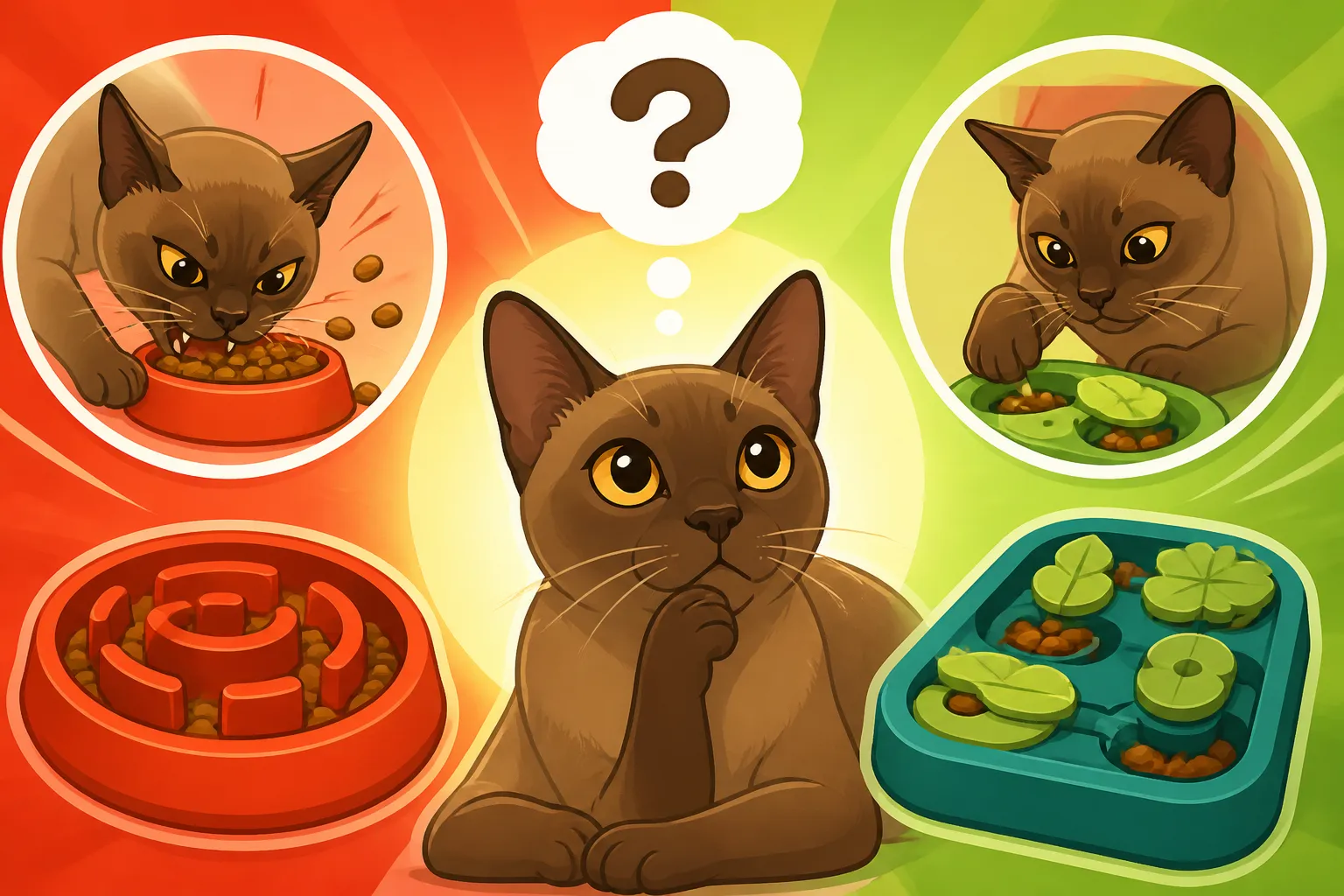
- Slow-Feed Bowls: These are the simplest form, resembling a regular bowl but with ridges, mazes, or pillars inside that force your cat to eat around obstacles. They're excellent for beginners and can often accommodate wet food, unlike many other puzzle feeders. You can find many options on Amazon.
- Treat Balls/Kibble Dispensers: These are hollow balls or cylinders with adjustable openings. Your cat bats, rolls, or nudges them, and dry kibble or treats fall out. They encourage movement and play. They come in various sizes and materials.
- Maze Feeders/Activity Mats: These are typically flat trays with various channels, tunnels, or compartments where food is hidden. Your cat uses their paws and nose to push the food along the maze until it reaches an accessible spot. They're great for mental stimulation and come in a wide range of designs.
- Interactive Boards/Stations: These are more elaborate, multi-part feeders that combine different types of puzzles, such as pegs to navigate, drawers to pull open, or domes to lift. They offer the highest level of challenge and engagement and are often quite sturdy.
| Puzzle Feeder Type | Description | Initial Difficulty | Best For | Pros | Cons |
|---|---|---|---|---|---|
| Slow-Feed Bowl | Bowl with internal ridges or obstacles. | Easy | Beginners, wet food, preventing gulping. | Simple, easy to clean, often dishwasher safe. | Limited mental stimulation; cats may still gulp. |
| Treat Ball | Ball with holes that dispenses food when rolled. | Easy/Medium | Dry food, encouraging active play. | Promotes exercise, portable, fun to chase. | Can be noisy, may frustrate less active cats. |
| Maze Feeder | Flat board with channels, often with paw-holes. | Medium | Dry food, mental challenge, encourages paw use. | Engaging, quiet, good for strategic thinkers. | Can be bulky, some harder to clean thoroughly. |
| Interactive Board | Multi-compartment station with various mini-puzzles. | Medium/Hard | Experienced cats, high mental stimulation. | Highly stimulating, durable, prevents boredom. | Can be more expensive, takes up more space. |
Features to Look For in a Burmese-Friendly Feeder
When you're ready to pick one out, consider these important features to ensure it's a good fit for your Burmese:
- Material and Durability: Look for food-grade, non-toxic materials like sturdy plastic, ceramic, or silicone. Burmese cats are strong and persistent; flimsy feeders won't stand a chance. Ensure it's built to withstand enthusiastic pawing and nudging.
- Stability: A puzzle feeder that slides all over the floor will only frustrate your cat. Look for feeders with non-slip bases or those that are heavy enough to stay put during use.
- Ease of Cleaning: This is crucial! Food particles and saliva can quickly turn a feeder into a bacterial breeding ground. Opt for designs that are easy to disassemble and clean thoroughly, preferably dishwasher-safe components. Many good quality ones can be found on Amazon.
- Adjustable Difficulty: For clever cats like the Burmese, adjustability is a huge plus. Starting with an easy setting and gradually increasing the challenge keeps them engaged and prevents them from getting bored once they’ve mastered the initial puzzle.
- Size of Openings: Ensure the openings are large enough for your cat's kibble or small pieces of wet food, but not so large that the food just spills out too easily, defeating the purpose of the puzzle.
- Versatility (Wet vs. Dry Food): Most treat balls and maze feeders are designed for dry kibble. If your Burmese eats wet food primarily, look for slow-feed bowls or specific interactive feeders designed to hold and release wet food portions.
Introducing the Puzzle Feeder to Your Clever Companion
Introducing a new puzzle feeder requires patience and a positive approach. Here’s how to do it:
- Start Simple: Don't throw your Burmese into the deep end immediately. For a treat ball, leave the openings wide open initially, or even partially fill the ball and leave it in their regular food dish. For a maze feeder, place food pieces directly on the easiest-to-access pathways.
- Use High-Value Treats/Food: To pique their interest, start with their absolute favorite kibble or freeze-dried treats. The higher the reward, the more motivated they'll be to figure it out.
- Demonstrate: Gently show your Burmese how it works. Tap at the food in the maze, or gently roll the treat ball so a piece of food falls out. Let them see the cause and effect.
- Supervise Early Sessions: Watch them closely to ensure they don't get overly frustrated or try to chew on the feeder instead of solving the puzzle. You're there to encourage and guide, not to solve it for them every time.
- Positive Reinforcement: When they successfully get a piece of food out, offer praise and maybe even a gentle stroke. Make it a fun, rewarding experience.
- Don't Remove the Old Bowl Immediately: Continue to offer a small portion of food in their regular bowl during the transition, slowly decreasing it as they become more proficient with the puzzle feeder.
Remember, the goal is not to frustrate them but to engage them. If they seem to be struggling, simplify the feeder or the amount of food within it.
Integrating Puzzle Feeders into Your Burmese's Daily Routine
Once your Burmese gets the hang of their puzzle feeder, incorporating it seamlessly into their daily life will maximize its benefits.
Strategic Placement and Timing for Optimal Engagement
Where and when you present the puzzle feeder can significantly impact its success.
- Vary Locations: Instead of always putting it in the same spot, consider placing the feeder in different areas of the house. This encourages exploration and adds to the "hunt" aspect. If you have multiple Burmese or other cats, consider having multiple feeders in separate, quiet areas to prevent resource guarding.
- Regular Schedule: Cats are creatures of habit. While the puzzle feeder adds novelty, maintaining a consistent feeding schedule helps them understand when to expect their meals. If they typically eat twice a day, use the puzzle feeder for both meals.
- Morning and Evening Ritual: Many owners find success by using puzzle feeders for morning and evening meals. This provides a structured activity at the start and end of the day, which can be particularly beneficial for indoor cats.
- When You're Away: If you work long hours, a puzzle feeder can be an excellent way to keep your Burmese occupied and mentally stimulated while you're gone, helping to prevent boredom and potential anxiety. However, ensure they've mastered it well before leaving them alone with it for extended periods.
Maintaining Hygiene and Varying the Challenge
Just like any food dish, puzzle feeders need regular cleaning. Plus, to keep your smart Burmese interested, you'll need to shake things up occasionally.
- Regular Cleaning: Depending on the type of food used (wet vs. dry) and how often it's used, puzzle feeders should be cleaned regularly – daily for wet food, and at least a few times a week for dry kibble. Wash them with warm, soapy water and rinse thoroughly. For plastic feeders, a gentle scrubbing brush can help remove stubborn food residue. Many parts of Amazon puzzle feeders are designed for easy cleaning, some even being dishwasher safe, which is a huge convenience.
- Increase Difficulty Gradually: Once your Burmese easily masters a feeder, increase the challenge. For treat balls, narrow the openings. For maze feeders, add more obstacles or hide food in harder-to-reach areas. If your feeder has adjustable settings, move up a level.
- Rotate Feeders: To prevent boredom, consider having a few different types of puzzle feeders and rotating them. This keeps the experience fresh and introduces new challenges, ensuring your clever Burmese doesn't get tired of the same old game. It's like giving them a variety of brain teasers.
- Different Food Types (if applicable): If you use different kibble types or small pieces of cooked meat as treats, vary what you put in the feeder to add interest. Just make sure whatever you offer fits within their balanced daily caloric intake.
Troubleshooting Common Challenges and Adapting to Your Cat's Needs
Even with the best intentions, you might encounter some bumps along the way. Don't get discouraged!
- My Burmese Ignores It: This is common! Go back to basics. Make the food very easy to access, perhaps even scattering some pieces around the feeder. Use the highest-value treats possible. You can also try coating some kibble in a tiny bit of tuna juice to make it more appealing. Ensure the feeder isn't in a stressful or high-traffic area.
- My Burmese Gets Frustrated: If your cat is swatting at the feeder angrily, growling, or giving up quickly, the challenge might be too high. Simplify it immediately. Break the puzzle down into smaller steps, or try a different, easier feeder type. Sometimes, a different material or texture is all it takes.
- My Burmese Just Tips It Over: Some clever (and persistent) Burmese cats will try to bypass the puzzle by simply flipping the feeder. Look for heavier, more stable feeders, or those with suction cups on the bottom. Alternatively, try a maze feeder that is flat and harder to overturn.
- My Burmese Still Begs: Puzzle feeders help manage hunger and provide stimulation, but a Burmese's natural inclination to interact with you, especially around food, is strong. Be consistent with your feeding times and don't give in to extra treats outside their planned intake. You can offer non-food based affection and play sessions instead.
- Multi-Cat Household: If you have more than one cat, ensure each cat has their own puzzle feeder and that they can access it in a safe, undisturbed location. You might need to experiment with different types if one cat is much faster or more dominant than another. Or, consider How to Keep Two Burmese on Different Diets if one has specific needs.
Ultimately, the goal is to make mealtime a positive, enriching experience for your greedy Burmese. By being patient, observant, and willing to adapt, you'll find the perfect puzzle feeder routine that keeps them happy, healthy, and a little less prone to inhaling their dinner!
Disclaimer
This article is for general informational purposes only and does not constitute professional advice. Laws, prices and regulations vary by location and change over time. Consult a qualified professional for guidance on your specific situation.