Why a Burmese Is the Easiest Cat to Clicker Train
It’s a common misconception that cats are aloof, independent creatures who simply can’t be trained in the same way a dog can. Many cat owners resign themselves to a life dictated by their feline overlords, assuming their cat will never learn anything beyond where the food bowl is kept. But if you're a Burmese owner, or considering becoming one, you're in for a delightful surprise. Your incredibly intelligent, people-oriented companion is not only trainable but often thrives on the mental stimulation and bonding that clicker training provides. This guide will walk you through why your Burmese is perfectly wired for this kind of engagement and how you can tap into their innate eagerness to learn.
The Burmese Mindset: Why They're So Eager to Learn
The Burmese isn't just a pretty face with a gorgeous satin coat; they possess a unique blend of intelligence, curiosity, and an almost dog-like devotion to their humans. These traits make them exceptionally receptive to training, especially when it involves positive reinforcement methods like clicker training. They don't just tolerate interaction; they crave it, and learning new things becomes another way to deepen that cherished bond with you.
Their People-Oriented Nature
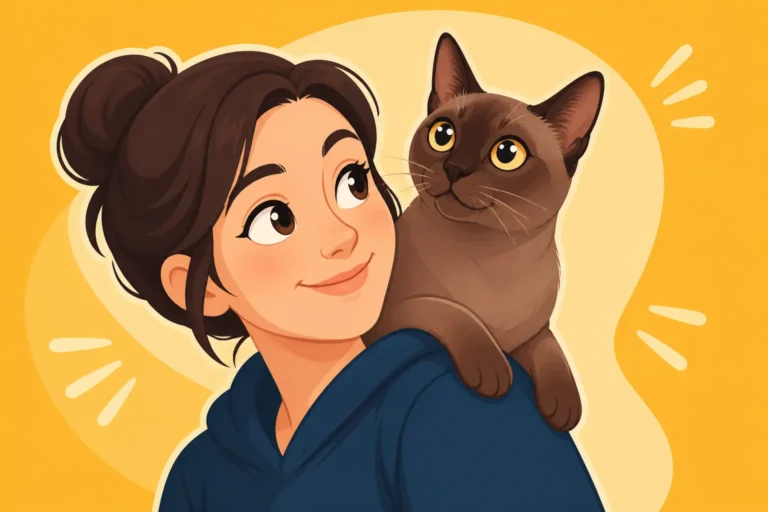
If you've spent any time around a Burmese, you know they aren't content to be mere roommates. These cats are often described as "Velcro cats" for a reason. They want to be with you, on you, and actively involved in whatever you're doing. This profound desire for companionship and attention is a massive advantage when it comes to training. Unlike some more independent breeds that might view training as an interruption, a Burmese often sees it as an exciting opportunity for one-on-one time. They thrive on praise and interaction, making them incredibly motivated to perform behaviors that earn your focused engagement. They're often found The Burmese Is the Velcro Cat of the Cat Fancy, following you from room to room, even insisting on riding your shoulder as you move about the house. This constant desire for closeness means they are usually ready and willing to participate in any activity that involves you.
High Intelligence and Curiosity
Burmese cats are notoriously smart, almost to a fault. They are problem-solvers who can figure out how to open cabinets, turn on faucets, or even escape supposedly secure enclosures. This high intelligence isn't just for mischief; it also means they pick up new concepts quickly. When you introduce a new behavior or trick, a Burmese won't just stare blankly; they'll often try to understand what you're asking, experimenting with different actions until they hit upon the right one. Their innate curiosity drives them to explore and learn about their environment, and this extends to understanding the patterns and rewards of training sessions. They love a mental challenge and view training not as a chore, but as an engaging puzzle to solve, especially if the reward is appealing.
Food Motivation: A Powerful Training Tool
Let's be honest: many cats are food motivated, but the Burmese takes it to another level. These are cats who are often very enthusiastic about mealtime and treats, sometimes to their detriment. While Why a Burmese Should Never Be Free Fed is crucial for their health, this strong drive for food is an incredible asset in clicker training. A small, high-value treat can be a powerful motivator for a Burmese, making them incredibly keen to perform the desired action. Because they love food so much, they are often willing to work for it, and this makes the process of shaping behaviors much faster and more straightforward. You can leverage this natural greed to your advantage, transforming it from a potential health concern into a positive force for learning.
The Principles of Clicker Training and Why They Align with the Burmese
Clicker training isn't just a trendy pet fad; it's a scientifically-backed method that uses positive reinforcement to teach animals new behaviors. It works by precisely marking the exact moment an animal performs the desired action, followed immediately by a reward. This clarity and positive feedback loop are perfectly suited to the Burmese's intelligent and sensitive nature.
Positive Reinforcement: Building Confidence and Trust
At its heart, clicker training is all about positive reinforcement. There's no scolding, no force, and no punishment involved. Instead, you're rewarding the behaviors you want to see, making the cat more likely to repeat them. This approach is incredibly effective with a Burmese because they are so tuned into their human's emotions. A harsh tone or negative interaction can easily make them retreat or become anxious. With clicker training, every interaction is positive, building their confidence and strengthening their trust in you. They learn that engaging with you in this structured way leads to good things, both in terms of treats and your enthusiastic approval. This positive association ensures they remain eager and happy participants.
Clear Communication Through the Clicker
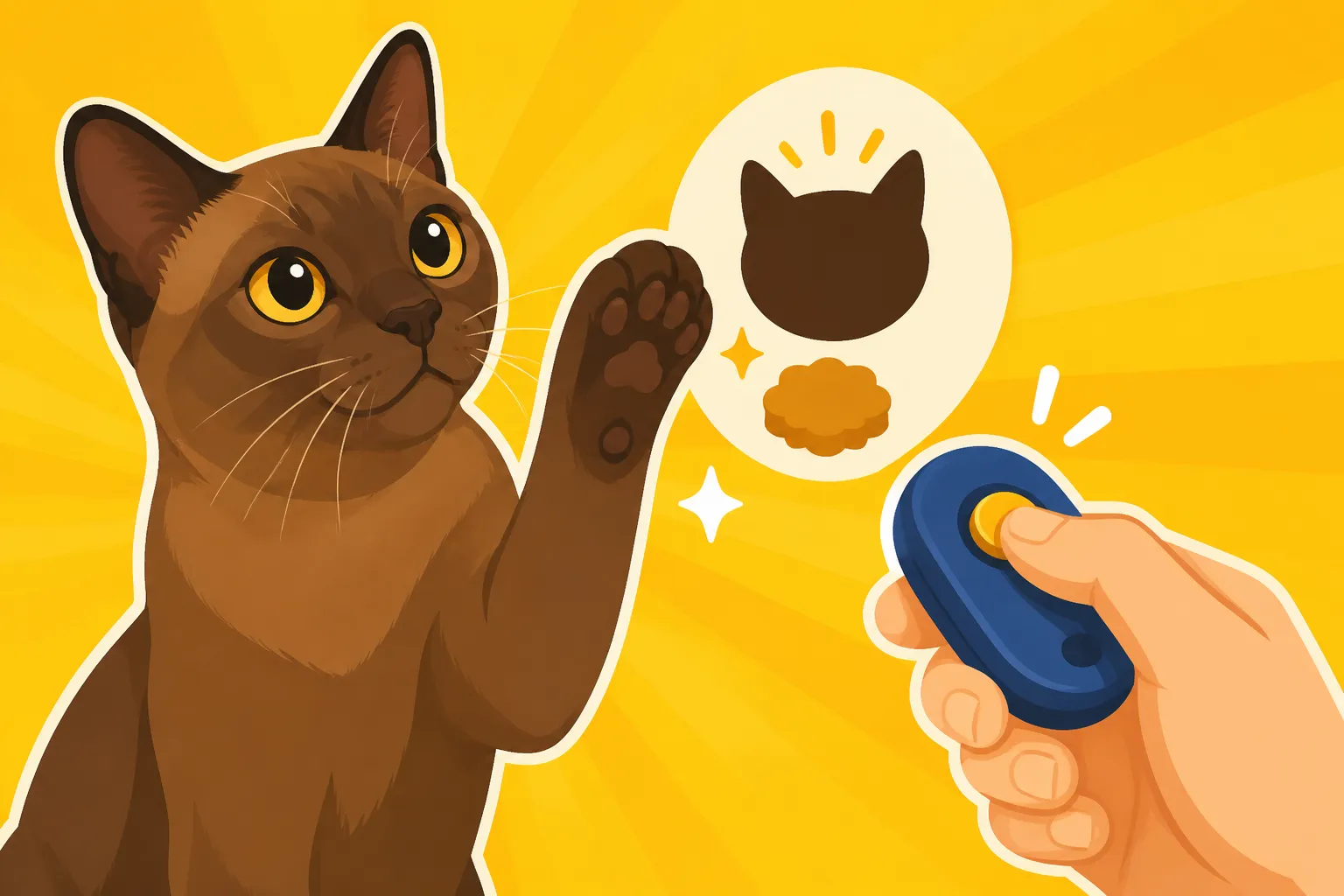
One of the greatest benefits of the clicker is its ability to mark a behavior with extreme precision. A verbal "good cat!" or a pat might come a second too late, making it harder for your cat to understand exactly what they did right. The sharp, distinct sound of the clicker, however, can pinpoint the exact moment your cat's bottom touches the floor for a "sit" or their paw taps your hand. This clear, unambiguous feedback helps a smart cat like the Burmese make immediate connections between their action and the reward. They quickly learn the meaning of the click and start actively offering behaviors to earn that satisfying sound. This precision is particularly valuable when teaching complex tricks or behaviors that involve multiple steps.
Building a Stronger Bond Through Shared Activity
Beyond teaching tricks, clicker training is an incredible way to deepen the bond you share with your Burmese. It's a shared activity, a puzzle you solve together, and a conversation that strengthens understanding. Your Burmese learns to focus on you, to interpret your cues, and to engage in a structured way that stimulates their mind. This dedicated one-on-one time is invaluable for a breed that thrives on companionship and interaction. It's not just about the treats; it's about the attention, the mental engagement, and the joy of working together. Many Burmese owners find that training sessions become a cherished part of their daily routine, a special time that reinforces the unique connection they have with their cat. This focused interaction is far more engaging for a Burmese than simply batting a toy around on their own; it's social, and that's what they crave.
Getting Started: Practical Steps to Clicker Train Your Burmese
So, you're ready to embark on this training journey with your bright Burmese! The good news is that getting started is quite simple, and your cat will likely pick up on the concept faster than you might imagine. Consistency and patience are key, but with a Burmese, enthusiasm often comes naturally.
Essential Tools and Setup
You don't need a lot of fancy equipment to start clicker training your Burmese. The essentials are straightforward:
- A Clicker: You can find these easily online, for example on Amazon, or at most pet supply stores. Choose one that's comfortable to hold and produces a clear, consistent sound. Some even come with wrist straps so you don't drop them.
- High-Value Treats: These should be small, easily consumable, and utterly irresistible to your cat. Think tiny pieces of cooked chicken, commercial cat treats, or even freeze-dried salmon. The goal is something they'll happily work for. Remember, with a Why a Burmese's Food Bill Is a Health Decision, you want to make sure these treats fit into their overall daily calorie intake, especially if you're managing their weight.
- A Quiet Space: Start training in a calm environment with minimal distractions. This helps your Burmese focus solely on you and the task at hand. As they become more proficient, you can gradually introduce more distractions.
- Short Sessions: Keep training sessions brief, typically 5-10 minutes, especially at the beginning. Cats have shorter attention spans than dogs, and you want to end on a high note, leaving them wanting more.
Charging the Clicker: The Foundation
Before you teach any specific tricks, you need to "charge" the clicker. This means teaching your Burmese that the click sound always predicts a treat. This creates a positive association and transforms the clicker into a powerful communication tool.
- Preparation: Have your clicker in one hand and a handful of small, high-value treats in the other.
- Click and Treat: In a quiet moment, click the clicker, and immediately (within 1-2 seconds) give your Burmese a treat. Don't ask them to do anything yet.
- Repeat: Do this 10-20 times in a session. Click, then treat. Click, then treat.
- Observe: You'll likely notice your Burmese start to look at you expectantly after the click, perhaps even turning towards you or the treat bag. This is a sign they're making the connection!
- Daily Practice: Repeat these short "charging" sessions a few times a day for a few days until your cat clearly associates the click with a reward.
Once your Burmese responds to the click with anticipation, you're ready to start teaching actual behaviors!
Simple First Tricks: Sit, Come, Retrieve
With the clicker charged, you can begin teaching simple behaviors. Remember, the key is to click at the exact moment the behavior occurs, then immediately follow with a treat.
-
Teaching "Sit":
- Hold a treat close to your Burmese's nose.
- Slowly move the treat over their head, towards their tail. Their head should follow the treat, naturally causing their bottom to lower into a sit.
- The instant their rear touches the ground, click and give them the treat.
- Repeat this a few times. Once they're reliably sitting, you can start to introduce a verbal cue like "sit" just as their bottom starts to go down, before the click.
- Gradually fade out the hand lure until they respond to just the verbal cue.
-
Teaching "Come":
- Start in a quiet room, a short distance from your cat.
- Say their name or "come," and as they take a step towards you, click and reward them.
- Gradually increase the distance and distractions. You might find that Why a Burmese Ignores Anything You Are Not Holding is true, so using an engaging toy or the promise of a treat for this one is essential.
- Many Burmese already follow their owners everywhere, so this can be an easy win! You can also practice Teaching a Burmese to Come From Another Room by calling them from another part of the house.
-
Teaching "Retrieve":
- Burmese cats often have a natural retrieving instinct, much like dogs. This makes "fetch" a surprisingly easy trick.
- Toss a favorite small toy a short distance.
- As your Burmese picks up the toy, click.
- As they bring it back towards you (even if they drop it a little way off), click again and reward.
- Gradually shape the behavior until they bring the toy all the way to you and drop it. You can encourage this by offering a treat when they drop the toy at your feet, making it clear that bringing it closer earns the reward. Many Burmese will naturally Turning a Burmese's Retrieving Into a Routine once they understand the game.
Training for Handling and Cooperative Care
Beyond fun tricks, clicker training is an invaluable tool for cooperative care, making routine veterinary visits, grooming, and even medication much less stressful for your Burmese and for you. Their trusting nature means they are often receptive to this kind of training.
Making Vet Visits Smoother
Many cats dread the vet, but a Burmese, with their inherent trust and desire for human interaction, can often be trained to tolerate, or even enjoy, aspects of veterinary care. You can use clicker training to desensitize them to being handled in ways that mimic a vet exam.
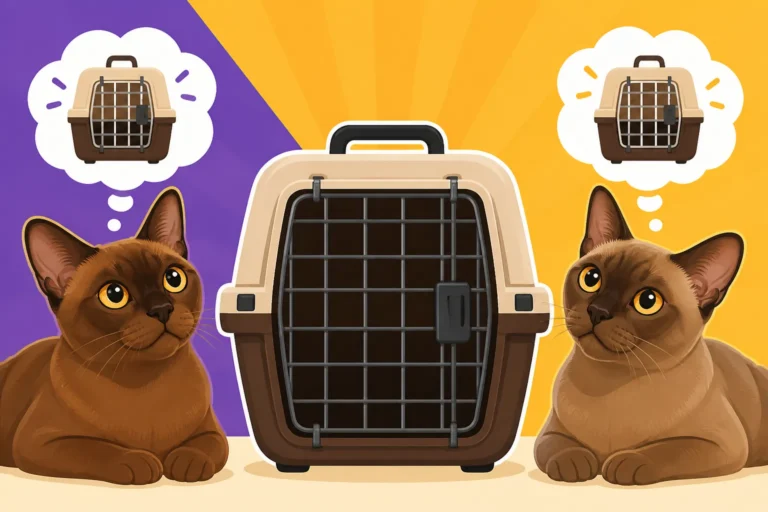
For example, gently touching their paws, ears, or mouth for a brief moment, clicking, and then treating them immediately, can build positive associations. This can be especially helpful for checking their teeth, as Burmese are prone to Why a Burmese's Gums Recede Early. Imagine how much easier it would be if your Burmese was relaxed during a temperature check, a claw trim, or even when being placed in a carrier. By breaking down these potentially stressful experiences into small, click-and-treat steps, you empower your cat to be an active participant rather than a reluctant victim.
Easing Medication and Glucose Checks
If your Burmese ever needs regular medication, such as insulin for diabetes (a condition they are predisposed to, as detailed in Why a Burmese Is Four Times More Likely to Become Diabetic), clicker training can be a lifesaver. You can train your cat to sit still for injections or to voluntarily take liquid medication. The process involves gradually introducing the syringe or needle, clicking for each small step of acceptance (e.g., looking at it, sniffing it, letting it touch their fur), and then rewarding them. Eventually, you can get to the point where they calmly accept the full procedure. For those needing to monitor blood glucose, Teaching a Burmese to Sit Still for a Glucose Check is perfectly achievable with consistent clicker training, transforming a potentially frightening experience into a familiar routine. Their high food motivation truly shines here, as they're often willing to tolerate minor discomfort for a prized treat.
Grooming and Handling Routines
Even with their low-maintenance The Burmese Satin Coat Is the Shortest in the Cat Fancy, routine care like claw trims, ear cleaning, and brushing can be made more pleasant with clicker training. You can teach your Burmese to accept having their paws handled, their ears gently examined, or a soft cloth wiped over their coat. This approach is respectful of your cat's boundaries and builds positive associations with handling, rather than resorting to force. A Burmese often enjoys the attention that comes with these sessions, especially if they end with a treat or a cherished play session with Which Wand Toys Hold a Burmese's Attention. This early training, perhaps started during kittenhood, can make a significant difference in how they perceive handling throughout their long life.
Disclaimer
This article is for general informational purposes only and does not constitute professional advice. Laws, prices and regulations vary by location and change over time. Consult a qualified professional for guidance on your specific situation.