Why a Burmese’s Voice Is Throatier Than a Siamese’s Wail
Burmese and Siamese cat vocalizations differ due to genetics, larynx anatomy, skull shape, and muscular control of vocal cords.
Change the room, not the cat.
Litter box avoidance, scratching and furniture, multi-cat tension and night activity — and the vertical space, play routines and feeding puzzles that solve more than correction does.
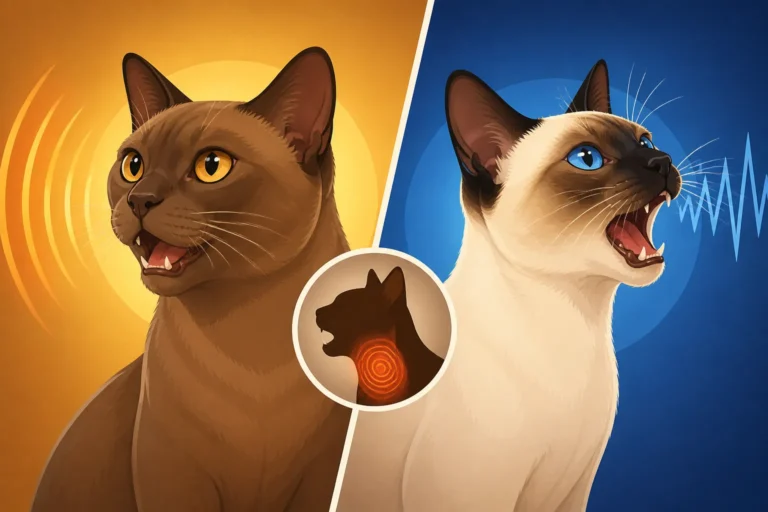
Burmese and Siamese cat vocalizations differ due to genetics, larynx anatomy, skull shape, and muscular control of vocal cords.

The deep Burmese cat rumble is a continuous chest vocalization expressing contentment and requesting attention from owners.

Burmese and Siamese vocal differences stem from feline anatomy, respiratory systems, genetics, and distinct behavioral patterns.

The Burmese cat rasp is a throaty, rumbling sound heard frequently throughout the day during greetings and daily interactions.
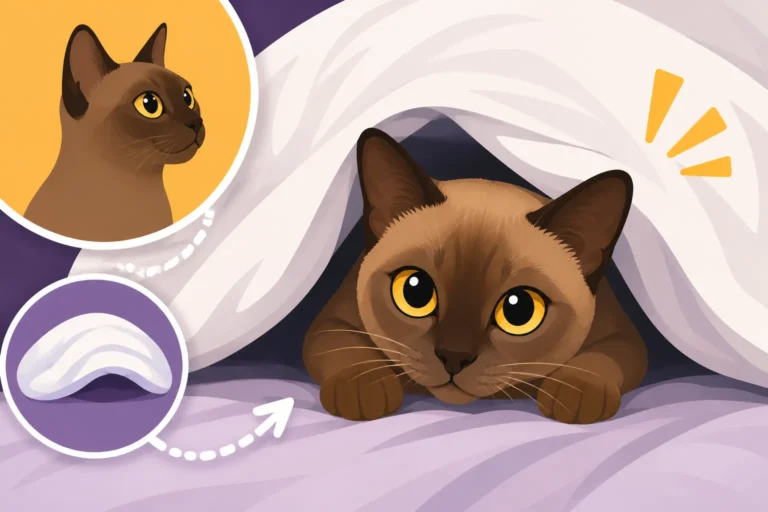
Burmese cats burrow under duvets because their short, fine coats lack insulation, causing them to lose body heat quickly.

Burmese cat attachment to the person home most occurs because this breed needs constant human companionship and interaction.
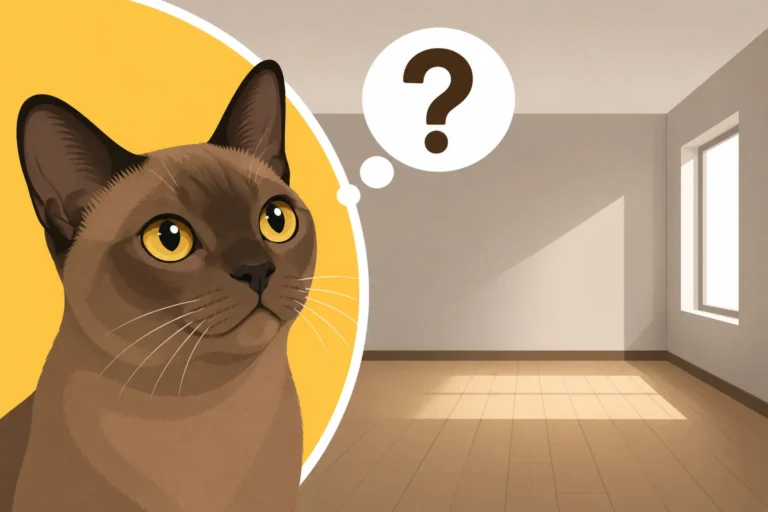
The social Burmese cat experiences profound emotional distress and separation anxiety when left alone in empty rooms all day.

Burmese cat clinginess stems from breed origins developed in the 1930s by Dr. Joseph Thompson and early breeding with a Siamese.
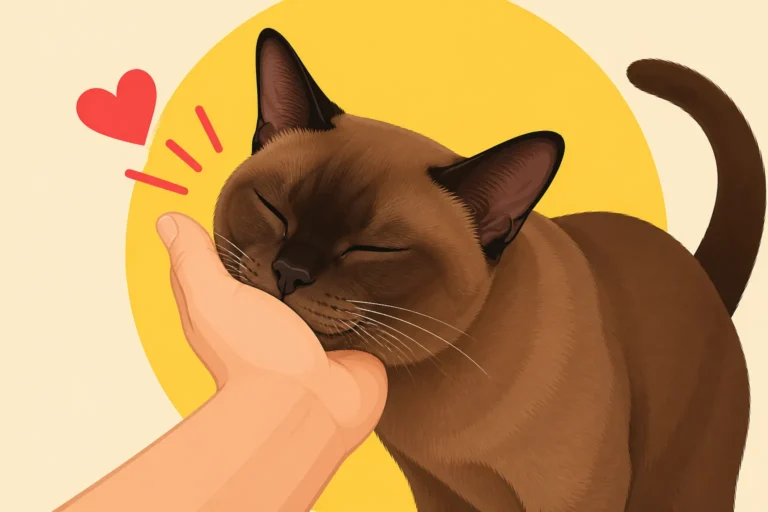
Burmese cat head-pushing behavior and scent marking explain why these affectionate pets demand your attention and closeness.

The Burmese cat breed earns its doglike nickname through relentless devotion, constant room-to-room shadowing, and intense physical affection.