What a Camera Catches a Lonely Burmese Doing
Burmese cat behavior captured on camera reveals pacing near doors, mournful rasps, and separation anxiety during owner absences.
Change the room, not the cat.
Litter box avoidance, scratching and furniture, multi-cat tension and night activity — and the vertical space, play routines and feeding puzzles that solve more than correction does.
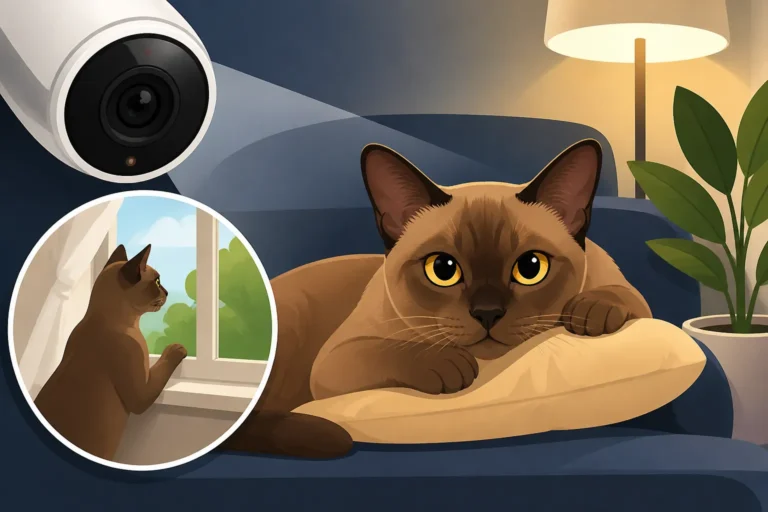
Burmese cat behavior captured on camera reveals pacing near doors, mournful rasps, and separation anxiety during owner absences.
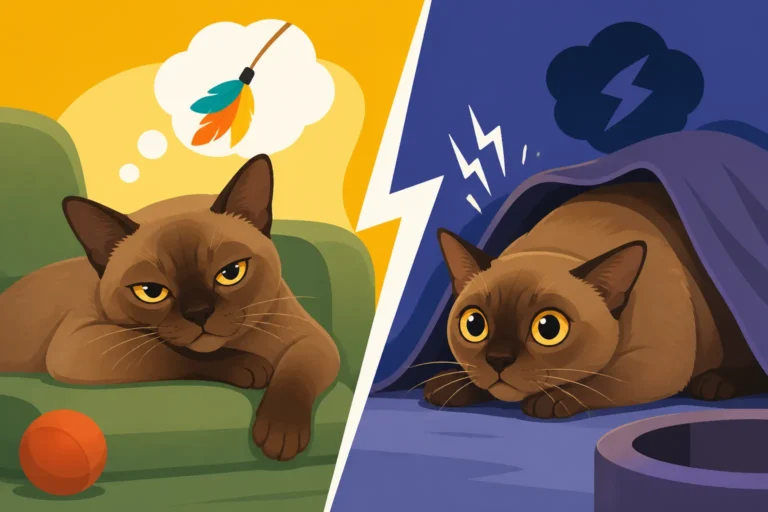
Distinguishing between a bored Burmese cat and an anxious one helps owners provide correct support for these sensitive pets.
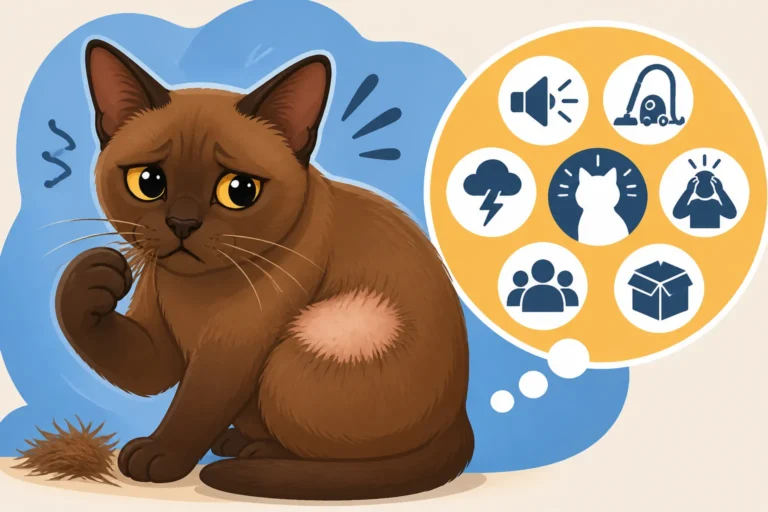
Burmese cat anxiety triggers and overgrooming behaviors explained, with practical steps to identify stress and restore their comfort.
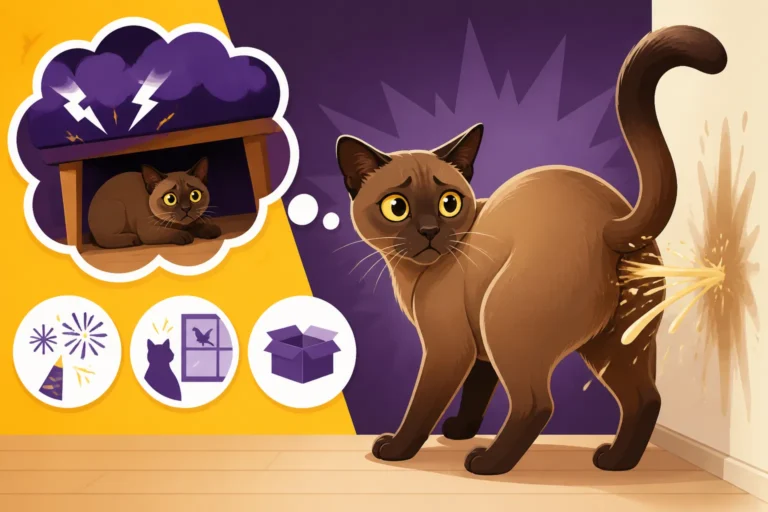
Anxious Burmese cats spray due to loneliness or environmental stress, signaling a desperate need for companionship and security.
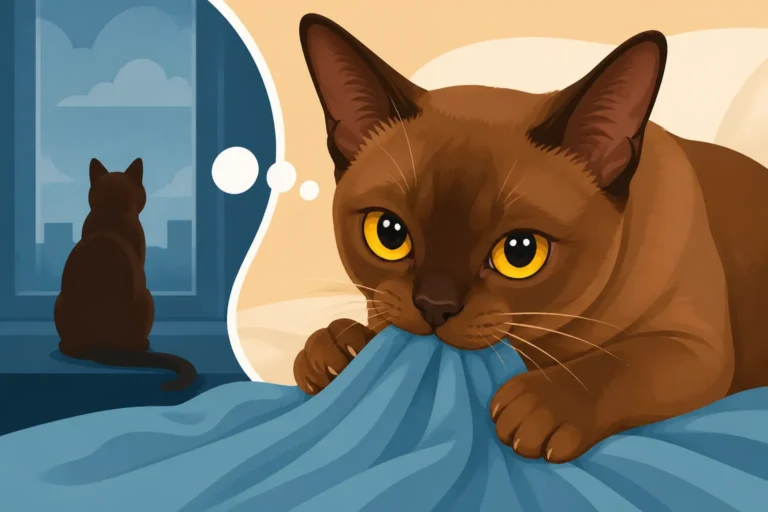
Burmese cat fabric chewing signals separation anxiety, boredom, and loneliness, acting as a self-soothing response to distress.

A Burmese left alone for nine hours experiences distress, boredom, and anxiety due to intense needs for social interaction and companionship.
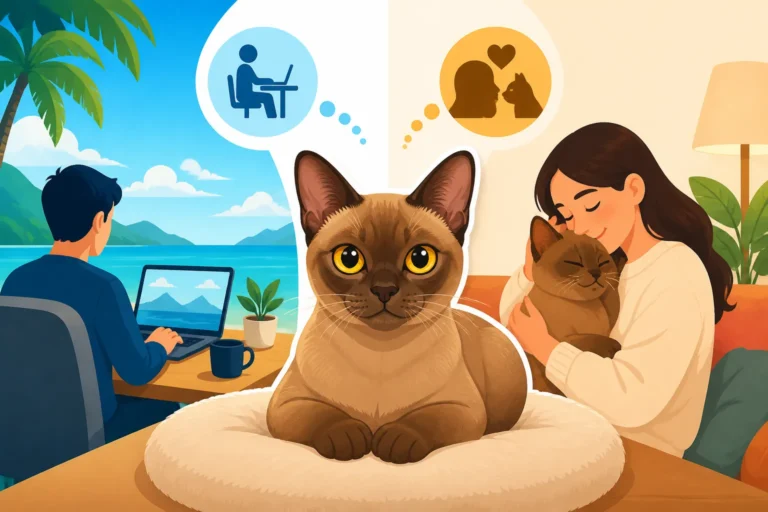
Burmese cats need constant human companionship and suffer severe separation anxiety with excessive grooming when left alone during work hours.
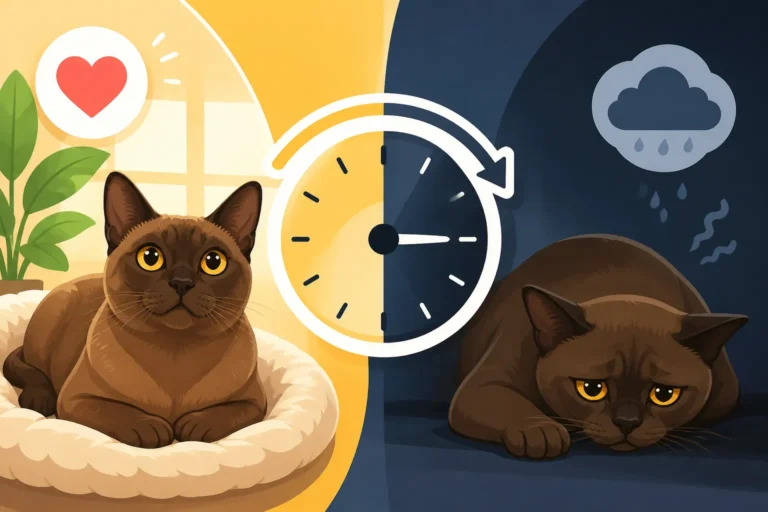
Burmese cat solitude limits, behavioral distress signs, and actionable steps to keep pets happy when left alone for eight hours.

Burmese cat early morning wake-up calls happen due to natural instincts and affection, and owners can reset these expectations.
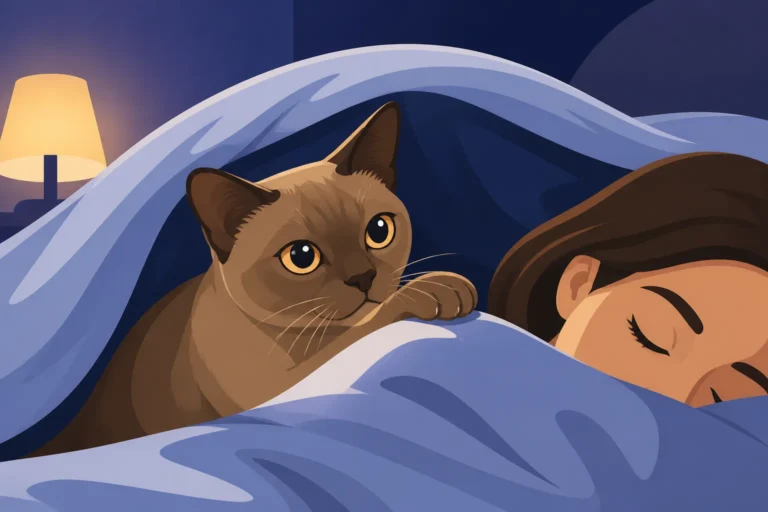
Burmese cat bed sharing behaviors explained through feline physical warmth needs and deep emotional attachment instincts.