How Many Play Sessions a Burmese Asks For
Burmese cat play needs, lifespan changes, and daily integration help prevent destructive behavior and health issues.
Change the room, not the cat.
Litter box avoidance, scratching and furniture, multi-cat tension and night activity — and the vertical space, play routines and feeding puzzles that solve more than correction does.

Burmese cat play needs, lifespan changes, and daily integration help prevent destructive behavior and health issues.
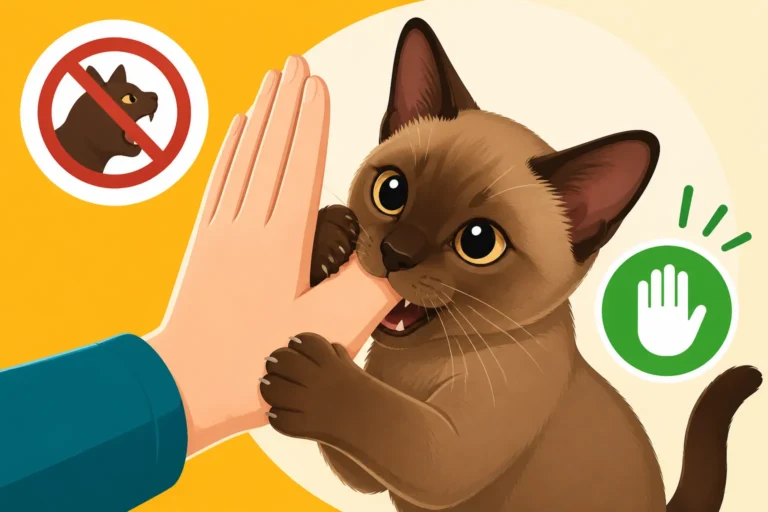
Burmese kitten mouthing and play biting behaviors require specific techniques to redirect the natural hunting and wrestling instincts toward toys.
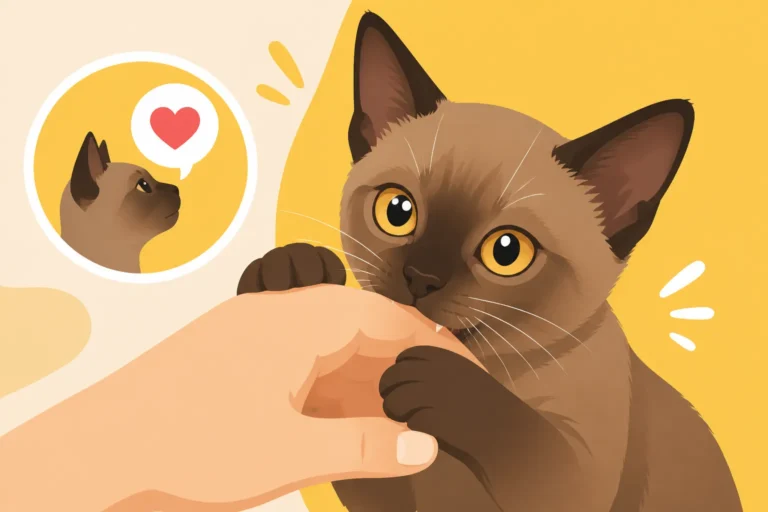
Burmese kitten mouthing stems from natural instincts, teething discomfort, and a strong interactive personality requiring redirection.
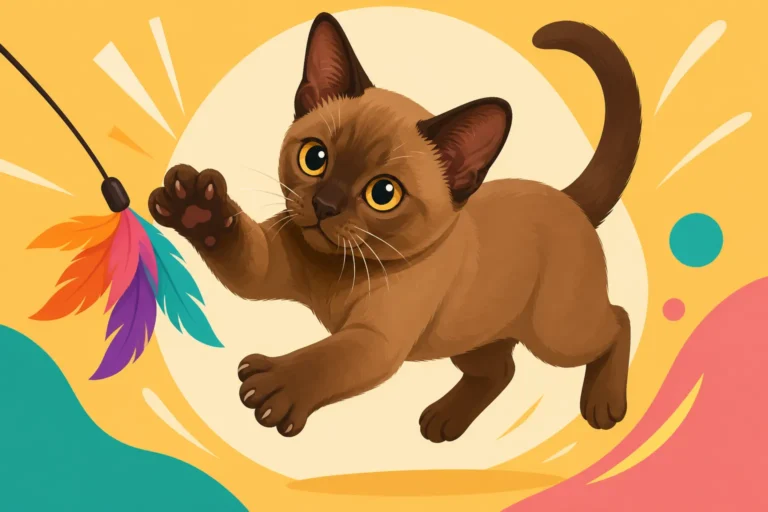
Four-month-old Burmese kitten play behavior involves high-energy hunting, sprinting, and jumping that requires proper outlets for a peaceful home.
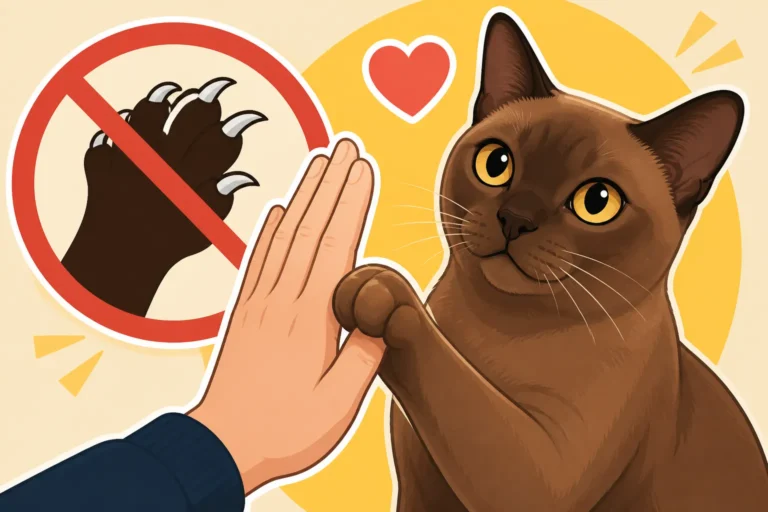
Burmese cats rarely use claws aggressively on humans due to gentle temperaments, early socialization, and high trainability.
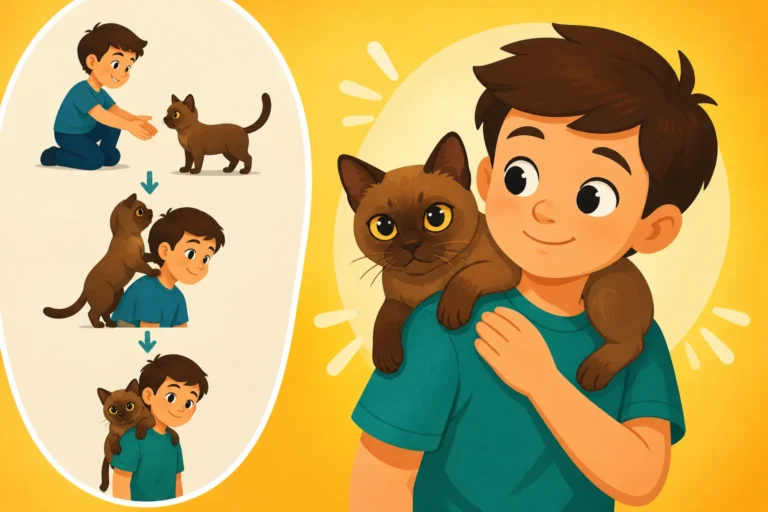
Teaching a child to safely carry a Burmese cat on their shoulder requires understanding feline body language and respect.
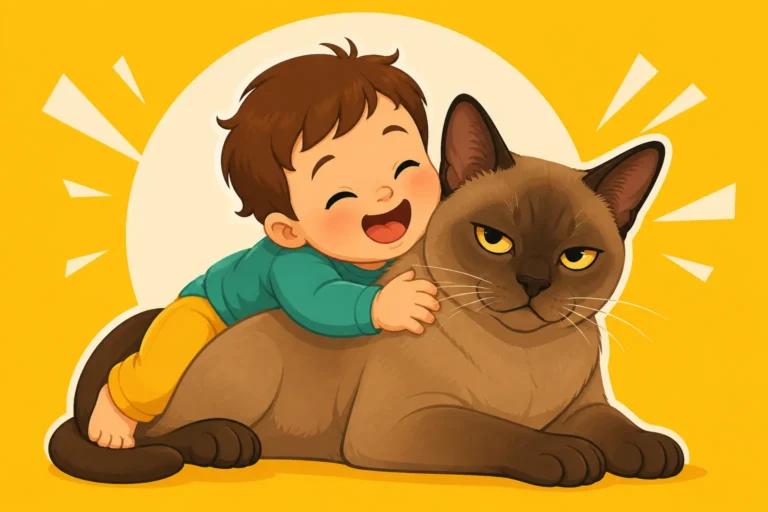
Burmese cat social nature, affection, and patience explain how this breed safely tolerates loud toddlers, chaos, and grabby hands.
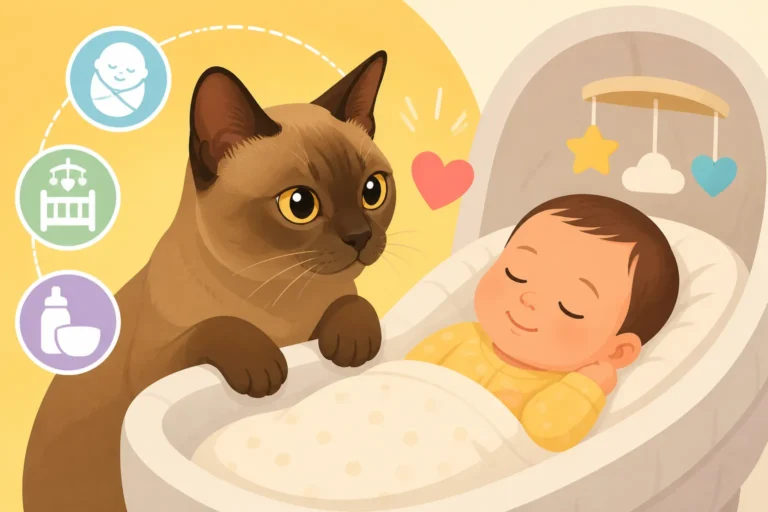
Burmese cats naturally seek to join new baby routines because their social breed traits demand constant family connection.

The Burmese cat retains a strong hunting drive, explaining why primal instincts survive domestication and require safe outlets.

Burmese cats sleep against dogs because their short coats lack insulation and they crave intense social companionship and security.