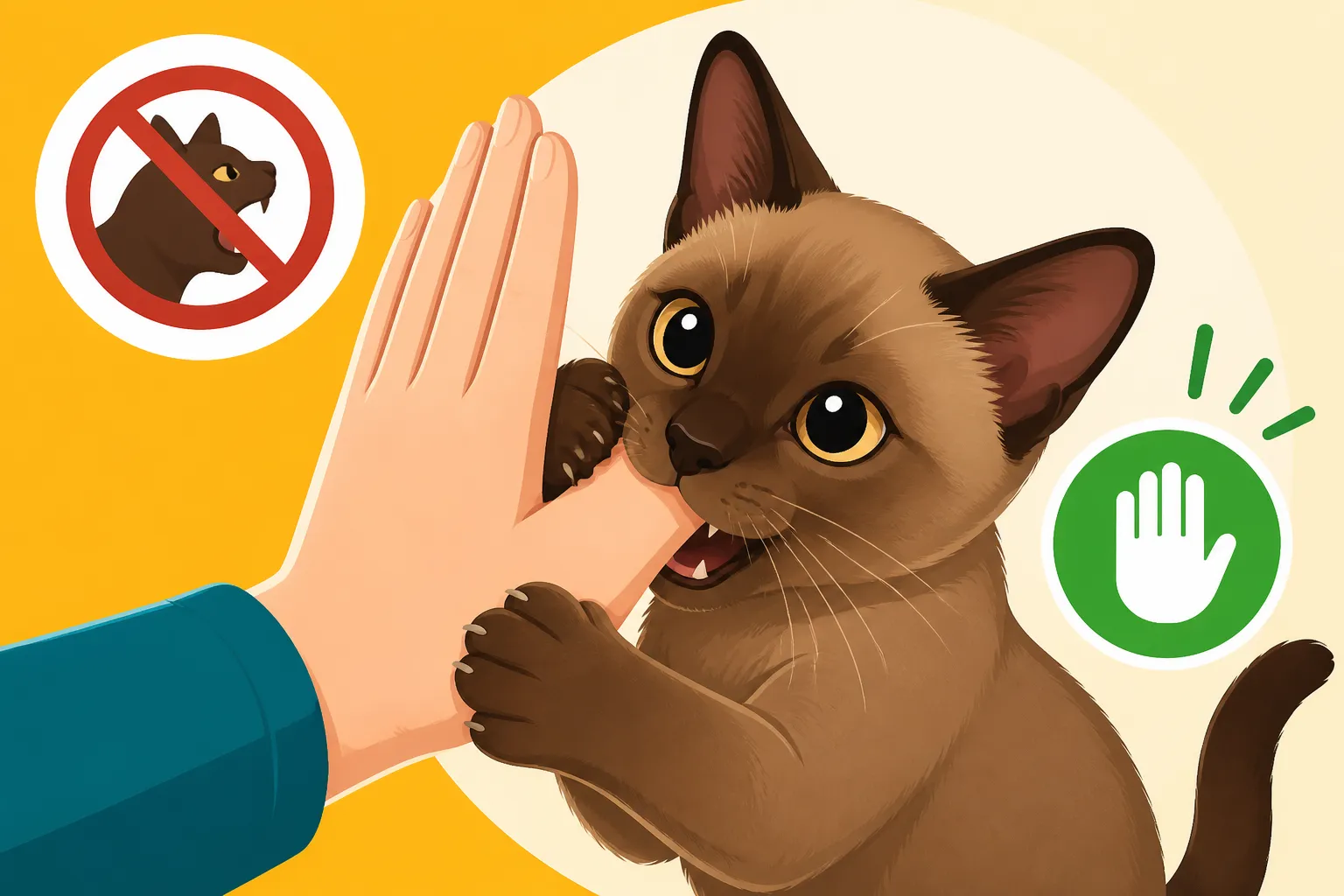
Stopping a Burmese Kitten Mouthing in Play
It’s a familiar scenario for many Burmese cat owners: your adorable kitten, full of boundless energy and affection, decides that your hands or feet are the perfect targets for its playful nips and bites. While it might start out cute, these playful "love bites" can quickly become painful and concerning as your kitten grows stronger, leaving you wondering how to enjoy play without turning into a chew toy. This guide is here to walk you through understanding why your little Burmese companion is mouthing in play and, more importantly, how to gently and effectively redirect that natural instinct into acceptable behaviors.
Understanding Why Your Burmese Kitten Mouths During Play
When your Burmese kitten mouths your hands, arms, or even your ankles, it's not usually out of aggression or malice. It's almost always a deeply ingrained part of their natural play behavior, a leftover from their wilder days and their early interactions with littermates. Understanding this fundamental truth is the first step toward effective redirection. Your kitten isn't trying to hurt you; it's just speaking in the only language it knows for play.
The Instinctual Drive Behind Play Mouthing
Think about how kittens play with each other in a litter. They pounce, wrestle, chase, and yes, they bite and mouth. This is how they learn bite inhibition – how hard is too hard? They learn this from their siblings and, crucially, from their mother. If a kitten bites too hard, a littermate will yelp and stop playing, or the mother cat will give a corrective cuff. This teaches them boundaries. When a kitten comes into your home, you become their new "littermate" and often, their primary play partner. Without other kittens to teach them, they'll naturally try out their play-biting on you, testing those boundaries. This is especially true for Burmese kittens, who are known for their incredibly physical, interactive, and playful nature. They're often described as having How Hard a Burmese Kitten Plays at Four Months, which means their play can be quite vigorous!
Moreover, a kitten's mouth is how it explores the world. Just like human babies put everything in their mouths, kittens use their teeth and gums to investigate textures, temperatures, and shapes. Your fingers, wiggling enticingly, might just be another interesting object to explore. Their strong instinct to hunt and capture also plays a huge role. In the wild, cats stalk, pounce, and deliver a "kill bite" to their prey. While your kitten isn't seeing you as prey, the action of grabbing and biting is part of that innate predatory sequence.
The Problem with Hands as Toys
It's a common mistake, and one almost all of us make at some point: letting a kitten play with our bare hands. It seems harmless, even cute, when they’re tiny. They have those needle-sharp kitten teeth, but their bites are usually more annoying than painful at first. The problem is, as they grow, those bites get stronger, and they learn that hands are toys. They associate your hands with play, with wrestling, and with the satisfying sensation of sinking their teeth into something. This becomes a deeply ingrained habit that's much harder to break later on.
Imagine the confusion for your Burmese. One minute, you're petting them gently; the next, you're wiggling your fingers to entice play. For a highly intelligent and interactive breed like the Burmese, consistency is key. If hands are sometimes toys and sometimes for petting, it creates mixed signals. This can lead to your cat initiating play-biting at inappropriate times or with guests who aren't prepared for it. It's not the kitten's fault; they're just following the rules we inadvertently taught them.
Gentle and Effective Correction Techniques
The good news is that you absolutely can redirect your Burmese kitten's mouthing behavior. It takes consistency, patience, and understanding, but with the right approach, you can teach them that hands are for affection, not for biting. The goal isn't to punish them for an instinct, but to guide them towards acceptable outlets.
The "Yelp and Withdraw" Method
This technique mimics what a littermate would do. When your Burmese kitten nips or bites a little too hard during play, let out a sharp, high-pitched "yelp" or "ouch!" that clearly signals distress. The sound itself should be startling, not angry. Immediately after the yelp, withdraw your hand and stop playing for a few moments. Turn your back, or even get up and walk away if the biting is persistent. The key is to make the consequence immediate and clear: "If you bite too hard, the fun stops."
Don't prolong the "punishment" or scold your kitten. The short, sharp withdrawal of attention is usually more effective than any verbal reprimand, which a kitten won't understand. After a minute or two, you can try to re-engage with a proper toy. If the mouthing starts again, repeat the yelp and withdraw. Your Burmese kitten is intelligent and social; they want to play with you, and they'll quickly learn to associate painful bites with the cessation of attention and play. This is a crucial step in teaching them How Rarely a Burmese Uses Its Claws on Anyone on their human companions.
Redirection with Appropriate Toys
This is perhaps the most important technique: always have an appropriate toy ready. As soon as your Burmese kitten tries to mouth your hand, immediately present a suitable toy for them to sink their teeth into instead. Wand toys are fantastic for this, as they allow you to engage in vigorous play while keeping your hands at a safe distance. Look for durable wand toys on Amazon with different attachments like feathers, ribbons, or small stuffed animals. The key is to redirect their predatory instincts to an inanimate object, not your body parts.
Interactive toys like kickers or small, sturdy plush toys can also be great for them to "wrestle" and mouth. If they're particularly prone to biting fingers, consider giving them a specific chew toy that is always available. The idea is to satisfy their need to bite and chew in a way that's safe for both of you. This consistent redirection teaches them, "Hands are off-limits, but this toy is perfect for biting!" It also encourages them to engage in How Many Play Sessions a Burmese Asks For with the right tools.
| Approach | What It Involves | Why It Works (or Doesn't) |
|---|---|---|
| Yelp and Withdraw | High-pitched "ouch," then immediate cessation of play/attention. | Mimics littermate correction; kitten learns biting stops fun. |
| Redirection with Toys | Immediately offer a wand toy or kicker when mouthing starts. | Satisfies predatory instinct safely; teaches what is acceptable to bite. |
| Ignoring | Completely disengage, turn away, or leave the room. | Removes desired attention; effective for persistent mouthing. |
| Scolding/Punishment | Yelling, tapping nose, spraying water. | Can make kitten fearful, anxious, or aggressive; damages bond; often ineffective. |
| Playing with Hands | Wiggling fingers, wrestling with bare hands. | Teaches kitten hands are toys, leading to ingrained bad habits and painful bites later. |
Consistency and Patience
Teaching a kitten anything requires consistency, and stopping play mouthing is no exception. Every single time your Burmese kitten mouths inappropriately, you need to apply the chosen correction method consistently. If sometimes you let it slide, your kitten will get mixed signals and the learning process will be much slower. Everyone in the household needs to be on the same page. Children, in particular, should be taught Teaching a Child to Carry a Burmese on a Shoulder and how to interact safely, understanding that hands are not toys.
Patience is also crucial. Kittens don't learn instantly. There will be setbacks. There will be days when your kitten seems to forget everything you've taught them. Don't get frustrated. Just calmly and consistently reapply the techniques. Remember, your Burmese wants to please you and wants to play. You're just helping them understand the rules of polite play in a human household. This continuous reinforcement is how you help them solidify What a Burmese Kitten Has Already Learned by Twelve Weeks and build on it.
Providing Alternative Outlets for Play and Energy
A Burmese kitten, especially, is a dynamo of energy and curiosity. If they don't have enough appropriate outlets for their physical and mental energy, they're more likely to resort to undesirable behaviors like play mouthing. Providing a rich, stimulating environment is foundational to curbing this habit.
Enriching Play Sessions with Appropriate Toys
Interactive play is essential for a Burmese. They thrive on engagement. Instead of letting them roughhouse with your hands, invest in a variety of toys that satisfy their hunting instincts. Wand toys, as mentioned, are perfect for simulating prey. You can find many robust and engaging options on Amazon, from feather teasers to crinkle balls on a string. The key is to make the toy move like prey – darting, hiding, and pouncing – letting your kitten stalk and "capture" it. This provides a safe and satisfying outlet for their natural predatory drive.
Puzzle feeders are another excellent way to engage their minds and satisfy their foraging instincts. Instead of just putting their food in a bowl, make them work for it. This can reduce boredom and channel their energy into problem-solving. Rotate toys regularly to keep things interesting. A toy that's been put away for a week can feel brand new and exciting when reintroduced. For such an intelligent breed, Which Tricks a Burmese Learns for a Piece of Food can also be a wonderful form of mental enrichment.
Considering a Companion Animal
Burmese cats are famously social creatures; they are often called "Velcro cats" for a reason. They thrive on companionship and can suffer from separation anxiety if left alone for long periods. If you have a Burmese kitten, and your household schedule means they'll be alone for much of the day, getting a second cat – ideally another Burmese or a similarly active and social breed – can be a game-changer. Why Burmese Breeders Sell Them in Pairs is a testament to this need. A companion cat provides a constant playmate, someone they can wrestle and mouth with to their heart's content, without involving your hands.
Having a second cat allows your Burmese kitten to engage in species-appropriate play, where they can practice bite inhibition and social skills with someone who speaks their language. This significantly reduces the likelihood of them turning their full play intensity onto you. Breeders often recommend getting a pair for this very reason, understanding that Whether a Burmese Should Be Bought as a Pair is often the best solution for their needs. The benefits of Why Two Burmese Settle Each Other extend far beyond just curbing mouthing behavior; it contributes to their overall happiness and well-being.
Structured Play and Handling
Beyond just having toys, it's important to have structured play sessions. Dedicate specific times each day (at least two 15-20 minute sessions for a kitten) where you actively engage your Burmese with wand toys or other interactive items. This helps burn off excess energy and satisfies their need for attention and interaction. When play sessions are intense and satisfying, your kitten will be less inclined to seek out your hands for stimulation at other times.
It’s also important to continue handling your Burmese kitten gently and frequently, even if they've been mouthy. Burmese kittens typically Why a Burmese Kitten Insists on Being Handled and enjoy human contact. Use these moments for petting, cuddling, and positive reinforcement. If they start to mouth during a cuddle, gently push them away and immediately offer a comfort toy. This reinforces the idea that gentle touch is welcome, while biting is not. Over time, your kitten will learn the difference, and you'll both enjoy a much more harmonious relationship. Even in their later years, a Burmese will remain playful; What a Burmese Is Still Doing at Twelve is often still demanding interactive playtime.
Disclaimer
This article is for general informational purposes only and does not constitute professional advice. Laws, prices and regulations vary by location and change over time. Consult a qualified professional for guidance on your specific situation.