How a Burmese Compares to a Tonkinese as a Pet
Burmese and Tonkinese cat breeds compared by vocal style, coat patterns, body build, and daily activity levels for pet owners.
Is this the right one for you?
Origins and temperament, size and coat, what living with one is actually like, and how it compares to the breeds people weigh against it.

Burmese and Tonkinese cat breeds compared by vocal style, coat patterns, body build, and daily activity levels for pet owners.
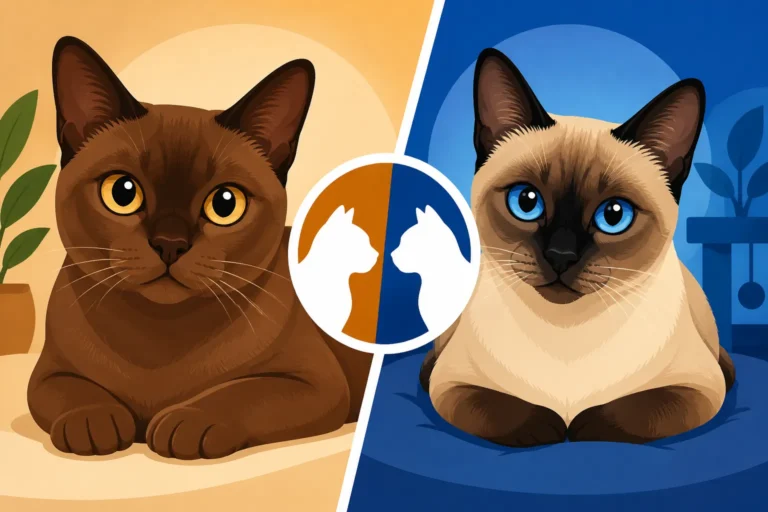
Burmese and Siamese personality traits, voices, activity levels, and daily care needs compared for prospective cat owners.

A Burmese cat left alone during long workdays requires specific support, careful routine planning, and social contact.
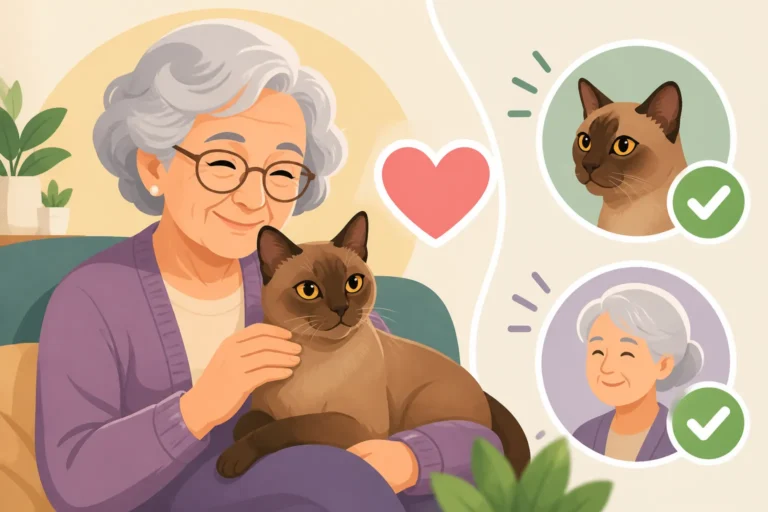
Burmese cats suit older adults by offering constant affection, but owners must manage high energy and daily care needs.
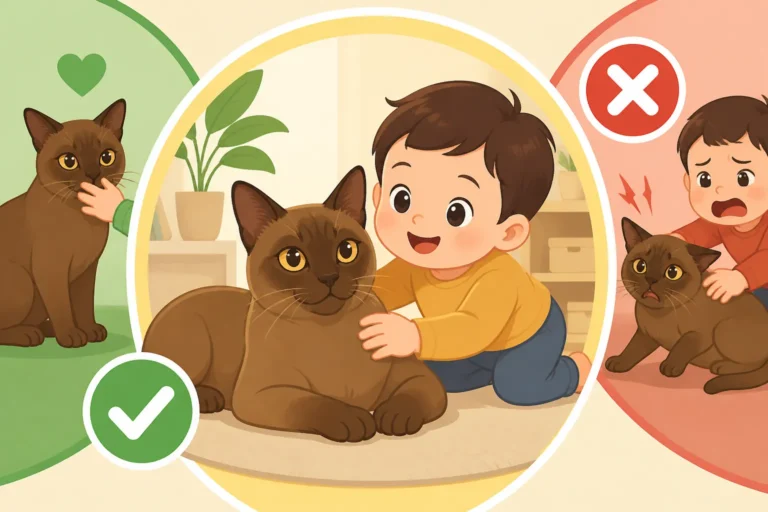
Burmese cats and toddlers living together require careful adult supervision because affectionate pets still need quiet space and safe boundaries.
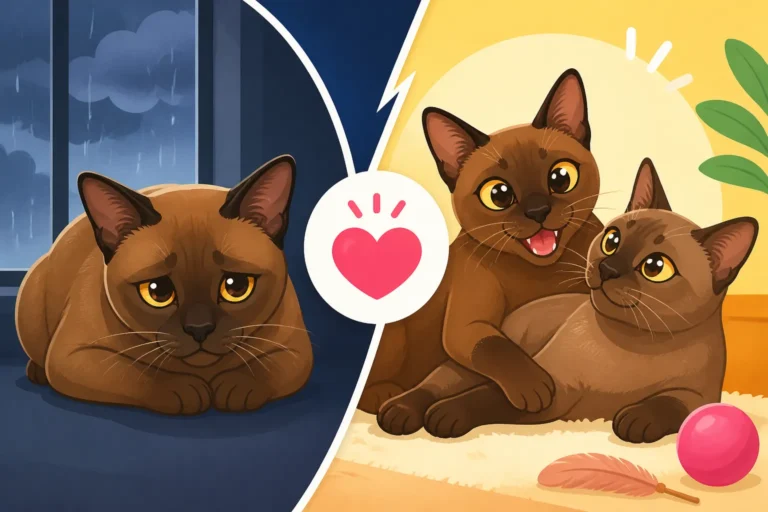
Burmese cats need constant social company, explaining why companion pets help prevent loneliness and destructive behavior during long workdays.
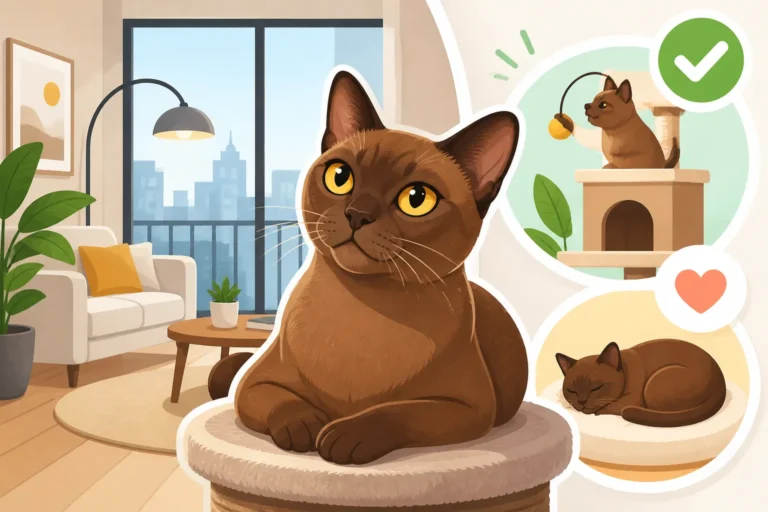
Burmese cats can thrive in apartments if owners provide vertical climbing spaces, regular play, and constant daily companionship.

A Burmese cat suits first-time owners needing affection, but requires daily play, routine, and constant attention.

Burmese cat registration numbers vary because individual organizations maintain separate records rather than one central international authority.

Burmese cat popularity in Australia stems from active local breeding communities, distinct appearances, and affectionate social behavior.