How Popular the Burmese Is in Australia
The Burmese cat’s popularity in Australia depends on registration numbers, show presence, and local availability in major cities.
Is this the right one for you?
Origins and temperament, size and coat, what living with one is actually like, and how it compares to the breeds people weigh against it.

The Burmese cat’s popularity in Australia depends on registration numbers, show presence, and local availability in major cities.
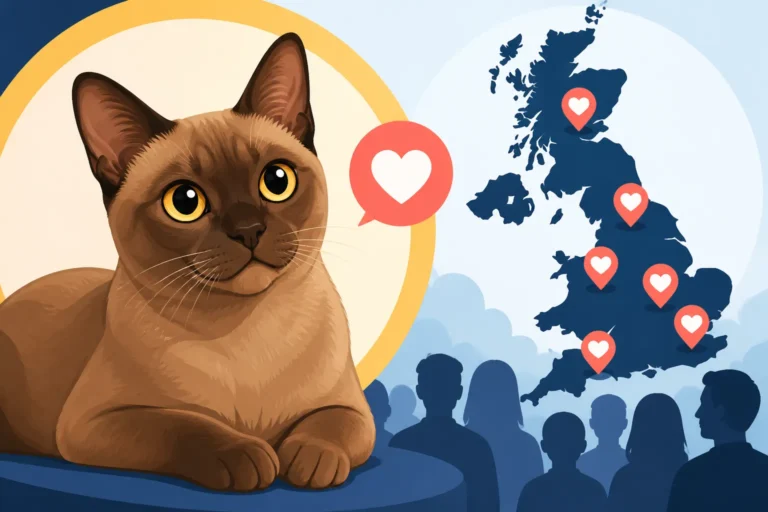
The Burmese cat breed holds a smaller public profile in Britain despite active breeder communities and official recognition.

Burmese and Siamese cats share similar features and coat colors, but differences in eye color, build, and coat patterns clarify breed identification.
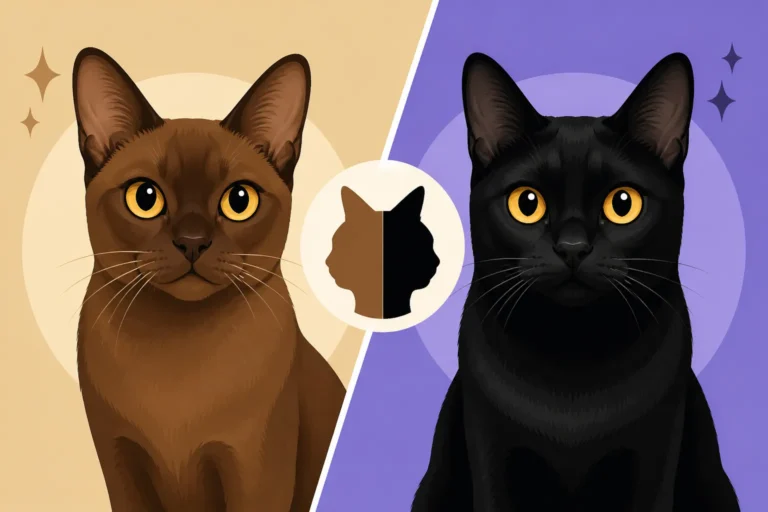
Burmese and Bombay cat identification depends on comparing coat color, eye shade, head shape, and pedigree records.
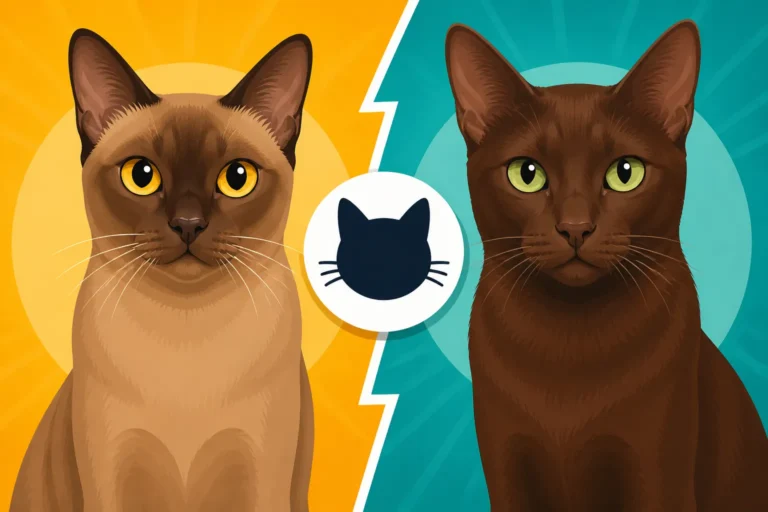
Burmese and Havana Brown cat identification compares eye color, head shape, body outline, and documented pedigree.
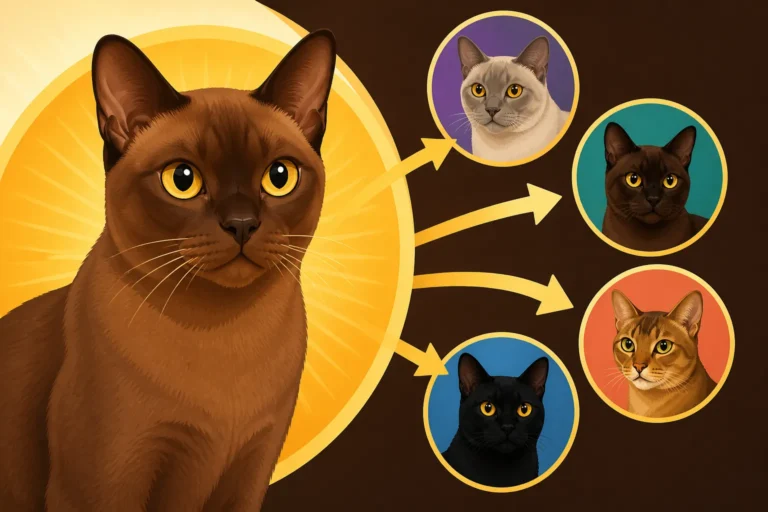
Burmese cat ancestry helped shape the Bombay, Tonkinese, and Burmilla, influencing traits, appearance, and development.
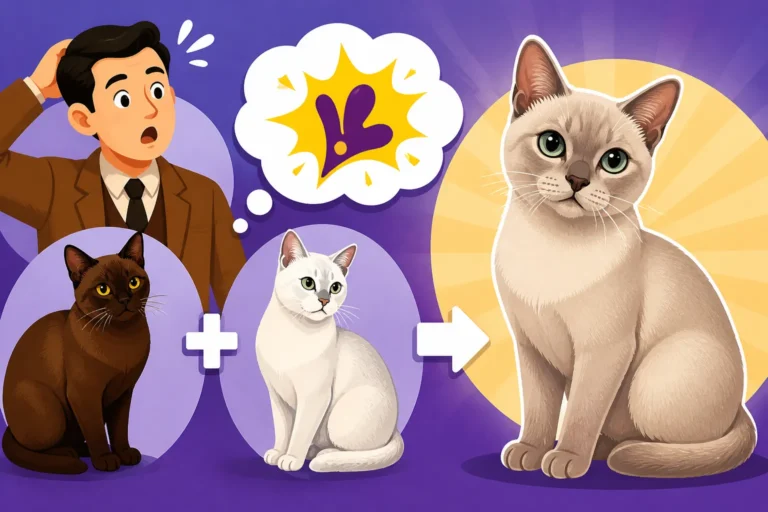
An accidental mating in Britain between a Chinchilla Persian and a Burmese created the first Burmilla kittens in 1981.
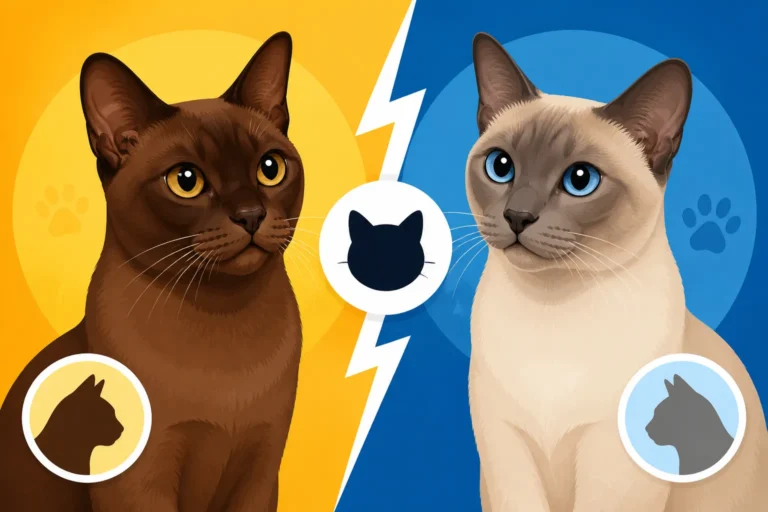
Burmese and Tonkinese cat differences in build, head shape, coat pattern, and eye color help owners identify each breed.
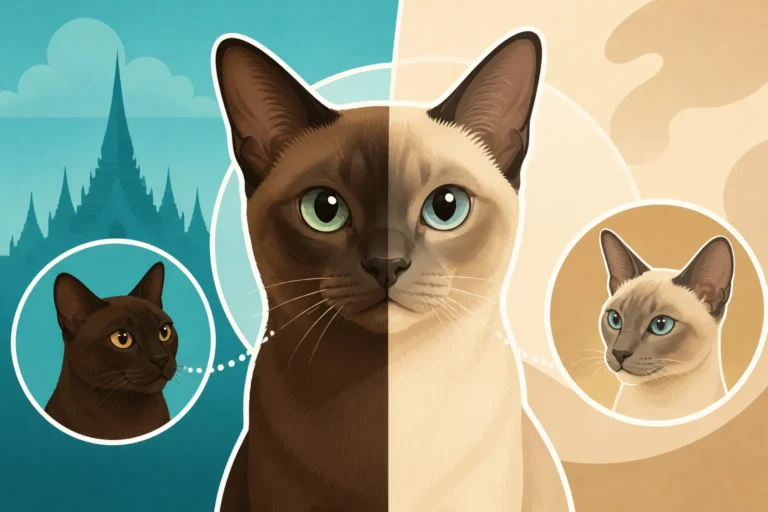
The Tonkinese cat breed history explains why the half Burmese label describes ancestry rather than exact DNA percentages.
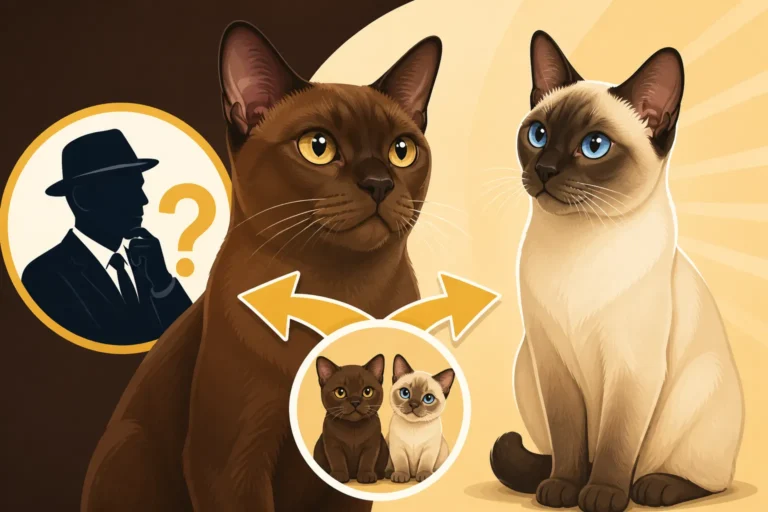
Canadian breeder Margaret Conroy developed the Tonkinese in the 1960s by crossing Burmese and Siamese cats to create a distinct breed.