How to Tell a Burmese From a Havana Brown
A brown, short-haired cat with bright eyes can be difficult to identify at a glance, especially when both Burmese and Havana Brown cats share a sleek coat and affectionate reputation. The most useful clues are the cat’s eye color, head shape, body outline, and documented pedigree. This guide explains what to compare—and why appearance alone cannot confirm a breed.
Start with the clearest visual differences
Compare eye color and coat shade
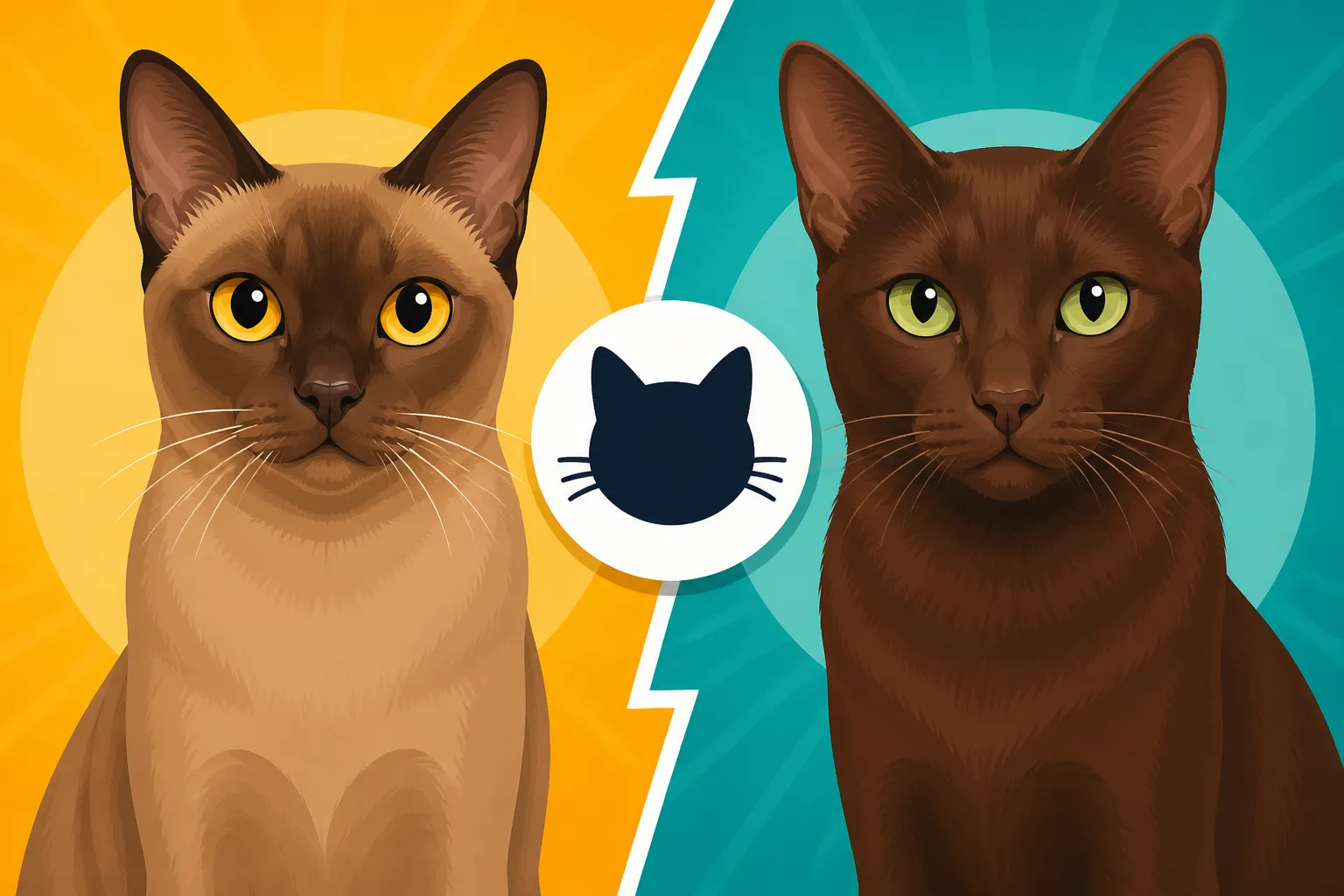
Eye color is often the quickest clue. Burmese cats typically have yellow to gold eyes, ranging from pale yellow to deep amber. Havana Browns are known for green eyes, ideally a clear, vivid green. In some light, a Burmese’s eyes may look greener or a Havana Brown’s may seem less striking, so check in natural daylight rather than relying on a single indoor snapshot.
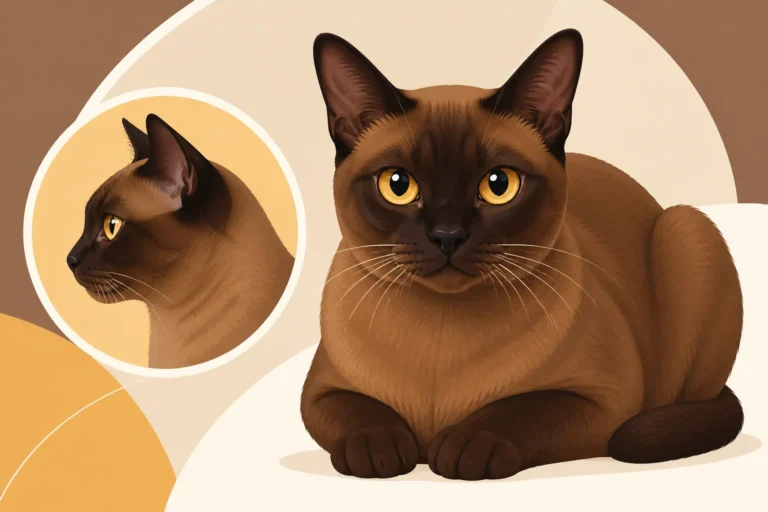
Coat color can be more confusing. A Havana Brown is characteristically a rich, warm brown, often described as mahogany, with a relatively even color across the body. A Burmese may also be brown, but the breed comes in several recognized colors depending on the registry and type. In American Burmese, the classic brown color is called sable; other recognized colors include champagne, blue, and platinum. A brown Burmese coat may also appear darker at the cooler extremities, though the contrast is usually subtle.
Color terms are not always used consistently by breeders or registries. In Britain, for example, a Burmese color commonly called sable in the United States may be called brown. So a seller’s description of a “brown cat” is not enough to establish whether it is a Havana Brown or a Burmese. For a closer look at the Burmese coat color, see What a Sable Burmese Looks Like.
Look at the head and expression
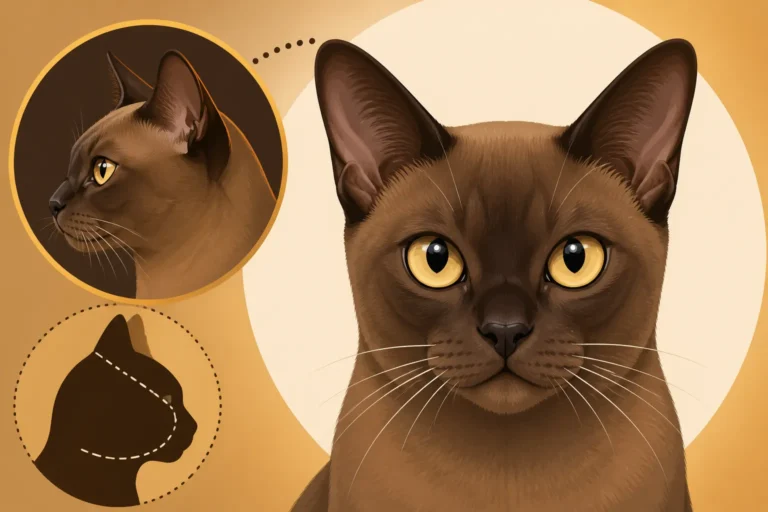
The head can help distinguish the breeds, but it is important to know which Burmese type you are looking at. American Burmese are generally bred to have a compact, rounded head and a short, broad muzzle. European Burmese tend to have a more moderate wedge-shaped head, with a longer muzzle and a less rounded outline. These differences mean that one Burmese may look quite different from another while still fitting its breed standard. How the American and European Burmese Split explains why the distinction matters.
Havana Browns generally have a longer, more angular outline than the rounded American Burmese. Their muzzle has a distinctive shape, and the face can look somewhat longer and narrower than a Burmese’s. Large ears set broadly apart also contribute to the Havana Brown’s alert expression. But head shape is not a perfect shortcut: European Burmese may look less round than American Burmese, while individual cats vary in features and proportions. For more detail on Burmese head type, see What a Burmese's Head Is Judged.
Compare body shape and coat texture
Notice the overall outline, not just the weight
Both breeds can feel surprisingly solid when picked up. Burmese cats are often described as compact and muscular, with a substantial body for their size. Their build can give them a heavier feel than their appearance suggests. That does not necessarily mean a Burmese is overweight; it is part of the breed’s characteristic physique. Why a Burmese Weighs More Than It Looks explores that difference.
Havana Browns are also muscular, but their overall outline is usually more elongated and less compact. The best comparison is not simply “which cat looks bigger?” but how the body is put together: a Burmese often looks rounded and solid, while a Havana Brown tends to look longer and more angular. A cat’s age, sex, fitness, and individual lineage can all affect what you see, so body shape should support—not replace—other clues.
If you are examining a cat in person, observe it standing and walking rather than judging from a curled-up pose. A relaxed cat may look rounder, and a stretched-out cat may seem longer. Notice the back, legs, chest, and tail in relation to one another. Avoid deciding based on weight alone; a healthy, muscular cat can weigh more than expected without being overweight.
Feel and observe the short coat
Both breeds have short coats that lie close to the body, so neither is likely to have a fluffy or heavily feathered appearance. Burmese coats are often described as satin-like, with a smooth, glossy finish. Havana Brown coats are also short and sleek, with the close, even appearance that helps show off their rich brown color.
Coat feel can be subtle, especially if you are meeting the cat briefly or looking through photos. Lighting, grooming, and seasonal shedding can change how glossy a coat looks. A picture with warm filters can also make a brown coat seem more mahogany than it is. Treat coat texture and color as supporting details rather than proof of breed.
| Feature | Burmese | Havana Brown |
|---|---|---|
| Typical eye color | Yellow to gold | Green |
| Common overall outline | Compact and muscular | More elongated and angular |
| Brown coat appearance | Can be sable or brown, depending on terminology and registry | Characteristically rich, even brown |
| Head shape | Varies between American and European types | Generally longer and more angular |
| Best confirmation | Pedigree and registry records | Pedigree and registry records |
Understand why photos and labels can mislead
Remember that Burmese cats do not all look alike
“Burmese” does not describe one identical head shape everywhere. American and European Burmese have developed along different standards, so comparisons that assume every Burmese has the same rounded face can be misleading. The American type is usually more rounded, while the European type is more moderate in shape. Reading about What a Burmese Looks Like Against the Standard can help you compare a cat with the appropriate type rather than with a general image of the breed.
The variety of Burmese colors adds another complication. A sable Burmese may be mistaken for a Havana Brown in a dim photograph, especially if the cat’s eyes are difficult to see. Conversely, a photograph with bright reflections can make gold eyes appear green. If you are trying to identify a cat online, look for multiple clear pictures: a face-on portrait, a full-body view, and a photo taken in natural light.
Even those pictures cannot prove pedigree. Crossbreeding, mixed ancestry, and individual variation can produce cats that resemble a recognized breed without being registered members of it. Appearance can suggest a possibility; it cannot establish lineage.
Treat breed names as claims to verify
If someone is selling or rehoming a cat as a Havana Brown or Burmese, ask what documentation supports that description. A pedigree from a recognized registry is more useful than a verbal claim, a social-media caption, or a coat-color label. Check that the paperwork identifies the cat and its parents, and ask which registry’s breed standard the breeder follows.
Regional naming can also cause confusion. Breed names and accepted colors do not always match across countries or cat associations. If a cat is described as a Havana Brown, ask the breeder which registry the cat is registered with and what breed name appears on its papers. This helps clarify whether the seller means a pedigreed Havana Brown under a particular standard or is using the name informally for a brown domestic cat.
The same care applies to Burmese identification. Ask whether the cat is American or European type where that distinction is relevant, and review the pedigree rather than relying on a seller’s visual comparison. Breed records matter most when you need reliable information about ancestry, expected traits, or breeding status.
Make a careful identification in person
Use a simple observation checklist
When you meet a cat, give yourself time to observe rather than making a snap judgment. Start with the eyes in natural light, then assess the head shape, body outline, and coat. Ask about the cat’s age and whether it is relaxed; a nervous cat may hold its body differently, and a kitten’s features can change as it matures.
A practical checklist can keep the comparison grounded:
- Check the eyes. Green eyes are a strong clue for a Havana Brown; yellow or gold eyes are typical of a Burmese.
- Look at the whole silhouette. A compact, rounded build may point toward an American Burmese, while a longer outline may fit a Havana Brown or a European Burmese.
- Consider the coat. Note whether the brown appears evenly warm or whether the cat’s color and pattern fit the Burmese description given by its breeder or registry.
- Ask for records. Request pedigree information and confirm which registry the documents come from.
- Avoid relying on one trait. No single visual clue can confirm a breed on its own.
If you are adopting rather than buying from a breeder, the cat’s welfare matters more than finding a perfect breed label. A shelter may have limited background information, and a cat that resembles a Havana Brown or Burmese may simply be described as a brown domestic shorthair. That does not make the cat less deserving of a home; it just means its ancestry is uncertain.
Prepare for the cat in front of you
Burmese cats are often people-oriented and active, so consider whether the household can provide interaction, play, and companionship. A breed description can help you know what questions to ask, but the individual cat’s temperament matters most. If you are considering a Burmese, Which Household a Burmese Fits offers useful questions to consider before bringing one home.
For a newly adopted cat, focus first on a calm transition: a quiet room, familiar food if possible, a clean litter box, hiding places, and time to explore at the cat’s pace. If you are gathering basics, Chewy is one retailer where owners may look for litter, food, and starter supplies; compare products with the cat’s current needs and any veterinary guidance. For enrichment, Chewy also carries toys and play equipment that can help you build a routine, though the cat’s preferences will determine what actually gets used.
A short coat does not mean a cat needs no care. Regular handling, nail checks, play, and veterinary visits are useful regardless of whether the cat is Burmese, Havana Brown, or a mixed-breed lookalike. For grooming supplies, Chewy is another option to browse, but a simple, gentle grooming routine is generally more important than buying specialized equipment. The most reliable identification still comes from the combination of appearance and documented ancestry—not from a product description, coat color, or one striking photograph.
Disclaimer
This article is for general informational purposes only and does not constitute professional advice. Laws, prices and regulations vary by location and change over time. Consult a qualified professional for guidance on your specific situation.