Whether a Burmese Is a Low Anesthetic Risk
Burmese cat anesthetic risk depends on age, health conditions, and procedures, requiring careful veterinary monitoring and preparation.
Know what to watch for.
Breed-specific conditions, screening and DNA tests, what surgery actually costs, and the daily habits that stretch a healthy lifespan.

Burmese cat anesthetic risk depends on age, health conditions, and procedures, requiring careful veterinary monitoring and preparation.
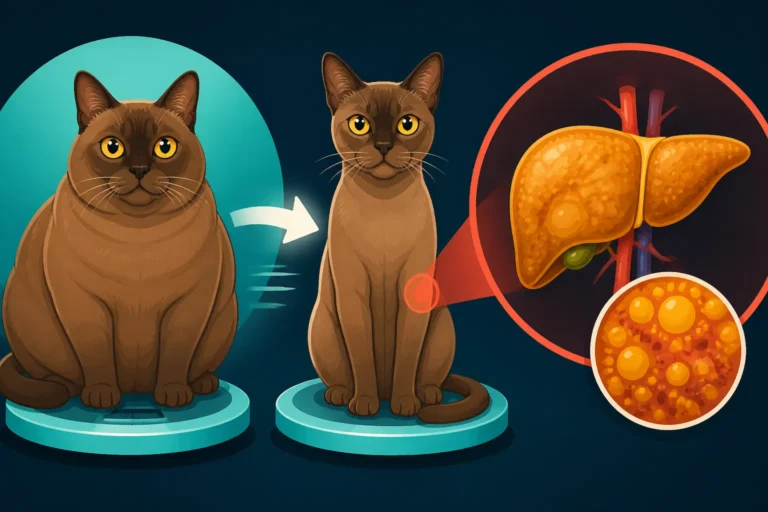
Rapid weight loss in Burmese cats triggers hepatic lipidosis, a fatal liver disease caused by sudden fat overload in the liver.
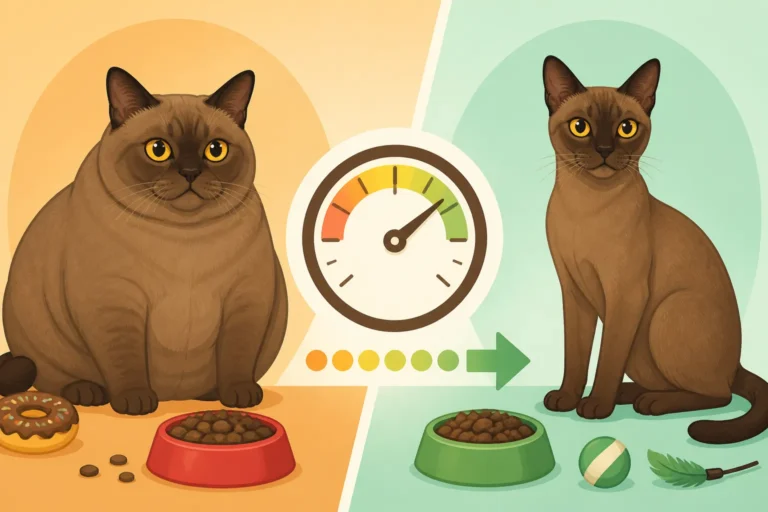
Overweight Burmese cats face a high diabetes risk, making safe weight loss vital to prevent serious health complications.

Burmese cat weight and muscle density compared to fat through body condition scoring, rib palpation, and physical traits.

Burmese cats possess a dense muscular build and heavy bone structure, making them surprisingly heavy for their sleek size.
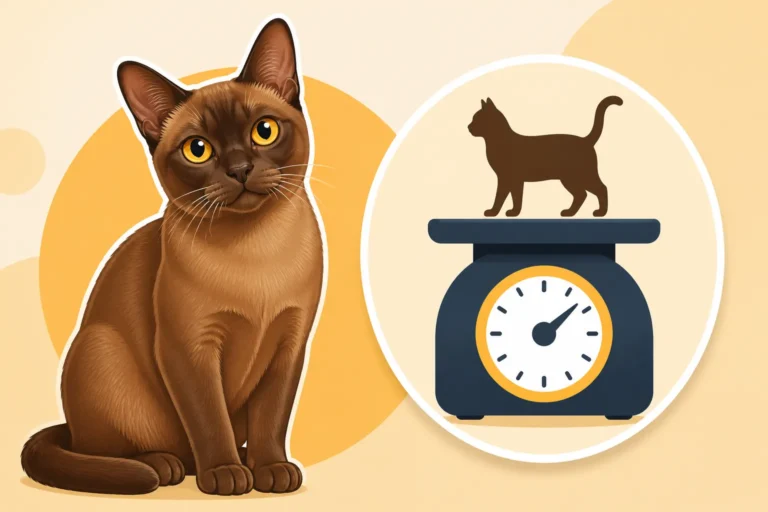
Adult male Burmese cats weigh eight to twelve pounds, while females weigh six to ten pounds, requiring tactile rib checks.
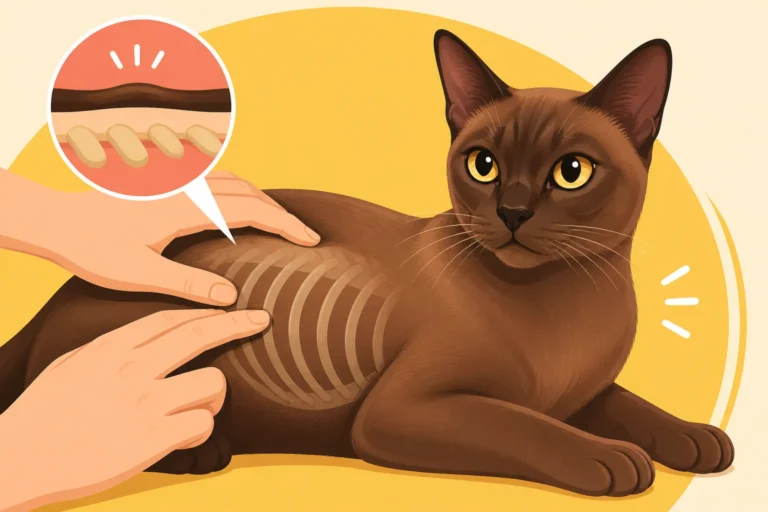
Hands-on palpation techniques let Burmese cat owners feel hidden ribs beneath dense muscles and short satin coats to monitor health.
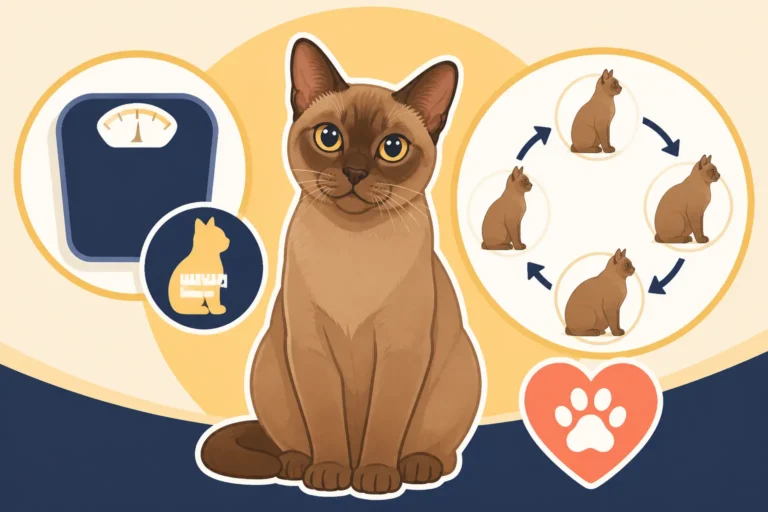
Monthly weight recording helps Burmese cat owners catch early health issues, lower diabetes risks, and track hidden weight changes.
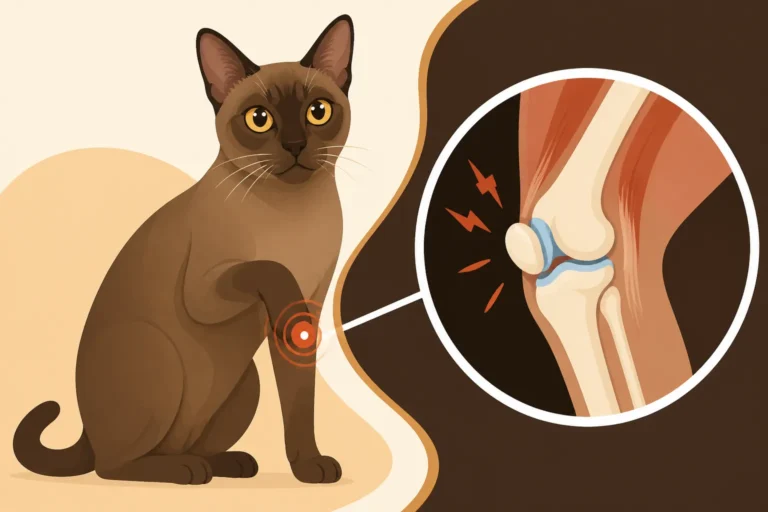
Patellar luxation in Burmese cats involves slipped kneecaps categorized into four grades, causing mobility issues, intermittent lameness, and joint pain.
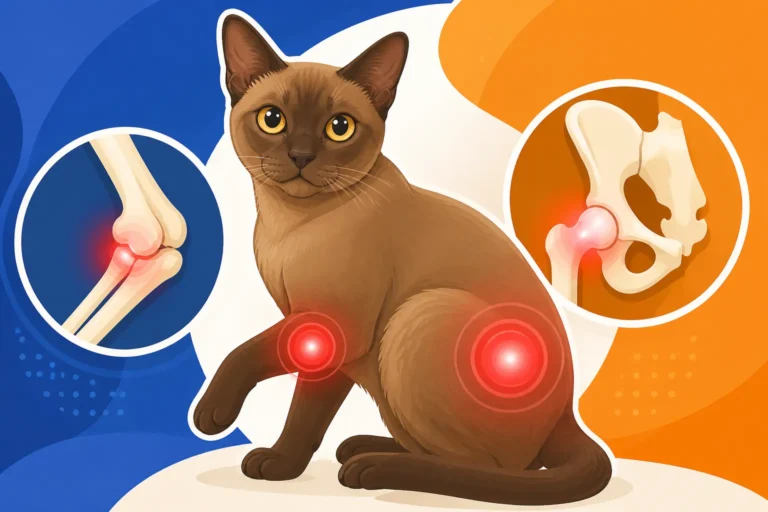
Burmese cat joint health details covering hip dysplasia, luxating patella conditions, genetics, and lifestyle impact factors.