Cutting a Burmese’s Claws While It Purrs
One of the most common frustrations cat owners face is the dreaded claw trim. Visions of wrestling a wriggling, unhappy feline often keep us from tackling this essential task, leading to scratched furniture, accidental nips, and even ingrown claws. But for Burmese owners, there's a unique opportunity to turn this chore into a surprisingly calm, even enjoyable, bonding experience. This guide will walk you through how to trim your Burmese's claws so smoothly, they might just purr their way through it, reinforcing that special connection you share.
The Burmese Advantage: Why They're Often Easier for Claw Trims
Burmese cats are truly something special when it comes to temperament. Their famously affectionate and dog-like personalities aren't just for cuddles; they actually make routine care tasks, like claw trimming, much more manageable than with many other breeds. If you've ever wrestled a more aloof cat into submission for a simple nail trim, you'll immediately appreciate the Burmese difference.
Their Affectionate and Trusting Nature
Burmese are often called "Velcro cats" for a reason – they thrive on human companionship and genuinely want to be involved in whatever you're doing. This deep attachment fosters an incredible level of trust. When you approach your Burmese with a calm, confident demeanor, they are far more likely to yield to your handling, rather than resisting with fear or aggression. They see you as their primary source of comfort and security, which translates into a willingness to cooperate. This trust is key, as it allows you to gently manipulate their paws without them immediately tensing up or trying to escape. Imagine your cat actually wanting to stay on your lap while you work; that's the Burmese magic at play. This is why Why a Burmese Enjoys Being Handled From the Start is such a benefit for their owners.
Early Socialization and Handling
A well-bred Burmese kitten typically comes to you already well-socialized and accustomed to human touch. Responsible breeders handle their kittens frequently from birth, getting them used to having their paws touched, their ears cleaned, and even their teeth brushed. This early exposure makes a world of difference. A kitten that has learned that being held and examined isn't threatening will grow into an adult cat that views these interactions as normal and even pleasant. If you continue this routine from the moment your kitten comes home, gently playing with their paws and extending their claws, you're setting them up for a lifetime of stress-free grooming. Think of it as laying the groundwork for cooperative care, right alongside their potty training and play sessions. You can even start Introducing a Toothbrush to a Burmese at Twelve Weeks to build a comprehensive grooming routine.
The Importance of a Calm Demeanor
Cats are incredibly perceptive creatures, and your Burmese will pick up on your energy immediately. If you're stressed, anxious, or rushed, they will sense it and likely become agitated themselves. This is why maintaining a calm, patient, and reassuring attitude is paramount. Speak softly, use gentle strokes, and take deep breaths yourself. A relaxed owner creates a relaxed cat. Your Burmese wants to please you and revels in your attention, so frame the claw trim as another quiet moment of connection, rather than a necessary evil. Their natural inclination to stay close and seek comfort means they are often quite receptive if you make the experience soothing and positive. This is part of Why a Burmese Treats Grooming as Attention – they love the interaction more than they dislike the task.
Gathering Your Tools and Setting the Scene
Before you even think about picking up your Burmese for a trim, it's crucial to have everything ready. A disorganized approach can add unnecessary stress for both of you, breaking that precious bond of trust. Having the right tools and a prepared environment sets the stage for success.
Choosing the Right Clippers for a Burmese
The market is flooded with cat clippers, but not all are created equal, especially for a Burmese. You want clippers that are sharp, comfortable for you to hold, and sized appropriately for a cat's delicate claws. Guillotine-style clippers can sometimes be tricky for beginners, as they require a precise angle. Scissor-style clippers, which resemble tiny human nail clippers, are often easier to maneuver and provide better visibility of the claw, making them a popular choice for home grooming. No matter the style, ensure the blades are sharp; dull clippers can crush the claw rather than cut it cleanly, causing pain and splintering. Many reputable pet supply retailers like Chewy offer a wide selection of cat clippers with detailed reviews, so you can find one that feels right in your hand. Always keep a styptic powder or cornstarch close by, just in case of a mishap, to quickly stop any bleeding. For more specific recommendations, look for guides on Which Clippers Suit a Burmese That Sits Still for It.
Essential Comforts and Distractions
While your Burmese might be wonderfully cooperative, a little extra comfort never hurts! Have a soft blanket or towel ready to place on your lap or the surface where you'll be working. This provides a cozy spot for them and can also offer a bit of gentle restraint if needed, though with a Burmese, it's often more about making them feel secure. High-value treats are non-negotiable. Think something irresistible that they don't get every day – perhaps a lickable treat paste, a tiny piece of cooked chicken, or their absolute favorite crunchy kibble. You can find excellent options on Amazon. These treats serve as positive reinforcement, associating the claw trim with something wonderful. A quiet toy can also be a good distraction, but often, the sheer joy of your undivided attention and treats will be enough. Knowing Which Treats Fit Inside a Burmese's Weighed Ration is important for their overall health, especially given their predisposition to certain conditions.
Creating a Peaceful Environment
The environment plays a huge role in your cat's comfort. Choose a quiet time of day when your household is calm and free from sudden noises or disruptions. Turn off loud TVs, put away the vacuum, and make sure children or other pets won't interrupt. A well-lit area is crucial so you can clearly see the quick (the pink part of the claw that contains blood vessels and nerves). A comfy chair where you can sit and have your Burmese on your lap is ideal, allowing them to feel safe and close to you. Avoid trying to trim claws when your cat is hyper or in a playful mood; wait until they are relaxed, perhaps after a meal or a good nap, when they are more receptive to quiet cuddles. The goal is to make this a calm, almost meditative experience for both of you.
Here's a quick checklist for your grooming session:
| Item | Purpose | Notes |
|---|---|---|
| Sharp Cat Clippers | Clean, quick cuts for comfort | Scissor-style often best for beginners; check sharpness regularly. |
| Styptic Powder/Cornstarch | Stops bleeding if quick is cut | Keep within arm's reach for emergencies. |
| High-Value Treats | Positive reinforcement and distraction | Lickable treats or small meat pieces work wonders. |
| Soft Blanket/Towel | Comfort for your cat, gentle restraint if needed | Creates a cozy, secure spot. |
| Good Lighting | Clear visibility of the claw and quick | Natural light is ideal; avoid shadows. |
| Quiet Space | Minimizes distractions and stress | Away from household noise and other pets. |
The Gentle Art of Trimming: Step-by-Step
Now that you're prepared, it's time to actually trim those claws. Remember, the key is patience, gentleness, and breaking the process down into manageable steps. Your Burmese will appreciate your calm approach.
Approaching Your Burmese with Confidence
Start by gently approaching your Burmese when they are already relaxed – maybe purring on your lap or stretched out on the sofa. Instead of just grabbing them, begin with some petting and soft words. Let them settle further into your presence. Slide your hand down their back and onto a paw, stroking it gently. The goal is to make paw handling a natural extension of your affection, not a sudden attack. If your cat tenses up, stop, resume petting, and try again in a few moments or even postpone if they're truly not in the mood. You might try doing just one paw, or even just one or two claws at a time, especially initially. Remember, this is about building a positive association, not conquering a mountain in one go. You'll find that Trimming a Burmese's Claws While It Sits on You becomes second nature with practice.
Isolating the Paw and Extending the Claw
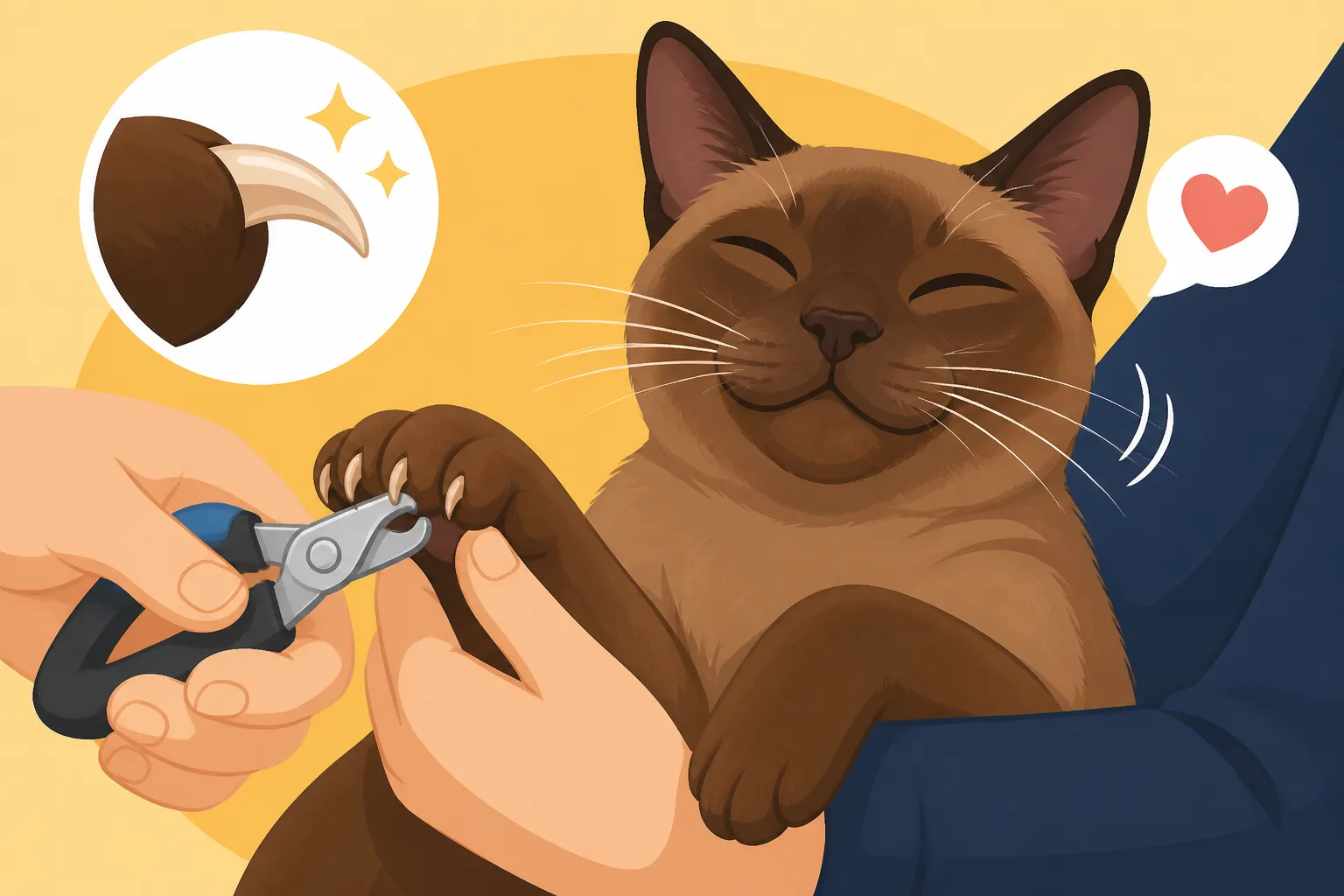
Once your Burmese is comfortable with you handling their paw, gently take one paw in your non-dominant hand. With your thumb on top of the paw and your index finger underneath, gently squeeze the toe pad. This action will extend the claw fully. Take a moment to examine the claw. You'll notice the sharp, clear or opaque tip, and then, if your cat has lighter claws, a pinkish area closer to the paw. This pink area is the "quick," and it contains blood vessels and nerves. Cutting into the quick is painful for your cat and will cause bleeding, so it's vital to avoid it at all costs. For cats with darker claws, the quick is harder to see, so you'll need to be extra cautious and only trim the very tip. If you're ever unsure, it's better to cut less than more.
The Safe Cut: Avoiding the Quick
With the claw extended and the quick identified (or estimated), position your clippers. You want to cut only the very tip of the claw, usually the sharp, clear, hooked part that curves downwards. Aim to cut straight across the tip, or at a slight angle that mimics the natural shape of the claw. Hold the clippers firmly but gently, and make a swift, confident snip. The quicker the cut, the less time your cat has to react. After each successful cut, immediately offer a tiny, high-value treat and some verbal praise. "Good kitty! What a brave cat!" is excellent. This immediate positive reinforcement helps your Burmese associate the sound and sensation of trimming with a reward. Repeat for a few claws on that paw, then switch to another paw, or even take a break and come back later or the next day. Sometimes, just doing one claw at a time is a great way to start.
What to Do If You Cut Too Deep
Accidents happen, even to the most careful owners. If you accidentally cut into the quick, your Burmese will likely yelp, pull their paw away, and it will bleed. Don't panic. Immediately apply styptic powder or cornstarch to the bleeding claw and apply gentle pressure. The bleeding should stop within a few minutes. Try to remain calm and reassuring, even if you feel awful. It's crucial not to scold your cat. If you do, they will associate the pain with you and the clippers, making future trims much harder. Offer comfort, a treat, and lots of pets. You might need to take a break and resume the trim another day. Learning How to Get a Burmese Used to a Glucose Check demonstrates their capacity for accepting routine procedures, even after a setback.
Making Claw Trims a Purr-fectly Positive Experience
The goal isn't just to get the claws trimmed; it's to make it an experience that strengthens your bond and leaves your Burmese feeling loved and secure. Consistency and positive reinforcement are your best friends here.
The Power of Praise and High-Value Treats
Every single time you trim a claw, or even just handle a paw successfully, shower your Burmese with praise. Use an enthusiastic but soft tone of voice, tell them how wonderful they are, and offer those irresistible treats. This immediate reward system is incredibly effective for cats, especially intelligent and food-motivated breeds like the Burmese. Over time, your cat will begin to anticipate the treats and positive attention, making them more willing participants. Don't underestimate the power of a good scratch behind the ears or a gentle cheek rub as a reward, either. Remember, your Burmese thrives on attention and affection, so use it to your advantage. This consistent positive reinforcement also helps with other routine care, such as Getting a Toothbrush Into a Burmese Kitten's Routine.
Consistency and Routine Build Trust
Cats are creatures of habit, and the Burmese is no exception. Establishing a regular routine for claw trims is far more effective than sporadic, emergency trims. Aim for once every 2-4 weeks, depending on how quickly your Burmese's claws grow. Pick a time when your cat is typically relaxed and you have ample time, free from distractions. A consistent schedule helps your cat understand what to expect, reducing anxiety. If you only do one paw at a time, or even just a couple of claws, that's perfectly fine, especially when starting out. The cumulative effect of many short, positive sessions is much better than one long, stressful one. This consistent, gentle handling reinforces the deep trust your Burmese places in you, making these grooming moments another opportunity for bonding.
When to Seek Professional Help
While many Burmese owners find they can master home claw trimming, there's absolutely no shame in seeking professional help if you're struggling. If your cat becomes overly stressed, aggressive, or if you're simply too nervous to perform the trim safely, don't hesitate to contact your veterinarian or a professional groomer. They have the experience and tools to get the job done efficiently and can often offer tips and techniques tailored to your specific cat. Sometimes, even just watching a professional demonstrate the proper technique can give you the confidence you need to try it yourself next time. Your vet can also check your Burmese's paws for any underlying issues or advise on any specific concerns. Remember, your Burmese's well-being and your relationship with them are the top priorities. Even Why a Burmese Purrs Through a Vet Examination highlights their general acceptance of professional handling.
Disclaimer
This article is for general informational purposes only and does not constitute professional advice. Laws, prices and regulations vary by location and change over time. Consult a qualified professional for guidance on your specific situation.