Dr Joseph Thompson and the Burmese He Bought in 1930
It’s easy to look at our beloved Burmese cats today, with their sleek coats and adoring personalities, and forget the fascinating journey they took to get here. We often marvel at their unique appearance and charming "dog-like" traits, but for many, the story of their origin is a hazy whisper. This guide will take you back to the very beginning, exploring the pivotal role of Dr. Joseph Thompson and the singular cat he brought to America in 1930, a feline whose genetic secrets would revolutionize our understanding of cat breeding and establish one of the most cherished breeds in the cat fancy.
The Curious Arrival of Wong Mau in 1930s San Francisco
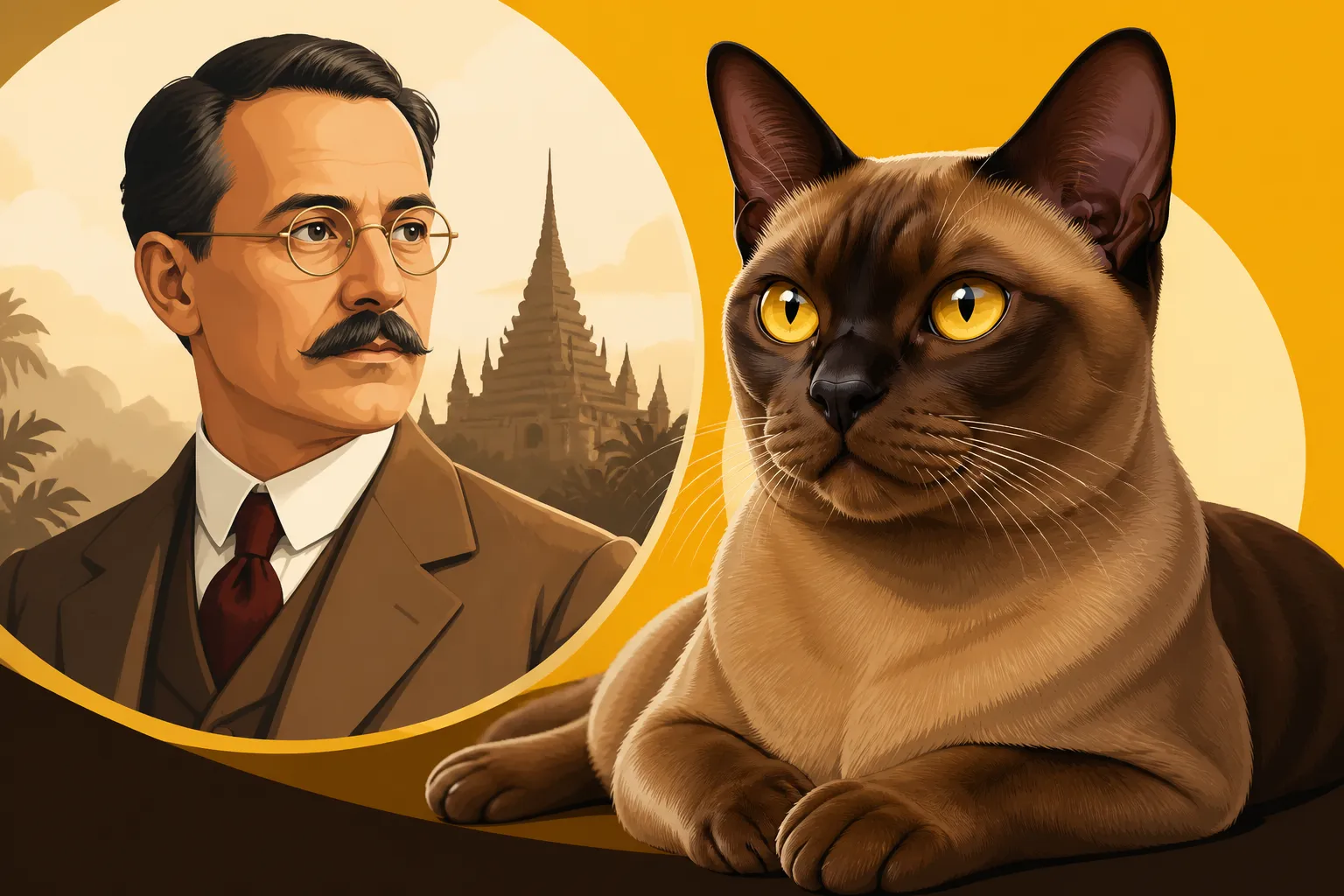
Imagine the San Francisco docks in the early 1930s, a bustling hub of international trade and exotic arrivals. It was into this vibrant scene that Dr. Joseph C. Thompson, a retired U.S. Navy medical officer with a deep interest in genetics and feline science, found himself captivated by a small, unassuming cat. This wasn't just any stray; this particular feline possessed a striking appearance and an undeniable charm that hinted at something truly special. Her presence marked the silent, unwitting dawn of a new era in the world of domestic cats.
Dr. Joseph Thompson's Medical Mission and Passion for Cats
Dr. Joseph Thompson wasn't just a cat enthusiast; he was a serious scientist and a dedicated naval physician whose work had taken him across the globe. His medical background instilled in him a meticulous approach to observation and record-keeping, a trait that would prove invaluable in his future endeavors with this unique cat. He had a deep appreciation for the subtle nuances of animal physiology and an insatiable curiosity about genetic inheritance. It was this unique combination of scientific rigor and genuine affection for felines that made him the perfect person to uncover the secrets held within Wong Mau. He wasn't just collecting a pet; he was embarking on a scientific quest, though he might not have fully realized its magnitude at the time.
His experience in various cultures, particularly in Southeast Asia, gave him a unique perspective on cats that were quite different from the common domestic shorthairs found in America. He had likely encountered cats with unusual colorations and builds, which probably piqued his scientific interest long before Wong Mau arrived. This broadened view meant he was prepared to see past what was "normal" and recognize the truly extraordinary in his new companion. It's safe to say that without Thompson's discerning eye and scientific mind, the story of the Burmese cat might never have been written. His passion wasn't just for cuddly companions, but for understanding the very fabric of life and inheritance in these beautiful creatures.
Wong Mau: A Unique Feline Found Far From Home
The cat in question, who Dr. Thompson would name Wong Mau, was brought to San Francisco from Burma (now Myanmar). She possessed a distinctive appearance that immediately set her apart from the Siamese cats popular at the time. While she shared some physical traits with the Siamese, such as a sleek body and short coat, her color was a rich, warm brown, darker than the pale body of a Siamese but not a solid black or chocolate like other recognized breeds. She carried an elegance that was both exotic and refined, catching the eye of anyone with an appreciation for feline beauty. The Burmese Began With One Cat Called Wong Mau by tracing her arrival to Thompson's care.
Wong Mau's arrival was more than just the transportation of a single animal; it was the introduction of a completely new genetic blueprint to the Western cat world. Her unusual coloring suggested a partial expression of the Siamese gene, a phenomenon that fascinated Thompson. He knew that the key to understanding this cat lay not just in her appearance, but in her genetic makeup, and he was determined to unlock that secret. Her presence sparked a quest that would ultimately lead to the recognition of an entirely new breed. She wasn't just a pretty face; she was a biological puzzle waiting to be solved.
First Impressions: Why Wong Mau Stood Apart
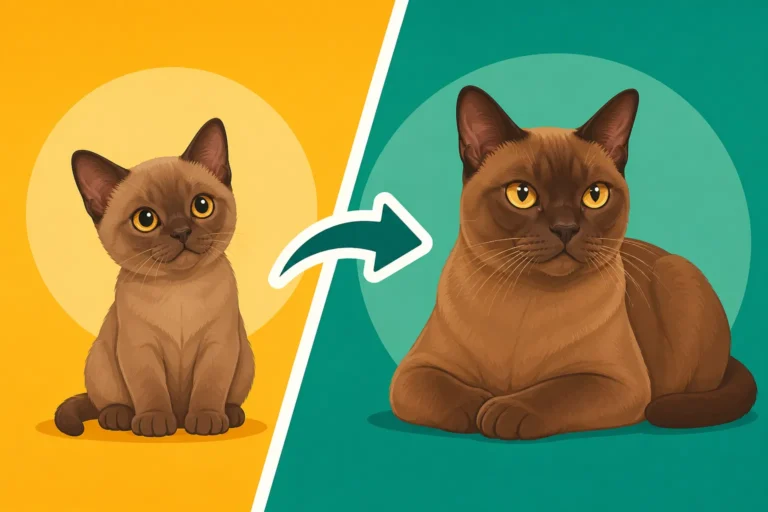
Wong Mau's charm went beyond her looks. She was described as exceptionally affectionate, intelligent, and possessing a unique vocalization that was less of a harsh meow and more of a soft, rasping rumble. These personality traits, combined with her distinct physical characteristics, made her an intriguing subject for scientific study. While many cats are beautiful, Wong Mau offered something more: a tangible mystery wrapped in a silky brown package. What the First Burmese Looked Like goes into greater detail about her physical appearance.
Her eyes were a striking gold, adding to her allure and further differentiating her from the blue-eyed Siamese. Thompson must have spent countless hours observing her, noting every detail, every behavior, and every subtle shift in her coat color. It's this deep, almost obsessive, attention to detail that set the stage for his groundbreaking work. He wasn't just admiring her; he was analyzing her, comparing her to existing breeds, and mentally mapping out a plan to understand her genetic heritage. Imagine the excitement of a scientist holding a living piece of a genetic puzzle, eager to fit it into place.
Unraveling Wong Mau's Genetic Mystery: The Siamese Connection
Dr. Thompson knew that to truly understand Wong Mau, he couldn't just admire her; he had to delve into her genetics. The obvious comparison was the Siamese, given her short coat and sleek body, but her distinct brown coloration was a puzzle. To unlock the secrets of her unique phenotype, Thompson decided on a bold and scientifically sound strategy: controlled breeding. This decision, though seemingly straightforward, would lay the foundation for an entirely new breed.
The Decision to Breed Wong Mau with a Siamese
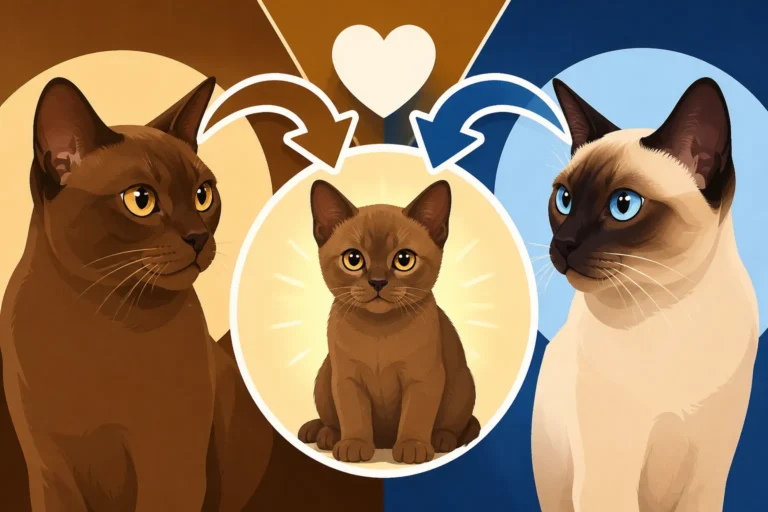
To properly investigate Wong Mau's genetic makeup, Dr. Thompson made the crucial decision to breed her with a Siamese cat. This wasn't a random choice; it was a deliberate scientific experiment designed to reveal the genetic components of her distinctive brown coat. If Wong Mau carried the same colorpoint gene as the Siamese, but in a modified form, breeding her to a purebred Siamese would produce predictable results that could then be analyzed. He needed a control, a known genetic baseline, to understand what Wong Mau truly represented. Why the First Burmese Was Bred to a Siamese offers specific context for this pivotal choice.
This wasn't about creating "designer cats" for profit; it was about rigorous scientific inquiry. Thompson understood that the best way to isolate and identify the genetic traits he observed in Wong Mau was through Mendelian genetics, carefully tracking inheritance patterns across generations. He wasn't just playing matchmaker; he was constructing a genetic roadmap. The choice of a Siamese stud was critical because it allowed him to test his hypothesis about Wong Mau carrying a dilute form of the Siamese colorpoint gene, leading to her warm, sable brown. It was a calculated risk that paid off handsomely for the future of cat breeds.
The Unexpected Kittens: Unveiling a New Breed
The first litter born from the pairing of Wong Mau and a Siamese stud was nothing short of remarkable, and arguably, the moment the Burmese breed truly began. The kittens displayed three distinct coat patterns: some were full Siamese, exhibiting the classic cream body and dark points; some resembled Wong Mau herself, with a solid, rich brown body and slightly darker points; and, surprisingly, some were solid, dark brown cats with no visible points at all. This diverse litter provided Thompson with the conclusive evidence he needed. He had not just a new type of cat, but proof of a unique genetic allele.
This discovery was a "Eureka!" moment for Thompson. The presence of these three distinct phenotypes in a single litter strongly indicated that Wong Mau was not a purebred Siamese, nor was she simply a dark variant of one. Instead, she carried a unique gene for color, which when combined with the Siamese gene, created the "Tonkinese" pattern (the cats resembling Wong Mau) and, when present in two copies, produced the solid brown Burmese. It was a clear demonstration of recessive and dominant traits at play, a living genetics lesson unfolding right before his eyes. This litter was the blueprint for the entire breed, a vibrant illustration of genetic diversity and the potential for new expressions of feline beauty.
Understanding the "Burmese" Coloration: The cb Allele
Thompson, with the help of geneticists, quickly deduced that Wong Mau carried a distinct gene, now known as the "Burmese allele" or cb, for color restriction. This allele is a mutation of the tyrosinase gene, which is responsible for pigment production. While the Siamese allele (cs) restricts pigment to the cooler extremities of the body (points), the Burmese allele (cb) allows for more widespread pigment development, resulting in the warmer, richer brown that Wong Mau displayed, with only slightly darker points. When a cat inherits two copies of cb (cb/cb), the pigment is even more distributed, resulting in the solid brown color that would become the hallmark of the Burmese breed. The cb Allele Is What Makes a Burmese Brown explains this genetic phenomenon in detail.
The intermediate coloration seen in the cats resembling Wong Mau (now known as Tonkinese) occurs when a cat inherits one Siamese allele and one Burmese allele (cs/cb). These cats are often called "mink" colored, showcasing a beautiful blend of both genetic influences. Thompson's meticulous record-keeping and breeding experiments were instrumental in identifying this specific genetic allele and understanding its expression. He meticulously documented everything, from mating pairs to litter outcomes, which was absolutely crucial for the scientific community to accept his findings. His work essentially cracked the code of feline color genetics for this particular trait, opening doors for further research and breed development.
The Birth of a Breed: Thompson's Groundbreaking Breeding Program
With the genetic puzzle of Wong Mau's coloring solved, Dr. Thompson moved from discovery to establishment. He understood that simply having a unique cat and identifying her genes wasn't enough; to create a recognized breed, he needed a structured, long-term breeding program. This transition from scientific curiosity to dedicated breeder was a monumental task, especially given the traditionalist nature of the cat fancy at the time.
The Scientific Approach to Establishing a New Breed
Dr. Thompson's methodical and scientific background profoundly influenced his approach to establishing the Burmese breed. He didn't simply aim to produce more cats like Wong Mau; he set out to create a consistent, healthy, and genetically sound population that could be recognized as a distinct breed. This meant careful selection of breeding partners, detailed pedigree tracking, and a clear understanding of genetic risks and benefits. He knew that for the breed to endure, it had to be more than just a novelty; it had to be a robust and well-defined lineage.
He continued to breed Wong Mau and her offspring with carefully selected Siamese cats, and then bred the resulting cb/cs (Tonkinese-patterned) cats back to each other, or to cb/cb (Burmese) cats, to consistently produce the solid brown Burmese. This process required patience, foresight, and an unwavering commitment to his vision. It was a true testament to his scientific discipline, applying the principles of Mendelian inheritance to sculpt a new feline form. His detailed records, which included everything from birth weights to temperament notes, provided an unparalleled foundation for the Burmese breed, setting a high standard for future breeders.
Early Challenges and Skepticism from the Cat Fancy
Introducing a new breed, especially one derived from a cross with an already established and revered breed like the Siamese, was not without its challenges. The cat fancy in the 1930s was, in many ways, quite conservative, with strict rules and expectations for what constituted a "purebred" cat. Many breeders of the day viewed Thompson's work with skepticism, questioning the legitimacy of these new brown cats and fearing that they were merely "unacceptable" Siamese variants or mixed breeds. This pushback was a significant hurdle for Thompson, as he worked tirelessly to educate and convince the community.
Thompson faced the difficult task of explaining complex genetics to a community that often relied more on visual phenotype and traditional pedigrees. He had to demonstrate that the Burmese was not a defect, but a valid and distinct genetic expression. This period required immense advocacy and detailed presentations of his findings. He presented his scientific data, including detailed genetic charts and breeding outcomes, to prove the Burmese's unique status. His efforts to overcome this early resistance are a crucial part of the Burmese origin story, highlighting the struggle involved in challenging established norms. What Thompson's Program Proved About the Burmese encapsulates this period of scientific validation.
Documenting the Burmese: A Legacy in Writing
Crucially, Dr. Thompson didn't just conduct his breeding experiments in isolation; he meticulously documented every step of his journey. His findings were eventually published in scientific journals, including the Journal of Heredity, making the Burmese one of the first cat breeds whose origin was so thoroughly and scientifically chronicled. This academic rigor lent immense credibility to his work and the legitimacy of the nascent breed. Which Journal Published the Burmese Findings details the importance of this publication.
These detailed publications were more than just scientific papers; they were the birth certificate of the Burmese cat. They provided a verifiable, peer-reviewed account of its genetic foundation, breed characteristics, and the scientific methodology used to establish it. This meticulous record-keeping contrasted sharply with the often-anecdotal origins of many other breeds, giving the Burmese a unique and robust scientific heritage. Thompson's written legacy continues to inform and guide Burmese breeders and enthusiasts today, offering an invaluable window into the foundational years of the breed.
Establishing the Burmese Standard and Early Recognition
Once the scientific basis of the Burmese was clear, the next step was to define what an "ideal" Burmese should look like and how it should behave. This process of establishing a breed standard is critical for any new breed, providing a blueprint for breeders and judges alike. It dictates everything from eye color to body shape and temperament, ensuring consistency and guiding the breed's development.
Crafting the Ideal Burmese Look and Temperament
Based on Wong Mau and her offspring, Dr. Thompson, along with other early Burmese enthusiasts, began to draft the first breed standard. This standard aimed to capture the essence of what made the Burmese unique: its compact, muscular body (often described as "a brick wrapped in silk"), its short, satin-like coat, its expressive golden eyes, and its notably affectionate and intelligent temperament. The standard sought to differentiate the Burmese from the more slender, angular Siamese, emphasizing its distinct, rounded features and solid build. What a Burmese Looks Like Against the Standard provides a detailed overview of these physical traits.
The temperament aspect was just as important as the physical attributes. From the very beginning, the Burmese was noted for its "dog-like" devotion, its desire to be constantly with its human companions, and its playful, inquisitive nature. These behavioral traits were deliberately included in the standard because they were considered intrinsic to the breed's appeal. Breeders were encouraged to select for both conformation and personality, ensuring that the Burmese would not only look beautiful but also embody the loving, interactive spirit that makes them such wonderful companions.
The Initial Acceptance and Excitement in the Cat World
Despite the initial skepticism, the unique beauty and captivating personality of the Burmese began to win over the cat fancy. In 1936, the Cat Fanciers' Association (CFA) officially recognized the Burmese, allowing it to compete for championship status. This was a monumental achievement for Dr. Thompson and his fellow breeders, a validation of years of hard work and scientific dedication. The Burmese was no longer just a scientific curiosity; it was a legitimate, recognized breed, ready to take its place among the established feline aristocracy. When CFA First Recognized the Burmese highlights this significant milestone.
The initial recognition brought a surge of enthusiasm. Cat shows now featured these stunning brown cats, attracting new admirers and breeders. The Burmese's affectionate nature made it an instant hit with judges and the public alike, cementing its place as a desirable companion animal. The excitement was palpable; here was a cat that was not only beautiful but also offered a deeply rewarding and interactive companionship experience. This period of early acceptance was crucial for the breed's momentum, drawing in new enthusiasts ready to dedicate themselves to its future.
The First Official Registrations and Breed Clubs
With CFA recognition, the formal process of registering Burmese cats and establishing dedicated breed clubs began. These clubs were vital for supporting the breed, promoting responsible breeding practices, and ensuring adherence to the newly established standard. They provided a forum for breeders to share knowledge, discuss challenges, and collectively work towards the betterment of the Burmese. The first Burmese Cat Clubs were formed by passionate individuals who believed wholeheartedly in the future of these unique felines.
These clubs played a critical role in standardizing practices and maintaining the integrity of the burgeoning breed. They organized events, published newsletters, and fostered a sense of community among Burmese owners and breeders. Registering a cat officially with a recognized association like CFA meant that its lineage was recorded, helping to prevent indiscriminate breeding and maintain genetic purity. This structured approach was essential for guiding the Burmese from a handful of experimental cats to a thriving and respected breed. Today, resources like Chewy offer a wide range of supplies that cater to the specific needs of registered breeds, including specialized food and grooming tools, a far cry from the limited options available to those early Burmese owners.
The Suspension and Reinstatement: Proving Purity
The early days of any new breed are often a rollercoaster, and the Burmese was no exception. Despite initial recognition, challenges arose that threatened its very existence in the cat fancy. The journey from initial acceptance to lasting establishment was fraught with political and genetic hurdles that Dr. Thompson and his supporters had to overcome.
Why the Cat Fancy Temporarily Withdrew Recognition
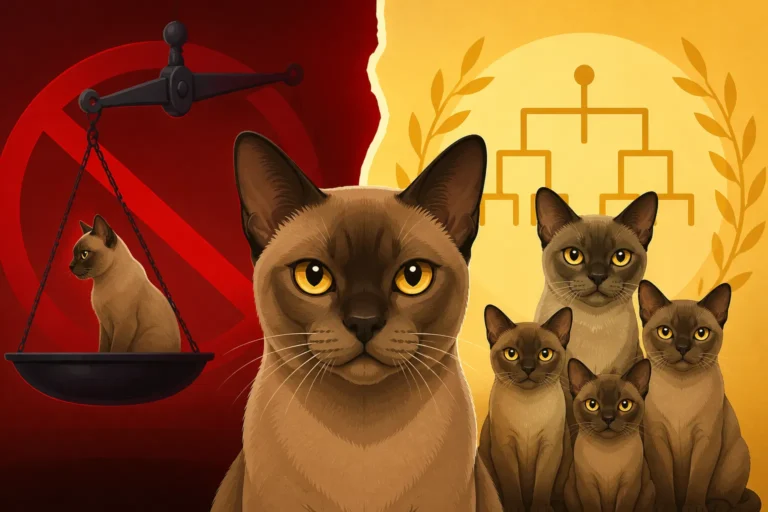
The biggest challenge facing the Burmese in its early years was the issue of hybrid breeding. Because Wong Mau had been bred to Siamese cats to establish the breed, and the resulting cb/cs offspring (Tonkinese-patterned cats) were still being used in breeding programs, it created a situation where Siamese-looking cats or "minks" could be registered as Burmese. This blurring of lines caused significant concern among traditional cat fanciers and led to accusations of indiscriminate breeding and a lack of true purity within the Burmese lines. Some felt that the breed was being diluted with Siamese characteristics, undermining its distinct identity. CFA Suspended the Burmese in 1947 and Took It Back sheds light on this controversial period.
This confusion was compounded by breeders who might have been less scrupulous than Thompson, perhaps inadvertently or intentionally registering cats that didn't fully meet the emerging Burmese standard, or continuing to breed Siamese/Burmese crosses without proper understanding of the genetics. The cat fancy, keen to maintain the integrity of its recognized breeds, saw this as a serious problem. The influx of "not-quite-Burmese" cats led CFA to take drastic action in 1947: they suspended the registration of the Burmese, demanding that breeders prove a clear distinction between the Burmese and its Siamese ancestors. This was a blow to Thompson and the budding breed, but it also spurred a renewed commitment to purity.
Thompson's Tireless Work to Rectify the Situation
The suspension of registration was a profound setback, but Dr. Thompson was not one to back down. He understood the concerns of the cat fancy and dedicated himself to addressing them head-on. His mission became to prove, unequivocally, that the Burmese was a stable, distinct breed, genetically separate from the Siamese. This meant tightening breeding practices, enforcing stricter adherence to the standard, and meticulously documenting multiple generations of pure Burmese to demonstrate consistency. It was a period of intense focus on selective breeding and genetic purification.
Thompson and a handful of dedicated breeders worked tirelessly, focusing on breeding only Burmese to Burmese for several generations. The goal was to produce cats that were "three generations pure" – meaning a cat's parents, grandparents, and great-grandparents were all purebred Burmese, with no Siamese ancestors within those three generations. This rigorous approach was designed to eliminate any lingering Siamese phenotypes from the breeding pool and solidify the distinct Burmese characteristics. It required immense dedication and a deep understanding of the genetic principles he had first uncovered with Wong Mau.
The Return to Good Standing: A Hard-Won Victory
After years of diligent work, careful selective breeding, and rigorous documentation, Dr. Thompson and the Burmese breed's champions successfully demonstrated its purity and stability. Their efforts paid off when, in 1956, CFA reinstated the Burmese, allowing it once again to compete for championship honors. This reinstatement was a hard-won victory, solidifying the breed's place in the cat fancy and proving its genetic distinctiveness. What CFA Required Before Reinstating the Burmese covers the specific criteria for this return to official recognition.
The triumph was a testament to Thompson's scientific foresight and the enduring appeal of the Burmese. It meant that the breed could continue to flourish, with its unique characteristics now firmly established and protected by the breed standard. This period of suspension and reinstatement taught invaluable lessons about the importance of genetic purity and responsible breeding, principles that remain cornerstones of the Burmese fancy today. The perseverance shown during these challenging years ensures that every Burmese cat we see today carries a lineage of intentional, scientific breeding.
Wong Mau's Lasting Impact on the Modern Burmese
Wong Mau, the little cat from Burma, may have passed on long ago, but her legacy is profoundly etched into the very DNA of every Burmese cat alive today. Her arrival in San Francisco wasn't just a curious incident; it was the genesis of a lineage that would shape feline genetics and breeding for decades to come. She is, quite simply, the matriarch of an entire breed, and her genetic blueprint continues to define what makes a Burmese, a Burmese.
The Foundation of the American Burmese Line
Wong Mau is universally recognized as the foundation queen of the American Burmese breed. Every American Burmese cat can trace its ancestry back to her, and the genetic discoveries made through her initial breeding program remain fundamental to understanding the breed's unique characteristics. Her cb allele is the cornerstone of their distinctive coloration, setting the standard for the rich, warm sable, blue, champagne, and platinum hues seen today. How Many Founding Burmese the Modern Breed Descends From reinforces her singular importance.
The meticulous breeding records kept by Dr. Thompson and the subsequent generations of dedicated American breeders ensured a consistent development of the breed. They focused on maintaining the compact, muscular body, the round head, and the sweet, expressive face that defines the American Burmese standard. This consistent selection has created a remarkably uniform and recognizable breed, all stemming from the genetic foundation laid by Wong Mau. When you look at an American Burmese, you're essentially seeing a direct, living descendant of that singular cat.
How Wong Mau's Genes Shaped the Breed's Future
Wong Mau's genetic contribution extended far beyond just color. Her initial cross with a Siamese not only revealed the cb allele but also highlighted the potential for specific physical and temperamental traits to be selected and amplified. Thompson's work demonstrated how a careful breeding program could isolate desired characteristics and reduce undesirable ones, essentially guiding the evolutionary path of a domestic animal. Her genes, in combination with the careful choices of early breeders, shaped the robust health, captivating personality, and distinctive appearance of the breed.
The recessive nature of some Burmese traits, such as the cb allele itself, meant that careful monitoring and understanding of genetics were paramount. This genetic transparency, pioneered by Thompson, set a precedent for health testing and informed breeding decisions that benefit the breed even today. It showed that breed development wasn't just about what looked pretty, but what was genetically sound. This focus on genetic understanding, starting with Wong Mau, has made the Burmese a breed with a well-documented genetic history, a rare and valuable asset in the cat world.
A Living Legacy: Thompson's Contribution to Genetics
Dr. Joseph Thompson's work with Wong Mau represents a pivotal moment in the history of animal genetics and the cat fancy. He didn't just discover a new breed; he provided a scientific model for how new breeds could be developed and understood. His meticulous approach to breeding and documentation was revolutionary, moving cat breeding from an often-subjective art to a more objective science. His efforts laid the groundwork for future genetic studies in felines, influencing how we approach breed development and genetic health today. Why the Founding Burmese Produced Two Breeds is a testament to the depth of his genetic discovery.
Thompson's legacy is evident not only in the existence of the Burmese cat but also in the scientific principles that underpin modern selective breeding. His demonstration of the cb allele's inheritance patterns remains a classic example taught in genetics courses. He showed that with careful observation and controlled breeding, the mysteries of genetic inheritance could be unraveled, leading to predictable and desirable outcomes. His pioneering spirit ensured that the Burmese arrived in the world with a strong scientific foundation, a heritage that continues to serve the breed well.
The Burmese Beyond Thompson: Evolution and Divergence
While Dr. Joseph Thompson's foundational work with Wong Mau was undeniably critical, the story of the Burmese didn't end with him. Like all living things, the breed continued to evolve, diverging into distinct types and influencing the creation of other beloved feline companions. The genetic legacy he unearthed proved to be a fertile ground for further development and diversification within the cat fancy.
How the American and European Burmese Types Emerged
One of the most fascinating developments in the Burmese story is the divergence into two distinct types: the American Burmese and the European (or British) Burmese. This split occurred primarily due to differing breeding goals and preferences in separate geographical regions. While the American Burmese maintained a more compact, cobby body, a rounder head, and fuller cheeks, the European Burmese developed a more elegant, moderate body type with a wedge-shaped head and slightly larger ears. How the American and European Burmese Split details this fascinating divergence.
The breeding programs in Europe, particularly in the UK, aimed for a more "oriental" look, preserving some of the svelte elegance often associated with the Siamese, albeit with the characteristic Burmese coloration. This intentional divergence led to two beautiful but distinct expressions of the Burmese breed, each cherished by its respective fanciers. Both types share the same foundational cb allele from Wong Mau, but generations of selective breeding by different standards created their unique appearances. It’s a wonderful example of how human preference can shape the evolution of a domestic animal.
The Influence of Thompson's Work on Other Breeds
The genetic insights gained from Wong Mau's breeding program had a ripple effect across the cat fancy, extending beyond just the Burmese breed itself. The understanding of the cb allele and its interaction with the cs (Siamese) allele directly led to the development and recognition of the Tonkinese breed. These "mink" colored cats, which were initially considered intermediate or "hybrid" in Thompson's early litters (cs/cb), eventually gained recognition as a distinct breed, celebrated for their unique coloration and delightful personalities.
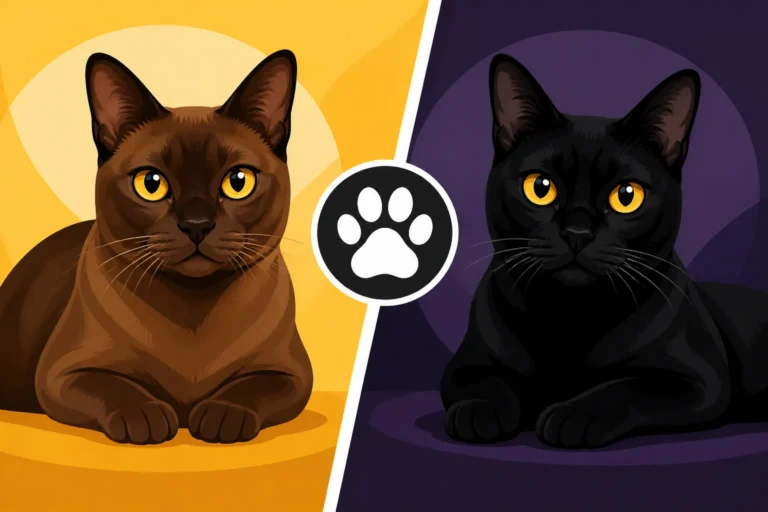
Furthermore, the Burmese itself became a foundational breed for others. For instance, the Bombay, with its sleek black coat and copper eyes, was developed by breeding Burmese cats with black American Shorthairs, aiming to create a "miniature panther." The Burmilla, a striking silver shaded cat, also owes its existence to an accidental cross between a Burmese and a Chinchilla Persian. Thompson's initial genetic discoveries provided the building blocks and the intellectual framework for these subsequent breed developments, proving the profound impact of understanding feline genetics.
The Burmese Today: A Testament to its Origins
Today, both the American and European Burmese continue to be cherished breeds worldwide, known for their captivating personalities and stunning appearances. They are popular choices for families, singles, and multi-pet households, adapting well to various living situations as long as they receive ample attention and companionship. Their playful nature, intelligence, and unwavering devotion make them truly special companions. Whether you're a fan of the cobby American type or the elegant European, the Burmese remains a beloved fixture in the cat fancy.
Modern Burmese breeders continue to build upon the legacy of Dr. Thompson, utilizing genetic testing and careful breeding practices to maintain the health and integrity of the breed. They remain committed to preserving the unique traits that made Wong Mau so special while also addressing contemporary health considerations. From their diet, often carefully managed with low-carbohydrate options from reputable brands like Chewy, to their routine vet care, the modern Burmese benefits from generations of informed breeding and dedicated ownership. The journey from a single cat discovered by a curious doctor in 1930 to the globally recognized and adored breed of today is a remarkable testament to the power of scientific inquiry and passionate dedication.
| Key Figures/Concepts | Role in Burmese History | Significance |
|---|---|---|
| Dr. Joseph Thompson | Discovered Wong Mau, initiated breeding program, conducted genetic studies, published findings. | Founder of the Burmese breed, pioneered scientific cat breeding. |
| Wong Mau | The first Burmese cat brought to the US, genetic foundation. | Matriarch of the American Burmese, source of the cb allele. |
| Siamese Cat | Bred with Wong Mau to prove genetic inheritance patterns. | Provided the cs allele, crucial for understanding Burmese genetics. |
| cb Allele | Unique gene for color dilution, defining Burmese coloration. | Makes Burmese unique brown, responsible for all recognized Burmese colors. |
| Cat Fanciers' Association (CFA) | First major registry to recognize (and later suspend/reinstate) the Burmese. | Validated the breed, set standards for purity and breeding. |
| Three Generations Pure | Requirement for re-registration after suspension. | Ensured genetic purity and distinctiveness from Siamese. |
| Tonkinese Breed | Result of cb/cs genetic combination, initially a "hybrid." | A distinct breed born from the early Burmese breeding experiments. |
Disclaimer
This article is for general informational purposes only and does not constitute professional advice. Laws, prices and regulations vary by location and change over time. Consult a qualified professional for guidance on your specific situation.