Whether Wong Mau Was a Purebred Burmese
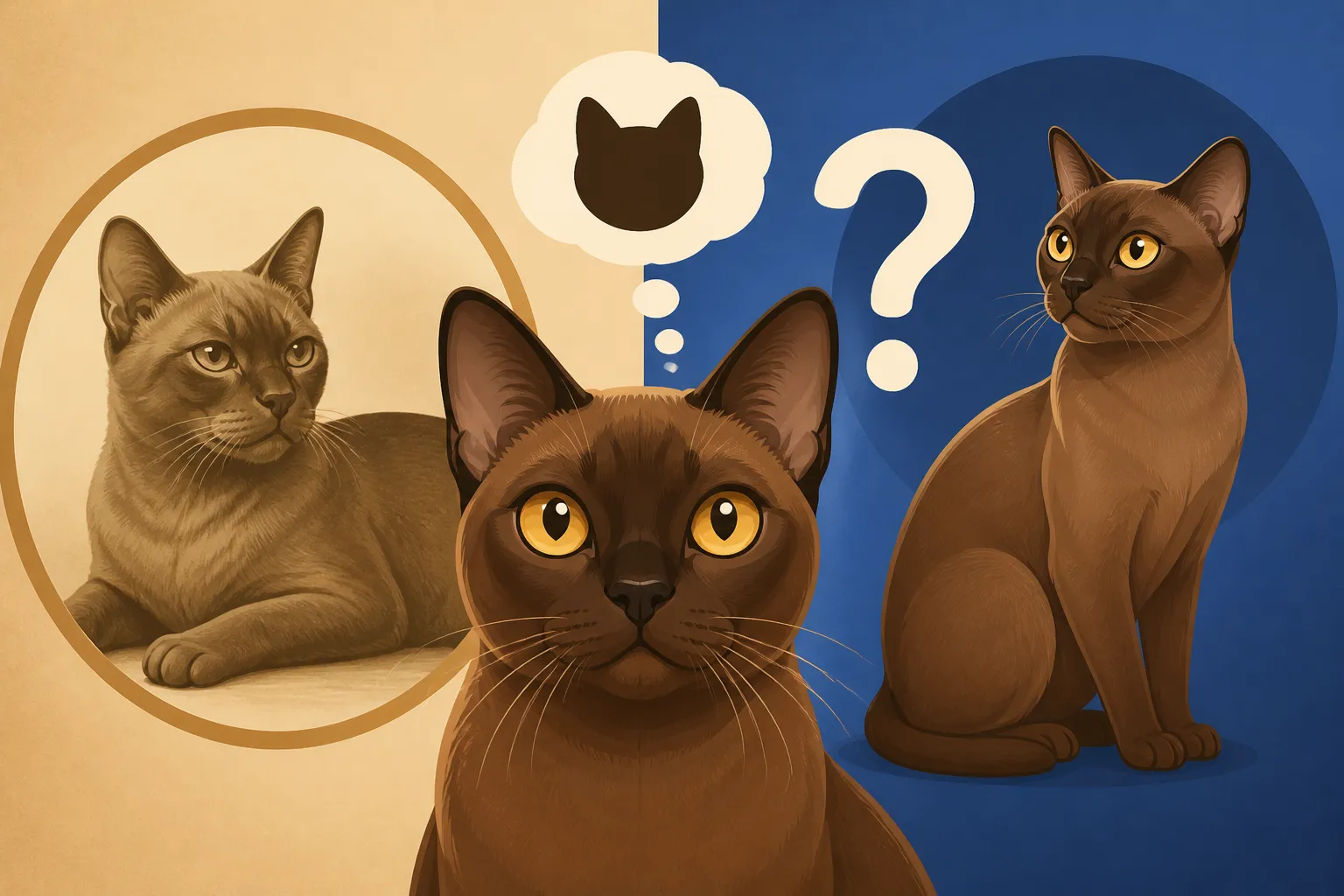
It's easy to get lost in the history of our beloved cat breeds, especially when digging into the very origins of a cat as unique as the Burmese. Many people wonder if the legendary Wong Mau, the foundational cat of the entire breed, was what we'd consider "purebred" in today's terms. It’s a valid question, considering how much genetics and breeding standards have evolved, and understanding her true background helps us appreciate the journey the Burmese has taken. This guide will delve into Wong Mau's fascinating story and clarify her status in the annals of cat history.
The Enigmatic Origin of Wong Mau and the Early Burmese Breed
Before the Burmese cat became the cherished, affectionate companion we know today, there was just one cat: Wong Mau. Her arrival in the United States marked the beginning of a remarkable journey that reshaped the cat fancy, but her own origins were far from clear-cut, leading to much debate about her "purity."
The Arrival of Wong Mau in San Francisco
The year was 1930, and Dr. Joseph Thompson, a U.S. Navy doctor, brought a small, dark brown female cat back with him from Burma (modern-day Myanmar) to San Francisco. This cat, Wong Mau, was unlike anything American cat fanciers had seen before. She was slender, with a short, sleek, dark brown coat that was darker at the points but not as dramatically contrasting as a Siamese. She carried herself with an exotic elegance that immediately captured attention.
At the time, the concept of meticulously documented pedigrees for every cat coming from overseas was not as established as it is today. Wong Mau arrived as a unique individual, an unknown quantity in terms of her specific ancestry. Dr. Thompson was captivated by her distinct look, believing her to be a new, previously unclassified type of cat. Her charm was undeniable, and she quickly became the subject of intense fascination among those interested in developing new breeds. You can read more about Dr Joseph Thompson and the Burmese He Bought in 1930.
The "Purebred" Concept in Early Cat Breeding
To understand whether Wong Mau was "purebred," we have to rewind to the early 20th century. The term "purebred" itself has evolved considerably. In modern cat breeding, a purebred cat typically means an animal whose ancestors are all of the same breed, documented through multiple generations of pedigree registration. It implies a consistency of genetic traits and adherence to a defined breed standard.
However, in the 1930s, especially for cats being imported from their native lands, "purebred" often referred to a cat that represented a distinct natural population or landrace, even if formal pedigrees didn't exist in the same way. The challenge with Wong Mau was that there was no existing "Burmese" breed in the Western cat fancy to compare her against. She was the starting point, the foundation. So, to declare her "purebred Burmese" would be anachronistic, as the breed hadn't even been established yet. Her "purity" was less about a documented lineage and more about her representing a unique genetic type that breeders hoped to isolate and perpetuate.
Dr. Thompson's Breeding Program: Unraveling Wong Mau's Genetics
Dr. Thompson wasn't just charmed by Wong Mau; he was a serious geneticist and veterinarian who saw the potential for a new breed. He embarked on a meticulous breeding program to understand her unique traits, a program that would ultimately reveal her true genetic makeup and establish the foundation of the Burmese breed.
The Strategic Cross to Siamese Cats
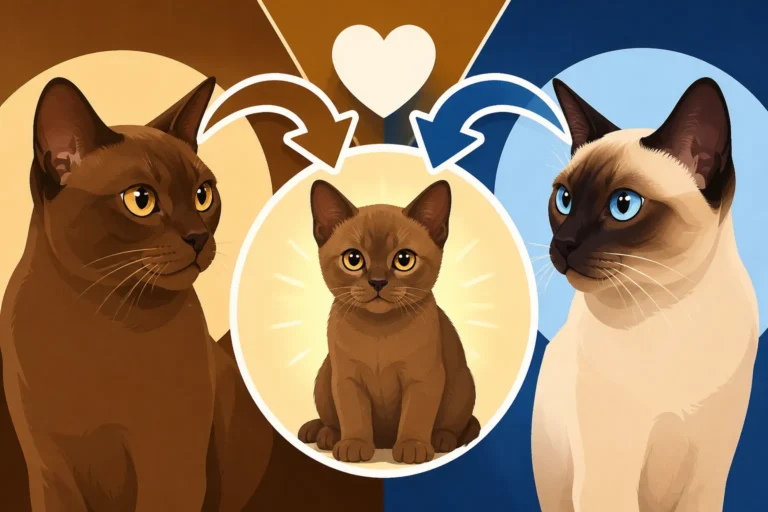
To unravel Wong Mau's genetics, Dr. Thompson made a strategic decision: he bred her to a Siamese cat. This wasn't a random choice; Siamese cats were an established breed with a known genetic makeup for colorpoint traits, and they shared a somewhat similar body type to Wong Mau. The expectation was to see how her unique brown color would manifest when combined with the Siamese gene. This cross was essential for proving that Wong Mau's appearance wasn't just a fluke but carried a distinct genetic pattern. You can delve deeper into Why the First Burmese Was Bred to a Siamese.
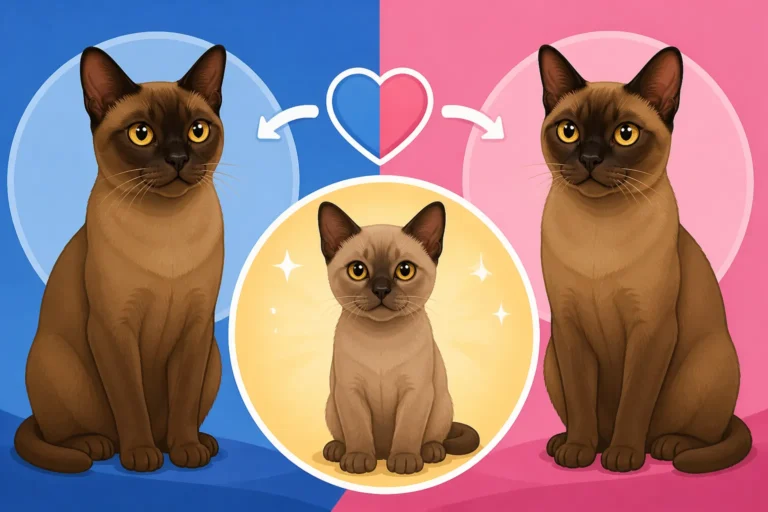
The results of this first litter were incredibly revealing, but perhaps not in the way initial expectations might have suggested. Instead of a uniform litter, the kittens displayed a surprising variety. There were kittens that looked like traditional Siamese, kittens that looked like Wong Mau, and a third type that was somewhere in between, featuring a darker body color than a Siamese but with distinct points. This genetic "mix-and-match" clearly indicated that Wong Mau herself was not genetically "pure" in the sense of being homozygous for her unique brown color. If she had been, all her kittens with a Siamese would have been uniform.
The Discovery of the Burmese Gene (cb)
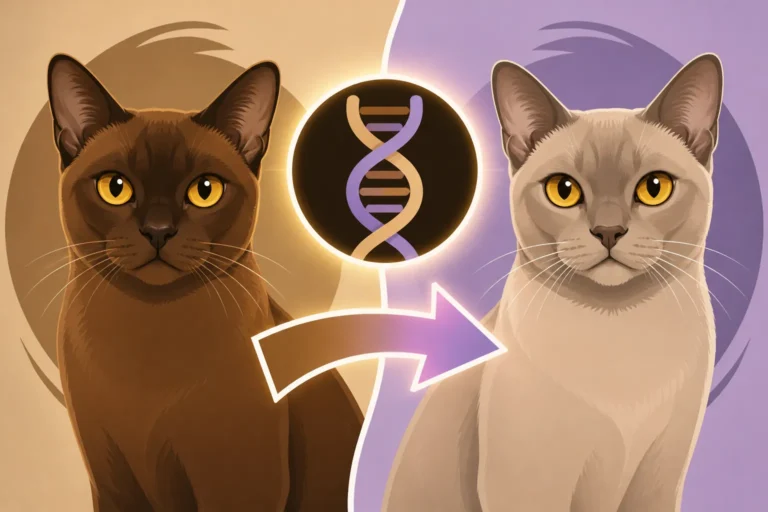
The varied kittens provided the crucial clues Dr. Thompson needed. He, along with other geneticists, deduced that Wong Mau carried two different color genes: one for the pointed pattern (like a Siamese) and another for her solid, rich brown color. This second gene, later identified as the Burmese dilution gene (cb), is what gives the Burmese its distinct coat color and pattern, known as "sepia." She was heterozygous, meaning she had one copy of the Siamese gene (cs) and one copy of the Burmese gene (cb) – making her genotype cb/cs.
This discovery was groundbreaking. It meant that what made Wong Mau unique wasn't a single, pure trait that bred true, but rather a combination of genes. Her specific brown shade, darker at the points but less extreme than a Siamese, was a result of this particular genetic pairing. The pure Burmese color, known as sable (or brown in Europe), only emerged when two cats carrying the cb gene were bred together, resulting in kittens with two copies of the cb gene (cb/cb). This genetic understanding proved vital for establishing the breed and explaining why The cb Allele Is What Makes a Burmese Brown. It also clarified that Wong Mau herself, while the source of the Burmese gene, was not phenotypically (and therefore not genetically, in the modern sense) a "purebred Burmese" in the way we understand it today.
The Genetic Legacy: Wong Mau's Influence on the Breed Standard
Even though Wong Mau wasn't "purebred" in the strictest sense, her genetic legacy is undeniable. She held the key to creating an entirely new breed, and it was through careful selection and breeding over time that the distinctive Burmese type was established and refined.
Defining the Burmese Look from Hybrid Litters
From the diverse offspring of Wong Mau and her Siamese mates, breeders began the meticulous process of selecting the kittens that exhibited the desired "Burmese" characteristics. These were the cats that had two copies of the cb gene (cb/cb), displaying the rich, even brown coloration with subtle pointing that we now associate with the Sable Burmese. They also sought a compact, muscular body type, a rounded head, and expressive gold to yellow eyes. This was the intensive work of defining a new standard from scratch.
This selection process was less about maintaining an existing "pure" line and more about creating one. Breeders had to identify and consistently reproduce the physical traits they desired, generation after generation, while weeding out the cats that looked too much like Siamese or the intermediate "Tonkinese" type. It was a challenging task, requiring keen observation and a deep understanding of the emerging genetic patterns. The perseverance of these early breeders ultimately gave us the Burmese we cherish. You can see how this all developed in What the First Burmese Litter Told Thompson.
The Role of Outcrossing in Breed Development
Establishing a new breed from a single foundation cat like Wong Mau inherently involved outcrossing. Initially, this meant breeding her to Siamese cats to understand her genetics. As the population of cats carrying the Burmese gene grew, selective breeding between these "part-Burmese" cats began. However, early breeders sometimes continued to outcross to Siamese to introduce fresh genetic material and increase the number of cats with the desired genes. This practice was a double-edged sword. While it expanded the gene pool and helped solidify the new type, it also led to complications later on, blurring the lines between true Burmese and their close relatives.
This continuous infusion of outside genes highlights why Wong Mau wasn't a "purebred" in the sense of coming from a closed stud book. Her brilliance lay in providing the unique genetic building blocks. Breeders had to then, systematically and patiently, assemble those blocks into a consistent, recognizable "purebred" entity over many generations. This careful balance between outcrossing for diversity and inbreeding for consistency is a fundamental part of establishing any new breed, and the early Burmese program was a prime example of this complex process. For example, The Bombay and the Tonkinese Came Out of the Burmese highlights how these cross-breedings led to other distinct breeds as well.
CFA Recognition and the "Three Generations Pure" Rule
The journey from Wong Mau's arrival to widespread recognition for the Burmese was not smooth. The initial excitement and rapid expansion of the breed led to a period of controversy and, ultimately, a significant turning point in its history.
Initial Recognition and Subsequent Suspension
The Cat Fanciers' Association (CFA) first granted recognition to the Burmese breed in 1936, a testament to the swift progress Dr. Thompson and other dedicated breeders made in defining the type. However, this early recognition was quickly followed by a period of turmoil. The very method used to establish the breed – outcrossing to Siamese – became its Achilles' heel. Some breeders continued to breed Burmese to Siamese or to "part-Burmese" cats, essentially creating what we now call Tonkinese cats, and registering them as Burmese. This influx of hybrid cats diluted the emerging Burmese gene pool and made it difficult to maintain a consistent breed standard.
By 1947, the situation had become untenable. CFA grew concerned about the widespread practice of registering these hybrid cats as purebred Burmese. The breed's distinct characteristics were being lost amidst a sea of cats that didn't fully conform to the desired Burmese type. As a result, CFA took the drastic step of suspending Burmese registration. This was a critical moment for the fledgling breed, signaling that purity and adherence to standard were paramount. This pivotal decision is explored in more detail in CFA Suspended the Burmese in 1947 and Took It Back.
The Path to Reinstatement: Strict Breeding Guidelines
The suspension forced breeders to re-evaluate their practices and commit to stricter standards. To address CFA's concerns and regain recognition, the Burmese breeders established stringent guidelines. The most significant of these was the requirement that only cats with "three generations pure" Burmese ancestry could be registered. This meant that a kitten could only be registered as Burmese if its parents, grandparents, and great-grandparents were all purebred Burmese cats, with no outcrosses to other breeds like the Siamese within those three generations.
This "three generations pure" rule was a monumental effort to solidify the Burmese breed and eliminate the ambiguities caused by earlier outcrossing. It ensured that future generations of Burmese would have a consistent genetic background, leading to predictable traits and a stronger adherence to the breed standard. This period was crucial for the breed's integrity, demanding patience and dedication from breeders who had to meticulously track pedigrees and selectively breed to meet these rigorous requirements. This commitment paved the way for the Burmese to be reinstated by CFA in 1956, stronger and more defined than ever. Understanding What CFA Required Before Reinstating the Burmese truly underscores the effort involved.
The Enduring Question: Was Wong Mau Truly Purebred?
Given the breed's complex history and the evolution of genetic understanding, the question of Wong Mau's "purebred" status remains a fascinating one. Her role as the progenitor is unquestionable, but her genetic makeup tells a deeper story.
The Modern Genetic Perspective
From a contemporary genetic standpoint, Wong Mau would not be considered a "purebred Burmese." We now understand that she was a hybrid, carrying one copy of the Siamese colorpoint gene (cs) and one copy of the Burmese sepia gene (cb). This made her heterozygous (cb/cs), a carrier for both traits. A truly "purebred" Burmese, by modern definition, would be homozygous for the sepia gene, meaning it would have two copies of the Burmese gene (cb/cb).
This distinction is crucial. Wong Mau's phenotype (her physical appearance) was unique, showcasing the intermediate color that initially captivated Dr. Thompson. However, her genotype revealed that she carried the potential for both Siamese and Burmese expression. It was the careful segregation and isolation of the cb/cb genotype in subsequent generations that truly established the Burmese breed as we know it. In essence, Wong Mau was the seed from which the purebred Burmese grew, rather than a fully developed purebred specimen herself. This understanding is key to appreciating the intricacies of cat genetics and breed development.
Wong Mau as the "Foundation" Rather Than "Purebred"
Instead of labeling Wong Mau as "purebred" or "not purebred," it's more accurate and respectful of her historical significance to recognize her as the foundation cat of the Burmese breed. She was the single, essential individual who carried the unique genetic mutation that, through deliberate breeding, was isolated and amplified to create a new breed. Without Wong Mau, there would be no Burmese cat. Her unique genetic contribution was the spark.
Her story is a perfect illustration of how many modern cat breeds came into existence: through the discovery of a novel genetic trait in a cat of uncertain lineage, followed by a dedicated breeding program to stabilize and perpetuate that trait. She wasn't born into a recognized "Burmese" lineage because one didn't exist; she created it. This nuanced understanding allows us to appreciate her immense contribution to the cat fancy, not as a finished product, but as the extraordinary starting point. Her significance as the genetic bedrock cannot be overstated, defining what makes a Burmese so distinct and beloved.
The Split: American and European Burmese Divergence
Wong Mau's influence didn't just stop at establishing one breed; it also subtly set the stage for the divergence of the Burmese into two distinct types: American and European. While both descend from her, their development paths led to significant differences.
How the Breeding Focuses Shifted
Following the initial establishment of the Burmese breed, geographical preferences and differing interpretations of the ideal "Burmese look" led to a divergence in breeding programs. In North America, breeders primarily focused on developing a cat with a more compact, cobby, and muscular body, often described as a "brick wrapped in silk." The head became noticeably rounder, with a shorter, broader muzzle and larger, more rounded eyes set far apart. This American Burmese type became very consistent in its appearance.
Across the Atlantic, particularly in Britain, breeders gravitated towards a slightly different aesthetic. They preferred a more elegant, svelte body with longer legs, a more refined bone structure, and a wedge-shaped head that was less extreme than a Siamese but distinct from the American ideal. The eyes were often more almond-shaped and tilted, giving a slightly different expression. These differences were not accidental; they were the result of deliberate breeding decisions, focusing on specific characteristics and selecting for them over many generations, even introducing some genetic diversity at certain points. These differing ideals cemented the How the American and European Burmese Split.
Genetic Implications of the Split
The continuous, separate breeding programs in North America and Europe, each with their own evolving standards, naturally led to genetic divergence between the two types. While both types still carry the foundational cb gene from Wong Mau that defines their sepia coloration, other polygenes affecting body structure, head shape, and eye placement began to accumulate differently within each population. This created distinct gene pools, making it challenging, and often undesirable, to interbreed American and European Burmese today, as their standards are quite distinct.
Today, many cat registries recognize these two types as separate, often referred to as the "Burmese" (American type) and the "European Burmese." This formal separation underscores just how much they have evolved from their common ancestor, Wong Mau. While a pet owner might simply see a beautiful cat, a breeder understands the profound genetic and phenotypic differences that have developed over decades of selective breeding. These separate trajectories mean that if you're looking for cat supplies, like specialized food or grooming tools that cater to specific coat types or dietary needs, you might consult retailers like Chewy, which offers a wide selection that can accommodate the nuances of either type. Or if you want to find an enriching cat tree, Chewy offers plenty of options that suit the Burmese's muscular build, preventing any potential injuries.
Understanding the Burmese Cat: A Comparison
To help clarify the nuances of Wong Mau's status and the development of the breed, here's a comparison of what "purebred" means in a modern context versus Wong Mau's role as a foundation cat.
| Feature | Modern Purebred Burmese (cb/cb) | Wong Mau (Foundation Cat, cb/cs) |
|---|---|---|
| Genetic Makeup | Homozygous for Burmese (sepia) gene (cb/cb) | Heterozygous for Burmese (sepia) and Siamese (colorpoint) genes (cb/cs) |
| Phenotype | Rich, even sable (brown) coat, distinct from Siamese | Unique intermediate brown, darker than Siamese but not sepia-pure |
| Ancestry | Documented pedigree of multiple generations of Burmese | Origin from Burma, assumed to be a natural landrace cat, no known pedigree |
| Breeding Outcome | Breeds true for Burmese color and type when bred to another cb/cb | Produced Siamese, Tonkinese, and Burmese types when bred to Siamese |
| "Purebred" Status | Fully recognized as a purebred breed | The progenitor; not "purebred" by modern definition but essential to the breed's creation |
| Purpose in Breeding | To perpetuate and refine the established breed standard | To introduce and identify a novel genetic trait for a new breed |
This table clearly illustrates that while Wong Mau was the source of the Burmese gene, she was not the "purebred Burmese" in the way we now define it. She was, in fact, more like an invaluable genetic Rosetta Stone, containing the key to unlock a beautiful new breed. For new Burmese owners looking for supplies, remember that whether you have an American or European type, finding quality products is key. Websites like Chewy can be a great resource for everything from specialized low-carb foods (important for a diabetes-prone breed) to engaging toys that suit their playful nature. When setting up your home for a new kitten, Chewy offers a wide range of starter kits and essentials to ensure your new companion thrives.
Disclaimer
This article is for general informational purposes only and does not constitute professional advice. Laws, prices and regulations vary by location and change over time. Consult a qualified professional for guidance on your specific situation.