When CFA First Recognized the Burmese
It’s easy to get tangled up in the long and storied history of many beloved cat breeds, and the Burmese is certainly no exception. When you're trying to trace the roots of your favorite velvet-pawed companion, especially concerning its official standing in the cat fancy, the details can feel a bit like a historical treasure hunt. This guide will meticulously unravel the path of the Burmese cat, focusing specifically on its journey to official recognition by the Cat Fanciers' Association (CFA) in America, exploring the initial excitement, the unexpected roadblocks, and the triumphant return to the show ring.
The Humble Beginnings of the Burmese in America
Every great cat breed has an origin story, and the Burmese is particularly fascinating because it traces back to a single, captivating feline. Imagine a time before the widespread understanding of feline genetics, when a cat appearing truly unique could spark a revolution in the cat fancy. That's exactly what happened with the Burmese.
Wong Mau's Arrival and Dr. Thompson's Vision
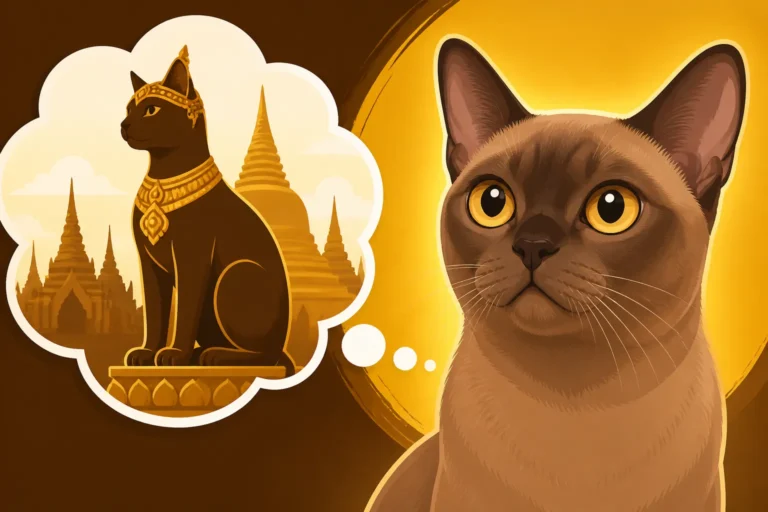
The tale truly begins in 1930, when a striking brown cat, reportedly from Burma (modern-day Myanmar), arrived in San Francisco. This beautiful creature, named Wong Mau, caught the keen eye of Dr. Joseph C. Thompson, a retired U.S. Navy medical psychologist and a dedicated cat enthusiast. Wong Mau wasn't like the known Siamese or other breeds of the time; she possessed a unique, warm brown coat and a distinct body type that immediately intrigued Thompson. He recognized her potential to be something entirely new. You can read more about Dr Joseph Thompson and the Burmese He Bought in 1930 to understand his pivotal role. At this point, no one was quite sure if Wong Mau was a purebred example of an existing, undocumented breed, or a natural hybrid. The sheer uniqueness of her appearance, with that deep sable color and muscular build, hinted at a special genetic makeup that begged to be explored.
The Siamese Connection and Early Litters
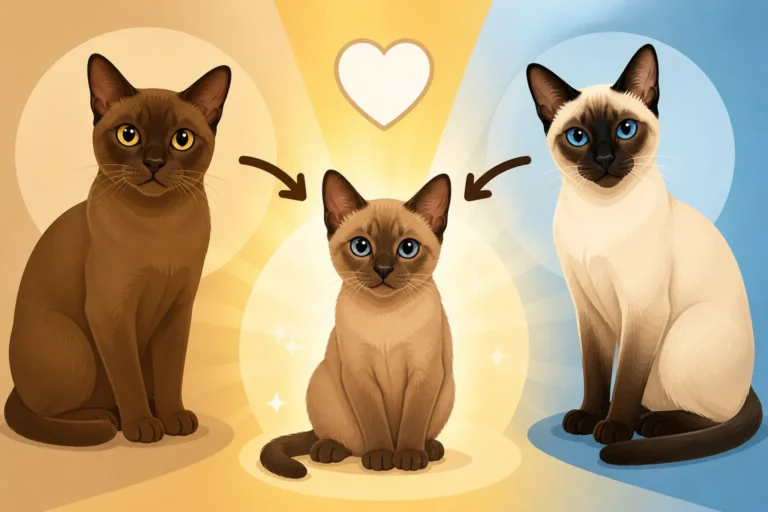
To understand Wong Mau's genetic contribution, Dr. Thompson embarked on a deliberate breeding program. His crucial decision was to breed Wong Mau to a Siamese cat, a breed known for its distinctive point coloration and vocal personality. This pairing was not arbitrary; it was a scientific experiment designed to reveal the genetic underpinnings of Wong Mau's unique appearance. The results were revelatory. The first litter produced kittens that were clearly Siamese, others that looked like Wong Mau herself, and some that were an intermediate color, later recognized as Tonkinese. This demonstrated that Wong Mau carried genes for both the full color typically seen in domestic cats and the point coloration of the Siamese, but in a modified form. This intermediate gene, the cb allele, is what gives the Burmese its signature warm, rich brown coat, where the body is darker than a Siamese but lighter than a solid brown cat. It was a clear indication that a new breed, distinct from both the Siamese and the emerging Tonkinese, was truly taking shape. For a deeper dive into the genetics, check out The cb Allele Is What Makes a Burmese Brown and Why the First Burmese Was Bred to a Siamese.
CFA's Initial Embrace and the Groundbreaking Research
The novelty and beauty of the Burmese quickly captured the attention of the wider cat fancy, leading to its rapid acceptance by the premier cat registering body in the United States.
Early Recognition and Breed Standard Development
Following Dr. Thompson's successful breeding program and the establishment of distinct characteristics, the Cat Fanciers' Association (CFA) recognized the Burmese as a distinct breed. This momentous recognition occurred in 1936, a mere six years after Wong Mau's arrival. It was a testament to the compelling and unique traits that the Burmese exhibited. Enthusiasts and breeders alike were thrilled to have a new, fascinating breed to champion. The initial breed standard, largely influenced by Thompson's observations and goals, described a cat of medium size with a compact body, a short, fine, satin-like coat, and those mesmerizing gold or yellow eyes. This early recognition allowed Burmese cats to be officially registered and shown in championships, paving the way for its burgeoning popularity. To learn more about the very first cat of this breed, you can look up The Burmese Began With One Cat Called Wong Mau.
The Scientific Approach to Burmese Genetics
What set the Burmese apart from many other emerging breeds of its time was the scientific rigor applied to its development. Dr. Thompson, with his background in psychology and a meticulous approach, collaborated with geneticists, particularly Dr. Clyde E. Keeler and Dr. Gordon Davis of Harvard Medical School. This collaborative effort made the Burmese one of the first, if not the first, cat breeds to be extensively studied through genetic principles. Their research helped to prove that Wong Mau was not merely a variant of an existing breed but a foundation animal for a genuinely new genetic type. The detailed analysis of her progeny confirmed the recessive nature of the Burmese brown gene and its interaction with the Siamese gene. This scientific validation gave the Burmese a strong, credible footing in the cat fancy, differentiating it from breeds developed purely through selective breeding without such a deep genetic understanding. This early emphasis on genetic understanding continues to influence responsible breeding today, often seen in the array of quality products available from suppliers like Chewy, who support healthy pet care.
The Unexpected Suspension of Burmese Registration
Just as the Burmese seemed to be on a clear path to widespread acclaim, a significant setback occurred. The very enthusiasm that propelled its initial recognition also led to practices that threatened its genetic integrity.
The Influx of Siamese Hybrids and Pedigree Concerns
The popularity of the Burmese unfortunately led to some shortcuts in breeding practices. Not all breeders were as meticulous or genetically informed as Dr. Thompson. Some, eager to produce more Burmese kittens quickly, began to outcross indiscriminately with Siamese cats, or even worse, were breeding the intermediate "Tonkinese" types back into Burmese lines. The problem was that the Burmese gene (cb) is recessive to the full-color gene (C) and co-dominant with the Siamese gene (cs). Breeding a Burmese (cbcb) with a Siamese (cscs) produces only Tonkinese (cbcs) kittens. To get more Burmese kittens, these Tonkinese would then need to be bred together, or back to a Burmese, but some breeders were just registering these Tonkinese or even first-generation hybrids as Burmese. This led to "Siamese hybrids flooding Burmese registration," blurring the lines of purity and making it difficult to ascertain whether a registered Burmese cat was truly representative of the distinct breed characteristics or simply a hybrid. It was a serious issue, as the unique type and temperament that Dr. Thompson had so carefully established were being diluted.
CFA's Strict Response in 1947
Concerned about the integrity of the breed and the consistency of its type, the CFA took decisive action. In 1947, just over a decade after its initial recognition, the CFA suspended Burmese registration. This was a dramatic and unprecedented move, but it underscored the association's commitment to maintaining breed standards. The CFA objected strongly to the presence of Siamese traits, such as longer bodies, wedge-shaped heads, and lighter eye colors, appearing in cats registered as Burmese. Their primary concern was that many cats being registered as Burmese were not "true-breeding," meaning they couldn't consistently produce kittens that conformed to the established Burmese standard when bred to another Burmese. The suspension was a clear message: the breed needed to be purified and its genetic distinctiveness re-established. They imposed a strict requirement: breeders needed to demonstrate "three generations pure" of Burmese-to-Burmese breeding, with no Siamese or other breed influence, to ensure that only true Burmese were being registered. This critical period is detailed further in Why CFA Suspended Burmese Registration.
The Road to Reinstatement and Renewed Purity
The suspension was a wake-up call for Burmese breeders, forcing them to re-evaluate their practices and commit to the breed's genetic purity.
Meeting the Three Generations Pure Mandate
The CFA's mandate for "three generations pure" was a significant challenge for breeders. It meant that every cat in a pedigree, going back three full generations, had to be a pure Burmese, demonstrably free of Siamese or other outcross influences. This required meticulous record-keeping, careful selection of breeding partners, and sometimes waiting for several generations to pass before a cat could be registered. Breeders had to actively seek out and utilize individuals who consistently produced true Burmese type. This period involved a dedicated effort to stabilize the gene pool and reinforce the distinct physical characteristics of the Burmese. It demanded patience, scientific understanding, and an unwavering commitment to the breed's original vision. Breeders who persevered during this time laid the foundation for the strong, consistent Burmese lines we appreciate today, proving that a dedicated approach, much like selecting the right nutritional food from a trusted source like Chewy, leads to the best outcomes. You can find more details on this crucial requirement in What Three Generations Pure Meant for the Burmese.
The Resumption of Registration in 1956
The efforts of these dedicated breeders eventually paid off. After nearly a decade of suspension, the CFA was satisfied that the Burmese breed had been successfully re-established with genetic integrity and consistent type. In 1956, the CFA officially resumed registering the Burmese for championship status. This was a triumph for the breed and for the breeders who had worked tirelessly to meet the stringent requirements. Three specific cats were instrumental in proving the breed's purity and consistent type to the CFA: Grand Champion Casa Gatos' Golden Lotus, Grand Champion Lynn-Lee's Lotus Bud, and Grand Champion Mingrou's Tali. Their pedigrees and consistent progeny demonstrated that the Burmese was once again a true-breeding and distinct feline. This reinstatement marked a new chapter for the breed, allowing it to re-enter the show halls and regain its momentum. The full story of this return to grace can be explored in When the Burmese Was Registered Again.
The Legacy of CFA's Early Decisions
The turbulent early history of the Burmese, particularly its suspension and reinstatement by the CFA, had a profound and lasting impact on the breed's development and its place in the cat fancy.
Shaping the American Burmese Type
The strict requirements enforced by the CFA during the suspension period played a critical role in solidifying the American Burmese type. Breeders were compelled to focus on maintaining a distinct look, emphasizing the short, rounded muzzle, the round head, and the compact, muscular body that are hallmarks of the American standard. This rigorous selection process inadvertently led to a divergence in type from the Burmese being developed in other parts of the world, particularly in Britain. While American breeders were refining their cats based on these specific ideals, British breeders were heading in a slightly different direction, resulting in what would eventually be recognized as the European Burmese. This historic split is a fascinating aspect of the breed's history, and you can learn more about it in How the American and European Burmese Split. The American Burmese, with its distinctive "brick wrapped in silk" physicality, owes much of its iconic appearance to this period of intense scrutiny and refinement.
The Importance of Pedigree and Genetic Health
The entire episode of the CFA suspension hammered home the vital importance of accurate pedigree records and responsible breeding practices. It taught breeders a valuable lesson about the dangers of indiscriminate outcrossing and the necessity of understanding genetic principles to maintain breed purity and health. Today, reputable Burmese breeders continue to prioritize genetic health testing and meticulous pedigree analysis to prevent hereditary diseases. This commitment ensures the long-term well-being of the breed. For example, understanding a cat's lineage can help predict potential health issues like diabetes susceptibility, which is more prevalent in Burmese cats. Knowing this, many owners proactively manage their cat's diet and healthcare, often sourcing specialized foods or supplements through reliable pet suppliers like Chewy. This historical precedent established a foundation for responsible breeding that continues to guide the cat fancy, ensuring that future generations of Burmese cats are as healthy and true to their heritage as possible. It also emphasizes why a potential owner should always inquire about a kitten's full DNA panel and lineage.
CFA Recognition Timeline for the Burmese Cat
To give you a clearer picture, here's a quick timeline of the key events regarding the CFA's recognition of the Burmese:
| Year | Event | Significance |
|---|---|---|
| 1930 | Wong Mau arrives in San Francisco | Foundation cat for the Burmese breed. |
| 1936 | CFA grants initial recognition | Burmese officially recognized as a distinct breed for championship status. |
| 1947 | CFA suspends Burmese registration | Due to widespread outcrossing with Siamese and inconsistent breed type. |
| 1956 | CFA reinstates Burmese registration | After breeders successfully demonstrated three generations of pure breeding. |
This table highlights the journey and challenges faced by the Burmese cat in establishing its place in the feline world.
Disclaimer
This article is for general informational purposes only and does not constitute professional advice. Laws, prices and regulations vary by location and change over time. Consult a qualified professional for guidance on your specific situation.