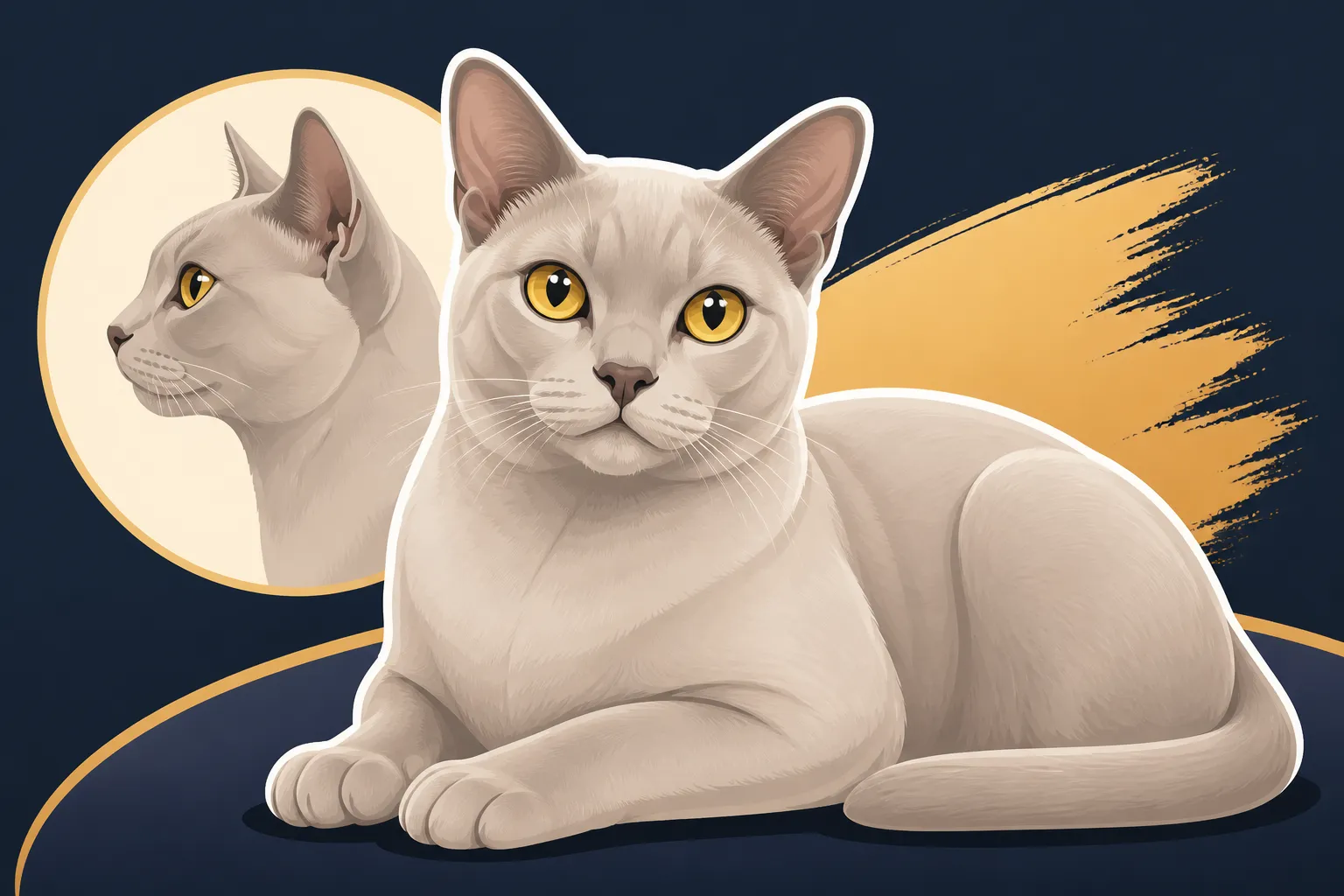
What a Platinum Burmese Looks Like
A platinum Burmese can look almost silver in bright daylight, then reveal a soft, warmer gray indoors. That subtle shift often leaves people wondering whether they’re seeing a true platinum Burmese or simply a pale blue cat. This guide explains the color, coat pattern, eyes, and build to look for—and why photos can make the shade misleading.
The platinum Burmese coat and its subtle shading
The main shade is pale silver-gray
Platinum is a soft, pale gray color with a light fawn or warm beige cast. Depending on the cat and the lighting, the coat may appear silvery, dove-gray, or gently lavender-toned. It should look even and smooth overall, rather than sharply divided into a pale body and dark points.
The color can be surprisingly hard to judge in a single photograph. Cool daylight may make a platinum Burmese look almost silver-white, while warm indoor bulbs can bring out beige or taupe undertones. A phone camera may also alter the shade through automatic exposure and color correction. If you’re comparing cats, try to view pictures taken in natural light and consider the whole coat rather than focusing on one bright patch.
The word “platinum” refers to the recognized coat color, not a separate Burmese breed. It is one of the four familiar colors in the American Burmese: sable, champagne, blue, and platinum. To see how the coat fits into the breed’s overall appearance, compare it with What a Burmese Looks Like Against the Standard.
The points are shaded, but not sharply pointed
A platinum Burmese may have slightly deeper shading on the face, ears, legs, and tail. The shift is usually subtle. Unlike a Siamese, which has a clear contrast between a light body and darker extremities, a Burmese has a more blended, shaded appearance across the coat. The overall effect is closer to a single soft color than a dramatic point pattern.
That difference can be confusing if you’re looking at a kitten or a heavily edited image. A shaded face may look like a mask in some lighting, but the coat should not form a sharply outlined dark “mask” against a very pale body. The coat’s gentle transitions are part of the Burmese look. For a closer comparison, Why a Burmese Is Not a Solid Colored Cat explains how the breed’s color can vary across the body without resembling a pointed pattern.
Here’s a simple way to compare the four recognized American Burmese colors:
| Color | General appearance | Typical impression |
|---|---|---|
| Sable | Rich, deep brown | Dark and warm |
| Champagne | Warm beige to honey-brown | Lighter and golden |
| Blue | Medium blue-gray | Cool and softly shaded |
| Platinum | Pale silver-gray with fawn undertones | Light, muted, and sometimes lavender-toned |
Color descriptions are useful guides, not guarantees that every cat will look identical. Individual coats, lighting, age, and the way a photograph is processed can all change how a shade appears.
How to recognize a platinum Burmese in person
Look at the coat in more than one kind of light
If you’re trying to identify a platinum Burmese, check the coat near a window in indirect daylight. Avoid judging color under a strong lamp, a colored blanket, or a phone filter. Then look at the cat in the room’s ordinary light. A true coat color should still read as a pale, cool gray overall, even if its warmer undertones become more noticeable indoors.
Look at several areas: the back, shoulders, sides, face, and tail. A platinum Burmese may show some natural shading, but it should not have patches of unrelated color or a coat that appears dramatically darker at the ends. If one area looks very different from the rest, ask whether the image was taken in unusual lighting or whether the cat has a coat condition that merits a veterinary check.
A young cat’s shade can change as it grows, so a kitten’s current appearance may not tell the whole story. Burmese kittens are often paler when young, and their adult coat color develops over time. Why a Burmese Kitten Is Born Paler Than It Ends Up and When a Burmese Kitten's Color Settles offer more detail on that gradual change.
Notice the nose leather and paw pads as supporting clues
The nose leather and paw pads can help you assess the overall color, but they shouldn’t be used alone to identify a cat. Platinum Burmese often have softly colored nose leather and paw pads that complement the pale coat, with a pinkish-lavender or muted mauve impression. Exact shades can vary, and photographs can make these small details especially difficult to judge.
A quick look at a kitten’s nose or pads is not a substitute for reliable breed information. If you’re choosing a kitten, ask the breeder what color is recorded in the pedigree and which registry the cat is registered with. Clear paperwork and a consistent family history are more dependable than a label in an online advertisement. How a Burmese's Color Is Registered explains why the recorded color and registry matter.
Eye color can also provide context. Burmese eyes are generally expected to fall within yellow-to-gold shades, although the precise appearance varies. A green-looking eye in a photograph may be affected by reflections, lighting, or camera processing, so don’t make a decision from one image alone. For the breed’s eye-color expectations, see Which Eye Color a Burmese Should Have.
The Burmese shape beneath the pale coat
A platinum Burmese is compact and muscular
Coat color is only one part of the picture. A Burmese is a compact, muscular cat with a rounded overall impression and a short, close-lying coat. The body can feel heavier than it looks when you lift the cat, because a Burmese often carries substantial muscle for its size. That dense build is one reason people describe the breed as a “brick wrapped in silk.”
A platinum coat may make the body look softer or more delicate than it is. Pale color can visually blur the outline of the muscles, especially in bright photographs. In person, look for a sturdy body, a rounded head shape, and a smooth coat that lies close to the skin rather than standing away from it. The breed’s appearance should feel cohesive: the light coat doesn’t change the Burmese’s solid, athletic build.
It’s also easy to mistake healthy muscle for extra weight—or to miss weight gain beneath a broad body. A cat’s silhouette alone is not a reliable way to assess body condition. Your veterinarian can help you judge whether a Burmese is at a healthy weight. For context on the breed’s unexpectedly solid build, see Why a Burmese Is Heavier Than It Looks.
The short coat makes the color easy to see
The Burmese coat is short, glossy, and close to the body. Because it has little length to obscure the underlying shade, the platinum color is visible across the cat’s outline instead of being hidden beneath a fluffy topcoat. When the coat is in good condition, light can give it a smooth, satin-like sheen.
This short coat is generally straightforward to maintain. A gentle hand or soft grooming tool can help remove loose hairs and keep the coat looking tidy, but vigorous brushing is rarely needed. If you’re shopping for a grooming glove or a soft brush, check the product description for gentle materials and suitability for short-haired cats. Chewy may be one place to compare options, but choose based on the tool’s design and your cat’s comfort rather than the product label alone.
A grooming session can also be a chance to notice changes that have nothing to do with color: flaky skin, bald patches, sores, or a sudden dullness in the coat. Those signs are not proof of a serious problem, but they are worth discussing with a veterinarian, particularly if they persist. If you use wipes or grooming products purchased through a retailer such as Chewy, confirm that they are made for cats and avoid applying anything near the eyes unless its directions specifically allow it.
Why platinum Burmese photos can be misleading
Camera settings and surroundings alter the shade
A pale gray coat is particularly vulnerable to camera distortion. Against a dark sofa, the cat may look lighter than it does in person. Against a white wall, the camera may darken the coat to balance the image. Warm household lights can make platinum look beige, while cool daylight may exaggerate its silvery appearance.
Background colors can influence your perception, too. A cream blanket may make the coat seem cooler; a blue cushion can make it look warmer by comparison. When a seller or breeder shares photos, ask for a few ordinary, unfiltered images in different settings. A brief video can help as well, because you can see how the shade changes as the cat moves through the light.
If you are comparing a platinum Burmese with a blue Burmese, look for the overall tone rather than expecting a perfect visual test from a screen. Platinum is commonly described as paler and more muted, with fawn undertones, while blue tends to read as a deeper blue-gray. But the distinction may be subtle in a photograph, so confirm the cat’s recorded color with its breeder or registry.
Age and temperature can influence coat appearance
Burmese coat color can deepen or shift as a kitten matures. The change is gradual, and the adult coat may not match the first photographs you saw. Temperature-sensitive coloration is also part of the Burmese color story: cooler areas of the body can develop more pigment, which may contribute to gentle shading. That doesn’t mean every platinum cat will show the same pattern or change at the same pace.
This is another reason to be cautious about promises based on a kitten’s early photos. Ask to see pictures of adult cats from the same line, if available, and ask how the breeder identifies the kitten’s color. It’s reasonable for a breeder to explain that a young cat’s shade will develop, but the answer should still be clear about the recorded color and the uncertainty of predicting an exact adult appearance.
Platinum should not be confused with a coat that has suddenly become dull, patchy, or unusually discolored. Changes in coat condition can come from grooming, nutrition, skin irritation, or other health concerns. If the coat changes abruptly or the cat is scratching, losing hair, or showing sore skin, contact a veterinarian rather than assuming it is simply normal color development.
Questions to ask when choosing a platinum Burmese
Confirm the color and breed details
If you’re considering a kitten, ask the breeder to identify the cat’s color and explain how it is recorded. Ask which registry appears on the pedigree and whether the parents’ information is available. A photo can show you the kitten’s current appearance, but paperwork and a breeder’s explanation help establish how the cat is classified.
It’s also useful to ask whether the kitten is an American or European Burmese. The two types have different breed histories and standards, and registry terminology can vary. Don’t assume that “platinum” means precisely the same thing in every advertisement. Clarifying the type, registry, and recorded color helps prevent confusion before you make a commitment. For more on the distinction, see How the American and European Burmese Split.
Finally, ask for unedited photos in natural light and, if possible, a short video. A responsible conversation should make room for ordinary questions about the kitten’s appearance, health, and care. If the seller relies only on heavily filtered photos or uses vague color descriptions without explaining the cat’s background, it’s sensible to slow down and ask for clarification.
Choose care products for the cat, not the coat label
A platinum Burmese does not need special whitening shampoo or color-enhancing products to look correct. The goal is a clean, comfortable cat with healthy skin and a coat that lies smoothly. A soft grooming glove or chamois may be enough for routine coat care, depending on what the cat enjoys. Chewy and other pet retailers offer many grooming choices, so read descriptions carefully and avoid tools designed for heavy shedding if they seem too harsh for a close-lying coat.
The same care goes for eye-corner or face cleaning. Use a clean, damp cloth when needed and be gentle; don’t apply human cosmetics, dyes, or products intended to change the coat’s appearance. If the eyes are persistently watery, crusted, or irritated, ask your veterinarian what is causing it instead of trying to conceal the symptom. A retailer such as Chewy can help you locate basic cat-care supplies, but health concerns call for veterinary guidance.
A platinum Burmese is best recognized by the combination of a pale, softly shaded silver-gray coat, a short glossy texture, the breed’s sturdy build, and appropriate breed documentation. The shade may look cooler or warmer from one room to another, and a kitten’s coat can deepen with age. If photos leave you unsure, natural light, unfiltered images, and clear pedigree information are more useful than trying to identify the color from one snapshot.
Disclaimer
This article is for general informational purposes only and does not constitute professional advice. Laws, prices and regulations vary by location and change over time. Consult a qualified professional for guidance on your specific situation.