Why the Bombay Was Bred From a Burmese
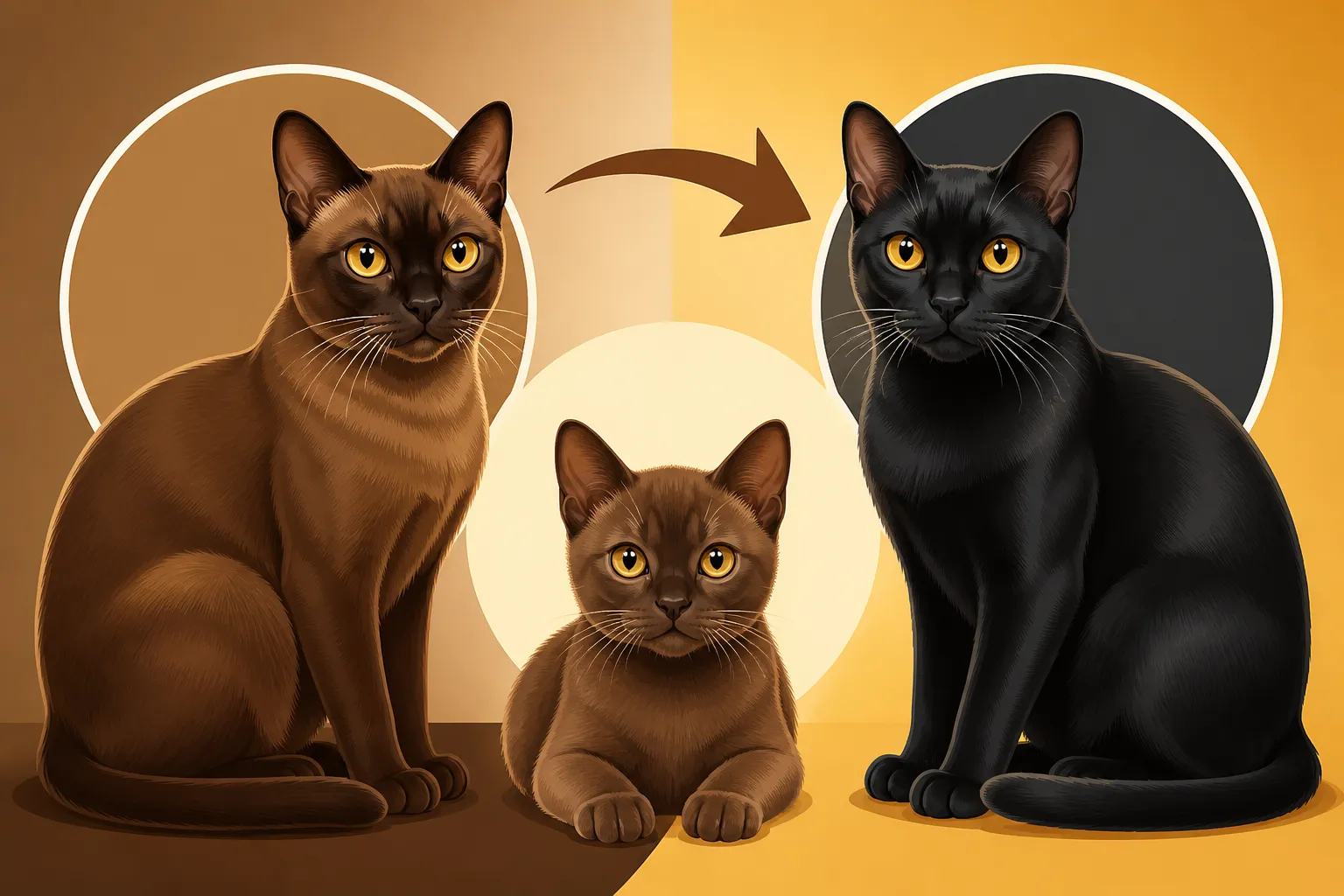
A Bombay can look like a Burmese dressed in a glossy black coat, so it is natural to wonder why the breed was developed from Burmese cats in the first place. The answer lies in a breeder’s specific goal: creating a companion cat with the appearance of a miniature black panther. Here’s how that idea took shape and what the Burmese contributed.
The idea behind breeding the Bombay
A miniature black panther was the goal
The Bombay was developed in the United States by breeder Nikki Horner, who wanted to create a domestic cat with the dramatic look of a black panther and the friendly, people-oriented nature associated with Burmese cats. The name “Bombay” evokes India and its black leopards, but the breed’s modern development is generally linked to Horner’s breeding program in Louisville, Kentucky—not to a historic cat breed from Bombay, now Mumbai.
The goal was more specific than simply producing black kittens. Horner was working toward a consistent combination of features: a sleek black coat, bright copper-toned eyes, a compact and muscular body, and an affectionate temperament. A black cat from an ordinary mixed litter might have some of those traits, but a breed is shaped by generations of selective breeding toward a recognizable standard.
That distinction helps explain why the Bombay was bred from a Burmese rather than developed from black cats alone. The Burmese offered a foundation for the body type and character Horner wanted, while black American Shorthairs contributed the dark coat color. The Bombay became its own planned breed, not just a black-colored version of the Burmese.
Why a Burmese was a useful foundation
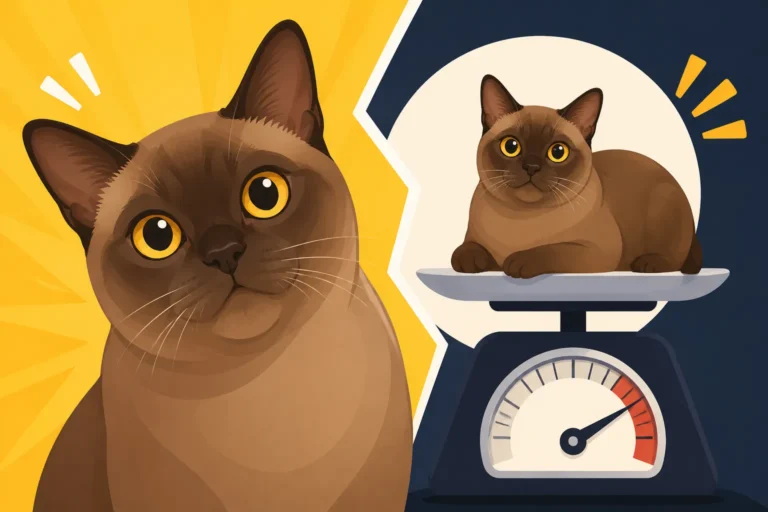
Burmese cats are compact, muscular, and surprisingly heavy for their size. Their build gave breeders a useful starting point for the Bombay’s sturdy, rounded appearance. The Burmese also has a short coat that lies close to the body, a quality that fits the Bombay’s sleek, polished look.
Temperament was another important part of the plan. Burmese cats are often notably social and people-focused. While no breed can guarantee an individual cat’s personality, that characteristic made the Burmese an appealing contributor to a project aimed at producing a companion cat as well as a striking-looking one. A panther-like appearance alone would not have fulfilled the breeder’s vision if the cats were also meant to be engaging household companions.
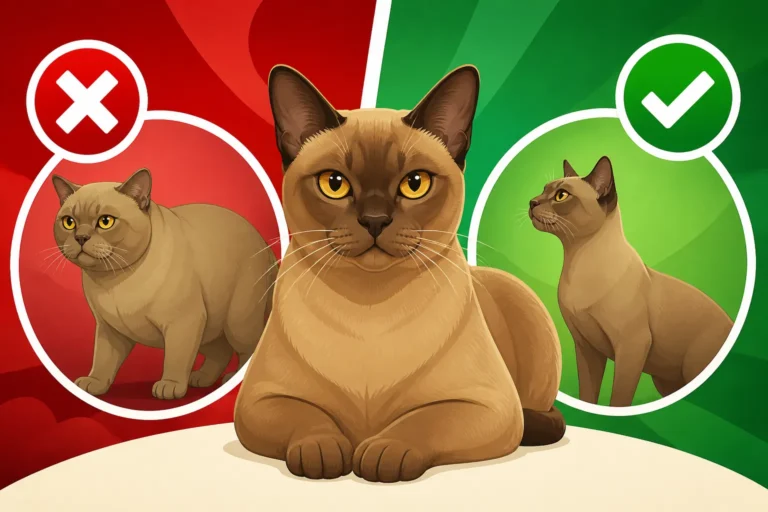
The Burmese color itself is not black. In the American Burmese standard, familiar colors include sable, champagne, blue, and platinum. You can see how that coat and body type differ in What a Burmese Looks Like Against the Standard and What a Sable Burmese Looks Like. The Bombay project used Burmese ancestry for selected qualities, while pursuing a different coat color and overall breed identity.
How the breeding program combined Burmese and American Shorthair cats
Two breeds contributed different traits
The classic description of the Bombay’s development is a cross between sable Burmese cats and black American Shorthairs. The two breeds offered complementary starting points: the Burmese contributed its compact build and social character, while the black American Shorthair contributed a source of black coat color.
That does not mean every kitten from an early cross looked exactly like the Bombay people recognize today. Early-generation crosses can vary in appearance, and breeders need to select cats that best match their aims before breeding onward. Over time, that selection helps make traits more predictable. The process is not a one-litter makeover; it is a sustained breeding program.
It is also useful to distinguish the project’s historical foundation from how a modern breed is maintained. Once a breed has been established and accepted by a registry, breeding practices are shaped by its rules and standards. The Bombay is not simply produced by pairing any Burmese with any black cat. Responsible breeding involves pedigrees, health considerations, and attention to the traits expected of the breed.
| Breed or population | Contribution to the Bombay project | What that means for the finished breed |
|---|---|---|
| Burmese | Compact, muscular build and a social companion-cat background | Helps explain the Bombay’s sturdy appearance and people-oriented reputation |
| Black American Shorthair | A source of black coat color | Helped establish the Bombay’s distinctive black coat |
| Selectively bred Bombay cats | Consistency across generations | Made it possible to develop a recognizable breed with its own standard |
Why the Bombay’s black coat is more than a color choice
The Bombay’s black coat is central to its appearance, but the breed is not defined by color alone. A cat’s overall look comes from the combination of coat, body, head, eyes, and other traits. Breeders select for a cohesive appearance rather than treating “black” as the only requirement.
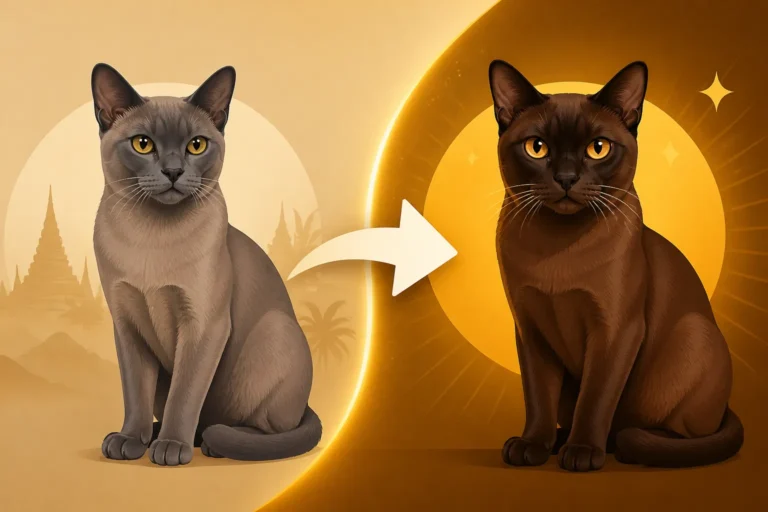
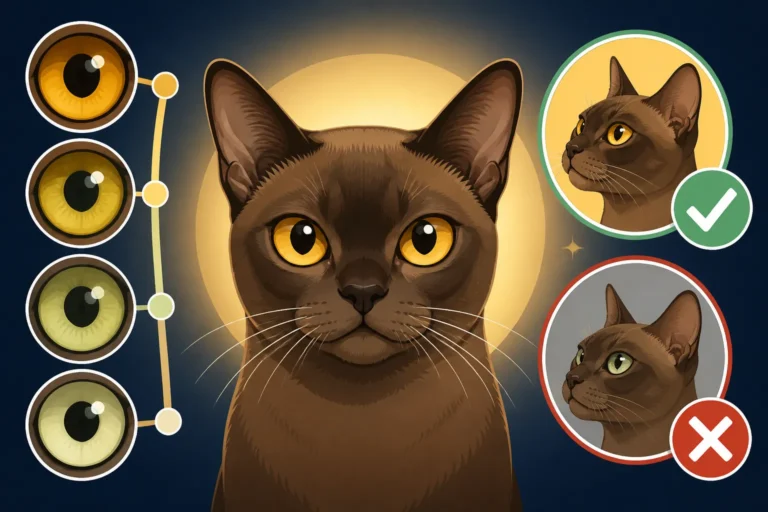
This is one reason the Bombay is not interchangeable with a black Burmese. Burmese cats have their own standards and color range; the Bombay has a different target appearance, including a close-lying black coat and copper or gold-toned eyes. For a closer look at the visual distinction, see How a Bombay Differs From a Black Burmese.
The Burmese color gene also works differently from a simple “paint the cat black” idea. Burmese coloration is associated with the cb allele, which affects pigment and can create the breed’s characteristic color. That is part of why Burmese cats are not simply solid-colored cats in the usual sense; What the cb Allele Does to a Burmese's Color and Why a Burmese Is Not a Solid Colored Cat explain the distinction. The Bombay’s black coat and the Burmese’s color pattern should not be confused just because the breeds share ancestry.
How the Bombay became a distinct breed
Selective breeding created a recognizable type
A deliberate cross is only the beginning of breed development. Breeders must continue choosing cats that match the desired traits, while avoiding the assumption that every kitten will inherit the same combination. A consistent breed type emerges over generations as breeders make choices about which cats are suitable for future breeding.
For the Bombay, the target was a black cat with a sleek, close coat, a rounded overall impression, and a solid, muscular body. Its eyes add an especially noticeable contrast. The Burmese influence can be seen in the breed’s compactness and physical presence, but the Bombay’s standard is its own.
That is why a cat’s ancestry alone does not settle how it should be described. A Bombay is a recognized breed with a distinct identity, while a black Burmese remains a Burmese if it fits that breed’s lineage and standard. The two may share some traits and have historical ties, but they are not simply two names for the same cat.
Breed standards matter more than a quick visual guess
People often try to identify a breed by coat color or face shape alone. That can be misleading. A glossy black cat might be a Bombay, a domestic shorthair, or another cat with a different background. Likewise, a Burmese may look compact and polished without being a Bombay.
Breed standards provide a structured way to describe the desired appearance, but even they do not make a photograph or a casual glance a reliable substitute for pedigree information. If you are considering a kitten advertised as a Bombay, ask about its pedigree and the registry documentation available. If you are simply curious about how breeds compare, the relevant distinction is that the Bombay was developed using Burmese cats but was not intended to be a black Burmese.
The contrast is especially clear when you compare coat expectations. Burmese standards recognize specific colors, as outlined in Which Colors CFA Accepts in a Burmese. Burmese ancestry also connects to other breed histories: for example, the Tonkinese developed from Burmese and Siamese ancestry, but it has a different appearance and standard. How a Burmese Differs From a Tonkinese offers a useful comparison.
What the Bombay’s Burmese ancestry means for owners
Shared ancestry does not make the breeds identical
The Burmese connection helps explain why the Bombay is often described as affectionate, people-oriented, and solidly built. But breed tendencies are not promises. A cat’s personality develops through genetics, early socialization, health, and its day-to-day environment. Two cats from the same breed can have noticeably different preferences.
If you are choosing between a Bombay and a Burmese, think beyond the coat color. Consider the temperament and care needs of the individual cat, and ask the breeder or rescue about that cat’s behavior, medical history, and daily routine. A black coat may draw you in, but it cannot tell you whether the cat enjoys being handled, wants constant company, or prefers a quieter home.
The historical relationship also does not mean that every Bombay has the same proportion of Burmese ancestry or that all cats with Burmese ancestry should be called Bombays. The breed name refers to a specific identity, not a general look. Pedigree and breeding history are more useful than appearance alone when you want to understand where a cat comes from.
Practical care matters more than the breed’s origin story
For everyday life, the Bombay’s coat is relatively straightforward to care for: a short, close coat generally needs routine grooming rather than elaborate styling. Regular attention to weight, dental health, play, and veterinary checkups matters more than trying to reproduce the polished look seen in breed descriptions.
If you are organizing supplies for a new cat, a retailer such as Chewy can be one place to compare basic items like litter, food storage, and grooming tools. That is separate from deciding whether a cat is truly a Bombay; product listings cannot establish a cat’s breed or pedigree. Chewy may also help owners compare everyday cat-care supplies, but food choices should be made with the cat’s age, health, and veterinary advice in mind.
For someone bringing home a Bombay or Burmese, it is sensible to make a quiet adjustment space, set up food and water separately from the litter box, and let the cat approach new people at its own pace. Chewy is one option for browsing routine supplies, while a veterinarian and the cat’s breeder or rescue are better contacts for individualized health and transition questions. The breed’s history explains how the Bombay came to be; attentive care is what helps an individual cat settle and thrive.
Disclaimer
This article is for general informational purposes only and does not constitute professional advice. Laws, prices and regulations vary by location and change over time. Consult a qualified professional for guidance on your specific situation.