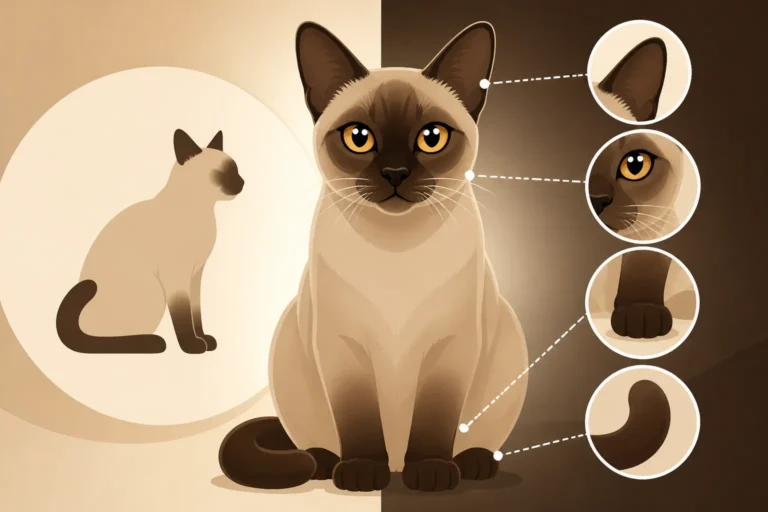
Whether a Burmese Suits Someone Who Works Away
A Burmese can be a wonderful companion, but a long commute or full workday may leave this people-focused cat with too little company. This guide explains when a Burmese can manage while you work away, what support makes the arrangement kinder, and when a different routine—or another pet—may be a better fit.
Why a Burmese May Find a Workday Difficult
Company matters more than square footage
Burmese cats are often strongly people-oriented. Many like to follow their humans from room to room, settle close by, and join in whatever is happening. That affectionate nature can be lovely when you’re home, but it also means that a quiet, empty house may feel like a big change for a cat who expects regular interaction.
A spacious home doesn’t necessarily solve the problem. A Burmese with a sunny window, climbing furniture, and plenty of toys may still miss social contact. Enrichment helps fill the day, but it is not quite the same as a familiar person or a compatible animal companion.
That doesn’t mean every Burmese will struggle whenever you leave. Temperament, age, health, past experiences, and the length and predictability of your absence all matter. Some cats settle into a steady routine; others become restless or distressed. For a closer look at how individual cats cope, see How Many Hours Alone a Burmese Tolerates and Why a Burmese Cannot Be Left Alone All Day.
Watch for changes rather than assuming the cat is fine
Cats can be subtle about stress. A Burmese might call at the door when you leave, become unusually clingy when you return, or seem restless at night. Other possible clues include changes in appetite, litter-box habits, grooming, or interest in play. None of these signs proves that loneliness is the cause, so a veterinarian should help rule out health problems—especially if a behavior change is sudden or persistent.
A camera can show what happens after you leave, but it can’t diagnose distress on its own. A cat that sleeps for much of the day may be perfectly settled; a cat that repeatedly paces, vocalizes, or pulls at its coat may need a closer look. If your Burmese stops following you, withdraws, or loses interest in food, don’t assume it is simply being moody. Why a Burmese's Appetite Goes When It Is Unhappy offers more on that particular change.
Can Your Work Routine Suit a Burmese
Consider the whole day, not just your shift
A standard workday may include more than the hours spent at your workplace. The commute, errands, traffic, and occasional late meeting can stretch the time a cat is alone. Think through an ordinary weekday honestly: when do you leave, when do you get home, and how often does your schedule run later than planned?
A Burmese may be a more realistic choice for someone who works away if the cat has reliable social contact and a predictable routine. That might mean another household member is home, a trusted person visits, or the cat has a carefully introduced animal companion. The right setup depends on the cat; simply having another pet in the house doesn’t guarantee they’ll be friends.
Kittens and newly adopted cats deserve extra thought. A young kitten is still learning household routines and needs more supervision and interaction than a settled adult. A recent move can also be unsettling, so avoid adding long, unstructured absences while your cat is still learning that its new home is safe.
Match the cat’s needs to the household
The best question is not just “How many hours will I be gone?” It’s “What does this particular cat do when I’m gone, and what support can I provide consistently?” A quiet adult who has previously lived comfortably with a companion may cope differently from a highly attached cat used to someone being home most of the day.
If you’re considering a kitten, ask the breeder or rescue about the kitten’s temperament, social experience, and history with other animals. If you’re adopting an adult, ask how it has handled time alone before. Those details can be more useful than relying on broad assumptions about the breed. Which Household a Burmese Fits can help you consider the wider fit between a Burmese and your home.
| Your situation | What to consider | A practical next step |
|---|---|---|
| Someone is usually home | The cat may still need play, routine, and a safe retreat | Plan daily interactive time rather than relying on company alone |
| You work a regular full day | Predictable absences may be easier to prepare for than changing ones | Use measured meals, enrichment, and a consistent leaving routine |
| You have a long commute or frequent late days | The total time alone may be substantially longer than your shift | Arrange a trusted visit or another dependable form of companionship |
| You are away overnight often | A quick check-in may not provide enough interaction for every Burmese | Plan care around the cat’s individual social and health needs |
| You are thinking about a second pet | Compatibility and gradual introductions matter | Ask about temperament and plan separate resources and spaces |
Ways to Make Time Alone More Manageable
Build a calm, engaging home routine
Before leaving, offer a short play session that lets your cat stalk, chase, and catch a toy. Then give the cat time to settle rather than making departures dramatic. Keep food and water in dependable places, provide clean litter, and make sure there are comfortable resting spots away from household hazards.
Rotate toys instead of leaving every toy out all the time. A few safe options—such as a sturdy ball or a toy designed for independent play—can keep the environment interesting. Puzzle feeders may provide a useful activity, but introduce them while you’re home first. Check that the puzzle is appropriate for your cat and doesn’t become frustrating or unsafe when unsupervised.
Retailers such as Chewy carry a range of cat toys and puzzle feeders, but the important thing is not where you buy them. Choose items your Burmese actually uses, and remove anything with loose strings or small pieces that could be swallowed. Food puzzles should also fit within the cat’s daily ration, especially if weight management is part of the care plan.
Make companionship dependable
A midday visit can be helpful for some cats, particularly when it includes more than topping up a bowl. A familiar sitter might refresh water, check the litter, offer a little play, and notice whether anything seems unusual. For a cat that is shy with visitors, arrange introductions gradually and keep the visit calm.
A second cat can provide social contact, but it is not an automatic fix. Cats have their own preferences, and a mismatch can create stress instead of companionship. If you’re considering this route, think about each cat’s age, play style, and tolerance for sharing space. Plan separate food and water areas, litter boxes, resting places, and hiding spots so neither cat has to compete. Read Why a Second Cat Fixes Most Burmese Problems alongside Whether a Burmese Should Be Bought as a Pair for a fuller look at the benefits and trade-offs.
For practical enrichment, a feeder from Chewy may help turn part of a meal into a quiet activity, while a camera can help you learn whether your cat uses it or ignores it. Neither replaces interaction, and a gadget is only useful if it suits your cat’s habits.
Introduce changes gradually
If you’re changing from working at home to being away, start with short departures and build up when possible. Keep the routine familiar: use the same resting area, feeding schedule, and departure cues. If you are bringing home a companion, give both animals separate spaces at first and let them become familiar with each other’s scent before expecting them to share a room.
A sudden change in behavior deserves attention. Don’t respond to persistent crying, house-soiling, or overgrooming by simply adding more toys and hoping for the best. Keep notes about when the behavior happens and discuss it with your veterinarian. A camera or a sitter’s observations may help you describe the pattern clearly.
Deciding Whether a Burmese Is Right for You
Look at your backup plan as well as your usual schedule
A Burmese may fit a working household when the cat has enough dependable attention and the owner can adapt when plans change. Before adopting, decide who can help during late shifts, travel, illness, or unexpected delays. If your only plan is to leave extra food and hope the cat sleeps, the arrangement may not be robust enough.
An apartment can work for a Burmese if the home is safe and engaging; access to a garden is not the same as companionship. Think about vertical spaces, window views, places to retreat, and daily play. For more on the living-space question, see Whether an Apartment Suits a Burmese.
If you’re away for much of the day and regularly return late, consider whether you can reliably add a sitter, another household member’s help, or a compatible pet. If those options are not realistic, an independent adult cat with a known history of coping alone may be a better match than a Burmese kitten.
Make the choice around the individual cat
Ask breeders or rescue staff direct questions: Has the cat lived with another cat? How does it respond when people leave? Does it settle after play or keep seeking attention? What changes have they noticed in appetite, grooming, or vocalizing when routines shift? Specific examples are more useful than a simple assurance that the cat is “friendly.”
A second Burmese may suit some households, while another cat may prefer being the only pet with human company arranged around the workday. Why Two Burmese Settle Each Other explains one possible benefit, but compatibility still depends on the individuals. A careful introduction and realistic expectations matter as much as breed.
Chewy may be one convenient place to look for toys, feeders, or other home supplies, but equipment can only support a good routine; it cannot make an unsuitable schedule work by itself. Choose the Burmese only if you can provide consistent attention, observe how the cat responds to your absences, and adjust the plan when its needs call for it.
Disclaimer
This article is for general informational purposes only and does not constitute professional advice. Laws, prices and regulations vary by location and change over time. Consult a qualified professional for guidance on your specific situation.