Whether a Burmese’s Papers Name Its Type
It’s a common heartache for Burmese cat owners, especially those new to the breed: you’ve fallen head over heels for your sleek, affectionate companion, but when you look at their official papers, something feels missing. You’ve heard whispers of "American Burmese" and "European Burmese," perhaps even noticed subtle differences in photos, but your kitten's registration certificate doesn't seem to explicitly state which type they are. This guide is here to unravel that mystery, helping you understand why your Burmese's papers might not name its type, what information you can expect, and why discerning the type is still incredibly important for responsible ownership and breeding.
The Tale of Two Burmese: Understanding the Type Split
The story of the Burmese cat is a fascinating one, marked by a divergence that often leaves new owners a little bewildered. It’s not just about aesthetics; it’s about different breeding philosophies and health considerations that evolved over decades. Understanding this split is the first step to appreciating why your cat's papers might not be as clear-cut as you’d hope.
How the Standards Diverged Across Continents
The original Burmese cat, Wong Mau, arrived in the United States in the 1930s. From her, a breeding program was established that ultimately led to the official recognition of the breed. However, when Burmese cats were exported to the United Kingdom, particularly after World War II, the British breeders developed their lines independently, favoring a slightly different aesthetic. Over time, these two distinct "types" emerged: the American Burmese and the European (or British) Burmese. Each type adhered to its own breed standard, leading to subtle but significant differences in appearance and even temperament. It's not a matter of one being "better" than the other, but rather a reflection of different visions for the breed's development. This historical split is fundamental to why Which Registries Separate the Two Burmese Types is a question many owners find themselves asking.
The differences weren't immediate or intentional at first, but rather a natural progression as breeders on separate continents focused on specific traits they admired. In America, the tendency leaned towards a more compact, rounder, and heavier-boned cat with a distinctly domed head and shorter muzzle, often described as a "brick wrapped in silk." Across the pond, British breeders aimed for a slightly more svelte, oriental look, retaining some of the elegance seen in their Siamese ancestors, resulting in a slightly longer body and a more wedge-shaped head. These evolving preferences, enshrined in different breed standards, solidified the physical distinction between the two types.
This divergence means that a "Burmese" isn't just one cat; it's a family of closely related, yet distinct, lines. If you're passionate about the breed, delving into this history helps you understand the nuances. For an owner, it might mean recognizing why their cat looks different from a Burmese they saw online, and for a breeder, it's about maintaining the integrity of their specific line.
Key Physical Distinctions to Look For
While both types share that incredible, captivating personality and the signature satin coat, their physical forms have diverged. The American Burmese typically boasts a rounder head, full cheeks, a shorter, broader muzzle, and eyes that are famously large and rounded, often described as "gold." Their body is often more cobby and muscular, giving them that "brick wrapped in silk" feel. They tend to feel surprisingly heavy for their size when you pick them up. If you're trying to figure out your cat's lineage, you might want to consider What an American Burmese's Head Should Look Like to compare.
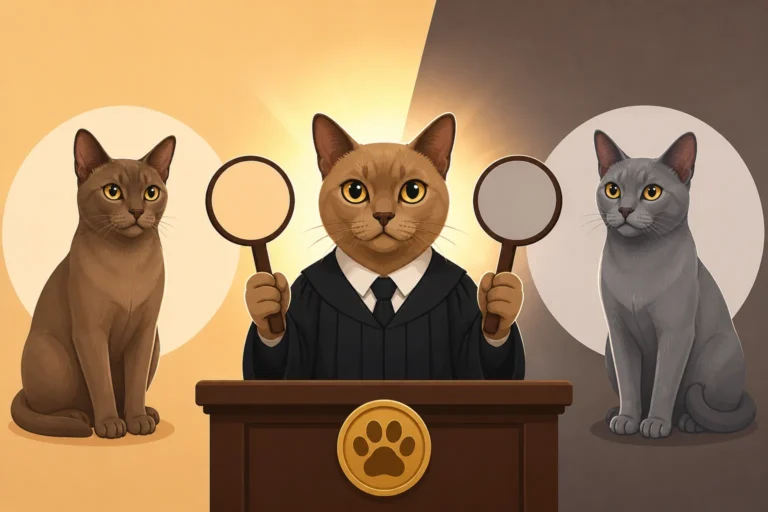
In contrast, the European Burmese tends to have a slightly more refined, wedge-shaped head, with larger, more expressive eyes that can be any shade of yellow to amber-green. Their muzzle is often longer and more tapering, and their body is typically more elegant and slightly longer, with fine boning. They still possess that dense musculature under their short coat, but the overall impression is less cobby and more sleek. Knowing What a European Burmese's Head Should Look Like can be a useful comparison point when you're unsure. These distinctions are recognized in the show ring, where judges adhere strictly to one standard or the other, depending on the registry and location.
These differences might seem subtle to the untrained eye, but once you know what to look for, they become quite pronounced. Think of it like comparing different regional styles of art – both are beautiful, but each has its own distinct characteristics. The bone structure, the set of the ears, the shape of the muzzle, and even the overall body condition contribute to these distinctions. For instance, the European Burmese often has a less pronounced 'break' at the nose than its American cousin.
Why This Divide Matters to the Breed's Future
The existence of two distinct types is more than just a matter of appearance; it has significant implications for breeding programs, genetic diversity, and even some health predispositions. Breeders who wish to maintain the integrity of their chosen type must be scrupulous about not crossing the lines, as this can dilute the distinct characteristics that define each. This is why you'll often hear discussions around Why the Two Burmese Types Are Not Crossed among serious breeders.
For owners, understanding the type can offer insight into potential health concerns or behavioral traits, as certain lines might have different genetic histories. For example, some lines of European Burmese, particularly those from Australia, have shown a higher prevalence of diabetes than American lines, highlighting the importance of knowing your cat’s specific background. Responsible breeders will be very upfront about the type they breed, as it speaks to their commitment to preserving the standard and ensuring healthy offspring. This commitment extends to thorough genetic testing and health screening.
The genetic diversity within each type is also a concern. Smaller gene pools, which can sometimes occur with specific breeding goals, mean careful selection is paramount to avoid concentrating undesirable traits. This is why extensive health testing, like What a Burmese Breeder Must Test Before Any Mating, is absolutely crucial regardless of type. The long-term health and vitality of the breed depend on breeders making informed choices, often guided by decades of accumulated knowledge about their specific lines.
What's in a Name? Deciphering Your Burmese's Official Papers
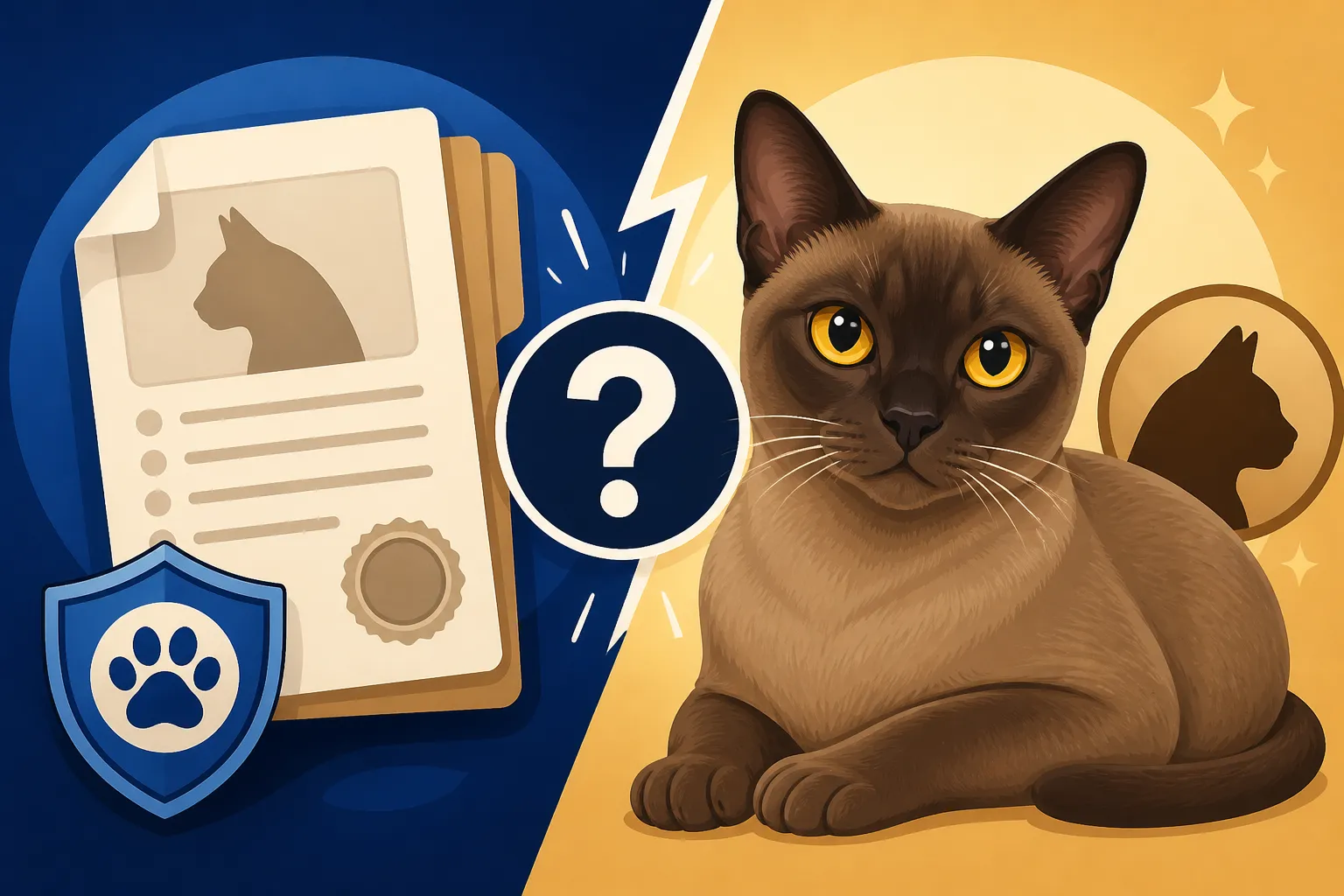
When you receive your beautiful Burmese kitten, along with all the joy and chaos they bring, you’ll also get a packet of papers. These documents are vital, but they often don't contain the explicit "American" or "European" label that many owners expect. This lack of direct designation can be confusing, but there's a good reason for it.
Pedigree vs. Registration: What Each Document Reveals
First, let's clarify the difference between a pedigree and a registration certificate. A registration certificate is essentially a birth certificate for your cat, confirming its existence as a purebred Burmese within a specific cat registry (like the Cat Fanciers' Association, CFA, or The International Cat Association, TICA). It will list your cat's registered name, its date of birth, its color, its sire (father), and its dam (mother). It confirms its place in the officially recognized breed.
A pedigree, on the other hand, is more like a family tree. It traces your cat's lineage back several generations, typically three to five, listing all the ancestors on both the sire's and dam's sides. This document is far more detailed and provides a much clearer picture of your cat's genetic background. While it also won't explicitly state "American" or "European" on every line, by observing the origin of the registered cats listed (e.g., names of catteries, known lines) and the registering body itself, you can often infer the type. The pedigree is truly where the story of your cat's ancestry begins to unfold.
For instance, if you see predominantly CFA-registered cats with cattery names recognized for breeding American Burmese, you can be fairly certain of your kitten's type. Conversely, a pedigree filled with cats registered with the Governing Council of the Cat Fancy (GCCF) in the UK would strongly suggest a European lineage. The astute buyer needs to know How to Tell Which Burmese Type You Are Buying by carefully examining these documents.
The Elusive "Type" Designation on Certificates
Here's the frustrating bit: official registration certificates from major cat registries generally do not explicitly state "American Burmese" or "European Burmese" as a breed type. They simply list "Burmese." This is largely because, from a registry's perspective, they are still considered variations of the same breed. While some registries might separate the two types in their judging standards or even in their registration classifications, the primary certificate often reflects the overarching breed name.
This doesn't mean the information isn't available or that breeders are hiding it. It's more about how the administrative systems of cat registries are structured. For example, CFA only recognizes the American type, so any Burmese registered with CFA is an American Burmese. TICA, however, recognizes both, but it's often the breeder's responsibility to denote the type in their own records and provide that context to buyers. The papers themselves are designed to be concise and standardized, not necessarily to provide every granular detail of breed variation. It's a key reason why you need to go beyond just the surface of the papers to understand your cat’s full heritage.
This can be incredibly vexing for new owners trying to understand their cat's background. You expect a clear label, but you get something more akin to a puzzle. It forces you to delve deeper, which, while educational, can be intimidating. The onus then falls on the buyer to do their research and ask pointed questions, ensuring they fully comprehend what they are bringing into their home.
Common Information You Will Find on Papers
Despite the absence of an explicit type designation, your Burmese's papers are far from empty. They contain crucial information that helps confirm your cat's identity and lineage. You'll definitely find:
- Registered Name: This is your cat's official name as recorded by the registry, often including a cattery prefix.
- Pet Name: The name you actually call your cat!
- Date of Birth: Essential for tracking age and developmental stages.
- Color: Such as Sable (the most common), Champagne, Blue, or Platinum.
- Sex: Male or Female.
- Sire and Dam: The registered names of your cat's parents.
- Breeder Information: The name and contact details of the person who bred the litter.
- Owner Information: Your details as the registered owner.
- Registration Number: A unique identifier within the registry.
Beyond these basics, a responsible breeder should also provide documentation of health screenings for the parents. This is where information about genetic predispositions comes in, particularly for conditions prevalent in Burmese cats. For example, Why Hypokalemia Results Belong on a Burmese's Paperwork is crucial, as this is a recessively inherited condition for which DNA tests are available. Similarly, a breeder should be transparent about What to Ask About a Burmese Line's Diabetes History given the breed's higher risk. While you might use a general pet supplier like Chewy for your daily cat supplies, these official documents are about much more than just shopping for food; they're about your cat's heritage and health.
The papers also act as a testament to the breeder's adherence to ethical breeding practices. They confirm that the cat is indeed purebred and registered, rather than a mixed breed or an unregistered animal. This transparency is a cornerstone of reputable breeding and provides peace of mind that you are acquiring a well-documented and legitimate purebred cat.
The Critical Role of Breeder Transparency in Burmese Type
Given that official papers often don't explicitly name the Burmese type, the breeder becomes your primary and most critical source of information. A reputable breeder's transparency isn't just a nicety; it's fundamental to understanding your kitten's background and ensuring you're getting the companion you expect.
Asking the Right Questions About Lineage
When you’re looking for a Burmese kitten, never hesitate to ask direct questions about the lineage. Inquire specifically, "Are your cats American or European type Burmese?" A good breeder will not only answer readily but will be happy to explain the differences, show you photos of previous generations, and discuss their breeding goals. They should be proud to share their knowledge. Ask about the cattery names that appear on the pedigree – are they known for American or European lines? This kind of detailed inquiry can feel daunting, but it's an investment in your future pet's health and happiness.
A responsible breeder understands that you are making a long-term commitment, potentially for What a Burmese Costs Over Sixteen Years, and they want you to be fully informed. They should offer to walk you through the pedigree and explain the ancestry, highlighting any notable cats or achievements in the line. This interaction is key because it goes beyond what's written on a standardized form. It's about a conversation that builds trust and provides context that official documents often lack. Don't be shy; a breeder who genuinely cares will welcome your curiosity.
This dialogue also opens the door to discussing specific traits beyond type. You can ask about the typical temperament of their lines, their health history, and even what an adult cat from their breeding program generally looks like. This holistic approach ensures you're not just buying a cat but understanding its entire genetic and behavioral blueprint.
Beyond Papers: Breeder Knowledge and Mentorship
The breeder's personal knowledge and experience are invaluable. Many experienced Burmese breeders have been involved with the breed for decades and can instantly tell the difference between an American and European type. They often act as mentors, guiding new owners through the nuances of the breed. They might explain why they prefer one type over the other, or how they manage their breeding program to maintain the distinct characteristics. This is where you gain insights that no piece of paper can fully convey.
A good breeder will also share their "philosophy" behind their breeding program. Do they focus on show quality, temperament, or specific health clearances? Do they actively participate in breed health research? Their dedication to the breed should shine through their willingness to educate you. They may even introduce you to the parents of your kitten, allowing you to see the adult form of the type firsthand. This level of transparency and mentorship is what distinguishes a truly reputable breeder from someone simply selling kittens.
Sometimes, the breeder’s reputation is itself a strong indicator. If they are well-known within the cat fancy for a specific type of Burmese, their word carries significant weight. Seek out breeders who are actively involved in breed clubs and are committed to the long-term health and preservation of their chosen type.
The Ethical Implications of Undisclosed Type
While a cat's type might not be explicitly stated on basic registration papers, a breeder who intentionally conceals the type, or worse, cross-breeds without disclosure, raises significant ethical flags. The primary concern here is the dilution of the distinct characteristics that define each type. This can lead to offspring that don't conform well to either standard, potentially causing confusion for future owners or breeders. It also makes it difficult to track genetic predispositions accurately when lines are mixed indiscriminately.
Furthermore, a lack of transparency can indicate a breeder who is not prioritizing the long-term health and integrity of the breed. It might suggest they are cutting corners in other areas, such as essential health testing. For instance, if a breeder is cagey about their cat's lineage, they might also be less forthcoming about crucial health information, such as whether they've tested for conditions like Hypokalemia or are transparent about the diabetes risk inherent in the breed. This isn't just about preserving breed standards; it's about ensuring the health and well-being of the kittens they produce.
Always be wary if a breeder seems unwilling or unable to discuss their cats' lineage or type openly. This isn't just a red flag; it's a profound warning sign that suggests they may not be operating with the integrity necessary for responsible breeding. It could mean you're getting a cat whose heritage is unclear, which can impact everything from its physical traits to its long-term health prospects.
Identifying Your Burmese's Type When Papers Are Unclear
What if you've already brought your Burmese home, and the papers are vague, or you're considering a rescue cat? Don't despair! While official documentation is always best, there are ways to make an educated guess about your cat's type.
Visual Cues and Body Language
One of the most immediate ways to assess your Burmese's type is through careful observation of their physical characteristics. Get to know the breed standards for both American and European Burmese, then look at your cat with a critical eye.
| Feature | American Burmese | European Burmese |
|---|---|---|
| Head Shape | Rounded, broad, domed | Moderately wedge-shaped, gentle curve |
| Muzzle | Short, broad, full, distinct "break" | Longer, tapering, no distinct "break" |
| Eyes | Large, round, gold | Large, expressive, yellow to amber-green |
| Ears | Medium, set wide apart, rounded tips | Medium, slightly wider set, rounded tips |
| Body | Cobby, compact, very muscular, feels heavy | Sleek, elegant, moderate length, well-muscled |
| Legs/Paws | Medium length, rounded, dense | Medium length, oval, fine boning |
| Tail | Medium length, tapering | Medium length, tapering |
Observe how your cat carries itself. American Burmese often have a very confident, almost swaggering gait due to their dense build. European Burmese, while equally confident, might appear a bit more lithe. Remember, these are general guidelines, and individual cats can show variations. However, by carefully comparing your cat to detailed descriptions and images of both types, you can often form a strong opinion.
For instance, if your Burmese has a strikingly round head with noticeably full cheeks and those iconic round gold eyes, it leans strongly towards the American type. Conversely, if their head is a bit more triangular, and their eyes have a more "oriental" or almond-shaped hint, despite being large, and their body is longer, it's more indicative of the European type. It’s about looking at the overall balance and harmony of their features against the respective breed standards.
Leveraging Breed Standards and Expert Opinions
If you're still uncertain after your own visual assessment, don't hesitate to seek out expert opinions. Attend local cat shows, even if you’re not showing your cat, and observe the Burmese cats there. Talk to experienced breeders and judges. Most will be thrilled to share their knowledge and offer an informal assessment of your cat’s type based on its appearance. They have years of experience recognizing the subtle differences that might elude a new owner.
Another valuable resource is breed clubs. Many countries and regions have specific Burmese breed clubs whose members are dedicated to preserving and promoting the breed. Reaching out to them, perhaps with clear photographs of your cat, can yield excellent insights. These clubs often have extensive knowledge of local lines and can help you understand the context of your cat's pedigree, even if it's somewhat sparse. They can also advise on Which Registries Separate the Two Burmese Types and how these registries might impact your understanding of your specific cat.
Even if you can't get a definitive "official" answer without explicit papers, these expert opinions can provide strong guidance and reinforce your own observations, building your confidence in understanding your cat's specific heritage. This kind of mentorship is invaluable in the world of purebred cats.
The Limits of Genetic Testing for Type Classification
You might wonder if a DNA test can definitively tell you whether your Burmese is American or European type. The answer, unfortunately, is generally no, at least not in the way you might hope. Genetic testing for cats, like the comprehensive panels often recommended by breeders, primarily focuses on identifying specific health markers (like the WNK4 mutation for Hypokalemia or markers for GM2 Gangliosidosis) or confirming coat color genetics. Which Tests Belong on a Burmese DNA Panel is a great question to ask a breeder.
These tests are designed to identify individual genes associated with diseases or traits, not to categorize a cat as "American type" or "European type." The physical differences between the two types are polygenic, meaning they are influenced by many genes interacting together, rather than a single "type" gene. While subtle genetic differences exist between the populations, there isn't a simple DNA test that can definitively label a cat as one type or the other based solely on a swab. So, while a DNA panel is crucial for health screening and should be part of What a Burmese Breeder Must Test Before Any Mating, it won't resolve your type identification dilemma. This means your best tools remain the pedigree, visual assessment, and expert opinion.
This is a common misconception, and it highlights why it’s so important to rely on reputable breeders and comprehensive pedigrees. While advancements in genetic science are ongoing, the complex interplay of genes that defines a cat's overall "type" is far more intricate than a single disease marker. Therefore, for now, visual assessment, pedigree analysis, and breeder knowledge remain the gold standard for type identification.
Navigating the World of Cat Registries and Burmese Types
The landscape of cat registries can be a bit like navigating a maze, especially when two distinct "types" of the same breed exist. Each registry has its own rules, standards, and historical approaches to the Burmese, which further complicates the journey of understanding your cat's documentation.
How Major Registries Approach the Burmese Divide
The approach to the two Burmese types varies significantly among the major cat registries. In North America, the Cat Fanciers' Association (CFA) explicitly recognizes and registers only the American type Burmese. If your cat is registered with CFA, it is, by definition, an American Burmese, adhering to their specific standard. This simplifies things for CFA-registered cats, as the registry itself serves as an indicator of type.
The International Cat Association (TICA), on the other hand, is a more inclusive registry that recognizes both American and European types of Burmese. However, TICA generally allows breeders to register their cats under the overarching "Burmese" breed name. While TICA's system allows for the distinction in show classes, the primary registration certificate often doesn't explicitly highlight the "type." It relies more on the breeder's understanding and designation within their own cattery records.
Across the Atlantic, in the United Kingdom, the Governing Council of the Cat Fancy (GCCF) registers the European Burmese (often simply called "Burmese" in the UK) and adheres strictly to the European standard. They do not register the American type Burmese. This geographical and historical split in registry recognition is a major reason for the type distinction and why knowing which registry certified your cat's lineage is so important.
The Challenges of Cross-Registration and Pedigree Interpretation
The existence of different standards and registry approaches presents particular challenges for breeders and owners, especially regarding cross-registration. If a breeder is trying to trace lines that span different registries or even different continents, interpreting pedigrees can become quite complex. A cat registered in the UK might have "Burmese" on its GCCF papers, which implicitly means European. But if that cat's offspring are then registered with TICA, the TICA papers might just say "Burmese," requiring an understanding of the ancestral lines to determine the type.
This complexity underscores the need for thorough pedigree analysis. Beyond just listing names, a good pedigree will often include the registry and registration number for each ancestor, allowing you to trace their origin. However, if a breeder has crossed the two types, either intentionally or accidentally, the pedigree becomes a true mixed bag, which is generally frowned upon by type-specific breeders. This is why a keen eye for detail and perhaps a bit of genealogical sleuthing are necessary.
For new owners, this means that merely seeing "Burmese" on a TICA certificate isn't the full story. You still need to investigate the lineage, look at the parentage, and ideally speak to the breeder to get the complete picture. It's a journey into cat history!
Ensuring Your Burmese's Type is Acknowledged Correctly
While the papers might not always explicitly name the type, it is still crucial to ensure your Burmese's type is acknowledged correctly, particularly if you ever plan to show your cat or breed. Showing a European Burmese in an American Burmese class, or vice-versa, would lead to immediate disqualification as they are judged against different standards.
For breeding, correct type identification is paramount for maintaining the integrity of lines. Breeders work tirelessly to preserve the unique characteristics of their chosen type, and accidental or undisclosed cross-breeding can undermine decades of effort. This is also important for understanding potential health predispositions that might be more prevalent in one type over another.
Ultimately, your understanding of your Burmese's type comes from a combination of the explicit information on registration documents and pedigree, visual assessment, and, most importantly, transparent communication with a reputable breeder. This holistic approach ensures you truly know your companion and can provide the best possible care throughout their long and affectionate life. And when you're stocking up on supplies for your beloved feline, whether it's specialized diet food recommended by your breeder or just high-quality litter, knowing their background helps you make informed choices. For peace of mind regarding potential health issues, many owners choose comprehensive pet insurance from providers like Healthy Paws, which can help cover unexpected veterinary costs, regardless of type.
Disclaimer
This article is for general informational purposes only and does not constitute professional advice. Laws, prices and regulations vary by location and change over time. Consult a qualified professional for guidance on your specific situation.