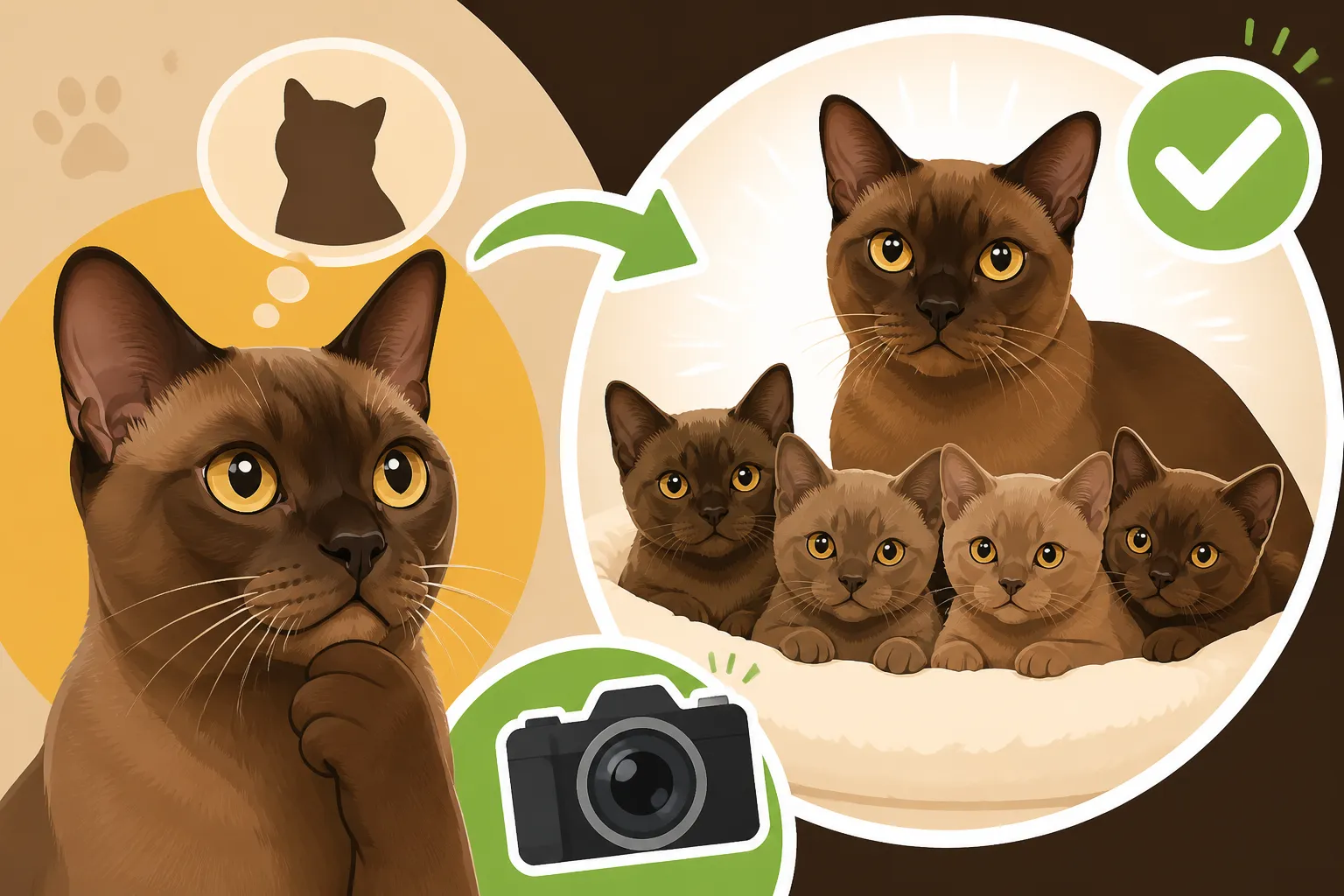
Why to Ask a Burmese Breeder for Photos of the Litter Together
It's completely normal to feel a mix of excitement and anxiety when you're choosing a new Burmese kitten, especially if you can't visit the litter in person. You might be focusing on picking "the one," but I'm here to tell you that asking your breeder for photos of the entire litter together can reveal so much more than just a cute face. This guide will walk you through why these group photos are a crucial step in ensuring you bring home a healthy, well-socialized kitten that will thrive in your home.
Understanding the Value of Group Litter Photos
When you're looking for a new Burmese, it's easy to get caught up in individual kitten photos. You see a sweet face, a striking coat color, and you start to imagine them in your home. However, focusing solely on individual shots can make you miss important clues about the litter's overall well-being and the environment they're being raised in. Group photos offer a snapshot of the dynamic, health, and even the early socialization that's happening, or perhaps not happening.
Think of it like this: if you were hiring someone for a team, you wouldn't just look at their individual resume. You'd want to know how they interact in a group, wouldn't you? The same goes for bringing a highly social cat like a Burmese into your family. A single photo can hide a multitude of developmental nuances, but a group shot can lay them bare. It helps you see the bigger picture, giving you a more complete understanding of the kitten's beginnings before it even steps paw in your home.
Deciphering Temperament and Socialization Clues from Litter Pictures
The Burmese breed is renowned for its outgoing, affectionate, and people-oriented nature. They are often called "dog-like" for a reason, and a big part of that comes from their early socialization. Group photos can provide invaluable insights into how well these tiny personalities are developing, and how they interact with their siblings and potentially with humans in their environment.
When you're sifting through those adorable pictures, look beyond the cuteness for specific behavioral indicators. Are the kittens huddled together, or are some consistently off by themselves? Do they appear relaxed and playful with one another, or is there any sign of tension or bullying? A healthy, well-socialized Burmese litter should exhibit curiosity, playfulness, and comfort in each other's presence. You might see them wrestling playfully, grooming each other, or simply snuggled up in a big pile. If you see one kitten constantly isolating itself or looking fearful while its siblings are engaged, it might warrant further discussion with the breeder about that individual's temperament. Remember, a Burmese kitten's first twelve to thirteen weeks are critical for socialization, and seeing them interacting naturally with their littermates is a huge green flag. Why a Burmese Kitten Stays Until It Is Socialized will tell you more about this important developmental period.
Observing Play Dynamics and Comfort Levels
Genuine interaction among littermates is a strong indicator of good socialization. Watch for kittens engaging in normal kitten play – batting at each other, pouncing, or chasing tails. A confident litter will be exploring, wrestling, and learning bite inhibition from their siblings. If all the kittens in the photo seem to be asleep in a perfect row, that's fine for a moment, but a good breeder should be able to provide pictures of them awake and interacting.
Moreover, pay attention to their comfort with their surroundings. Are they in a clean, stimulating environment? Are there toys they are interacting with? Do they look startled or relaxed? A Burmese kitten should be curious and confident, not timid. If the photos show kittens cowering or looking anxious, it could suggest a less-than-ideal upbringing or a lack of positive human interaction, which is especially important for a breed that thrives on connection.
Spotting Early Signs of Confidence or Shyness
While every kitten has its own personality, extremes can be telling. A kitten that is always at the center of the pile, confidently engaging in play, is likely to be a bold and outgoing cat, typical of the Burmese breed. Conversely, a kitten that is consistently on the periphery, looking watchful or withdrawn, might be more timid. While a slightly shyer kitten can absolutely blossom into a loving companion, it's good to be aware of these tendencies upfront.
Sometimes, a breeder might even include a hand in the photo, or a human gently interacting with the group. This can show how comfortable the kittens are with human touch and presence. Given how much a Burmese thrives on human attention, seeing them relaxed around people is a huge plus. This helps predict how quickly they'll adjust to their new family and how readily they'll seek out affection.
Health and Development Indicators in a Litter Group
Beyond temperament, group photos can offer a surprising amount of information about the physical health and consistent development of the entire litter. While a vet check is always paramount, these visual cues can support your confidence in the breeder's care.
Look for uniformity in size, clear eyes, clean noses, and healthy coats across all kittens. A litter that is roughly the same size and condition indicates consistent nutrition and good overall health management from the breeder. If some kittens appear significantly smaller, have duller coats, or show signs of discharge around their eyes or noses while others are thriving, it's a red flag. What a Burmese Kitten's First Exam Should Cover highlights other vital health checks, but these visual assessments in a photo can be a valuable preliminary step.
Assessing Uniformity in Size and Condition
A healthy litter of Burmese kittens should show a relatively consistent size and weight for their age. While there might be slight variations, extreme differences could indicate issues with access to food, underlying health problems, or even a very large litter straining the queen. A responsible breeder aims for robust, healthy kittens, and this often translates to a litter that is growing well and evenly. When considering the breed's predisposition to certain health conditions like diabetes, ensuring a healthy start with proper weight management from kittenhood is vital. Why a Burmese Is Four Times More Likely to Become Diabetic explains the importance of early health monitoring.
Similarly, observe their coats. The Burmese's famous satin coat should look soft, sleek, and shiny, even at a young age. Dull, patchy, or matted fur on one or more kittens could signal nutritional deficiencies, parasites, or other health concerns that affect the whole litter. Their eyes should be bright and clear, free from excessive tearing or crusting. Cleanliness around their faces, especially their eye corners, suggests good hygiene in the cattery.
Evaluating the Overall Environment and Care
The background of the photos can speak volumes about the breeder's dedication to proper care. Is the environment clean and well-maintained? Do the kittens have access to clean bedding, water, and appropriate toys? A breeder who is proud of their setup will often share photos that showcase a clean, enriching space.
Conversely, photos taken in a cramped, dirty, or barren environment should give you pause. While every breeder's home looks different, the underlying principle of cleanliness and enrichment for growing kittens should be evident. This early environment plays a huge role in their physical and mental development. Kittens raised in a stimulating, hygienic setting are more likely to be robust and well-adjusted.
What Litter Photos Can Tell You About Breeder Practices
Beyond the kittens themselves, group photos can offer subtle but powerful clues about the breeder's overall practices and commitment to the breed. A good breeder is transparent and proud of their setup, and photos of their litter are often a reflection of their standards.
For instance, the frequency of photos can be telling. A breeder who regularly provides updated group photos shows a high level of engagement and willingness to communicate. This indicates that they are actively monitoring the kittens' development and are keen to keep prospective owners informed. If you're struggling to get more than one blurry shot, it might be a sign of a less attentive breeder or one who is simply too overwhelmed to give each kitten the individual care and attention they need.
Transparency and Communication
A breeder willing to share multiple group photos, perhaps even from different angles or showing different activities, demonstrates a level of transparency that is very reassuring. They aren't trying to hide anything. This openness often extends to other aspects of their breeding program, such as sharing health test results for the parents or discussing potential hereditary conditions like Hypokalemia. You can find more details on this in How to Read a Burmese Hypokalemia Carrier Result.
Good communication is key in the breeder-owner relationship, and the sharing of photos is an early indicator of this. If a breeder is responsive and happy to provide these visual updates, it suggests they will be a valuable resource for questions and support even after you take your kitten home. You want a breeder who feels like a partner, not just a seller.
How Many Kittens and Their Age
Seeing the full litter allows you to verify the number of kittens. While this might seem trivial, it helps confirm the reality of the breeding process. It's not uncommon for Burmese queens to have good-sized litters, and knowing how many siblings your kitten has can give you an idea of the social dynamics it's been exposed to. How Many Kittens a Burmese Queen Has provides insights into typical litter sizes.
Furthermore, these photos, especially if dated or accompanied by videos, help confirm the kittens' approximate age and progression. You can observe developmental milestones, such as how active they are, whether their eyes are fully open, and how they interact with their environment. Kittens should remain with their mother and littermates until at least 12-13 weeks of age to ensure proper socialization and development.
Signs of a Clean and Enriched Environment
The setting where the photos are taken can be incredibly informative. Is the area clean, with fresh bedding? Are there age-appropriate toys that encourage mental and physical stimulation? A well-kept environment, even if it's just a designated kitten room, speaks volumes about the breeder's dedication to hygiene and enrichment.
| What to Look For in Litter Photos | What Might Be a Concern |
|---|---|
| All kittens present | Only one or two kittens shown repeatedly |
| Kittens interacting playfully | Kittens consistently separated, cowering, or fighting |
| Uniform size and healthy appearance | Significant size disparities, dull coats, discharge |
| Clean, stimulating environment | Dirty bedding, barren surroundings, signs of neglect |
| Relaxed body language around humans | Kittens appearing fearful or tense when handled |
| Clear eyes and clean noses | Crusty eyes, sneezing, or nasal discharge |
| Good muscle tone and activity | Lethargy, reluctance to move, or awkward gait |
Practical Steps for Requesting and Interpreting Litter Photos
Don't hesitate to ask your breeder for exactly what you need to feel comfortable with your choice. Most reputable breeders understand this desire for transparency and will be happy to oblige. You're not being overly demanding; you're being a responsible future pet parent.
When you've received the photos, take your time to examine them. Don't just glance and pick the prettiest face. Zoom in, look at the details, and consider the dynamics we've discussed. It's a small investment of your time that can make a huge difference in the long run.
Clearly Communicate Your Request
When you ask for photos, be specific. Instead of just "more pictures," try asking for "recent photos of the entire litter together, showing them playing and interacting." You might even ask for a short video, as motion can reveal even more about their gait and social skills. A good breeder will likely have recent pictures and videos readily available.
Explain why you're asking. For example, "I'm keen to see how they interact with each other to get a better sense of their developing temperaments, as I know Burmese thrive on companionship." This shows the breeder you're informed and serious about providing a good home. They want their kittens to go to the best possible homes, and your thoughtful questions demonstrate your commitment.
Observe and Ask Follow-Up Questions
Once you have the photos, dedicate some time to truly observing them. Don't rush. Look for the patterns mentioned earlier: consistent interactions, clean appearance, uniform size. If something catches your eye, don't hesitate to ask the breeder about it. For example, "I noticed one kitten seems to be sleeping by itself in most of the photos – is that typical for them, or are they just a bit more independent?"
This isn't about finding fault, but about gathering information. A good breeder will be able to answer your questions thoughtfully, providing context and reassurance. If they become defensive or dismissive, that's a significant warning sign that you might want to reconsider. Remember, the relationship with your breeder can be a long one, providing guidance on everything from What a Burmese Costs a Year Once Insulin Is Possible to behavioral quirks.
Consider the Holistic Picture
While group photos are a fantastic tool, they are just one piece of the puzzle. Combine what you learn from the pictures with your conversations with the breeder, reviews or references from other buyers, and any health guarantees or contracts. If you plan to ensure your new companion, a company like Healthy Paws might be a good fit, but always check their specific policy details regarding pre-existing conditions. For ongoing nutritional needs, you might explore tailored meal plans or quality dry and wet food options.
Ultimately, you're looking for a breeder who is transparent, knowledgeable, and genuinely cares about the well-being of their kittens. Group litter photos are a simple yet powerful way to gauge these qualities and get a truer sense of the little lives you're considering bringing into your home. They lay the foundation for a confident choice and a happy, healthy future with your new Burmese companion.
Disclaimer
This article is for general informational purposes only and does not constitute professional advice. Laws, prices and regulations vary by location and change over time. Consult a qualified professional for guidance on your specific situation.