Why a Burmese’s Voice Is Throatier Than a Siamese’s Wail
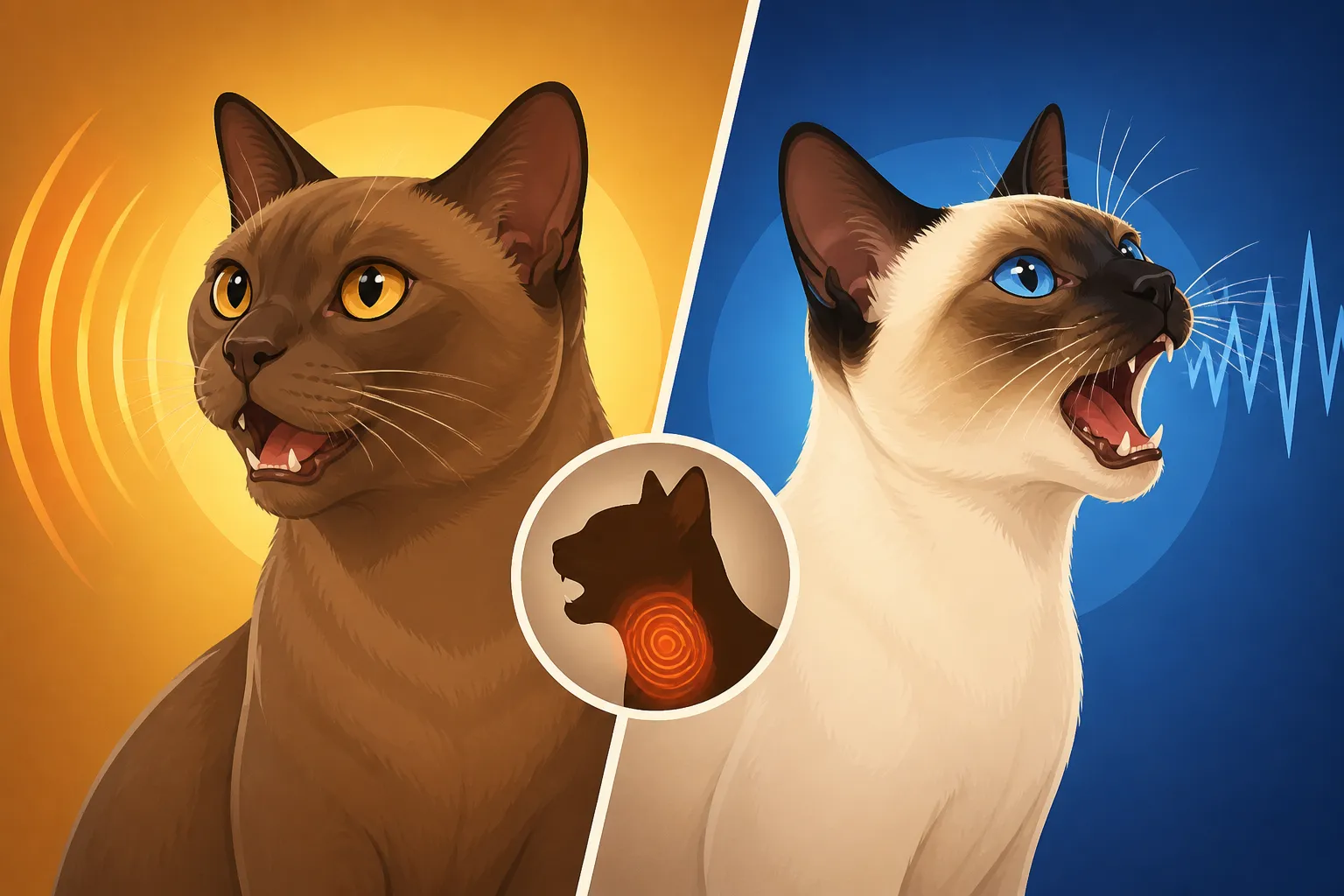
If you've ever spent time with both a Burmese and a Siamese cat, you've probably noticed something striking about their vocalizations – they couldn't be more different! It’s a common frustration for new owners, or even those just trying to understand the nuances of feline communication, when they expect one type of "meow" and get something entirely distinct. This guide will delve into the fascinating reasons behind these vocal differences, helping you understand why your Burmese offers a throaty rasp while a Siamese might unleash a full-blown wail.
The Core Anatomy of Feline Vocalization
Before we can truly appreciate the distinctive sounds of the Burmese and Siamese, it helps to understand the fundamental mechanics of how any cat makes noise. It’s not just a simple meow; it’s a complex interplay of anatomy, air, and muscle control. Every purr, chirp, or growl starts with the same basic equipment, but subtle variations can lead to vastly different sonic results.
How the Larynx and Vocal Cords Create Sound
At the heart of any cat's voice is the larynx, often called the voice box, located in the throat. Inside the larynx are two small, muscular folds of tissue known as vocal cords. When a cat exhales, air is forced through these vocal cords, causing them to vibrate. The speed and intensity of these vibrations determine the pitch and volume of the sound produced. Think of it like the strings of a guitar: thicker, looser strings produce lower notes, while thinner, tighter ones create higher pitches.
For a cat, the structure and tension of these vocal cords are partly genetic. Some breeds naturally possess vocal cords that lend themselves to certain types of sounds. A cat's physical size also plays a role; generally, larger cats might have slightly longer or thicker vocal cords, leading to deeper, more resonant sounds. However, this isn't a hard and fast rule, as we'll see with the surprising power of the Burmese's relatively small frame.
Resonating Chambers: The Skull and Sinuses
The sounds generated by the vocal cords don't just exit the mouth directly. They travel through various resonating chambers within the cat's head, primarily the throat, mouth, nasal passages, and even the sinus cavities. These spaces act like the soundbox of an acoustic instrument, amplifying and shaping the raw vibrations into recognizable vocalizations. The size and shape of a cat's skull, as well as the structure of its nasal passages, can significantly influence the timbre and quality of its voice.
For instance, a broader, rounder skull might offer different resonance than a narrower, more wedge-shaped one. This contributes to the unique "coloring" of each breed's voice, giving it its characteristic sound. It's why a cat's meow isn't just loud or soft, but also has a particular "texture" to it – whether it's clear, raspy, or even somewhat nasal. These anatomical differences are part of the inherited blueprint that separates a Siamese's shrill cry from a Burmese's deep murmur.
The Role of Muscle Control in Pitch and Volume
Beyond the static anatomy, a cat's ability to vocalize is also highly dependent on its muscular control. Cats can consciously adjust the tension in their vocal cords and the muscles surrounding their larynx to change pitch, volume, and even the duration of their sounds. This allows them to produce a wide range of vocalizations, from the softest purr to the most insistent yowl. They can open their mouths wide for a loud, attention-grabbing call or keep them almost closed for a subtle, murmuring sound.
This sophisticated muscular control is key to how cats communicate their needs, emotions, and intentions. A happy cat might purr deeply, while a distressed one might let out a series of frantic, high-pitched cries. Over time, individual cats and even entire breeds develop preferred ways of using this muscular control, leading to their signature vocal styles. For a Burmese, this often means a finely tuned control over lower, softer sounds, while a Siamese masters the art of projecting its voice with remarkable clarity and persistence.
The Burmese "Rasp": A Symphony of Soft Demands
If you're lucky enough to share your home with a Burmese, you'll know their voice isn't just different; it's practically legendary for its unique quality. Instead of a sharp meow, you're likely to hear a sound that's been lovingly described as a "rasp," a "gurgle," or a "rumble." It's a hallmark of the breed, as distinctive as their satin coat and their boundless affection.
Why the Burmese Voice is a Gentle Rumble, Not a Shout
The Burmese generally has a lower-pitched, softer voice compared to many other cat breeds. This isn't just about volume; it's about the fundamental frequency of their vocalizations. They tend to produce sounds that are deeper and more guttural, almost like a constant, conversational murmur rather than a piercing cry. While they can certainly make themselves heard when they want to, their default mode of vocal communication leans towards intimacy and a less aggressive tone. You might hear this gentle rumble when they greet you at the door, when they're soliciting pets, or even when they're just contentedly kneading your lap.
This vocal preference ties into their overall temperament. Burmese cats are known for being incredibly people-oriented and tend to avoid confrontation. Their softer vocalizations are often a reflection of this gentle nature. They don't typically need to shout to get what they want because they are masters of subtle persuasion and persistent, affectionate presence. They’ve learned that a soft, insistent rumble, combined with a head-nuzzle or a playful swat, is usually more than enough to get their human's attention. What a Burmese Wants When It Rumbles at You will tell you more about deciphering these delightful sounds.
Communication Through Proximity and Body Language
Part of why the Burmese developed this "rasping rumble" rather than a loud shout is their inherent need for close proximity to their humans. They are often called "Velcro cats" for a reason; they want to be right there, in your lap, on your shoulder, or snuggled under the covers next to you. This constant closeness means they often don't need a loud voice to communicate. A soft murmur is perfectly audible when they are nestled against your chest.
Their communication style relies heavily on body language: the intense stare, the gentle head-butt, the slow blink, the insistent rub against your legs. The throaty rumble often accompanies these physical gestures, forming a complete, intimate communication package. It’s a subtle art of conveying needs and affection without ever needing to raise their voice. If a Burmese is physically unable to get close to you, or feels ignored, they might escalate their vocalizations, but even then, it’s usually more a series of insistent rasps than a true yell.
The "Velcro Cat" Effect on Vocal Output
The intense bond a Burmese forms with its owner significantly shapes its vocal habits. As a "Velcro cat," a Burmese thrives on interaction and being part of your every moment. This leads to a communication style that is less about crying out from a distance and more about engaging in a continuous dialogue. Their rumbles and trills often sound like they're responding to your words, or simply commenting on their surroundings, in a quiet, companionable way. This constant low-level vocalization is often endearing, reinforcing their image as conversational companions.
You might find your Burmese "talking" to you as you move around the house, offering a series of soft chirps and rumbles rather than loud meows. This behavior is rooted in their deep attachment; they want to know you're still there and still engaged with them. The Burmese Is the Velcro Cat of the Cat Fancy explains this endearing trait further. Because they expect and receive so much attention, they rarely feel the need to resort to the piercing calls sometimes heard from breeds that might be more independent or prone to separation anxiety. Their voice is a tool for connection, not just a demand.
The Siamese "Meezer Howl": An Auditory Signature
In stark contrast to the Burmese's gentle rasp, the Siamese cat possesses one of the most distinctive and memorable voices in the feline world. Their vocalizations are not merely loud; they are unique in their timbre, pitch, and sheer volume. Often described as a "wail," a "howl," or even the sound of a "baby crying," the Siamese voice is an auditory signature that, once heard, is rarely forgotten.
The High-Pitched, Penetrating Nature of the Siamese Voice
The Siamese voice is characterized by its high pitch and incredible carrying power. It's not uncommon for a Siamese's call to be heard throughout a large house, or even by neighbors. This is due in part to the structure of their larynx and vocal cords, which are often adapted for producing higher-frequency sounds with less effort. Their vocal cords vibrate at a faster rate, resulting in a sound that cuts through ambient noise more effectively than a lower-pitched meow.
Moreover, Siamese cats often utilize their entire respiratory system to amplify their voice. They draw in deep breaths and expel air with significant force, allowing them to project their sounds over considerable distances. This innate ability to produce such a penetrating sound suggests a long evolutionary or selective history where a loud, clear voice was advantageous, whether for attracting mates, defending territory, or communicating with their human companions. It’s a voice designed to get attention, and it rarely fails.
Ancestral Traits and Selective Breeding for Voice
The origins of the Siamese's powerful voice are often traced back to their ancestral roots in Southeast Asia. These cats were historically revered and may have been encouraged to vocalize, possibly as a way to announce their presence or to interact with their royal or monastic caretakers. Over generations, breeders may have inadvertently or intentionally selected for cats with more distinctive and loud voices, further solidifying this trait within the breed.
Unlike many breeds where vocalization is a secondary trait, the Siamese's voice is almost a primary characteristic. It's part of what makes a Siamese a Siamese. This isn't just about being talkative; it's about the quality of that talk. The "Meezer Howl," as it's affectionately known by enthusiasts, is a testament to centuries of genetic predisposition and, perhaps, cultural reinforcement. It's a deeply ingrained trait, making it difficult to "train out" a Siamese's natural inclination to vocalize loudly.
How Siamese Use Vocalization to Command Attention
Siamese cats are incredibly intelligent, social, and often demanding. They use their unique vocalizations as a primary tool for interaction and control within their environment. Whether they are hungry, bored, lonely, or simply want your immediate attention, their voice is their go-to method for communicating these needs. A Siamese won't just sit and wait patiently; it will vocalize with increasing intensity until its message is received and acted upon.
This isn't necessarily a sign of distress, though it can be if their needs are truly unmet. More often, it's a testament to their self-assured nature and their belief that they are the center of their human's world. They expect a response, and their persistent vocalizations are designed to ensure they get one. If you've ever ignored a Siamese for too long, you'll quickly learn that their vocal range includes escalating calls that can become quite insistent and, to some, even irritating. They are masters of the auditory nudge, and they will keep nudging until you comply.
Temperament, Environment, and Vocal Expression
While genetics certainly lay the groundwork for a cat's vocal capabilities, temperament and environment play a huge role in how those capabilities are expressed. A quiet cat in one home might become more vocal in another, and vice-versa. Understanding these influences can help you better appreciate why your Burmese acts the way it does, or why a Siamese simply has to tell you everything that’s on its mind.
The Impact of Personality on a Cat's Talkativeness
Every cat has its own unique personality, but breed traits often provide a general roadmap. Burmese cats, as mentioned, are renowned for their affectionate, docile, and highly sociable nature. They thrive on companionship and physical closeness, which often translates into a preference for softer, more intimate vocalizations. Their contentment is often expressed through purrs, gentle chirps, and the famous throaty rumble. They're not typically prone to excessive, loud vocalization because their core needs for connection are usually met through presence and physical interaction. They communicate in a way that says, "I'm here, I love you, let's snuggle."
Siamese cats, on the other hand, are often described as having "dog-like" personalities in their intensity and demand for interaction. They are highly intelligent, inquisitive, and require a lot of mental and physical stimulation. This energetic and often demanding temperament often manifests in a higher propensity for vocalization. They are less subtle, preferring to vocalize their desires clearly and insistently. Their personalities lead them to use their voices as a tool to control their environment and engage their humans constantly. It's a personality that says, "I'm here, you're here, let's do something, and I'll tell you what that is!"
Learning Vocal Habits from Other Cats and Humans
Cats are incredibly adaptable and learn from their surroundings. A Burmese kitten raised in a household with a talkative Siamese might pick up some louder vocal habits, just as a Siamese raised in a quiet home might temper its natural "meow-fest" slightly. They observe how other cats communicate and how humans respond to different types of vocalizations. If a soft purr consistently gets attention, a cat will continue with soft purrs. If a loud yell immediately results in food, that behavior is reinforced.
This learning aspect is crucial. If you respond every single time your Siamese wails, you are, in essence, training it to wail more. Conversely, if you reward your Burmese's gentle rumbling with affection and attention, you encourage that softer form of communication. Consistency in how you respond to your cat's vocalizations can shape their habits over time. It’s not about silencing them, but about guiding them towards more appropriate and pleasant forms of expressing themselves.
Addressing Excessive Vocalization in Either Breed
While the Burmese's vocalizations are generally welcomed, and the Siamese's recognized as part of their charm, there are times when any cat's vocalizations can become excessive or problematic. If your usually quiet Burmese suddenly starts insistent, loud meowing, it's often a sign of distress, pain, or illness, and a vet visit is paramount. Why a Burmese That Stops Following You Is Unwell highlights similar behavioral cues that indicate a problem. Changes in routine, a new pet, or even boredom can also trigger unusual vocal patterns.
For Siamese owners, managing their natural talkativeness often involves understanding why they are vocalizing. Are they bored? Provide more interactive toys (like those found on Amazon that dispense treats or require engagement). Are they lonely? Consider getting a companion cat, as Why Two Burmese Cost Less Than One Anxious One explains, although with Siamese it's more about another stimulating presence rather than necessarily calming. Are they hungry? Stick to a strict feeding schedule to reduce food-related demands. Ignoring attention-seeking wails but rewarding quiet behavior can also help, though it requires immense patience and consistency. The key is to address the underlying need rather than just trying to silence the sound.
Comparative Analysis: Burmese vs. Siamese Vocal Styles
Comparing the vocal styles of the Burmese and Siamese offers a fascinating insight into breed development, temperament, and the diverse ways cats communicate with their human companions. It’s not just about which cat is louder, but how and why they choose to vocalize the way they do. Understanding these differences can deepen your appreciation for both breeds and improve your ability to interact with them.
Situations Where Each Breed Vocalizes Most
The Burmese cat, being intensely social and affectionate, tends to vocalize most in situations where they are seeking or receiving close interaction. You'll hear their gentle rumbles and chirps during:
- Greetings: When you come home, they'll often "talk" to you while rubbing against your legs or climbing into your lap.
- Lap Time/Snuggles: Contented purrs and soft rumbles are a constant soundtrack to their affection.
- "Conversations": Many Burmese will "answer" you when you speak to them, with soft trills and murmurs.
- Playtime: Excited chirps might accompany their playful antics, especially when chasing a favorite toy.
The Siamese, on the other hand, often vocalizes loudest and most persistently when they perceive a need that isn't being met, or when they want to draw attention to something specific. Their vocal peaks occur during:
- Hunger: An empty bowl will often provoke a sustained, demanding wail.
- Boredom/Loneliness: If left alone for too long or lacking stimulation, a Siamese will loudly lament their situation. Why a Burmese Cannot Be Left Alone All Day resonates with the Siamese need for company too, though their expression is louder.
- Demanding Play/Attention: They will vocalize insistently until you engage with them.
- Discomfort/Change: Any perceived grievance, from a slightly-too-cold room to an unfamiliar object, might be announced with a loud complaint.
Interpreting the Nuances of Their Calls
Understanding the nuance in their vocalizations is crucial for effective communication.
For the Burmese:
- Soft Purr/Rumble: Generally indicates contentment, affection, and happiness. This is their baseline "I'm happy with you" sound.
- Insistent Chirp/Rasp (repeated): Often a gentle demand for attention, food, or access to a closed door. They're persistent but rarely aggressive in tone.
- Muffled Meow: Can sometimes signify mild discomfort or annoyance if a play session ends too soon, or they want a particular toy.
- Quick, sharp meow: Could indicate a sudden surprise, or a warning to another cat to back off. However, these are less common.
For the Siamese:
- Sustained "Meezer Howl": This is their all-purpose demand signal. It can mean "Feed me!" "Play with me!" "Let me in!" or "I'm bored!" The context is key.
- Low Growl/Hiss: A clear warning sign of displeasure or aggression, usually towards another animal or a perceived threat.
- Chirps/Trills: While less common than the howls, Siamese can make softer, bird-like sounds, usually when tracking prey or showing excitement during play.
- Repetitive Yowl: Often indicates anxiety, distress, or a sustained unmet need, such as being locked out or genuinely lonely.
| Vocalization Type | Burmese Interpretation | Siamese Interpretation |
|---|---|---|
| Soft Purr/Rumble | Contentment, affection, bonding | Less common, may indicate deep comfort during snuggles, but often accompanied by other vocalizations. |
| Chirp/Trill | Playfulness, gentle greeting, "hello" | Excitement (e.g., seeing a bird), minor alert, tracking prey |
| Insistent Rasp/Meow | "Please pay attention to me," demand for petting/food, mild complaint | Mild attention-seeking, leading up to a wail if ignored |
| Loud, Sustained Wail/Howl | RARE: Sign of significant distress, pain, or severe fear/anxiety. Vet visit likely. | COMMON: Demand for attention, food, play, complaint, boredom, loneliness, expressing strong opinion. |
| Growl/Hiss | Aggression or fear (less common than in other breeds due to temperament) | Clear warning sign of aggression or deep displeasure |
Coexisting with Both Vocal Types in a Multi-Cat Home
Bringing a Burmese and a Siamese together, or living with any combination of these talkative breeds, can be a delightful, albeit sometimes noisy, experience. The key to harmony lies in managing their individual needs and understanding their communication styles.
For your Burmese, ensure they receive ample dedicated lap time and interactive play. Their gentler nature means they might be overwhelmed by a very dominant, loud Siamese if not given their own space and attention. A soft "conversation" with your Burmese throughout the day will reinforce their quieter vocal habits and make them feel secure. Remember, the Burmese craves connection, and their voice is a part of that continuous bond. Whether a Burmese Answers Back When You Talk to It is a common and endearing trait.
For your Siamese, establishing clear boundaries and routines is essential. Provide plenty of stimulating toys, cat trees, and puzzle feeders. Engage them in active play sessions daily to burn off their energy. Learn to differentiate between a wail of genuine need (e.g., illness) and a wail of mere demand. Consistently reward quiet behavior and desired vocalizations, while gently redirecting or ignoring excessive demanding wails (after ensuring all basic needs are met). Patience is your best friend when living with a Siamese, and sometimes, a robust pair of noise-canceling headphones you can find on Amazon can be a good backup plan for those particularly vocal moments. Providing an enriching environment means they have outlets for their energy and intelligence, reducing the need for constant vocal demands.
Ultimately, both the Burmese and the Siamese offer unique and rewarding companionship. Their distinct vocal styles are simply another facet of their captivating personalities, and learning to understand and appreciate them is part of the joy of sharing your life with these incredible felines.
Disclaimer
This article is for general informational purposes only and does not constitute professional advice. Laws, prices and regulations vary by location and change over time. Consult a qualified professional for guidance on your specific situation.