What a Burmese’s Rasping Voice Sounds Like
One of the most charming, yet sometimes perplexing, traits of the delightful Burmese cat is their unique vocal repertoire. If you've ever found yourself wondering why your Burmese doesn't quite "meow" like other cats, or why their communication style seems so intensely personal, you're not alone. Many new Burmese owners are taken by surprise by the distinct sounds these affectionate felines make. This guide is here to unravel the mystery of the Burmese's rasping voice, helping you understand what your furry companion is trying to tell you and how this special vocalization weaves into their incredible personality.
Understanding the Burmese Voice: More Than Just a Meow
When people talk about cat sounds, a "meow" is usually the first thing that comes to mind. But if you live with a Burmese, you know that their vocalizations are often in a league of their own. It's not a standard meow, and it's certainly not the piercing wail of a Siamese. The Burmese has a voice that is as unique and captivating as their personality, a sound that quickly becomes an endearing part of their presence in your home.
The Signature Rasp: What Makes it Unique
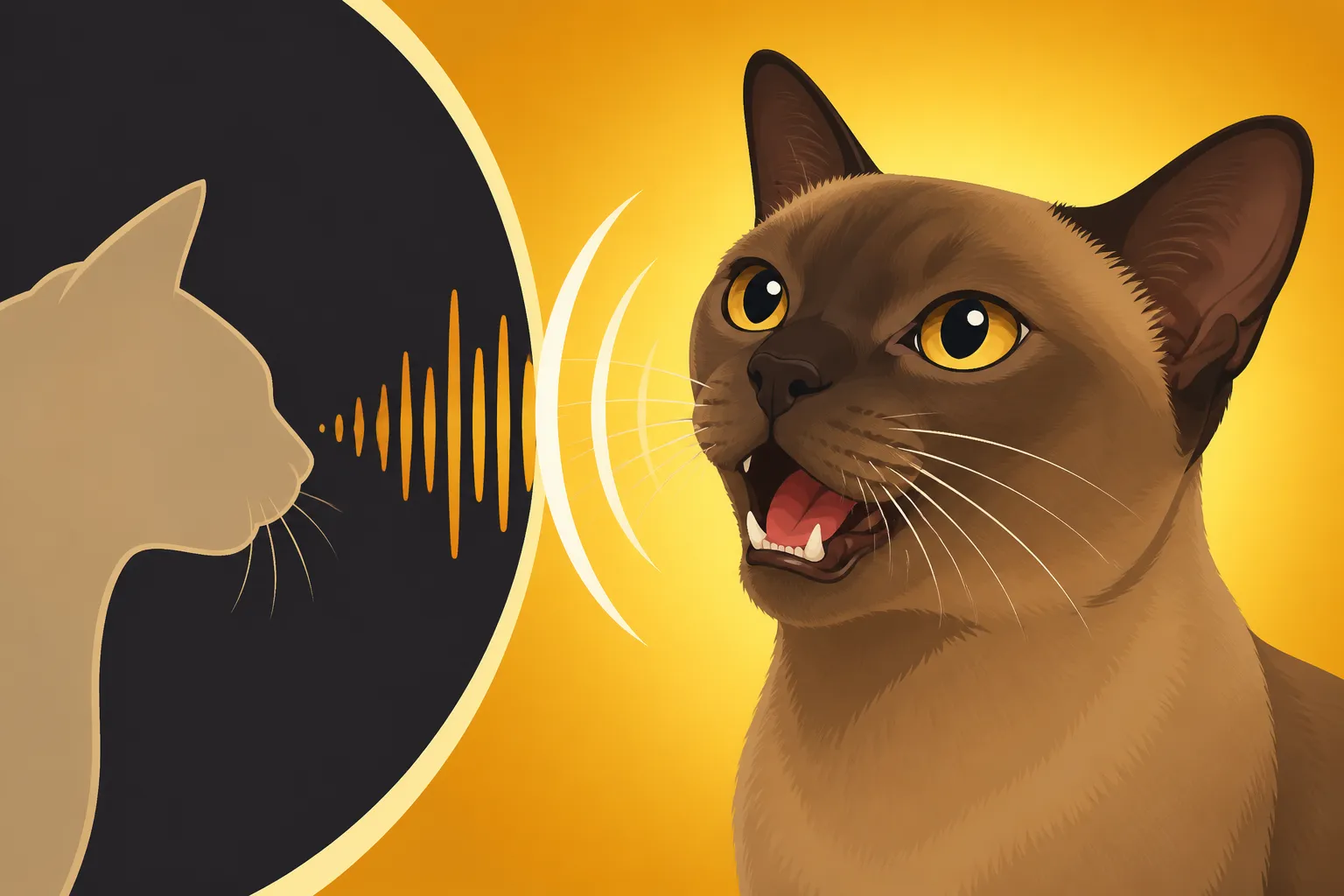
Imagine a sound that’s somewhere between a purr, a conversational murmur, and a gentle growl – that’s often the best way to describe the Burmese rasp. It's a throaty, guttural sound, rich with intonation and nuance. Unlike the more open-mouthed, high-pitched meow of many domestic cats, the Burmese sound seems to come from deep within their chest, almost as if they are perpetually purring while trying to articulate a sentence. This distinctive sound is often attributed to their unique vocal cord structure, which allows for a broader range of lower-frequency sounds. It’s less of a sharp, clear note and more of a continuous, rolling vibration, full of warmth and personality.
When you're trying to describe it to someone who's never met a Burmese, you might say it's like a perpetual rumble that sometimes escalates into a question or an urgent request. It's never truly silent, even when they're not overtly "talking" to you, there's often a low hum of contentment. The way their vocal cords vibrate creates a richness that's utterly unique. You'll hear it change pitch and volume depending on their mood, from a soft, almost imperceptible murmur when they're nestled beside you, to a more insistent, slightly louder rasp when they want something, like your undivided attention or a treat. This intricate range is part of what makes deciphering their "language" such a rewarding experience for their human companions.
Why the Burmese Rumbles Where a Siamese Would Yell
This is where the Burmese truly stands apart from its close cousin, the Siamese. If you're familiar with Siamese cats, you know they have a reputation for being incredibly vocal, often described as having a "yowl" or "wail" that can carry across rooms and demand immediate attention. The Burmese, while equally communicative, expresses itself in a fundamentally different way. Where a Siamese might project its voice with an almost operatic quality, the Burmese opts for a more intimate, close-quarters conversation. This isn't to say a Burmese can't be loud when it wants to be – a truly hungry or lonely Burmese can certainly make itself heard – but its natural inclination is towards a rumbling, rasping chatter rather than a full-blown yell.
This difference isn't just about sound production; it’s deeply rooted in their behavioral patterns and desire for connection. The Burmese is known for being an incredibly affectionate and people-oriented cat, often called "the Velcro cat." They thrive on physical closeness and constant interaction. Their vocalizations reflect this need for proximity; they want to talk with you, not just to you from a distance. The rasp is designed for a more personal conversation, a continuous flow of sound that affirms their presence and their bond with you. It’s a sound that invites you into their world, rather than just announcing their needs. You can explore this further by understanding Why a Burmese Sounds Throatier Than a Siamese.
What a Burmese is Asking For When It Rumbles at You
Decoding the various rasps, rumbles, and chitters of your Burmese cat is one of the joys of living with them. It’s like learning a whole new language, and trust me, they expect you to be a good listener! Their vocalizations are rarely random; each one carries a message, often nuanced by tone, volume, and accompanying body language. A soft, continuous rumble when they rub against your legs might be their way of saying "Hello, I love you!" or "So glad you're home, I missed you!" It’s a pure expression of contentment and affection, reinforcing their bond with you.
Then there's the more insistent, slightly higher-pitched rasp, often accompanied by them looking directly at you, maybe even nudging your hand with their head. This is usually the "feed me" or "pet me" sound. They’re making a direct request, and they expect a response! If you're heading to the kitchen, this rasp might escalate into a more excited chatter, clearly communicating their anticipation. A sudden, slightly startled "mrrrp?" might indicate curiosity or surprise, especially if they've just spotted something interesting outside the window or heard an unfamiliar sound. Paying close attention to these variations, and correlating them with the context, will quickly help you become fluent in your Burmese's unique vocabulary. For more on this, check out What a Burmese Wants When It Rumbles at You.
How Often a Burmese's Rasp Is Heard in a Day
If you're considering a Burmese, or have just welcomed one into your home, prepare for a steady stream of conversation. These are not quiet, aloof cats who will only grace you with an occasional meow. The Burmese is a true vocal companion, and their rasping voice is a constant soundtrack to their lives, especially when they are interacting with their favorite humans.
The Constant Companion: Expecting Frequent Vocalizations
Living with a Burmese means you’ll almost never be truly alone, even if they're not physically on your lap. Their vocalizations are a continuous thread throughout their day, particularly when you’re around. Expect to be greeted with a flurry of rasps and rumbles the moment you walk into a room, as if they’ve been waiting all day to tell you everything that’s happened. This isn't just a brief "hello"; it's often a sustained, excited exchange where they will "talk" to you as you move through the house. When you sit down, they’ll settle onto your lap or next to you, usually still chattering away with soft, contented rumbles.
Even when they're playing, exploring, or simply observing the world from a sunny windowsill, you'll hear their characteristic murmurs and quiet rasps. It's their way of staying connected, of letting you know they're present and engaged with their environment and, most importantly, with you. This constant stream of sound is a testament to their incredibly social nature. They genuinely want to be part of your world, and their voice is their primary tool for expressing that desire. It's a lovely part of their personality, but it's important to be aware that How Often a Burmese's Rasp Is Heard in a Day is a lot!
Decoding the Intensity: From Soft Purr to Urgent Growl
The Burmese voice isn't just one sound; it's a rich spectrum of expressions, each with its own meaning and intensity. Learning to differentiate these nuances is key to truly understanding your cat. At the lowest end, you have the soft, almost silent purr, a deep rumble that vibrates through their entire body when they're profoundly content – usually when they’re curled up on your chest. This can escalate into a gentle, continuous rasp, like a quiet chatter, which they use for general communication or when simply observing you. It’s a sound of pleasant acknowledgment, a soft background noise that says, "I'm here, and I'm happy."
When they want something specific, the intensity picks up. A more pronounced, slightly louder rasp with a clear questioning tone might be "Are you going to open that door?" or "Is it dinner time yet?" If their needs aren't met immediately, this can turn into a more insistent, slightly guttural growl – a short, sharp vocalization that means "Hey! I'm serious now!" You might hear this if they're impatiently waiting for their food bowl to be put down, or if they're particularly eager for a toy they've dropped to be thrown again. Observing their body language alongside these sounds is crucial. Tail up, eyes wide, rubbing against you usually means happy and demanding. Flattened ears or a twitching tail with a deeper growl might mean irritation or warning.
Whether a Burmese Answers Back When You Talk to It
Absolutely! One of the most endearing qualities of the Burmese is their conversational nature. They don't just talk at you; they actively engage in dialogues. If you speak to your Burmese, particularly in a gentle, warm tone, you'll often find them responding with a series of rasps, chirps, and rumbles. It's as if they're genuinely trying to hold a conversation with you, offering their own insights and opinions on whatever you're discussing. They’ll tilt their head, make eye contact, and then respond with a sound that seems to directly acknowledge what you've said.
This interactive communication is a huge part of their charm. It reinforces the idea that they see themselves as full members of the family, equally participating in household activities and discussions. They love the back-and-forth, and actively seek out opportunities for these vocal exchanges. So, don't be shy about talking to your Burmese; they're probably just waiting for you to start the conversation! This ability to engage in back-and-forth chatter is a strong indicator of their intelligence and deep connection to their human companions. It truly does feel like they understand every word you say, even if their responses are limited to their unique vocabulary. This conversational aspect is a key differentiator, and you can delve deeper into it by reading Whether a Burmese Answers Back When You Talk to It.
The Connection Between Voice and Affection in Burmese Cats
It's impossible to talk about the Burmese cat's voice without talking about their affection. For this breed, vocalizations are intrinsically linked to their desire for companionship and their profound love for their human family. Their voice isn't just a means to an end; it's an expression of their very being.
Vocalizations as a Sign of Bonding
The constant presence of their rasping voice is one of the most powerful signs of the deep bond a Burmese forms with its owner. They are often referred to as The Burmese Is the Velcro Cat of the Cat Fancy for a reason – they stick to you, emotionally and often physically. Their rumbles and murmurs are a continuous affirmation of their connection. When they follow you from room to room, chattering softly, they’re not just making noise; they’re communicating their desire to be close, to participate in whatever you’re doing. It’s a sonic hug, a reassurance that you are their world.
You’ll notice their vocalizations intensifying when they’re seeking comfort or reassurance, or when they want to offer it to you. A Burmese might settle on your lap after a long day, purring so deeply that you can feel the vibrations, occasionally punctuating it with a soft rasp, as if to say, "I'm here for you." This innate need for closeness means their voice is almost always engaged in some form of communication, whether it’s a quiet background hum of contentment or a more direct request for attention. Their voice is truly an extension of their affectionate nature, making them one of the most communicative and endearing breeds you could ever hope to share your life with. Even simple actions like them kneading your lap are usually accompanied by a soft, throaty sound, signifying their absolute bliss.
Handling a Burmese's Vocal Habits in a Busy Household
While their constant communication is charming, it can sometimes be a challenge in a very busy or quiet household. Burmese cats thrive on interaction, and if they feel neglected or bored, their vocalizations can escalate from charming chatter to persistent, attention-seeking demands. It’s not uncommon for a Burmese to become quite insistent if left alone for extended periods, as they truly do not enjoy solitude. This is why many breeders strongly recommend acquiring two Burmese cats together, or ensuring your cat has plenty of company throughout the day. Why a Burmese Cannot Be Left Alone All Day is not an exaggeration.
If you have a busy schedule, or live in a smaller space where constant noise might be an issue, there are ways to manage their need for interaction. Providing plenty of mental and physical enrichment is key. High-quality interactive toys, like those found on Amazon, that dispense treats or require problem-solving can keep their minds occupied when you’re not directly available. Regular, dedicated play sessions are also essential; even 15-20 minutes of active play with a wand toy can significantly reduce their need to "yell" for attention later. A companion cat, particularly another Burmese or a similarly social breed, can also provide the constant interaction they crave, channeling their vocal energies towards each other rather than solely at you.
The Difference Between a Contented Rasp and an Anxious One
Learning to distinguish between a happy, contented rasp and one that signals anxiety or distress is vital for any Burmese owner. A happy rasp is usually soft, rhythmic, and often accompanied by relaxed body language: a gently swaying tail, soft blinking eyes, and a willingness to rub against you or be petted. It’s the sound of a cat that feels secure, loved, and engaged. You might hear this when they're following you to the kitchen, when they're playing with a favorite toy from Amazon, or when they're just soaking up your presence. This is the sound of a well-adjusted, confident Burmese.
An anxious or distressed rasp, however, will sound different. It might be higher pitched, more frantic, or repetitive without resolution. It could be accompanied by other behavioral cues such as pacing, hiding, excessive grooming (pulling out their fur), or a change in appetite. If your Burmese is left alone too long, for example, their normal affectionate rasps might turn into mournful, drawn-out vocalizations, signaling What Separation Anxiety Looks Like in a Burmese. If you notice a sudden change in their typical vocal patterns – for example, if a normally chatty cat becomes unusually quiet, or a quiet cat suddenly becomes excessively vocal – it’s a red flag. This could indicate boredom, anxiety, or even an underlying health issue. Burmese cats are incredibly adept at hiding illness, so any significant change in their vocal habits warrants careful observation and possibly a vet visit. Remember, Why a Burmese Hides Illness Behind Its Affection is a serious consideration.
Practical Tips for Understanding and Responding to Your Burmese
Living with a Burmese is a truly enriching experience, and part of that joy comes from learning to communicate with them on their level. By paying attention to their unique vocalizations and responding thoughtfully, you can deepen your bond and ensure your feline friend feels understood and cherished.
Learning Your Burmese's Unique Language
Just like human babies, every Burmese develops its own unique dialect. While there are common patterns, your cat will have subtle variations in tone, pitch, and rhythm that are entirely their own. The best way to become fluent in your cat's specific language is through consistent observation and interaction. Pay attention to when they make certain sounds and what is happening around them. Does a particular rasp always occur before mealtime? Does another sound accompany their desire to play with a feather wand? Do they use a specific chirrup when they spot a bird outside?
Over time, you'll start to build a mental dictionary of their vocalizations. You might even find yourself unconsciously mimicking their sounds back to them, which they often seem to appreciate. Consider keeping a mental log, or even a small written note, of new sounds and what you interpret them to mean. This practice will not only enhance your understanding but also make you more attuned to their emotional and physical needs. The more you listen, the more they will "talk."
Encouraging Positive Vocal Interactions
You can absolutely encourage and reinforce the positive vocal habits of your Burmese. When your cat offers a soft, conversational rasp, respond in kind. Speak back to them gently, stroke them, or engage them in play. This teaches them that their vocalizations are heard and appreciated, and that communicating with you yields positive results. If they come to you with a delightful "prrr-mrrrp" and rub against your legs, crouch down and pet them, talking to them softly. This validates their attempt to connect.
Conversely, try to avoid inadvertently reinforcing overly demanding or anxious vocalizations. If your cat is yelling incessantly for food, wait for a brief moment of quiet before putting their bowl down. This isn't about ignoring them, but about teaching them that calm communication is more effective than insistent demands. However, if their vocalizations are due to loneliness, consider investing in a second Burmese, or making sure they have ample company. Remember, a Burmese doesn't just want food or pets; they crave interaction. A strategically placed cat tree or a comfortable bed from Amazon in a sunny spot where they can watch the world go by can also provide mental stimulation, reducing boredom-driven vocalizations.
When a Change in Vocalization Signals a Problem
As much as we love their chatter, a significant or sudden change in your Burmese’s vocal habits should always be taken seriously. If your normally vocal Burmese suddenly becomes very quiet and withdrawn, or conversely, if a usually placid cat starts howling or crying excessively, it could be a sign that something is wrong. Cats are masters at hiding pain and illness, and changes in vocalization can be one of the subtle cues they offer when they’re not feeling well. An unusual, strained sound, or a complete lack of their usual purr, could indicate discomfort or a health issue.
These changes might be accompanied by other symptoms like changes in appetite, litter box habits, or activity levels. For instance, increased, urgent vocalizations could point to pain, stress, or even an underlying medical condition like hyperthyroidism or kidney issues in older cats. If you notice a marked departure from your cat's typical vocal patterns that lasts for more than a day or two, it’s always best to consult your veterinarian. They can help rule out any medical causes and offer advice on managing behavioral issues if health problems are not the root cause. Paying attention to these subtle shifts is a critical part of being a responsible Burmese owner. Your cat's voice is not just charming; it's a vital indicator of their well-being.
| Vocalization Type | Common Meaning | Accompanying Body Language | What to Do |
|---|---|---|---|
| Soft Rasp/Rumble | Contentment, affection, "Hello," gentle acknowledgment | Rubbing, head bunting, slow blinks, purring, tail held high | Respond with gentle words, petting, allow them to sit near you. |
| Insistent Rasp/Chatter | Request for food, attention, play, "Look at this!" | Direct eye contact, following you, nudging with head, pacing | Acknowledge their request. Check food bowl, offer play, or initiate petting. |
| "Mrrrp?" / Chirrup | Curiosity, surprise, greeting | Ears swiveling, eyes wide, approaching cautiously, tail swishing | Engage in gentle exploration, investigate what caught their attention, acknowledge their presence. |
| Low Growl | Annoyance, warning (e.g., bothered by another pet, wanting space during play) | Ears slightly back, tail twitching, stiff posture | Observe the situation; remove the irritant if possible. Give them space if they're warning. |
| Prolonged/Loud Rasp | Strong demand for attention, loneliness, distress, "Let me in!" | Pacing, scratching at doors, looking distressed, pulling at fur | Provide attention, address loneliness (e.g., play, consider a companion), check for signs of anxiety or boredom. |
| Sudden Change (Quietness or Excessive Noise) | Illness, pain, significant stress | Lethargy, hiding, changes in appetite/litter, unusual posture | Immediate veterinary consultation is recommended. This is a critical sign of underlying issues that should not be ignored. |
Conclusion
The rasping voice of the Burmese cat is truly one of its most defining and delightful characteristics. It’s a testament to their incredibly social, affectionate, and communicative nature. Far from a simple meow, their complex vocalizations are a rich tapestry of sounds that allow them to express a wide range of emotions and desires, from deep contentment to urgent requests for attention. By taking the time to listen, observe, and understand these unique sounds, you’ll not only deepen your bond with your Burmese but also unlock a profound level of communication that makes living with this incredible breed an absolute joy. So, lean in, listen closely, and enjoy the conversation with your wonderfully chatty Burmese companion.
Disclaimer
This article is for general informational purposes only and does not constitute professional advice. Laws, prices and regulations vary by location and change over time. Consult a qualified professional for guidance on your specific situation.