Whether a Burmese Answers Back When You Talk to It
It can be incredibly frustrating when you're trying to understand your beloved Burmese cat, wondering if those little chirps and rumbles are truly their way of talking back to you, or just random noises. Many cat owners feel like they're having a one-sided conversation, but with a Burmese, it's often far from it. This guide will dive deep into the fascinating world of Burmese vocalizations, helping you decode their unique language and understand how they absolutely do "answer back" in their own charming way.
The Unique Vocal Repertoire of the Burmese Cat
Burmese cats aren't your average, quiet feline companions. While they might not possess the ear-splitting opera of their Siamese cousins, they have a rich and varied vocal repertoire that is deeply entwined with their affectionate and communicative personalities. If you've ever felt like your Burmese is perpetually chattering away at you, you're not imagining things; they truly love to engage.
More Than Just a Meow: Decoding the Burmese "Rasp"
Forget the typical "meow" you hear from most cats. The Burmese has a signature sound that sets them apart: a distinctive, throaty rasp or rumble. It’s not a high-pitched plea, nor is it an aggressive growl. Instead, it’s a guttural, almost rolling sound that emanates from deep within their chest, creating a truly unique acoustic signature. This isn't just a random noise; it's a foundational element of their communication style.
Many Burmese owners will tell you that this rasp is almost a constant background noise in their home. It's their go-to sound for almost any interaction, a versatile vocalization that can express everything from contentment to a gentle demand. Unlike other breeds that might use silence as their primary mode of communication, a Burmese often uses this rasp to punctuate their presence, ensuring you're always aware of their thoughts and desires.
You'll hear this characteristic rasp in a multitude of scenarios throughout the day. Your Burmese might greet you at the door with a series of rasps, almost like an excited monologue about their day. When it’s dinner time, the rasps become more insistent, a polite but firm reminder that their bowl should be full. And when they’re snuggled on your lap, a soft, continuous rumble is often their version of purring, a low-frequency vibration of pure bliss. It’s a sound that truly becomes the soundtrack to life with a Burmese, and you might find yourself hearing How Often a Burmese's Rasp Is Heard in a Day.
Conversational Rumbles and Chirps: Their Way of Chatting Back
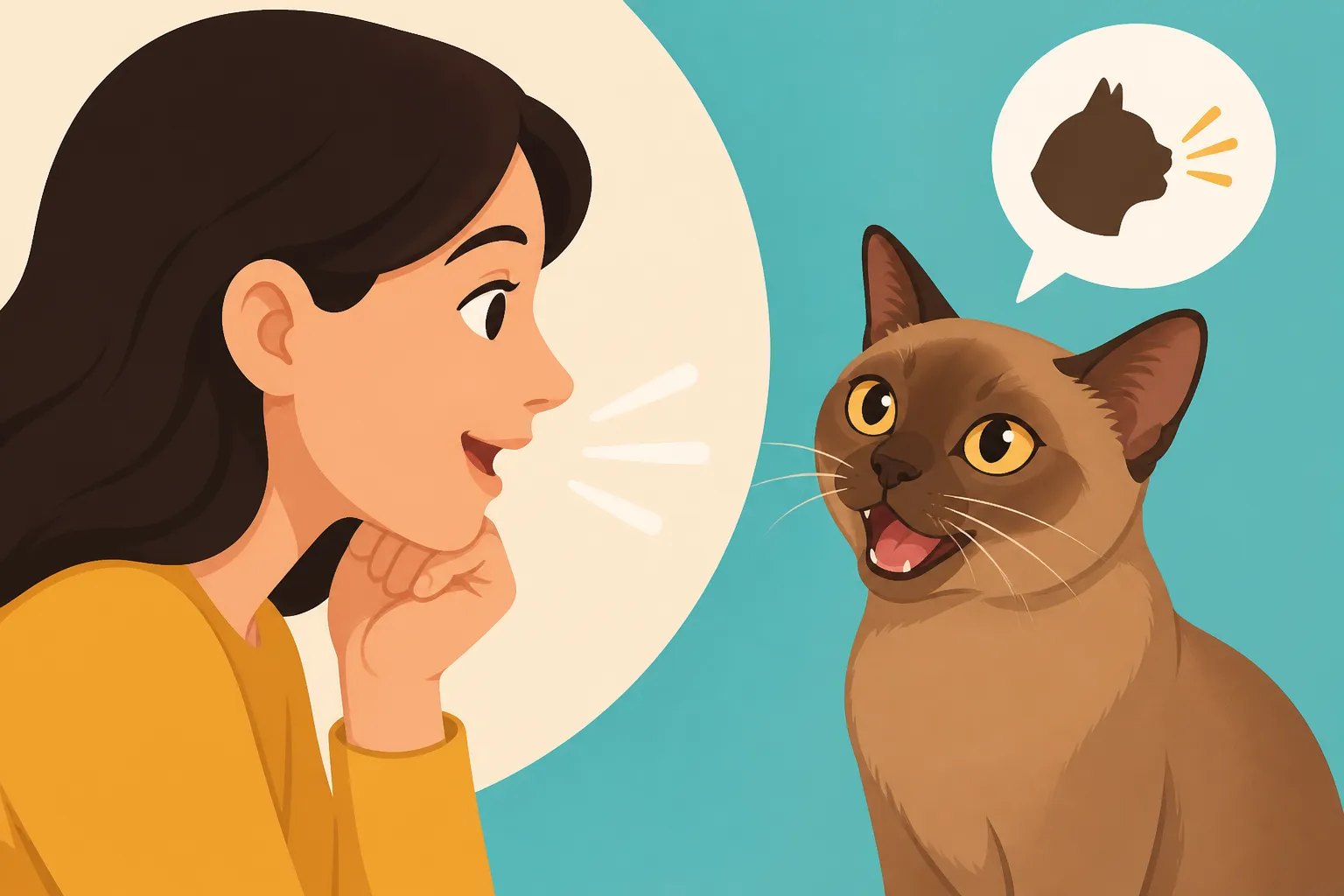
So, do they actually "answer back"? Absolutely! While they won't form full sentences, Burmese cats are incredibly responsive vocalizers. When you talk to them, you'll often get a distinct vocal reply, whether it's an immediate trill, a questioning chirp, or a drawn-out rumble that feels like a direct acknowledgment of your words. They don't just make noise at you; they make noise with you, engaging in what feels like a genuine dialogue.
These conversational rumbles and chirps are a cornerstone of the bond you build with your Burmese. Imagine asking your cat, "Are you hungry, little one?" and receiving a series of escalating chirps and rumbles as they weave around your legs. It's not just random sound; it's a direct, contextual response that shows they've processed your question and are eagerly communicating their answer. They use these sounds to keep the conversation going, indicating their presence and their involvement in whatever you're doing.
For instance, if you call their name from another room, you might hear a distinct "mrrrp?" in response, letting you know they heard you and are acknowledging your call. If you're petting them and ask, "Are you enjoying this?" they might lean into your hand, eyes half-closed, emitting a deep, rumbling purr that seems to confirm their pleasure. This interactive vocal behavior is part of what makes them feel so profoundly connected to their human companions, making every interaction feel like a shared experience.
Understanding What Your Burmese is Actually "Saying"
Deciphering the full depth of your Burmese's communication goes beyond just recognizing their unique vocalizations. It's about understanding the context, the tone, and how their sounds combine with their expressive body language to paint a complete picture of what they're trying to convey.
Interpreting the Nuances of Burmese Vocalizations
The key to truly understanding your Burmese's "conversation" lies in recognizing the subtle nuances of their vocalizations. A rasp isn't just a rasp; it can vary in volume, urgency, and duration, each conveying a different message. A soft, continuous rumble is usually a sign of profound contentment, especially when they're settled on your lap. But a sharp, insistent series of rasps directed towards the kitchen usually means, "Hey, my bowl is empty, and I'm not afraid to remind you!"
Context is everything. When your Burmese is rubbing against your legs with a soft, questioning chirp, they're likely asking for attention or a gentle stroke. If they're sitting by the door, gazing expectantly at you while emitting a more demanding rasp, they might be requesting playtime or even expressing frustration about being What a Burmese Does When It Is Shut Out of a Room. Over time, you'll start to build a mental dictionary for your individual cat, connecting specific sounds with specific desires or emotional states.
This learning process is a beautiful part of Burmese ownership. You become attuned to their unique "vocabulary," understanding that the subtle shift in their vocal tone can mean the difference between a casual greeting and an urgent plea. Many owners find themselves instinctively knowing What a Burmese Is Asking For When It Rumbles simply by the pitch, duration, and accompanying body language. This intuitive understanding deepens the bond and makes living with a Burmese feel like sharing your home with a truly communicative and expressive individual.
The Role of Body Language in Burmese Communication
While their vocalizations are certainly distinctive, a Burmese rarely relies on sound alone to communicate. Their body language is equally expressive and often works in tandem with their vocal repertoire to deliver a clear message. Understanding this combination is crucial for truly grasping what your Burmese is "saying."
Think about it: a soft, rumbling purr becomes even more potent when accompanied by slow blinks, a gently swishing tail, and a relaxed posture, indicating ultimate relaxation and trust. Conversely, that insistent rasp at the food bowl will likely be paired with direct eye contact, a hopeful lean, and perhaps even a paw gently patting your leg, all reinforcing their urgent desire for dinner. Their entire being is engaged in the act of communication.
The Burmese, known for being incredibly affectionate, often uses physical gestures to back up their vocal cues. They might rub their head against your hand while chirping softly, a clear invitation for more petting, or give you a gentle head bunt, a gesture many owners affectionately call Why a Burmese Pushes Its Face Into Your Palm. This holistic approach to communication means you're always getting a rich, multi-sensory message from your cat, leaving little room for misinterpretation if you're paying attention to all their cues.
Encouraging and Responding to Your Burmese's "Talk"
Since Burmese cats are natural communicators, encouraging and responding to their vocalizations isn't just about training; it's about nurturing the unique bond you share. Creating a two-way dialogue strengthens their confidence and reinforces their natural inclination to "talk" to you.
Building a Two-Way Conversation: Engaging Your Burmese
If you want your Burmese to "answer back" more, the simplest and most effective strategy is to talk to them frequently. Treat them like a conversant family member. Narrate your day, ask them questions, and use a variety of tones and pitches. They are highly intelligent and will quickly associate certain words and intonations with specific actions or moods. For example, using a happy, high-pitched voice when you ask "Want some treats?" will likely elicit an excited response.
When your Burmese vocalizes, make sure to respond to them. Whether it's a direct verbal answer, a specific action (like getting up to check their food bowl if they're rasping demandingly), or simply mirroring their chirps with your own soft vocalizations, acknowledging their communication is key. This teaches them that their voice has an impact and that you're paying attention.
You can even use specific verbal cues to teach them words. Many Burmese owners find their cats quickly learn Which Word a Burmese Learns Before Any Other, often their name or a phrase associated with food. Consistency is important here; if you always use the same word for a specific item or action, your Burmese will begin to understand and respond to it, often with their own unique verbal confirmation or anticipation. Platforms like Amazon offer a range of interactive toys that can also encourage vocal play, such as those that make sounds when batted or tossed, further enhancing their communicative enjoyment.
When Vocalizations Might Signal Something More
While a talkative Burmese is generally a happy and well-adjusted cat, it's crucial to distinguish between their normal conversational chatter and vocalizations that might signal distress, pain, or an underlying health issue. A sudden, unexplained change in their vocal habits should always prompt a closer look, and potentially a vet visit.
If your Burmese, usually a quiet rumbly cat, suddenly starts howling continuously, or if their usual affectionate rasps turn into a low, mournful moan, something could be wrong. Cats are masters at hiding illness, and a change in vocalizations can often be one of the few subtle clues. This is particularly true for a breed like the Burmese, which is known for its tendency to Why a Burmese Hides Illness Behind Its Affection. Excessive vocalization, especially when coupled with changes in appetite, litter box habits, or energy levels, is a red flag.
Other concerning vocalizations might include sudden, sharp cries during movement, indicating pain, or incessant, frantic meowing (or rasping) that seems to be without cause, which could point to anxiety or even cognitive decline in older cats. Always err on the side of caution. If you notice a significant, uncharacteristic shift in your Burmese's vocal patterns, consult your veterinarian. It’s better to get a clean bill of health than to dismiss a potentially serious issue. If you're often away, consider investing in a pet camera, readily available on Amazon, to observe their behavior and vocalizations when you're not physically present.
Comparing Burmese Vocalizations to Other Breeds
To fully appreciate the Burmese's unique vocal nature, it's helpful to compare it to other breeds, particularly their close relatives like the Siamese. This contrast helps highlight why the Burmese is often considered a beautifully vocal cat, but in a distinctly different way.
Burmese vs. Siamese: A Tale of Two Voices
When it comes to vocalization, the Siamese cat is famously known for its loud, insistent, and often piercing "yowl" or "wail." They are unashamedly loud and will use their full vocal power to demand attention, food, or simply to express their opinions at top volume. Living with a Siamese often means living with a constant, high-volume soundtrack.
The Burmese, while certainly vocal, generally presents a much softer, more guttural sound. Their characteristic "rasp" or "rumble" is less jarring and more conversational than the Siamese's often shrill demands. While they are equally, if not more, persistent in seeking attention, their method is typically through a continuous, lower-volume chatter rather than loud, intermittent yells. This is why many owners find that Why a Burmese Sounds Throatier Than a Siamese.
Ultimately, both breeds are highly communicative, but their delivery is vastly different. A Siamese commands attention with volume; a Burmese draws you in with an engaging, intimate chatter. You'll find that Why a Burmese Rumbles Where a Siamese Would Yell is a common topic among owners, reflecting the distinct auditory experiences of these two wonderful, talkative breeds.
How Burmese Vocalizations Fit into the "Velcro Cat" Persona
The term "Velcro cat" is often used to describe the Burmese, and for good reason. They are renowned for their intense need for human companionship, constantly seeking physical closeness and involvement in every aspect of your life. Their vocalizations are not merely sounds; they are an integral part of this "Velcro" behavior, a constant audible connection to their beloved humans.
A Burmese talks to you because they want to be with you, to participate in your activities, and to ensure they are never truly alone. Their chirps and rumbles are their way of marking their presence, engaging you, and maintaining that strong, almost constant, connection. If you're in the kitchen, they're likely there too, "chatting" as you prepare dinner. If you move to the living room, they follow, offering a continuous stream of commentary. They simply cannot let you leave the room without an audible protest or inquiry, demonstrating Why a Burmese Cannot Let You Leave the Room.
This constant communication is a beautiful manifestation of their deep affection and social nature. It's not just noise; it's a testament to their desire for interaction. They use their voice as an extension of their physical presence, ensuring that even when they're not draped across your shoulders, they're still actively engaging with you. This profound connection is a hallmark of the breed, truly making them The Burmese Is the Velcro Cat of the Cat Fancy, and their vocalizations are a crucial part of that endearing identity.
| Vocalization Type | Sound Description | Common Interpretation |
|---|---|---|
| Rasp/Rumble | Deep, throaty, continuous | Contentment, greeting, gentle demand |
| Chirp/Trill | Short, soft, bird-like | Question, playful invitation, acknowledgment |
| Demand Rasp | Louder, more insistent rasp | Urgent request (food, attention) |
| Mew/Soft Cry | Less common, high-pitched | Discomfort, seeking reassurance |
| Purr | Deep, vibrating rumble | Extreme contentment, affection |
Disclaimer
This article is for general informational purposes only and does not constitute professional advice. Laws, prices and regulations vary by location and change over time. Consult a qualified professional for guidance on your specific situation.