Teaching a Child to Carry a Burmese on a Shoulder
It's a common and heartwarming sight: a Burmese cat perched confidently on someone's shoulder, surveying their world like a tiny, furry monarch. This unique trait is one of the many reasons we adore this breed, and if you have children, chances are they're eager to share in this special bond. However, teaching a child to safely carry a Burmese on their shoulder isn't just about showing them how to lift; it's about fostering respect, understanding feline body language, and ensuring the safety and comfort of both your beloved cat and your child. This guide will walk you through establishing those crucial foundations and practical steps.
The Allure of the Shoulder: Why Burmese Love to Perch Up High
Burmese cats are renowned for their extraordinary affection and their desire to be constantly with their human companions. They aren't just lap cats; they're "Velcro cats" who want to be as close to you as possible, often seeking the highest available perch. Your shoulder fits this bill perfectly, offering warmth, proximity to your head (and therefore your voice), and an elevated view of the world. This natural inclination makes the idea of a child sharing this experience incredibly appealing, but it also means we need to approach it with careful consideration.
The Burmese "Velcro Cat" Personality
Anyone who lives with a Burmese knows they're not content to just be in the same room. They want to be on you, under the covers with you, or draped over your computer keyboard. This intense need for physical closeness and constant interaction is what earns them the affectionate moniker of "Velcro cat." They thrive on companionship, and for many Burmese, a human shoulder represents the ultimate expression of this bond – it's warm, it's personal, and it keeps them intimately connected to their favorite person. The Burmese Is the Velcro Cat of the Cat Fancy
This inherent desire to be near you is the foundation for why they often enjoy shoulder rides. It’s not just a physical act; it’s an emotional connection. They love the feeling of being included, of being part of your every move. When your child expresses a wish to have the Burmese on their shoulder, they're tapping into this deep-seated need for connection that's so characteristic of the breed. It’s a beautiful thing to witness, but it requires teaching your child how to reciprocate that trust and affection safely.
Why a Burmese Instinctively Seeks Elevation
Beyond just wanting to be close, there's a strong instinctual component to why your Burmese seeks high ground. In the wild, elevation offers a vantage point for spotting potential threats and surveying territory. While our domestic Burmese don't face the same dangers, that instinct remains. From a shoulder, they get a superior view of the room, feeling secure and in control of their surroundings. This isn't just about being spoiled; it's about comfort and a subtle sense of safety.
For a child, understanding this helps them appreciate that the cat isn't just a toy to be picked up, but a creature with its own innate behaviors and preferences. When a Burmese chooses to sit on a shoulder, it’s a sign of immense trust and comfort. It means they feel safe and confident in that elevated position, much more so than they might feel on the floor in a busy household. This knowledge can help your child approach the interaction with more respect and gentleness, recognizing it as a privilege rather than a right.
Assessing Your Individual Burmese's Readiness
While many Burmese are famously social and comfortable with being handled, every cat is an individual. Not every Burmese will instantly take to shoulder rides, especially with a child who might be less steady or predictable than an adult. It's crucial to observe your specific cat's personality. Is your Burmese generally calm and laid-back, or more easily startled? Does it seek out high places on its own, like shelves or cat trees, or prefer to stay closer to the ground?
Pay attention to how your cat reacts to being picked up and held in general. Does it purr and relax, or does it squirm and try to escape? If your Burmese is already comfortable being held close to your chest and tolerates being gently lifted, that's a good sign. If they're hesitant or nervous, more groundwork will be needed before even attempting a shoulder perch, particularly with a child. Rushing this stage can create a negative association for your cat, making them less likely to embrace shoulder time in the future.
Laying the Groundwork: Preparing Your Child and Your Burmese
Before any shoulder-perching can happen, a strong foundation of trust and gentle handling must be established. This isn't a quick lesson; it's an ongoing process of teaching your child patience, empathy, and how to interact respectfully with a living creature. For the Burmese, it’s about learning to associate your child's touch with positive, comfortable experiences.
Starting with Gentle Lap Time
The first step, and arguably the most important, is to ensure your child knows how to handle the Burmese gently and securely on their lap. This builds the foundational trust necessary for any elevated contact. Teach your child to approach the cat calmly, let the cat come to them, and offer a hand for sniffing before petting. When holding the cat on their lap, emphasize supporting the cat's entire body, especially the hindquarters, so they feel stable and secure. How to Carry a Burmese Around Without Dropping It
Encourage your child to talk softly to the cat and offer gentle strokes rather than rough play. Use treats as a reward for calm interactions, reinforcing that being with the child is a pleasant experience. Practice picking up the cat from a low surface, like the floor, and placing them gently onto the child's lap, always ensuring the child has both hands ready to support the cat. This repeated, positive interaction in a controlled setting is vital.
Teaching Proper Lifting Technique
Once lap time is mastered, you can begin teaching the child the correct way to lift the Burmese. This is where most issues arise, as a clumsy or insecure lift can scare the cat or even cause injury. Show your child how to cradle the cat with one hand under its chest, behind the front legs, and the other hand supporting its hindquarters. The key is to lift smoothly and confidently, avoiding dangling legs or unsupported rear ends.
Practice this lift without immediately putting the cat on the shoulder. Just lift, hold for a moment, and place back down. The goal is for the child to become proficient at a secure, gentle lift. Emphasize that the cat's weight should always be distributed and supported. You might find some excellent instructional videos online or children's books that demonstrate pet handling, which can be a great visual aid. Explain that the cat isn't a bag of groceries; it's a sensitive creature that needs to feel safe during the entire process.
Recognizing and Respecting Feline Body Language
This is perhaps the most crucial lesson for any child interacting with a cat, especially a cat as expressive as the Burmese. Teach your child to pay close attention to the cat's signals. A relaxed cat will have soft eyes, ears pointed forward, a gently swishing tail (not thumping), and a relaxed body posture. Signs of discomfort or stress include flattened ears, wide eyes, a tense or twitching tail, stiff body, hissing, or growling. The Signal a Burmese Gives Before It Climbs You
Create a "code word" or phrase with your child that means "the cat needs space." Explain that if the cat shows any signs of being unhappy, even subtle ones, they must immediately and gently put the cat down and give it space. This teaches empathy and respect for the cat's boundaries. A Burmese often hides discomfort behind its affection, so teaching children to truly read their cat's subtle cues is paramount for long-term trust and safety.
The First Shoulder Ride: A Controlled and Positive Experience
Once your child is adept at gentle handling, proper lifting, and reading body language, you can introduce the idea of a shoulder ride. This should always be a controlled, supervised, and brief experience designed for positive reinforcement.
Positioning the Burmese Safely
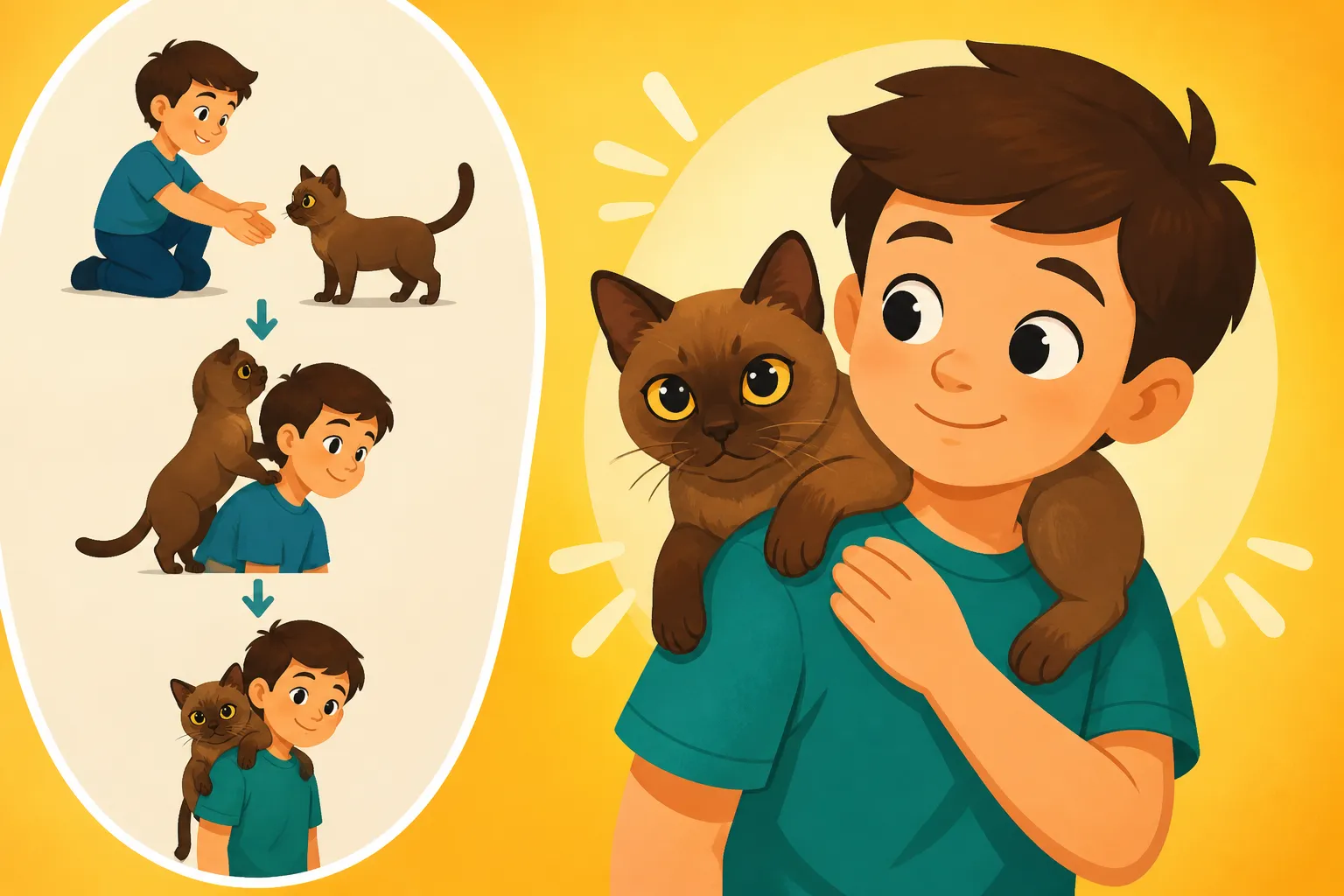
When it's time for the first shoulder ride, have your child sit on the floor or a low chair. You, as the adult, should facilitate the placement of the cat. Gently lift the Burmese and place it onto your child's shoulder, ensuring the child's arm can gently support the cat's body if needed. The cat should be facing forward or backward, lying across the shoulder, not precariously balanced. Emphasize that the child should remain still and calm.
The goal is to make the cat feel secure immediately. If the cat seems hesitant, don't force it. Let it sniff and explore the shoulder area first. You can entice it with a treat placed gently on the child's opposite shoulder. The key is to let the cat make the choice to stay, reinforcing that it's a comfortable and rewarding spot. Think of it as a soft landing on a new, interesting perch.
Establishing Clear Ground Rules
Before the cat even gets on the shoulder, establish strict rules with your child:
- No running or sudden movements: The child must remain still or move very slowly and deliberately.
- Gentle hands only: No grabbing, squeezing, or pulling.
- Limited duration: Keep the first few shoulder rides very short, just a minute or two, ending on a positive note.
- Cat's choice: If the cat wants to get down, the child must allow it immediately and gently.
These rules are non-negotiable and must be reinforced every single time. Explain that the cat is trusting them, and they need to honor that trust. This also includes reminding the child that this is a special activity, not an everyday expectation. Consistency from you, the parent, is vital in setting these boundaries and ensuring the cat's comfort and willingness to participate.
Rewarding Positive Interactions
Positive reinforcement is key for both the child and the cat. When the Burmese settles comfortably on the child's shoulder, offer praise and a small, highly palatable treat. For the child, praise their gentle handling and their ability to follow the rules. This creates a positive association for everyone involved.
Keep the rewards consistent. If the cat hops down on its own, avoid making a fuss or trying to put it back. Simply acknowledge its choice. If the child handles the situation well, praise them. This teaches the child that respecting the cat's autonomy is also a positive action. You might even find some excellent, highly rated pet grooming gloves or sturdy cat toys on Amazon that can serve as positive distractions or rewards.
| Best Practices for Shoulder Carrying | What to Avoid |
|---|---|
| Always supervise an adult | Leaving a child unsupervised with the cat |
| Teach gentle lifting & full body support | Dangling the cat by its front legs |
| Instruct on reading cat body language | Forcing the cat if it shows discomfort |
| Keep initial shoulder rides brief | Prolonging the interaction against the cat's will |
| Encourage calm, slow movements | Sudden movements, running, or roughhousing |
| Reward both cat and child for positive actions | Punishing the cat or child for mistakes |
| Ensure the child is wearing appropriate clothing | Loose clothing, dangling ties, or scratchy fabrics |
Essential Safety Measures and Ongoing Practices
Even with the best intentions and initial training, maintaining safety and a positive experience requires ongoing vigilance and adherence to some crucial measures. The goal is to make shoulder-riding a cherished, safe activity for years to come.
Non-Negotiable Adult Supervision
Let's be absolutely clear: a child should never be left unsupervised with a Burmese on their shoulder, especially when they are first learning. Accidents can happen in a flash – a sudden loud noise, an unexpected movement, or a moment of childish impulsivity can lead to a fall or a scratch. Your presence ensures that you can intervene immediately, guide your child, and ensure the cat's well-being. Why a Burmese Puts Up With a Toddler
As children get older and more experienced, supervision might become less direct but should still be present. Even a well-trained child can forget a rule in the heat of the moment. Think of yourself as the conductor of a small, furry orchestra, ensuring everyone plays in harmony. Your consistent presence also reinforces the importance of the activity and shows your child that you take the cat's safety seriously.
Creating a Safe Environment
Before any shoulder-riding takes place, ensure the immediate environment is safe. This means clear pathways, no precarious objects that could be knocked over, and soft landing spots below. If the cat decides to jump down suddenly, you want to minimize any potential injury.
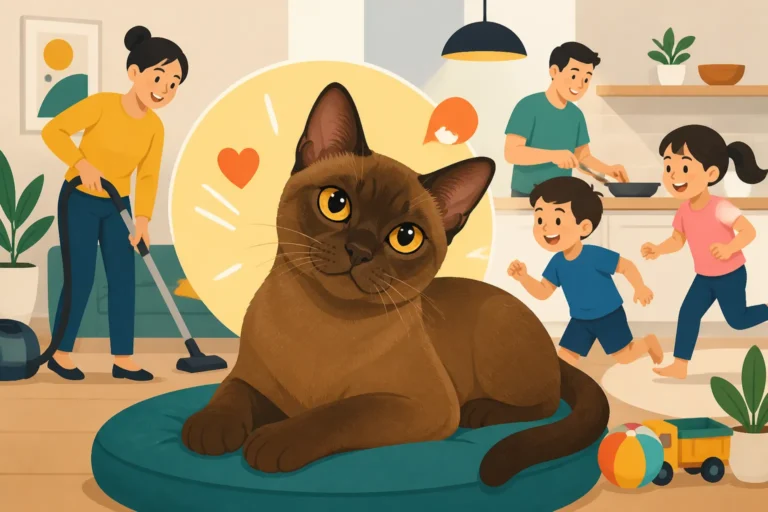
Consider the general activity level in the house. A calm, quiet moment is far better for a shoulder ride than a bustling, noisy play session. Also, ensure there are no open windows or doors that the cat could escape through if it gets startled and jumps off. Why a Burmese Should Never Be an Only Cat is important context here, as a second cat might provide company but also introduce distractions. Keep the setting serene.
Choosing the Right Attire
The child's clothing matters! Recommend sturdy, close-fitting clothing made of thick material, like denim or a heavy cotton sweater. Avoid anything with loose threads, dangling drawstrings, or excessive embellishments that could catch the cat's claws or get in its way. The idea is to provide a stable, comfortable, and safe surface for the cat to perch on, and to protect the child from accidental scratches.
Think about thick, woven fabrics, avoiding anything with loose threads or elaborate embellishments that could snag. Simple, well-made t-shirts or sweaters – readily available on sites like Amazon – are perfect. This also teaches the child that preparing for an interaction with their pet involves thoughtful consideration, not just rushing in. It's a small detail that makes a big difference in comfort for both parties.
Empowering the Cat and Child to Say "No"
It's vital that both your Burmese and your child feel empowered to end the interaction gracefully. Teach your child that if they feel unsteady, tired, or simply not up for a shoulder ride, it's okay to say "not right now." Similarly, if the cat shows any sign of wanting to get down, the child must comply immediately. This mutual respect prevents frustration and reinforces positive associations.
Remind your child that while the Burmese loves attention, it also has its own needs and preferences. By respecting the cat's decision to jump down or simply not want to climb up, your child learns empathy and boundary-setting. This fosters a deeper, more trusting relationship rather than one based on forced interaction. It also helps instill the understanding that the cat is a family member with feelings, not just a cuddly prop.
Beyond the Novelty: The Deeper Bond of Shoulder-Riding
Teaching a child to safely carry a Burmese on their shoulder isn't just about a cute photo opportunity; it's about nurturing a profound bond and teaching valuable life lessons. The benefits extend far beyond the immediate satisfaction of a shared moment.
Fostering Empathy and Responsibility
When a child learns to read a cat's body language, to handle it gently, and to respect its boundaries, they are developing crucial empathy skills. They learn that another living creature has feelings, needs, and preferences that deserve consideration. This understanding translates into responsibility – the child realizes their actions directly impact the cat's comfort and happiness. How Rarely a Burmese Uses Its Claws on Anyone is a testament to their gentle nature, but it's built on trust.
This responsibility isn't a chore; it becomes a natural extension of their affection. They learn that taking care of their Burmese involves more than just feeding it; it means understanding and responding to its subtle cues. The shared experience of a shoulder ride, when done correctly, reinforces this lesson every time, building a lasting foundation of care.
Strengthening the Child-Cat Connection
There's something uniquely intimate about a Burmese perched on a shoulder. It's a level of physical closeness that few other pets offer. For a child, this can create an incredibly strong, personal bond. The cat becomes not just a pet, but a confidante, a silent companion in their daily adventures. Why a Burmese Rides on Your Shoulder isn't just about height; it's about being part of the human world.
This shared experience strengthens their connection, fostering a sense of mutual trust and affection that can last a lifetime. The child feels chosen, special, and deeply connected to their beloved cat. It's these small, consistent, and safe interactions that forge the deepest bonds.
A Unique and Cherished Memory
In a world filled with fleeting digital distractions, the simple act of a Burmese cat riding on a child's shoulder stands out as a genuine, heartwarming interaction. These moments become cherished memories, shaping a child's understanding of love, responsibility, and the unique joy of animal companionship. Why a Burmese Settles Anywhere You Are highlights their adaptable, affectionate nature, making them ideal partners in these unique interactions.
As they grow, children will look back fondly on these times, remembering the warmth of the cat's fur, the gentle rumble of its purr, and the shared perspective from up high. It’s a testament to the special nature of the Burmese breed and the profound connections they form with their human families. So, with patience, guidance, and a lot of love, you can help your child and your Burmese share many happy shoulder-riding adventures.
Disclaimer
This article is for general informational purposes only and does not constitute professional advice. Laws, prices and regulations vary by location and change over time. Consult a qualified professional for guidance on your specific situation.