Whether a Burmese Would Rather Watch Birds or You
It’s a funny thing, isn't it? We pour our hearts into our beloved feline companions, providing comfort, food, and endless cuddles, only to sometimes wonder where their true attention lies. You might be sitting there, trying to read a book or watch a show, and your gorgeous Burmese is utterly captivated by a tiny bird flitting outside the window. It's easy to feel a little put out and ask yourself: given the choice, would my Burmese rather watch a bird or me? This guide delves into the unique, deeply social nature of the Burmese cat, contrasting their innate prey drive with their unparalleled bond with their humans, to explore exactly where your Burmese's priorities truly lie.
The Burmese: The Ultimate People-Watcher
When you bring a Burmese into your home, you're not just getting a cat; you're gaining a shadow, a confidante, and a constant, purring presence. These aren't your aloof, independent felines that tolerate your existence. Oh no, the Burmese is entirely different, and their focus on their humans is arguably their most defining characteristic. They are deeply entwined with the lives of their people, far more so than many other breeds.
The "Velcro Cat" Phenomenon
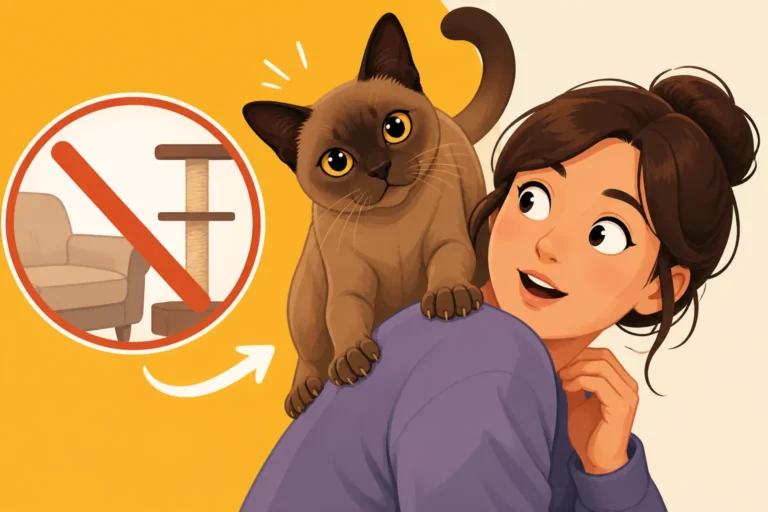
The nickname "Velcro cat" isn't given lightly to the Burmese; it's earned through consistent, unwavering dedication to their human companions. From the moment you wake up until the last light is out at night, a Burmese wants to be where you are, doing what you're doing, or at the very least, observing you do it. They will follow you from room to room, sit on your lap the moment you settle down, and often even climb onto your shoulder just to be closer. This isn't just a preference; it’s a fundamental need for connection. You'll find them perched on the arm of your chair, nestled against your side on the sofa, or even burrowing under the covers with you at night. This constant physical and emotional proximity is what makes them feel secure and loved. The Burmese Is the Velcro Cat of the Cat Fancy aptly captures this profound need for closeness.
It’s easy to dismiss this as mere affection, but it runs much deeper. This breed genuinely thrives on interaction and suffers greatly from loneliness. If you've ever tried to work from home with a Burmese, you know the struggle: a persistent head-nuzzle, a gentle paw tap, or a soft, demanding rumble. They're not just seeking attention; they're fulfilling their instinct to be part of your "pack." Their world revolves around their humans, and they are constantly seeking affirmation and engagement from you.
The Source of Their Affection
The intensity of a Burmese's bond with its owner isn't an accident; it's a characteristic that has been carefully nurtured throughout the breed's development. Unlike some breeds that were selected purely for aesthetics, the Burmese has always been celebrated for its personable nature. This deep-seated need for companionship likely stems from generations of selective breeding that emphasized social traits. They are bred to be companion animals, and they excel at it.
Consider a hypothetical scenario: you're having a particularly busy day, darting from one chore to the next. Your Burmese won't just observe from a distance; they'll weave between your legs, hop onto counters to watch you cook, or even try to "help" you fold laundry by napping on the pile. They're constantly processing your movements, your moods, and your sounds, learning your routine intimately. This constant observation is their way of understanding their world, and you are the central figure in that world. Their trust and devotion are palpable, making them feel less like a pet and more like a furry family member. This innate drive to be near and interact with you forms the bedrock of their behavior.
The Call of the Wild (or the Window)
Despite their profound connection to humans, let's not forget that cats, including the domestic Burmese, are still creatures of instinct. Deep within their genetic makeup lies the drive of a hunter, an observer of the natural world. This means that while you are their sun, moon, and stars, a fluttering bird outside the window can still ignite a primal spark.
Instinctual Prey Drive
Watching birds, squirrels, or even leaves blowing in the wind isn't just a casual pastime for a Burmese; it's an activation of their inherent predatory instincts. When a bird lands on a branch just outside, you'll see a distinct shift in your cat's demeanor. Their eyes will narrow, their tail might twitch with an almost imperceptible tremor, and you might hear that characteristic chattering sound unique to cats observing prey they can't reach. This isn't disloyalty; it's simply their biology taking over.
Imagine your Burmese, usually purring contentedly on your lap, suddenly stiffening and staring intently at the window. The world outside, full of movement and potential "prey," becomes an irresistible draw. For that moment, the bird represents an ancient challenge, a puzzle to be solved, a meal to be caught (even if they know, intellectually, they won't get to it). This intense focus is a testament to the fact that while domesticated, the spirit of the wild still lives within them. It's a healthy, natural behavior that provides mental stimulation, even if it pulls their attention away from you for a brief period.
Window Watching as Entertainment
When you're not actively engaging with your Burmese, or even when you are but the outside world offers something new, a window becomes their personal cinema. For a cat that thrives on mental stimulation and companionship, a lack of either can lead to boredom or anxiety. While you are undeniably their preferred source of entertainment, a lively outdoor scene offers a fascinating alternative.
Think about it: the rustle of leaves, the chirping of birds, the scampering of small animals – these are all dynamic visual and auditory stimuli that can keep a curious Burmese entertained for long stretches. A good window perch, perhaps one you found on Amazon, can become a prime viewing spot. This isn't a sign that they don't love you, but rather that they are resourceful and intelligent creatures who can find ways to occupy themselves when their primary companion (you!) is otherwise engaged. It's a mental game of "what if" and "if only," played out against the backdrop of your garden or street. For cats, observation is a form of play and mental exercise, preventing boredom and keeping their minds sharp.
The Hierarchy of Attention: You First, Then Everything Else
So, back to the core question: birds or you? While the allure of the wild is strong, a Burmese will almost always prioritize human interaction over passive observation. Your presence, your voice, and your touch are profoundly more engaging and fulfilling than any bird outside the window.
Prioritizing Human Interaction
When you are actively available for your Burmese, you immediately become the most interesting thing in the room. A bird flitting by might capture their gaze for a moment, but the second you speak their name, offer a gentle pat, or even just shift in your seat, their attention will snap back to you. This isn't just about food or comfort; it's about connection. They crave interaction, conversation, and shared experiences. Why a Burmese Cannot Let You Leave the Room highlights this inherent need for proximity and engagement.
Consider the difference in their response. A bird outside might elicit focused staring, perhaps a chattering sound. But you elicit a purr, a rub against your legs, a happy little rumble, or even a determined leap onto your lap. Their vocalizations, which are often a distinctive rasping rumble rather than a traditional meow, are almost always directed at you, their primary communicator. Why a Burmese Rumbles Where a Siamese Would Yell delves into this unique form of communication, which is all about engaging with you. The intensity of their interaction with you far surpasses the passive enjoyment they derive from watching a bird.
Passive Observation vs. Active Engagement
The key distinction here is the level of engagement. Watching a bird is a passive activity; it's observing, but there's no reciprocation. Watching you, however, is an active, two-way street. When you're present, your Burmese is constantly trying to engage you. They might follow your gaze, try to decipher your mood, or simply demand attention with a nudge or a purr. They aren't just looking at you; they're interacting with you, even if it's a silent conversation.
This is why, despite the captivating nature of the outdoors, a Burmese will often choose to snuggle onto your lap while you're reading or working, even if there's a bird convention happening right outside the window. Why a Burmese Sits on Whatever You Are Reading perfectly illustrates this dynamic. They want to be part of your activity, to feel your warmth, and to know they are central to your world. Their desire to be physically close and emotionally connected to you is a powerful force that generally outweighs the visual spectacle of nature. They observe you because you are an active, responsive, and loving part of their existence, not just a fleeting image.
Creating an Enriched Environment (With You at the Center)
Understanding this hierarchy of attention helps us create an environment where a Burmese can thrive, balancing their natural instincts with their profound need for human connection. It's about acknowledging both facets of their personality.
Balancing Instincts with Affection
The best approach is to provide opportunities for both types of "watching." Encourage their window-watching habits by providing comfortable, safe perches. A cat tree placed near a window or a window hammock can be a fantastic way to satisfy their natural curiosity and prey drive without them feeling neglected. This allows them to indulge their inner hunter safely from indoors.
However, these activities should always be secondary to direct interaction with you. Schedule regular play sessions where you are actively involved. Use wand toys, laser pointers (carefully, to avoid frustration), or even retrieve games to engage their hunting instincts in a way that includes you. Think of these as structured opportunities for them to "hunt" with their favorite companion. It's crucial to remember that while a window view is good, it's never a substitute for your personal attention. How Many Hours Alone a Burmese Tolerates emphasizes that even with distractions, their tolerance for solitude is low.
Interactive Play as a Bonding Tool
Interactive play isn't just about exercise for a Burmese; it's a vital bonding experience. They are highly intelligent and playful cats, even into their senior years. Engaging in games with them reinforces their understanding that you are the source of fun, stimulation, and affection. A few short, energetic play sessions throughout the day are far more beneficial than hours of passive window gazing.
Think about games of chase, hide-and-seek, or using a feather wand to mimic bird flight. These activities directly tap into their prey drive while simultaneously strengthening your bond. How Many Play Sessions a Burmese Asks For points to their high energy needs. They learn that while birds are interesting, you make the birds move and are an active participant in their joy. You can even teach them tricks – a Burmese is often easy to clicker train – which further solidifies your role as their beloved leader and playmate. Why a Burmese Is the Easiest Cat to Clicker Train is a testament to their intelligence and desire to please their humans. Ultimately, for a Burmese, the greatest entertainment, the deepest satisfaction, and the most profound connection will always come from you.
Comparison: Burmese Attention Priorities
To help put it all in perspective, here's a quick look at how a Burmese typically prioritizes its attention between you and the birds outside:
| Feature | Watching You | Watching Birds Outside Window |
|---|---|---|
| Engagement Level | Active, reciprocal, seeking interaction | Passive, observational, instinctual |
| Emotional Response | Purring, rubbing, vocalizing (rumble), seeking lap | Intense stare, chattering, tail twitching, focused |
| Desired Outcome | Companionship, affection, play, communication | Satisfy prey drive, mental stimulation, curiosity |
| Response to Your Call | Immediate redirection of attention | May be slow to respond, eventually turns to you |
| Long-Term Fulfillment | High, essential for well-being | Moderate, good for stimulation, but not primary |
| Behavioral Manifestations | Following, shoulder rides, cuddling, demanding play | Stalking motion, ears swiveling, focused gaze |
This table clearly illustrates that while birds offer a fascinating distraction that taps into their instincts, your Burmese's emotional investment and desire for active engagement are overwhelmingly directed towards you. They choose you, time and time again, as their preferred source of interaction and joy.
Disclaimer
This article is for general informational purposes only and does not constitute professional advice. Laws, prices and regulations vary by location and change over time. Consult a qualified professional for guidance on your specific situation.